Support

Walled Town of Concarneau

About

The Walled City of Concarneau (Ville Close de Concarneau) is a unique historical gem located in the town of Concarneau on the picturesque coast of Brittany, France. It is not just a landmark, but an entire ancient fortified town nestled on a small island in the center of the city harbor. It is connected to the mainland by an old bridge, and this ensemble of stone walls, towers, and gates, surrounded by water, creates the unmistakable atmosphere of a real medieval bastion and serves as the city's signature symbol.
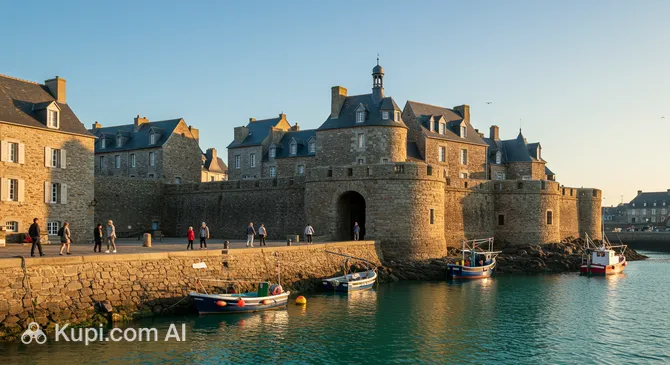
Walled Town of Concarneau. Illustration.
Source: Kupi.com AI

Traveller photos:

The exceptional cultural and architectural value of this site was recognized long ago: at the end of the 19th century, the Ville Close was added to France's national registry of historical monuments, highlighting its importance to the country's history and heritage. This makes it a must-see for anyone interested in European history and fortification.

A walk through the Walled City is a true journey back in time. Within its mighty walls, the dense medieval layout has been preserved, featuring a labyrinth of narrow streets, old granite houses, and half-timbered buildings. Today, it is full of life: souvenir shops, craft workshops, cozy cafes, and restaurants are all open for business. And by climbing up onto the ramparts, you can enjoy magnificent views of the busy harbor, fishing boats, and the modern part of Concarneau.

Contacts

Since the Walled City is a historical part of Concarneau rather than an independent organization, it does not have separate contact details. To obtain the most up-to-date tourist information — regarding museum opening hours, rampart access, tours, and events — it is recommended to consult the city's official resources. The primary useful contact for planning your visit is provided below.

How to contactContact
Address5 Rue Vauban, 29900 Concarneau, France
Phone+33 2 98 50 38 38
Websitewww.concarneau.fr

What to Do

A visit to the Walled City is an opportunity to dive headfirst into the atmosphere of medieval Brittany. The main activity here is leisurely strolling through the cobblestone streets, where ancient granite and half-timbered houses appear around every corner. Today, these buildings house numerous souvenir shops, art galleries, and cozy cafes where you can taste the freshest seafood the region is famous for. You should definitely take a walk along the ramparts: they offer magnificent panoramic views of the fishing port, boats bobbing on the water, and the vast expanses of the Atlantic Ocean.

Inside the walls of the Ville Close lies one of the key attractions — the Fishing Museum (Musée de la Pêche). Here, you can learn in detail about Concarneau's rich maritime history and the fishing traditions that have been the backbone of city life for centuries. The exhibition includes ship models, ancient maps, and even a real trawler moored at the museum's pier. Furthermore, various festivals, fairs, and cultural events take place within the fortress throughout the year, making a visit here especially interesting and memorable for the whole family.

Getting There

Getting to the Walled City is quite simple, as it is the centerpiece of Concarneau. The city itself is located in the Brittany region, in the Finistère department, about 21 kilometers southeast of Quimper. When traveling by car, take the N165 national highway and then follow the local roads leading directly into the city. Bus services are also well-developed, with regular buses running from Quimper and other regional towns. For those who prefer trains, you can travel to the nearest railway stations, such as Rosporden or Quimper, and continue your journey by bus.

The Walled City, or Ville Close, is located on an island in the very heart of the city harbor, making it easily accessible for pedestrians. It is just a few minutes' walk from Concarneau's central streets to the fortress entrance across an ancient stone bridge. This is an ideal spot for a leisurely stroll, as the entire historical center is essentially a large pedestrian zone.

For tourists arriving by car, dedicated parking lots are provided near the fortress. However, it is worth noting that Concarneau is extremely popular during the summer season, and the number of tourists increases significantly. Therefore, if you plan to visit during this time, it is highly recommended to arrive early in the morning to easily find a parking spot and avoid the large crowds at the entrance to the Ville Close.

Nearest city: Concarneau

History & Facts

The history of the Walled City of Concarneau, also known as the Ville Close, dates back to the early Middle Ages. The first fortifications on this rocky islet in the Concarneau harbor appeared as early as the 9th and 10th centuries. It was a typical early feudal structure known as a motte castrale — an earthen mound topped with a wooden palisade and surrounded by a moat. These early defensive structures laid the foundation for the future mighty bastion that would play a key role in the history of Brittany and all of France for centuries to come.

The transition from wood and earth to stone began in the 13th to 15th centuries, when powerful granite walls and towers were erected, shaping the recognizable appearance of the Ville Close. In the 15th century, the fortifications were significantly reinforced. The fortress's strategic location made it the scene of numerous battles and sieges, particularly during conflicts between England and France. One of the most famous episodes was the siege of 1373, when the renowned French commander Bertrand du Guesclin recaptured the citadel from the English.

With the development of artillery, further modernization was required. In the 17th and 18th centuries, the walls were improved to withstand cannon fire, with the legendary military engineer Vauban playing a hand in the design. It was under his project that the towers lost their conical roofs and were converted into artillery platforms. Throughout its history, the Walled City maintained its vital strategic importance, serving as both an impregnable defensive point and a bustling port on the Brittany coast.

Time Needed

To fully enjoy the atmosphere and see the main attractions of the Walled City of Concarneau, it is recommended to set aside 2 to 4 hours. This time will be quite sufficient to immerse yourself in its historical aura without rushing, explore the main corners, and get a complete impression of this unique place. This time allowance will let you do more than just run through the main street; you can truly feel the spirit of the ancient Breton citadel.

In these few hours, you will have time not only to walk through the picturesque cobblestone streets and browse the local souvenir shops but also to visit the Fishing Museum. Additionally, a walk along the ramparts is a must-do, offering stunning views of the harbor, the fishing port, and the modern part of the city. If you are short on time, you can manage a quick introductory walk in about an hour, but for a full immersion, it's better not to rush.

Working Hours

You can visit the Walled City of Concarneau at any time, which is one of its great advantages. Access to the Ville Close territory itself — its streets and squares — is free and not limited by time, as it is a public space. You can walk through the ancient cobblestone streets and enjoy the medieval atmosphere both early in the morning and late at night, all year round.

However, please note that the sites located within the fortress walls — museums (including the Fishing Museum), souvenir shops, art galleries, and cafes — operate on their own schedules. During the peak tourist season (usually from April to September), they are generally open daily from approximately 10:00 AM to 6:00 PM or 7:00 PM. Nonetheless, it is highly recommended to check the exact opening hours of specific establishments on their official websites or at the Concarneau tourist office before your visit, as schedules can change depending on the season. No advance booking is required to enter the fortress grounds, but it may be useful for guided tours or visiting certain museums.

Open 24/7

Nearby

A visit to the Walled City is undoubtedly the highlight for any guest of Concarneau, but you shouldn't limit yourself to its walls alone. Exploring the immediate surroundings will allow you to deeper understand the maritime character of this Breton city, its culture, and daily life. Just a few steps from the medieval bastions, other interesting sites await to make your journey even more rewarding and complete.

A walk along the lively waterfront, a visit to the local market, or relaxing in one of the many cafes will provide just as many impressions as exploring the ancient citadel. Below is a list of attractions and points of interest located in the immediate vicinity of the Walled City to help you better plan your itinerary.

NameDistance
Fishing Museum0 km
Concarneau0.2 km
Le Ptit Resto0.2 km
Tourist Office of Concarneau to Pont-Aven0.2 km
Crêperie Entre Amis0.2 km
Côté Mer0.4 km
Bac du Passage Ferry0.5 km

Reached the bottom of the page?

Looks like you know this route inside out