Support

Concarneau

About

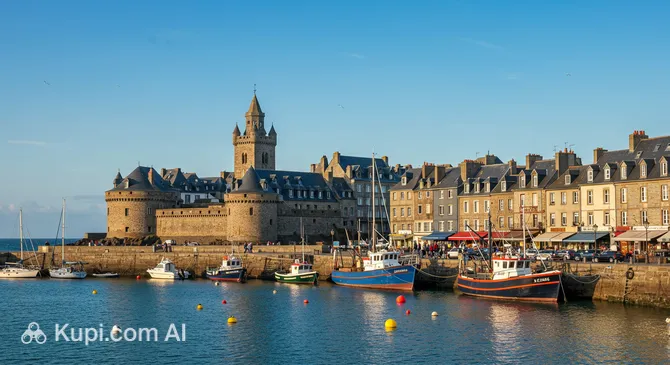
Concarneau is a true gem on the Atlantic coast, nestled in the western part of France, in the Brittany region. The city sits on the shores of a picturesque bay, where waves gently wash against ancient walls and fresh sea air fills the streets with vigor and inspiration. With a population of about 19,800, Concarneau maintains a cozy atmosphere while remaining an important fishing port and a popular seaside resort.
Concarneau. Illustration.
Source: Kupi.com AI

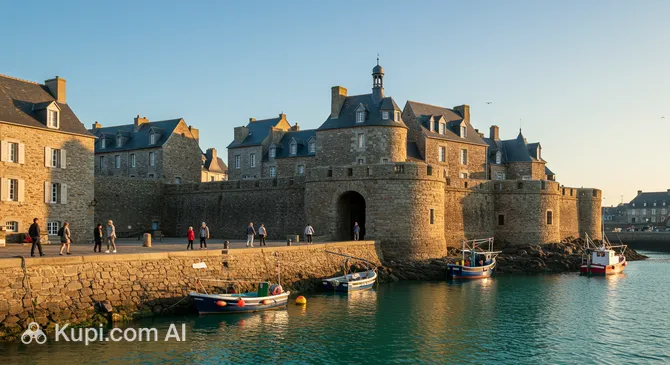
The heart of Concarneau and its main crown jewel is the famous old town, the Ville Close. This medieval fortress, situated on a small island and surrounded by massive granite walls, seems to transport visitors back several centuries. Narrow cobbled streets, ancient houses, and small squares create a unique atmosphere. Beyond the Ville Close, the city attracts tourists with its picturesque beaches, perfect for relaxation, and a lively waterfront ideal for a stroll while enjoying views of the ocean and yachts.

Concarneau is also famous for its Fishing Museum (Musée de la Pêche), which tells the detailed history and traditions of this industry, so vital to the city. Boating enthusiasts can take an excursion along the coast or to the nearby Glénan Islands, known for their crystal-clear water and white sandy beaches. Local cafes and restaurants offer the freshest seafood, which the region is so rich in.

Concarneau is a city that is easy to fall in love with at first sight. It is perfect for those who appreciate the combination of historical heritage, maritime romance, and the charm of Breton culture. A visit to Concarneau promises unforgettable impressions and a desire to return again.

You can find more interesting facts on the history of Concarneau page.
Weather Overview

The weather in Concarneau is characterized by a moderate maritime climate, making it attractive to visit at different times of the year. Expect pleasant, not too hot summers with occasional refreshing rains and mild but wetter winters here.

The warmest months are July and August, with an average temperature of about 18°C and maximum values reaching approximately 21°C. The coolest months are January and February, when the average temperature stays around 7-8°C. Precipitation falls throughout the year; however, the highest amount (3-4 mm per month) and number of rainy days (14-16) are observed from October to March. The summer months, from June to September, are usually drier, with about 2 mm of precipitation and 10-12 rainy days. To find out more details, check the Concarneau Climate page.

Average monthly temperature

Average monthly precipitation

Interesting Facts

Beyond its picturesque views and the famous Walled City, Concarneau holds many curious details and stories. This charming Breton port keeps secrets that will surprise even the seasoned traveler.

Walled Town of Concarneau. Illustration.
Source: Kupi.com AI

Traveler photos:

  • The main pride of Concarneau is the Walled City (Ville Close), which has never been taken by storm in its multi-century history. Massive granite walls surrounded by water reliably protected its inhabitants from any incursions.

  • The symbol of Concarneau is often considered to be the elegant clock tower (beffroi) that rises above the fortress walls. However, this is not a medieval structure: the tower was built only in 1906, becoming a unique architectural highlight and the city's signature landmark.

  • Not far from Concarneau is the Château de Keriolet, which has a surprising connection to Russian history. In the 19th century, it belonged to Princess Zenaide Yusupova, known for her philanthropy and contribution to the region's cultural life.

  • Concarneau is not only a historical gem but also one of France's largest fishing ports. Every year, it hosts the famous "Fête des Filets Bleus" (Festival of Blue Nets), dedicated to maritime culture and fishing traditions, attracting guests from all over the country with colorful parades and tastings.

How to Get There

You can reach this picturesque corner of Brittany in various ways, using a combination of flights and ground transport. Since the city is located on the coast, the route often passes through the region's major transport hubs. You can find out more about how to get to Concarneau on our dedicated page, and below we will look at the main options for arriving via neighboring cities.

Concarneau itself does not have its own airport, so travelers usually fly into neighboring air harbors. The closest option is Lorient South Brittany Airport (IATA: LRT) in Lorient, located just 38 km from the resort. However, a more popular choice for tourists is often Brest Bretagne Airport (IATA: BES), located about 74 km away. The drive from Brest to Concarneau takes about 1 hour, making this route quite convenient.

For international flights, many choose the larger Nantes Atlantique Airport (IATA: NTE), located 191 km from the city. It is also worth considering Rennes Airport, which is approximately 165 km away. A car trip from Rennes to the coast will take about 2 hours.

Summary of the nearest airports:

AirportPassenger trafficDistance
Pluguffan Airport18 24722 km
Lann Bihoue Airport6 21838 km
Brest Bretagne Airport810 79674 km
Pleurtuit Airport95 000158 km
Rennes Airport600 000165 km

Railway connection is another popular way to get to Brittany. The nearest major railway hubs receiving high-speed trains (TGV) from Paris are in Rennes and Nantes. Rennes Station is located about 170 km from Concarneau. If you rent a car at the station, the trip to your destination will take about 2 hours. Public transport (regional trains and buses) will require more time and transfers.

Another important hub is Nantes Railway Station (about 193 km). From here, tourists also often continue their journey by rental car or regional trains to stations closer to Concarneau (for example, in Quimper or Rosporden), from where the city can be reached by local bus or taxi.

List of the nearest major railway stations:

StationPassenger trafficDistance
Rennes Station15.2 mln170 km
Nantes Railway Station15.5 mln193 km
Angers Saint-Laud Station5.7 mln257 km
Falmouth Railway Station247 000267 km
Penzance Station618 956277 km

Main Attractions

Concarneau, a picturesque port city in the heart of Brittany, is famous not only for its rich history but also for its unique attractions that draw tourists from all over the world. From ancient fortress walls to fascinating museums, everyone will find something for themselves here.

The city's main jewel is undoubtedly the Walled City of Concarneau (Ville Close). This medieval fortress, located on an island and connected to the mainland by a bridge, is one of Brittany's most visited historical monuments. A walk through its narrow streets, surrounded by granite walls, immerses you in the atmosphere of the past. Inside, you will find many souvenir shops, restaurants, and cafes where you can relax and enjoy the local cuisine.

Walled Town of Concarneau. Illustration.
Source: Kupi.com AI

Traveler photos:

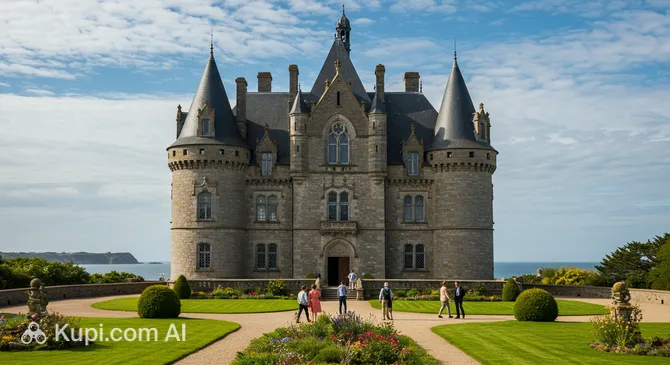
Near the city center lies the majestic Château de Keriolet. This impressive 19th-century Neo-Gothic castle once belonged to the Russian Princess Zenaide Narischkine-Yusupova, adding a special historical note to it. Today, the castle is open to visitors who can admire its luxurious interiors, rich art collection, and stroll through the picturesque park surrounding the castle, which offers peace and beautiful views.

Keriolet Castle. Illustration.
Source: Kupi.com AI

Traveler photos:

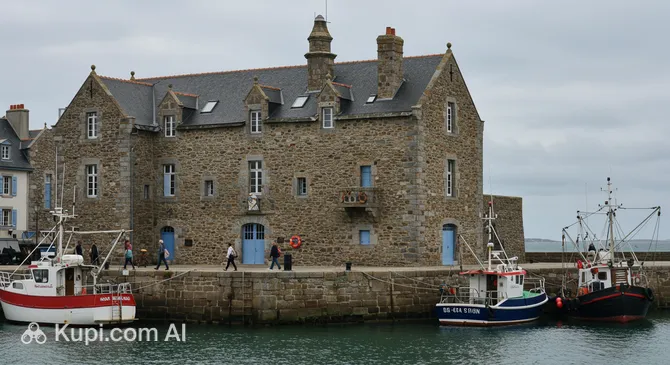
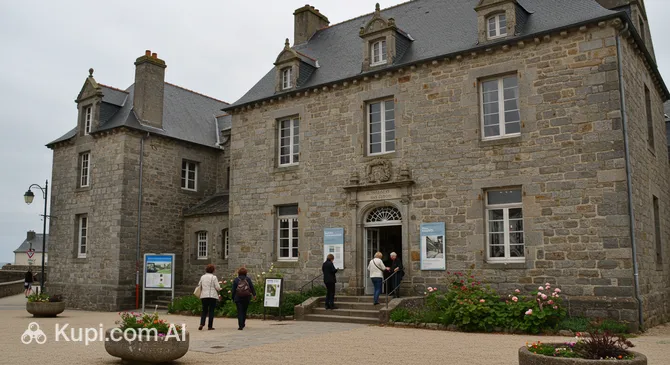
For those interested in the region's maritime history and fishing traditions, the Fishing Museum is a must-visit. Located in an old arsenal within the Walled City, the museum tells the detailed history of fishing in Concarneau and the Atlantic in general, from ancient times to the present day. It features ship models, various fishing gear, and interactive exhibits that will be of interest to both adults and children, allowing for a deeper understanding of this important part of the city's heritage.

Fishing Museum. Illustration.
Source: Kupi.com AI

Traveler photos:

To enjoy magnificent views of the Walled City from the water and feel the unique local flavor, be sure to take the Bac du Passage ferry. This short but extremely picturesque crossing connects the Walled City with the Passage Lanriec district. It is not only a convenient and fast way to travel between two parts of the city but also a great opportunity to take wonderful photos and see Concarneau from an unusual perspective, appreciating the beauty of its harbor.

Local Cuisine

The gastronomic scene in Concarneau is a true reflection of its seaside location and rich Breton traditions. The main pride of the local cuisine is, of course, the freshest seafood. In the city's numerous restaurants, you will be offered oysters, mussels, scallops, and, naturally, the famous Breton lobster, prepared according to classic recipes. It is definitely worth trying the thick and flavorful fish soup – soupe de poisson, which is perfect for warming up after a boat trip.

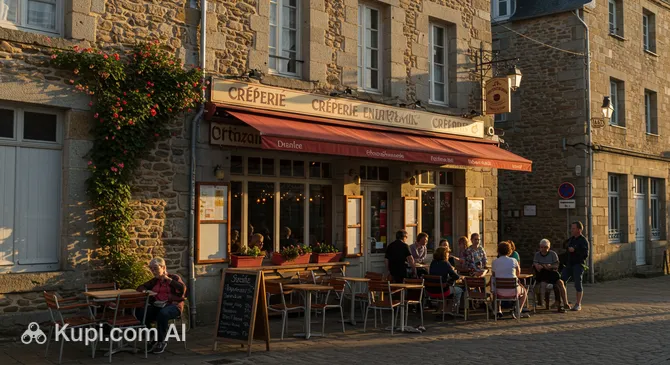
Sardines occupy a special place in Concarneau's culinary history. The city has long been an important center of the canning industry, and local sardines are rightly considered some of the best in France. Try them grilled or as high-quality canned goods, which make an excellent gastronomic souvenir. One cannot imagine Brittany without the famous buckwheat crepes – galettes – with various savory fillings, and for dessert, treat yourself to a traditional Breton "far Breton" cake with prunes or delicate caramel. To fully appreciate Breton crepes, you can stop by a place like Crêperie Entre Amis.

Crêperie Entre Amis. Illustration.
Source: Kupi.com AI

Traveler photos:

The dining culture in Concarneau is diverse. Locals and tourists enjoy meals both in cozy restaurants specializing in seafood and at the lively city markets. At the markets, you can find all the riches of the Breton land: fresh vegetables, farm cheeses, fragrant pastries, and, of course, freshly prepared galettes. Throughout the year, especially in summer, Concarneau hosts gastronomic festivals where you can taste dishes from local chefs and immerse yourself in the atmosphere of a feast of taste under the open sky.

The traditional drink of Brittany, which perfectly complements both savory galettes and seafood, is cider – apple or pear. Naturally, in the restaurants and cafes of Concarneau, you will also be offered a rich selection of French wines, as well as other local and popular non-alcoholic drinks, so that everyone can find something to their taste.

Travel Tips

Planning a trip to the charming port city of Concarneau? To ensure your trip goes smoothly and leaves only the most pleasant impressions, we have prepared some practical tips. They will help you better orient yourself on the spot and enjoy every moment in this corner of Brittany.

  1. Clothing and items for the season: Brittany's climate is known for its variability, so layering your clothes is your best ally. Be sure to bring a waterproof jacket or raincoat, even in summer. Comfortable shoes for walking on the cobbled streets of the ancient Ville Close fortress city are simply essential. In summer, don't forget sunscreen, sunglasses, and a hat. For electrical appliances, you will need a standard European adapter (Type E).
  2. Getting around Concarneau: The historical center of Concarneau, the famous Ville Close, is best explored on foot – that way you won't miss a single detail. For longer trips around the city and surroundings, you can use the local Coralie network buses. Taxis exist, but there may not be as many as in large cities. Car rental will be useful if you plan to travel actively throughout Brittany, but keep in mind that parking in the center of Concarneau, especially in season, can be difficult.
  3. Financial matters: The official currency in France is the Euro (EUR). Bank cards (Visa, Mastercard) are accepted in most shops, restaurants, and hotels. ATMs (distributeur automatique de billets) are easy to find in the city. In restaurants and cafes, a service charge (service compris) is usually included in the bill. However, if you especially liked the service, it is customary to leave a small tip (5-10% of the bill or simply round the amount up).
  4. Health and safety: Pharmacies in France are marked with a green cross and are called "Pharmacie". On-call pharmacies (pharmacie de garde) operating at night or on weekends can be found via notices on the doors of other pharmacies or online. In case of an emergency medical need, call the pan-European number 112. Concarneau is considered a quiet and safe city. Nevertheless, as everywhere, follow basic precautions: keep an eye on your belongings in crowded places, especially during the tourist season.
  5. Language and communication: The official language is French. In tourist areas, hotels, and some restaurants, staff may speak English, but knowing a few basic French phrases (e.g., "Bonjour" – hello, "Merci" – thank you, "S'il vous plaît" – please, "Au revoir" – goodbye) will be very warmly received by the locals. For mobile communication and internet, you can purchase a local SIM card or use roaming. Wi-Fi is usually available in hotels, many cafes, and the tourist information center.
  6. Local etiquette and communication: The French value politeness. Always say hello when entering a shop, cafe, or even an elevator ("Bonjour" during the day, "Bonsoir" in the evening). Use "s'il vous plaît" (please) and "merci" (thank you). When addressing strangers, it is better to use the polite form "vous". Calm and respectful behavior in public places is the norm.
  7. What to avoid: Don't start a conversation immediately in English without saying hello in French – it may be perceived as impolite. Also, don't talk too loudly in public places, especially in restaurants, as the French value a calm atmosphere during meals.
  8. Concarneau specialty: Be sure to walk along the walls of the Ville Close to enjoy the stunning views of the harbor and the ocean. Visit the fish auction (criée) early in the morning to see the fresh catch and feel the true atmosphere of an active fishing port. If your trip falls in August, don't miss the famous "Festival des Filets Bleus" (Blue Nets Festival) – a colorful celebration of Breton culture.

We hope these tips help you plan an unforgettable trip to Concarneau. We wish you bright impressions and a pleasant holiday in this picturesque corner of Brittany!

Entertainment & Nightlife

Concarneau, a charming port city in Brittany, offers its guests not only picturesque daytime landscapes but also a cozy atmosphere for evening relaxation. The nightlife here does not roar with metropolitan rhythms, but rather encourages pleasant socializing in a friendly setting, perfect for those seeking relaxation after a busy day.

The main evening entertainment is concentrated around the old port and within the walls of the historical Ville Close (Walled City). This is where you will find many bars, pubs, and restaurants where you can enjoy local drinks, such as cider or Breton beer, and dishes in pleasant company. The atmosphere in most establishments is usually relaxed and welcoming, conducive to long conversations.

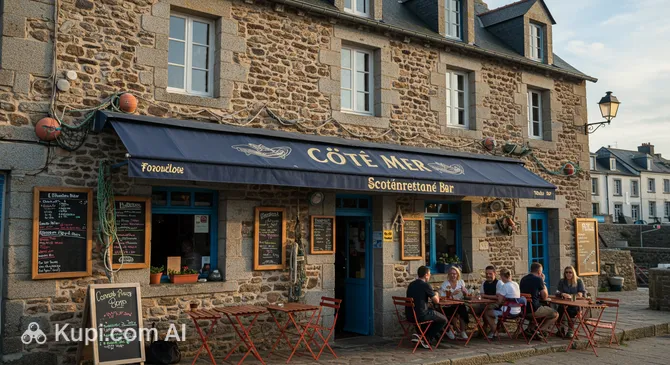
One of the popular spots for evening gatherings is the Côté Mer bar. This establishment attracts both locals and tourists with its laid-back atmosphere and a good selection of drinks. You can spend the evening here enjoying the harbor view or a lively chat with friends. Many bars also offer light snacks.

Côté Mer. Illustration.
Source: Kupi.com AI

Traveler photos:

For those who prefer to start the evening with dinner in a cozy place, Concarneau offers excellent restaurants that can also become part of your night program. For example, the restaurant Le P'tit Resto is a wonderful choice for tasting Breton cuisine in a warm atmosphere before continuing the evening in one of the local bars or simply taking a stroll through the night city.

The crowd in Concarneau's evening venues is diverse: from locals enjoying a chat after a work day to tourists exploring the city. The style of most establishments is casual, so no special dress code is usually required. Bars generally come to life towards the evening, especially after 8:00 PM - 9:00 PM, and stay open until late at night, particularly during the tourist season and on weekends. Some restaurants are also open late, offering guests the chance to enjoy a leisurely dinner.

When planning your evening, keep in mind that the best time to visit bars is after 9:00 PM, when the atmosphere becomes more lively. Restaurants usually take dinner orders until 10:00 PM. Prices in the establishments vary but generally remain moderate for a resort town. Moving around the city center in the evening is convenient on foot, as the main points of attraction are located close to each other.

Concarneau is considered a safe city for evening walks, especially in the tourist areas around the port and the Ville Close. Nevertheless, it is always worth following standard precautions. If you need a taxi, it can be ordered by phone through local services or you can ask the staff at your hotel or restaurant to call one. Public transport is rare at night, so a taxi or walking are the main options.

During the day, Concarneau also offers many interesting activities. You can explore the famous Walled City of Concarneau, visit the impressive Château de Keriolet, or learn more about the region's maritime history at the Fishing Museum. These attractions will perfectly complement your impressions of the city before you dive into its evening life.

Parks & Museums

Concarneau, a charming port city in Brittany, offers its guests not only picturesque maritime landscapes but also a rich cultural heritage. Here you can enjoy walks in green areas and immerse yourself in the history of the region by visiting interesting museums and historical monuments.

Although Concarneau is primarily famous for its seafront, nature lovers will find corners for relaxation here. Beautiful beaches stretch along the coast, such as Sables Blancs Beach (Plage des Sables Blancs), ideal for sunbathing and refreshing sea dips. Walks along the coastal paths offer breathtaking views of the ocean and allow you to enjoy the fresh sea air. It is also worth paying attention to the well-kept gardens surrounding some historical estates, such as Château de Keriolet, where you can spend pleasant time surrounded by greenery.

Keriolet Castle. Illustration.
Source: Kupi.com AI

Traveler photos:

The cultural life of Concarneau is closely linked to its maritime history. One of the key places to get acquainted with this topic is the Fishing Museum (Musée de la Pêche). Located in the heart of the Walled City, it tells in detail about the traditions and evolution of the fishing industry in the region, showcasing ship models, fishing gear, and items of fishermen's daily life. It is an excellent place to understand the vital role the sea has played and continues to play in the city's life.

Fishing Museum. Illustration.
Source: Kupi.com AI

Traveler photos:

For broader information about the region and its attractions, it is worth visiting the Concarneau - Pont-Aven Tourist Office. While it is primarily an information center, it often offers exhibitions dedicated to local culture and art and can serve as a starting point for discovering the works of artists inspired by the beauty of Pont-Aven and its surroundings.

Tourist Office of Concarneau to Pont-Aven. Illustration.
Source: Kupi.com AI

Traveler photos:

The main gem of Concarneau is undoubtedly the Walled City (Ville Close) – the historical center located on an island and surrounded by massive granite walls. A walk through its narrow streets, past ancient houses and souvenir shops, transports visitors to the Middle Ages. This place literally breathes history and is a must-visit.

Walled Town of Concarneau. Illustration.
Source: Kupi.com AI

Traveler photos:

Not far from the city is the majestic Château de Keriolet, built in the Neo-Gothic style. This castle with a rich history, which once belonged to the Russian Princess Zenaide Yusupova, impresses with its architecture and interiors. A visit to the castle will allow you to learn more about its famous owners and admire its lush decoration.

To feel the authentic atmosphere of Concarneau, turn off the main tourist routes inside the Ville Close and explore its quieter alleys. Also, do not miss the opportunity to take a ride on the small Bac du Passage ferry, which connects the Walled City with the other part of the city – it is not only a convenient way to get around but also an opportunity to see the fortress from the water.

Getting Around

Getting around Concarneau is quite convenient, especially if you plan to explore its historical center and coastal areas. Public transport in the city is represented mainly by buses, as well as a unique local means of transport – a small ferry.

The main form of public transport in Concarneau and its surroundings is the Coralie bus network. Buses connect various parts of the city as well as nearby settlements. This is a good option for reaching more distant beaches or areas outside the immediate center. Routes and schedules can be checked at stops, at the tourist office, or on the official Coralie network website.

One of the highlights of Concarneau's transport system is a small passenger ferry known as the "Bac du Passage". It runs across the harbor, connecting the modern part of the city with the famous Ville Close (Walled City) located on an island. It is not only a fast and convenient way to get to the historical fortress but also a pleasant short sea trip with picturesque views in its own right.

The fare payment system is quite simple. Tickets for Coralie buses can usually be purchased directly from the driver upon boarding. Multi-trip passes (carnets) or day tickets may also be available, which are more economical for frequent travel. For the "Bac" ferry, tickets are generally bought before boarding at a special ticket office or machine on the pier. Ticket prices are quite affordable, but it is recommended to check the current cost on-site.

Tourists should take note of several practical points. Bus and ferry schedules may change depending on the season (summer and winter schedules) and the days of the week (there may be fewer trips on weekends and holidays). Bus tickets usually need to be validated upon entry. During the tourist season, transport can be more crowded, especially the ferry to the Ville Close.

Besides public transport, there are other ways to get around Concarneau. The historical center and waterfronts are perfect for walking – this is the best way to enjoy the city's atmosphere. Bicycles are also popular and can be rented at several rental points; this is an excellent option for exploring the coast. For longer trips or for convenience, you can use taxi services, whose stands are usually located at key points in the city, or consider renting a car if you plan to travel actively around the Brittany region.

Accommodation

In Concarneau, tourists will find various accommodation options to suit different preferences and budgets. The city offers a wide choice from cozy guesthouses and apartments to comfortable hotels.

For those who want to be in the center of the action, the best choice would be the areas adjacent to Concarneau's Walled City (Ville Close) or along the waterfront. Many cafes, restaurants, and shops are concentrated here, and there is also a beautiful view of the harbor. Staying in this part of the city will allow easy access to the main attractions, such as the Fishing Museum.

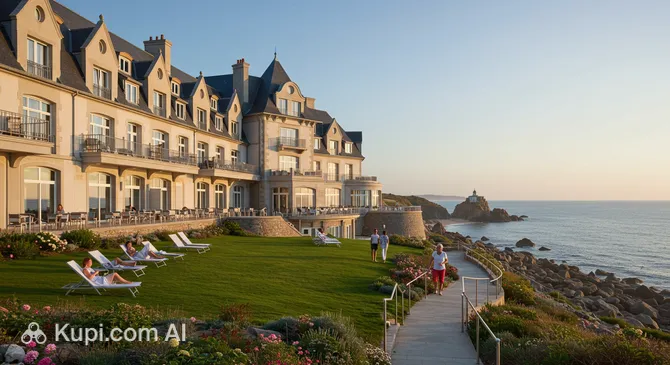
Among the well-known accommodation options is the Thalasso Concarneau Spa Marina Resort, offering wellness treatments and comfortable stays. In general, you can find both budget options and mid-to-high-class hotels in Concarneau. Prices vary depending on the season, comfort level, and location.

Thalasso Resort & Spa Concarneau. Illustration.
Source: Kupi.com AI

Traveler photos:

When planning a trip, especially during the peak tourist season (summer months), it is recommended to book accommodation in advance. This will allow you to choose the most suitable option at the best price. Booking is easily done through popular online platforms or directly on hotel websites. Some small guesthouses may also take bookings by phone.

Nearby Cities

For those who want to explore the surroundings, Concarneau serves as an excellent starting point for day trips to several interesting nearby places. For example, you can visit Quimper, a charming city with a rich history, known for its medieval center and the majestic Saint-Corentin Cathedral. Nearby is Lorient, a city with strong maritime traditions and a busy port, which is also famous for its annual Inter-Celtic Festival. And for lovers of coastal beauty and peaceful relaxation, Ploemeur is a great choice, attracting visitors with its picturesque beaches, opportunities for water sports, and coastal walks.

CityPopulationDistance
Fouesnant9 8647 km
Quimper63 28319 km
Quimperlé12 22028 km
Guidel11 76734 km
Queven8 77039 km

These nearby destinations allow for a deeper acquaintance with the diverse culture, history, and picturesque landscapes of Brittany, a region of France known for its unique heritage.

Shopping & Souvenirs

Shopping in Concarneau is a pleasant addition to exploring this charming Breton port city. You won't find huge shopping malls here, but you can enjoy shopping in small authentic stores, souvenir shops, and local markets where handmade items and famous Breton delicacies are sold.

The main place for shopping, especially if you are looking for souvenirs and local goods, is the famous Walled City of Concarneau (Ville Close). Inside its ancient walls are numerous shops offering Breton ceramics, textiles (including the famous "marinière" striped shirts), maritime souvenirs, artistic items, and, of course, local gastronomic specialties. It is also worth walking along the waterfront and the adjacent streets in the "modern" part of the city, where you can find clothing, shoe, and home goods stores.

Walled Town of Concarneau. Illustration.
Source: Kupi.com AI

Traveler photos:

There are no large modern shopping centers in Concarneau itself. Shopping here is more intimate, with an emphasis on small boutiques, craft shops, and specialized stores. For a wider selection of chain stores, you can head to nearby large cities like Quimper.

Be sure to visit the local market, which is usually located in the city center and on the waterfront. Here you can buy the freshest seafood, local cheeses, sausages, fruits, vegetables, as well as Breton sweets like the famous crepes and galettes. The market operates on certain days of the week, most often in the morning (usually Friday and Monday morning in the Ville Close, but it is better to check the schedule locally, for example, at the Concarneau - Pont-Aven Tourist Office).

Items worth bringing back from Concarneau include traditional Breton souvenirs: striped marinières, ceramic cider bowls (bolées), items with Celtic patterns, canned sardines and other fish delicacies, salted caramel, and Breton cookies (palets bretons, galettes). Interesting themed souvenirs can also be found in the shop at the Fishing Museum.

Fishing Museum. Illustration.
Source: Kupi.com AI

Traveler photos:

Shops in Concarneau are usually open from 9:00-10:00 AM to 7:00 PM, and many may close for a lunch break (roughly from 12:30 PM to 2:30 PM). During the tourist season, some shops, especially in the Walled City, may also work on Sundays. Both cash and bank cards (Visa, Mastercard) are accepted for payment. In small shops and at markets, it is preferable to have cash with you.

For tourists from countries outside the European Union, there is a possibility of a value-added tax refund (Tax Free) when making purchases over a certain amount in one store (usually over 100 euros). To process Tax Free, you must ask the seller for a special receipt and present it along with the purchases and passport at customs when leaving the EU.

Reached the end of the page?

That means the route is fully explored