Support

Ile d'Yeu

About

Île d'Yeu is a true gem of the Atlantic, located just 17–20 kilometers off the coast of Vendée. This picturesque island, covering 23 square kilometers, offers travelers a unique opportunity to escape the hustle and bustle of big cities. If your goal is to experience authentic France with its relaxed atmosphere and incredible natural beauty, this place is the perfect choice for your vacation.

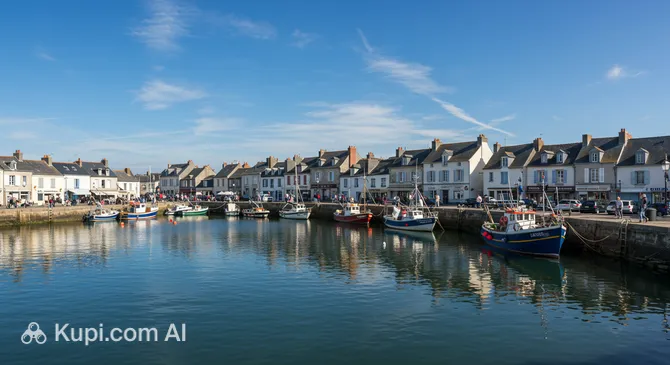
The island's landscape is surprisingly diverse and photogenic: wild rocky shores where waves crash harmoniously coexist with golden sandy beaches, while cozy coniferous forests and groves hide behind coastal dunes. The town's special charm is enhanced by traditional white houses with tiled roofs and bright shutters, tucked away on narrow streets overflowing with flowers.

Ile d'Yeu. Illustration.
Source: Kupi.com AI

Despite its compact size and a population of about 4,762 people, life here is full of events and traditions. The rich history of Île d'Yeu can be traced in the appearance of ancient castles and the carefully preserved way of life of the islanders. This destination is ideal for active travelers: you can go on an excursion to historical monuments or explore the island by bicycle, enjoying sea views along specially equipped routes.

Île d'Yeu invites you to slow down the pace of life and immerse yourself in harmony with nature. Come here for the fresh sea air, long walks along scenic trails, and genuine hospitality that will leave you with the warmest memories of your trip.

Weather Overview

The island's climate is largely determined by the influence of the Atlantic Ocean, which ensures mild weather year-round without sharp temperature fluctuations. Summer here is comfortable and not exhausting: in the warmest months, July and August, the average temperature stays around 19–20°C, occasionally rising to 22°C. This is the best time to visit, as the number of rainy days decreases to a minimum (about 8–9 per month).

The off-season on the island is long and fresh. As early as May, the air warms up to 15°C, and September brings a pleasant 18°C. Winters here are not at all harsh: in January and December, the thermometer rarely drops below 6–7°C, with average figures around 9°C. However, during the winter period, humidity increases and precipitation occurs more often—up to 15 days a month. To ensure your holiday is comfortable, we recommend checking what the forecast weather in Île d'Yeu is for the time of your trip.

Expect moderately warm summers with variable cloudiness and mild but fairly damp winters. Since the island is open to all winds, a light windbreaker will be useful even during the warm season.

Average monthly temperature

Average monthly precipitation

Interesting Facts

In addition to its obvious natural beauty, Île d'Yeu hides many secrets and legends that can surprise even seasoned connoisseurs of the region. Here are a few facts that will help you see this island from a new perspective:

  • Traces of Ancient Times. The history of human settlement on these lands began long before modern maps appeared. Archaeologists have discovered traces of Neolithic sites on the island, indicating that people settled here as early as 5000 BC, leaving behind a rich legacy.

  • Inspiration for Comics. The island has an unexpected connection to pop culture. Legend has it that the rugged appearance of the Old Castle (Vieux Château), built on a rocky headland in the 14th century, inspired the famous artist Hergé to create locations for "The Black Island" in the iconic Adventures of Tintin series.

  • A Mystery of Nature. One of the mystical attractions is the "shaking stones" (La Pierre Tremblante). These are massive boulders weighing several tons that, despite their size, are so amazingly balanced that they can be rocked with just one hand.

  • A Maritime Soul. Île d'Yeu is not just a resort, but a place with living fishing traditions. In local ports, you can see ancient boats that are the pride of entire dynasties, and colorful festivals in honor of the patrons of the sea remain an important part of the islanders' cultural life.

How to Get There

Since Île d'Yeu is an island located in the Atlantic Ocean, the journey here becomes a small adventure, consisting of the trip to the coast and the sea crossing. There are no direct bridges to the mainland, so the main modes of transport for the final leg are ferries or helicopters. You can find all the ways to get to the city and plan your route in detail on the relevant page.

Nevertheless, reaching the departure ports (usually Fromentine or Saint-Gilles-Croix-de-Vie) is easiest by using the major transport hubs of neighboring cities.

The town of Île d'Yeu itself does not have a civilian airport that accepts regular international flights, but you can fly into Nantes Atlantique Airport (IATA: NTE), located in the city of Nantes. This is the most convenient option, as it is located about 75 km from Île d'Yeu (in a straight line). The journey by taxi or rental car from the airport to the ferry crossing now takes less time thanks to improved navigation—plan for about 1 hour 15 minutes.

Another option is to use La Rochelle Airport (IATA: LRH) in the city of La Rochelle. The distance to the island is about 106 km. The road to the coast by car will take approximately 1 hour 45 minutes. This is a small but cozy airport that may be convenient if you are traveling from the south or west of France.

For clarity, here is a summary of the main airports in the region:

AirportPassenger trafficDistance
Nantes Atlantique Airport7.2 mln75 km
La Rochelle294 150106 km
Lann Bihoue Airport6 218143 km
Rennes Airport600 000158 km
Pluguffan Airport18 247197 km

If you prefer ground transport, trains are an excellent choice for reaching the Pays de la Loire region. There is no railway station on Île d'Yeu itself, but you can arrive at Nantes Railway Station in the city of Nantes, which is located about 83 km from the island. Buses and regional trains run regularly from the station to coastal towns where ships depart for the island.

You can also consider Rennes Station in the city of Rennes. It is located further away, about 163 km from Île d'Yeu, but is a major transport hub with good connections. The trip from there to the coast will take more time, so this option is suitable for those who also plan to visit Brittany.

Below is a table of the nearest major railway stations:

StationPassenger trafficDistance
Nantes Railway Station15.5 mln83 km
Angers Saint-Laud Station5.7 mln160 km
Rennes Station15.2 mln163 km
Poitiers Railway Station3.5 mln206 km
Le Mans Railway Station5.4 mln239 km

Main Attractions

Île d'Yeu is a place where history intertwines with wild nature, offering tourists routes full of discovery. The main architectural landmark of the island is undoubtedly the Old Castle (Vieux Château). This 14th-century medieval fortress stands on a rocky headland, surrounded by the turbulent waters of the Atlantic. Its rugged walls and towers seem to have stepped off the pages of knightly romances, and a visit here allows you to feel the power of the ancient fortifications that protected the island from uninvited guests in centuries past.

Another iconic symbol of the island is the picturesque Port de la Meule. This small natural harbor is considered one of the most beautiful on the Atlantic coast of France. Here, tucked into a crevice between the rocks, fishing boats find shelter, while the miniature chapel of Notre-Dame-de-Bonne-Nouvelle stands white atop the hill. People come here for the silence, incredible sunsets, and the atmosphere of seclusion so highly valued by travelers.

For those who want to enjoy panoramic views, the Grand Phare (Great Lighthouse) is a must-visit. Standing about 29 meters tall and located in the heart of the island, it serves as an excellent observation deck. After climbing the spiral staircase, you will be rewarded with a breathtaking view of all of Île d'Yeu, from the green forests to the endless ocean washing against the rocky shores.

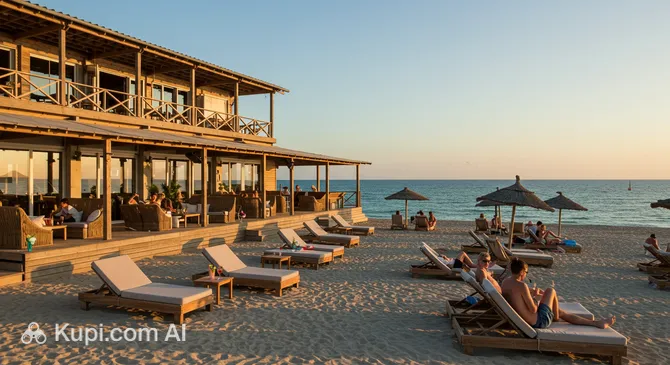
Le 09. Illustration.
Source: Kupi.com AI

Traveler photos:

A journey to the island would be incomplete without immersing yourself in the local atmosphere of relaxation and gastronomy. During breaks between excursions, it is worth visiting Le 09. This establishment attracts guests with its coziness and the chance to unwind after long walks. Here, you can not only have a bite to eat but also feel the rhythm of island life while enjoying quality service and a pleasant setting.

Local Cuisine

The gastronomy of Île d'Yeu is a true feast for seafood lovers. The island's location dictates the menu: it is dominated by the freshest seafood caught by local fishermen in Atlantic waters. Be sure to try the oysters, mussels, scallops, and shrimp, whose taste is particularly intense thanks to the ocean salt.

The local cuisine is famous for simple yet exquisite dishes. Restaurants and taverns will offer you braised cod with aromatic herbs or a thick, spicy fish soup prepared according to ancient recipes. For a quick snack, street food found at markets is perfect: fried squid, marinated sardines, or mini-sandwiches with anchovies.

For dessert, islanders traditionally serve tarte aux pruneaux—a delicate prune tart. This is the main sweet treat of Île d'Yeu, which pairs perfectly with a cup of coffee or tea. As for drinks, it is worth paying attention to homemade ciders and light sparkling wines, which beautifully complement fish dishes.

The food culture here is inextricably linked to the markets. A morning visit to the fish market is not just shopping, but a ritual that allows you to immerse yourself in the island's atmosphere. In summer, gastronomic life bustles at festivals where chefs compete in skill, turning the fresh catch into culinary masterpieces.

Travel Tips

Preparing for a trip to the island of Île d'Yeu requires special attention, as a holiday here differs from typical city tourism. To ensure your acquaintance with this picturesque corner of the Atlantic goes smoothly and leaves only pleasant memories, we have compiled a list of useful recommendations based on local specifics.

  1. Clothing and Gear. The weather on the island is changeable and windy even on sunny days. The main principle for your wardrobe here is layering: be sure to bring a windproof jacket and a light fleece or sweater. Since you will be doing a lot of walking or cycling, comfortable shoes (sneakers, trainers) are critically important; high-heeled shoes will be completely useless here.
  2. Transport on the Island. Île d'Yeu is a realm of cyclists. Renting a bike is the most popular and practical way to see the sights; rental points are located right by the ferry terminal. Bringing your own car is expensive and impractical due to traffic restrictions, but if you don't like to pedal, you can use the local bus network or call a taxi.
  3. Finances and Cash. Although bank cards are accepted in almost all restaurants and supermarkets in Port-Joinville, you will need cash in euros for purchases at morning markets, in small shops, or at remote beach cafes. ATMs are mainly concentrated in the port area, so we recommend withdrawing the necessary amount immediately upon arrival.
  4. Health and First Aid Kit. There are pharmacies and a medical center on the island, but they may operate on a reduced schedule on weekends or during the off-season. Pack a small travel first aid kit with plasters (for blisters after walks) and motion sickness remedies for the sea crossing. Be sure to use sunscreen: due to the constant breeze, it is easy to underestimate the strength of the sun and get burned.
  5. Communication and Connectivity. Mobile service and 4G internet work stably across almost the entire territory. Locals value politeness: even if you don't speak French, start a dialogue with "Bonjour" (Good day) or "Bonsoir" (Good evening). English is understood in many tourist areas, but it may be less common in the heart of the island.
  6. Local Etiquette. Life on the island moves at a slower pace; it is not customary to hurry or rush others. In shops and when boarding the bus, it is common to greet the staff. If you rent a bike, follow the traffic rules and park it only in designated areas so as not to obstruct pedestrians and vehicles.
  7. What to Avoid. It is strictly forbidden to walk on the dunes outside the fenced wooden walkways and paths. The dunes are the island's natural protection against the ocean and a habitat for rare plants; violating this rule risks not only destroying the ecosystem but also a substantial fine.
  8. Planning the Crossing. Ferry tickets, especially for the high-speed catamarans, sell out instantly during high season (July–August). Book your round-trip tickets in advance online several weeks before your trip to guarantee a spot at your preferred time.

By following these simple tips, you can avoid minor organizational difficulties and fully immerse yourself in the atmosphere of peace and natural beauty. May your journey to France and the island of Île d'Yeu be a true adventure, full of bright discoveries and fresh sea air!

Entertainment & Nightlife

Nightlife on Île d'Yeu has its own unique charm, which is fundamentally different from noisy metropolises or the large resorts of the French Riviera. Here, you won't find the neon signs of massive nightclubs or endless parties until dawn. Evening leisure on the island is primarily about coziness, live music, the clinking of glasses on terraces, and heartfelt conversations set to the sound of the ocean. The epicenter of all evening activity is the island's capital, Port-Joinville.

As dusk falls, life centers around the waterfront (Quai de la Mairie and Quai Carnot). This is where the main bars and pubs are located, with doors open late for guests. The traditional evening ritual begins with an aperitif on a terrace overlooking the fishing boats swaying in the harbor. During the high season (July and August), the atmosphere becomes particularly lively: many establishments host concerts by local bands playing everything from sea shanties to rock and jazz.

Le 09. Illustration.
Source: Kupi.com AI

Traveler photos:

If you are looking for a place to have a delicious dinner and then transition smoothly to evening drinks, check out Le 09. This spot is popular with both locals and tourists due to its friendly atmosphere and convenient location. Here, you can experience the true spirit of the island while enjoying a glass of wine or a cocktail in a relaxed setting.

Atmosphere and Dress Code. The style of nightlife on Île d'Yeu can be described as "relaxed." Floor-length evening gowns or high heels are completely out of place here—the port's cobblestones and the overall casual environment dictate their own rules. Comfortable shoes, jeans, light dresses, and a warm sweater or windbreaker (evenings by the ocean can be chilly) are the ideal choices. The crowd here is diverse: from old "sea dogs" to Parisian youth visiting for the holidays.

Practical Tips and Safety:

  • Transport. This is the most important point. There are no night buses on the island. If you live far from Port-Joinville, plan your return in advance. Taxis exist on the island, but there are few cars, and they must be booked ahead of time. Many tourists get around by bicycle, but in this case, be sure to check that your lights work and wear a reflective vest—roads outside the port are not illuminated.
  • Safety. Île d'Yeu is an exceptionally safe place. You can calmly walk along the Port-Joinville waterfront even late at night. The only real danger is the steep rocky cliffs in the dark, so it's better to limit night walks to the well-lit city streets.
  • Prices. The cost of cocktails and wine is comparable to mainland French resorts: a glass of wine costs an average of 5–8 euros, and cocktails start from 10 euros.

As for daytime and cultural entertainment, it is educational in nature. On a cloudy day or before an evening promenade, it's worth stopping by the Fishing and Sea Rescue Museum to better understand the history of those who have lived on this piece of land for centuries. There is also a small cinema, "Ciné Islais," which shows the latest releases—a great alternative to bars for a quiet evening.

Parks & Museums

Île d'Yeu is one of those rare cases where the boundaries between city, museum, and natural park are practically blurred. The entire island is perceived as a single nature reserve, where cultural heritage is harmoniously integrated into wild landscapes. You won't find massive museum complexes of metropolitan scale here, but the intimate exhibitions and majestic natural areas tell much more about the history of this corner of France than the dry figures of guidebooks.

Natural Areas and Gardens

The main "park" of the island is rightfully considered the Wild Coast (Côte Sauvage). This is a protected natural area on the southern side of the island that strikes visitors with its resemblance to the Celtic landscapes of Ireland. There are no benches or neat flowerbeds here, but there are majestic granite cliffs where Atlantic waves break, and endless heaths covered with heather and wild herbs. Special hiking trails (GR 80) have been laid out for tourists, allowing them to enjoy the views without disturbing the fragile ecosystem.

Another unique natural location is Pointe des Corbeaux, or "Ravens' Point," located on the southeastern tip of the island. This place is notable for its sharp contrast of landscapes: it is here that long sandy beaches with dunes meet the rugged rocky shore. A walk here allows you to see the transition from soft, "resort-like" nature to the wild and untamed element of the ocean. A lighthouse of the same name is also located on the point, adding to the picturesque scenery.

Museums and Cultural Heritage

To understand the soul of the islanders, be sure to visit the Fishing and Sea Rescue Museum (Musée de la Pêche et du Sauvetage en Mer) located in Port-Joinville. The exhibition is housed in the historical "Sailor's Shelter" (Abri du Marin) building. Here, a touching and detailed collection dedicated to the main craft of the local residents has been assembled. You will see models of traditional ships, ancient navigation instruments, and learn about the heroism of rescuers who went out into stormy seas. This place allows you to feel the respect for the sea that permeates all life on the island.

Although the Grand Phare (Great Lighthouse) is often perceived as a viewing platform, its lower levels and the grounds themselves function as a museum site. Built in the mid-20th century to replace a predecessor destroyed during the war, it tells the story of navigation in this dangerous region. Information panels and the architecture of the structure itself immerse visitors in the technical history of lighthouse keeping, and the climb to the top is the highlight of the tour.

A key historical monument serving as an open-air museum is the Old Castle (Vieux Château). This is not just ruins, but a magnificently preserved example of medieval military architecture. A tour of the castle allows you to walk along the fortress walls, look into the inner courtyard, and imagine how the garrison defended the island from pirates and English invaders. The atmosphere here is so authentic that it feels as if time stopped several centuries ago.

Insider Tip

If you want to see something truly unusual, find the Dolmen de la Planche-à-Puare in the heart of the island. This megalithic monument stands right in a field and is not enclosed by fences. Visiting this place at sunset, when the ancient stones are painted in golden tones, gives a mystical sense of touching eternity that is unavailable in ordinary museums.

Getting Around

The transport system of Île d'Yeu has its own unique character, determined by its island status and compact size. You won't find a metro, trams, or trolleybuses here. All public transport consists of a bus network, which is harmoniously complemented by a well-developed culture of bike rentals and taxis. The absence of complex urban infrastructure makes getting around the island straightforward and relaxed.

The main form of public transport is the municipal buses, known as ID-BUS. This network connects the island's capital, Port-Joinville, with key settlements (Saint-Sauveur, La Meule) and popular beaches. The buses are modern, comfortable, and run on a regular schedule. However, it is important to consider seasonality: during the summer period (from April to September), trips are frequent and cover almost all corners of the island, whereas in winter, the number of routes and frequency of service are significantly reduced.

The fare payment system is extremely simple and affordable. The cost of a single ticket is usually around 2 euros, and day or week passes are also available, which is beneficial for active tourists. Tickets can be purchased directly from the driver upon boarding (it's better to have cash, though terminals are becoming more common) or at the tourist office in the port. Tickets do not need to be validated; simply showing them to the driver is enough.

For those who prefer independence, the true "king" of transport on Île d'Yeu is the bicycle. This is the most popular alternative to buses. Rental points are located literally at every step near the ferry terminal. Both classic city bikes and electric models are available for rent, the latter being especially useful when riding against the wind. The island is crisscrossed with a network of cycle paths, allowing you to reach the most secluded bays where the bus does not go.

If you are traveling with heavy luggage or want more comfort, you can use taxi services or private transfers. There are not many on the island, so in high season and in the evenings, it is highly recommended to book a car in advance by phone. Familiar ride-hailing apps (like Uber) practically do not work here or have extremely low availability.

Renting unusual transport is also popular: electric cars, scooters, or vintage vehicles (such as the Citroën Méhari), which fit perfectly into the atmosphere of a retro resort. For a general introduction to the island, there is a "tourist train" (Petit Train) that takes you past the main attractions with an audio guide, making it a great option for families with children or elderly travelers.

Accommodation

Accommodation options on Île d'Yeu are characterized by their special charm and intimacy. Here, you won't find the faceless high-rise buildings of international hotel chains or massive resort complexes. The housing stock primarily consists of cozy family-run hotels, colorful guest houses (chambres d'hôtes), and a wide selection of apartments and villas for rent. For fans of budget travel and closeness to nature, there are well-equipped campsites located in scenic wooded areas near the sea.

When choosing a place to stay, it is important to consider the island's geography. The most convenient and strategically advantageous area is Port-Joinville. By staying here, you will be within walking distance of the ferry terminal, supermarkets, bike rentals, and most restaurants. This is an ideal option for those who do not plan to rent transport immediately upon arrival. If you are looking for seclusion and the atmosphere of old France, look into Saint-Sauveur—the island's historical center with white houses and quiet streets. For those dreaming of waking up to the sound of waves away from civilization, accommodation options in the Port de la Meule area or the secluded bays of the Wild Coast are suitable.

Booking Tip: The island has limited capacity, and its popularity among locals is very high. During the peak season (July and August), finding available accommodation upon arrival is almost impossible. It is highly recommended to book your stay in advance—ideally 4–6 months before your planned trip, especially if you are interested in apartments with a view or specific dates.

The price range on the island varies from affordable to high, depending on the season and type of housing. Campsites offer the most budget-friendly prices, while private villa rentals and boutique hotels fall into the upper-middle and luxury categories. You can book accommodation through major international online platforms; however, many unique options (especially private "gîtes") are only available through direct booking via local real estate agencies or the tourist office website.

Nearby Cities

For those who wish to diversify their island holiday, Île d'Yeu serves as an excellent starting point for trips to the mainland. Regular ferry services make it easy to reach the Vendée coast and visit interesting cities in the Pays de la Loire region, each with its own unique character.

Special attention should be given to Saint-Nazaire. This port city is known for its industrial power and history. Here, you can see the impressive cable-stayed bridge over the Loire, visit a submarine base from World War II, and the unique ocean liner museum, Escal'Atlantic. This place is ideal for those interested in engineering and maritime giants.

History buffs and fans of unusual architecture should head to the city of La Roche-sur-Yon. Founded by Napoleon, it has preserved a strict neoclassical layout. The city's main modern attraction is the "Mechanical Animals" in Place Napoléon—interactive sculptures that visitors can control themselves, delighting both children and adults.

If you are looking for something closer to the coast, visit Challans. This town is located just 39 km away (in a straight line and including the crossing) and is famous for its gastronomic traditions, particularly its renowned duck. Challans is the heart of local farming with colorful markets where you can experience the true taste of provincial France.

Below is information about the nearest cities that can be included in your travel itinerary:

CityPopulationDistance
Saint Jean de Monts8 69624 km
Saint-Hilaire-de-Riez11 29731 km
Challans21 32239 km
Olonne-sur-Mer15 06148 km
Pornic15 85949 km

These nearby destinations provide insight into the diverse culture and landscapes of the region, harmoniously complementing a relaxed stay on the island with new and vivid impressions.

Shopping & Souvenirs

Shopping

Shopping on the island of Île d'Yeu has its own unique flavor, far removed from the bustle of large shopping centers and glossy mainland boutiques. Here, the process of buying things is more of a pleasant addition to walks, an opportunity to chat with locals and find unique items that hold the warmth of craftsmen's hands. The range of shops is oriented towards authenticity: instead of mass-market brands, you will find shops with maritime delicacies, craft workshops, and cozy boutiques with nautical-style clothing.

The heart of the island's commercial life is its capital, Port-Joinville. It is here, along the waterfront and the adjacent narrow streets, that most of the commercial activity is concentrated. Take a stroll down Rue de la République and the alleys around the port, where shop doors are often flung wide open, inviting you to peek inside. A second, quieter center of attraction is the town of Saint-Sauveur, where you can also find interesting shops, though the selection is much more modest.

There are no large shopping centers or malls in the usual sense on Île d'Yeu, which is to be expected for a small island. For purchasing groceries, beach gear, and essential goods, there are chain supermarkets (such as Super U and Casino) located in Port-Joinville. They provide residents and tourists with everything they need, but for something exclusive, you should head to the small private shops.

The true soul of the island is revealed in its markets. The main market in Port-Joinville (Marché de Port-Joinville) on Place de la Pylaie is a must-visit for any tourist. In the summer season, it operates daily in the mornings, turning into a noisy and colorful festival of tastes and smells. Here you can buy the freshest fish and seafood, just unloaded from the boats, farm vegetables, cheeses, and flowers. Seasonal craft fairs are also held on the island, where handmade jewelry, paintings, and souvenirs are sold.

When choosing what to bring back as a memento or gift, look for gastronomic souvenirs. A hallmark of the island is locally produced canned fish: tuna rillettes, sardines in oil, or thick fish soup. For those with a sweet tooth, it's worth buying the famous tarte aux pruneaux (prune tart) at one of the local bakeries—it travels well. Also popular are bags of Atlantic salt (fleur de sel) and high-quality clothing: striped shirts, wool sweaters, and waterproof jackets that will serve you for many years.

When planning your shopping, take the island's rhythm of life into account. Most small shops close for a lunch break (siesta), which can last from 12:30 to 15:00 or even 16:00. Many shops are also closed on Sunday afternoons. Bank cards are accepted almost everywhere; however, for purchases at the market or in very small kiosks, it's always better to have some cash in Euros with you.

The Tax Free system (VAT refund) in France is available to tourists permanently residing outside the European Union for a single purchase exceeding 100 euros. However, on Île d'Yeu, not all shops provide this service due to their small size and specific nature. If you are planning a large purchase (for example, jewelry or expensive clothing), you should check in advance with the seller about the possibility of issuing a tax refund form.
Reached the end of the page?

That means the route is fully explored