Support

Tour de Vésone

About

The majestic Vesone Tower is a silent witness to the ancient past, located in the heart of the city of Périgueux. The structure is the preserved cella (inner chamber) of an ancient Roman temple that was once one of the largest in France. This circular stone building, about 24 meters high, impresses with its monumentality and a state of preservation that is unusual for Gallo-Roman architecture.
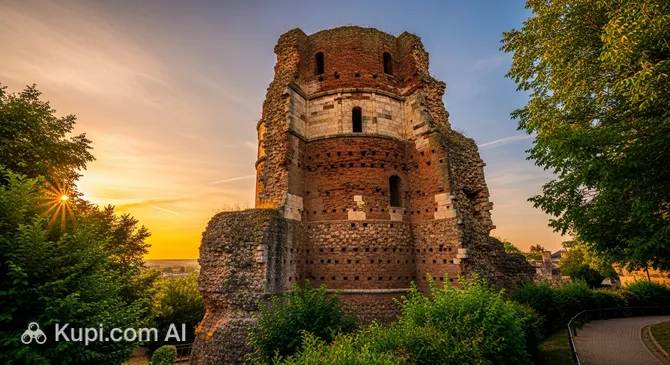
Vésone Tower
Vésone Tower. Иллюстрация. Источник: Kupi.com AI

Today, the tower is the central feature of the public garden Jardin de Vésone. Dedicated to the goddess Vesunna, it served as a sacred place where only priests had access in ancient times. A massive breach on the eastern side reveals the inner structure of the walls, which reach a thickness of two meters, allowing visitors to appreciate the skill of the ancient builders.

Thanks to its location just 50 meters from the modern archaeological museum, the tower has become an important part of the historical reserve. It is not just ruins, but a unique monument where Celtic roots and Roman influence intertwine, creating the singular character of the ancient city of Vesunna.

Contacts

You can contact the site administration or clarify visiting details through the city's official tourism portals. The tower is managed by the municipality, so for group tours, you should contact the tourist office.

How to contactContact
Address3 Rue Claude Bernard, 24000 Périgueux, Франция
Websitewww.guide-du-perigord.com

What to Do

The main reason travelers come here is for the chance to see authentic Roman masonry up close. You can walk all the way around the tower, examining the massive walls and the huge breach that has become a kind of symbol of time. Study the information stands in the garden carefully: they will help you visualize what the entire temple complex with its colonnades and porticos looked like nearly two thousand years ago.

Be sure to combine your inspection of the tower with a visit to the Vesunna Museum, housed under a striking glass dome. There you will see the foundations of ancient villas, luxurious mosaics, and everyday objects that will complete your insight into life in Roman Périgueux. After an intellectual break, it’s pleasant to simply stroll along the paths of the Jardin de Vésone or have a small picnic on the grass overlooking the ancient giant.

Photographers should linger here longer to catch the play of light on the ancient stones, especially during the pre-sunset hours. Also within walking distance are the ruins of a Roman amphitheater, transformed into a shady park where you can continue your immersion into the history of Aquitaine while relaxing away from the city bustle.

Getting There

Getting to this ancient monument in Périgueux is quite simple. If you are in the historic center, for example, near the Saint-Front Cathedral, the walk south will take about 15–20 minutes. The path leads through picturesque old quarters, gradually bringing you to the green expanse of the Vésone garden.

For those who prefer public transport, bus routes heading to the Vésone or Puy St-Front stops are suitable, from where the tower is just a couple of hundred meters away. If you arrive at the Périgueux railway station, you can take a taxi (the ride takes about 10 minutes) or walk, following signs for the Vesunna Museum.

Travelers by car can park on nearby streets such as Rue de Vésone or Rue Claude Bernard. For precise navigation, it is convenient to use the coordinates: 45.1794169° N, 0.7144104° E. The tower is located in an open park area, making it easily accessible for pedestrians from all sides.

Ближайший город: Périgueux

History & Facts

Erected in the 1st and 2nd centuries AD, the Vesone Tower served as the central part (cella) of a grand Gallo-Roman temple. It was dedicated to the goddess Vesunna, the patroness of the city and the Petrocorii tribe. This structure is unique because it combines the traditions of Celtic fanums with classical Roman architecture, being one of the largest sanctuaries of this type in all of Gaul.

There is an old legend associated with the huge breach in the eastern wall of the tower. Tradition says that Saint Front, after driving demons out of the pagan temple with his staff, caused the wall to collapse. However, the historical reality is more prosaic: in the Middle Ages, stones from the tower's entrance were gradually removed to build other structures, which eventually led to a loss of stability and the collapse of the upper part of the construction.

Archaeological interest in the site awakened in the 18th century, but serious excavations only began in the 1820s under the leadership of Count de Taillefer. It was then that traces of the peristyle and surrounding walls were discovered, confirming the scale of the temple complex. Unfortunately, the construction of the railway in 1860 forever destroyed part of the ancient enclosure, separating the temple from some associated buildings.

Since 1846, the tower has been officially recognized as a historical monument of France. Today, this majestic skeleton of antiquity stands on the edge of a modern park, a reminder of the times when the city of Vesunna was a prosperous center of Roman Aquitaine. Its proximity to the railway creates a striking visual contrast between ancient heritage and the industrial era.

Time Needed

For a quick overview of the tower itself and a walk through the surrounding garden, you will need about 30–45 minutes. This is enough time to walk around the perimeter of the structure, read the information plaques, and take commemorative photos against the background of the ancient walls.

However, we strongly recommend allocating 1.5–2 hours to visit this area. This will allow you to not only enjoy the atmosphere of the park but also visit the Vesunna Museum, located literally just a few steps away. This comprehensive approach will help you better understand what this area looked like in the era of antiquity and what significance the temple had for the city's inhabitants.

Working Hours

Since the Vesone Tower is located within a public park, access for outdoor viewing is possible daily. The garden is open to visitors from 07:30 to 21:00, allowing you to choose a convenient time for a walk — whether it's early morning or a peaceful evening.

There is no entrance fee for the park, however, it is recommended to check the city's official tourism website before visiting, as the garden's opening hours may change slightly depending on the season or cultural events.

07:30–21:00

Nearby

Exploring the tower's surroundings will allow you to get a complete picture of the region's rich heritage. Périgueux is literally steeped in history: from the ruins of Roman arenas to elegant Renaissance mansions.

A stroll through the nearby streets will reveal many interesting locations within easy walking distance:

NameDistance
VESUNNA Gallo-Roman Museum0.1 km
Square of the Arenas0.4 km
Périgueux Cathedral0.8 km
Le Troquet0.9 km
Hercule Poireau0.9 km
L'Epicurien0.9 km
Périgord Museum of Art and Archaeology1 km

Reached the end of the page?

That means the route is fully explored