Support

Aue-Bad Schlema

About

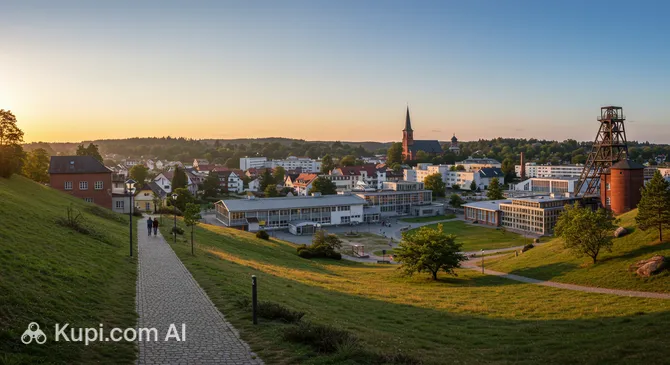
Aue-Bad Schlema is a cozy and picturesque town located in the heart of Saxony, literally nestled in the greenery of the Ore Mountains. This is a place where natural beauty harmoniously intertwines with the steady pace of life that Germany is so famous for. Here, travelers are greeted by pure mountain air, dense forests, and an atmosphere of true European tranquility.

Administratively, the town belongs to the Chemnitz district. Interestingly, it appeared on the map in its current form relatively recently: in 2019, the merger of two independent settlements took place—Aue and the spa resort of Bad Schlema. Despite the administrative youth of the combined municipality, the rich history of Aue-Bad Schlema and its cultural traditions are felt at every step.

Aue-Bad Schlema. Illustration.
Source: Kupi.com AI

The town is ideal for leisurely walks and contemplative relaxation. Its numerous bridges and expressive architecture, including ancient churches and well-kept houses with beautiful facades, give it a special charm. The population is about 16,000 people, which allows for an intimate, almost homely atmosphere, even though Aue-Bad Schlema holds the status of an important regional center.

If you are looking for a place to restore your strength and find inspiration, this Saxon corner is an excellent choice. Walks through picturesque streets, the aroma of fresh pastries in local cafes, and a unique combination of modern comfort with historical heritage will make your trip unforgettable.

Weather Overview

The climate in Aue-Bad Schlema is moderate, typical for the Ore Mountains region, with a mild change of seasons. Summer here is usually comfortable and not hot: in the warmest months, July and August, the average temperature is about 18°C, and during the day the air warms up to 22–23°C. This is the best time for long walks, although you should be prepared for variable cloudiness.

Winters are cool but without severe frosts. In January and December, the temperature stays in the range of -1°C to +3°C. However, it is the winter period that has the highest number of days with precipitation—up to 18 days per month, so waterproof shoes will be a mandatory item in your luggage. Spring comes gradually: by May, the air warms up to a pleasant 16°C. To plan your trip as accurately as possible, we recommend checking what weather in Aue-Bad Schlema is expected during your visit in advance.

Expect a warm summer with occasional rain and cool, damp winters with temperatures around zero.

Average monthly temperature

Average monthly precipitation

Interesting Facts

In addition to the main attractions, Aue-Bad Schlema holds many fascinating features that reveal this Saxon town from a new side.

  • The town has a unique history, arising from the merger of two settlements completely different in spirit. While Aue historically developed as a powerful industrial center, Bad Schlema became famous as a quiet spa resort with mineral springs, where people came from all over Germany to improve their health.

  • It is home to the one-of-a-kind Zoo of Miniature Animals ("Zoo der Minis"). This amazing place features rare dwarf animal breeds, making it incredibly popular for family outings.

  • The true pride of the town is its bridges. They not only connect the banks but also serve as a picturesque reminder of the region's rich engineering history, turning an ordinary walk into an architectural tour.

  • Aue-Bad Schlema is famous for its sporting traditions. The local Sparkassen-Erzgebirgsstadion is an important center of public life, where matches and major events regularly take place, uniting residents and guests of the town.

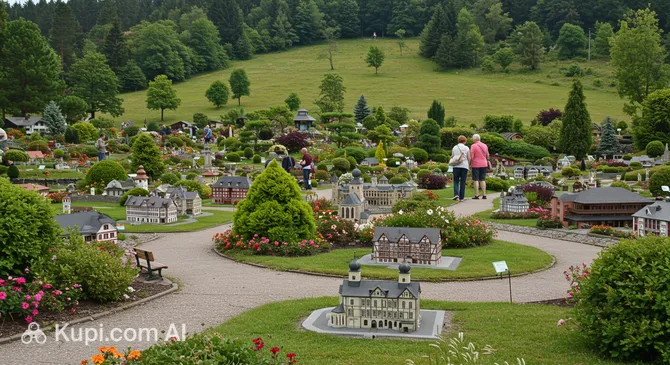
Zoo of Minis. Illustration.
Source: Kupi.com AI

Traveler photos:

How to Get There

When planning a trip to this picturesque corner of Saxony, it is worth thinking through the route in advance. You can find out all the ways to get to the city in our detailed guide, and below we will look at the most popular arrival options via the nearest transport hubs.

Since Aue-Bad Schlema does not have its own airport, tourists usually fly into major neighboring cities. One of the most convenient options is Dresden International Airport (DRS), located in the city of Dresden. It is about 97 km from the resort. The journey by car or taxi takes about 2.5 hours, and public transport may require a transfer.

Another excellent option is Leipzig/Halle Airport (LEJ), which serves the city of Leipzig and is about 99 km away. This is a large transport hub with good connections. Also, many travelers choose Václav Havel Airport Prague (PRG) in neighboring Czechia. Despite being slightly further away (about 123 km), the large selection of international flights makes it an attractive entry point.

For clarity, here is summary information on the main airports:

AirportPassenger trafficDistance
Karlovy Vary Airport37 90045 km
Dresden International Airport929 92897 km
Leipzig/Halle Airport2.2 mln99 km
Vaclav Havel Airport Prague16.4 mln123 km
Erfurt Airport138 002131 km

Railway connection is another popular way to reach the region. In Aue-Bad Schlema itself, there is no major main station for long-distance travel, but you can reach key Saxon stations and transfer to a regional train.

The nearest major hub is Dresden Main Station in Dresden, located about 96 km from the destination. Trains regularly depart from here towards the Ore Mountains. An alternative is Leipzig Main Station (about 99 km), which is considered one of the largest and most beautiful stations in Europe. From these stations, the journey to Aue-Bad Schlema by taxi or rented car will take about 2–2.5 hours, but it is more convenient to use local regional trains.

Below are the nearest major railway stations:

StationPassenger trafficDistance
Dresden Hauptbahnhof21.9 mln97 km
Leipzig Hauptbahnhof43.8 mln99 km
Erfurt Hauptbahnhof16.8 mln125 km
Holesovice Railway Station135 km
Prague Main Railway Station53 mln136 km

Main Attractions

Aue-Bad Schlema offers guests a harmonious combination of wellness relaxation, natural beauty, and unique entertainment. Although the town seems small, there are places here that can surprise even seasoned travelers. A walk through this Saxon resort will give you a sense of comfort and peace.

One of the most famous points of interest, especially for families with children, is the Zoo of Miniature Animals. It is the only place of its kind in the world that specializes exclusively in dwarf and miniature breeds. Here you can see tiny ponies, mini-pigs, pygmy otters, and many other animals that look like scaled-down copies of their relatives. Visiting the zoo provides a wealth of positive emotions and allows you to look at the animal world from an unusual perspective.

Zoo of Minis. Illustration.
Source: Kupi.com AI

Traveler photos:

The heart of the resort part of the town is rightfully considered to be the Kurpark (Spa Park). It is not just a green zone, but a true landscape masterpiece created on the site of former mines. Today, the park is an oasis of silence with fountains, well-kept alleys, and themed gardens. It is pleasant to walk here at any time of year, enjoying the fresh air of the Ore Mountains and watching the play of light on the water of local ponds.

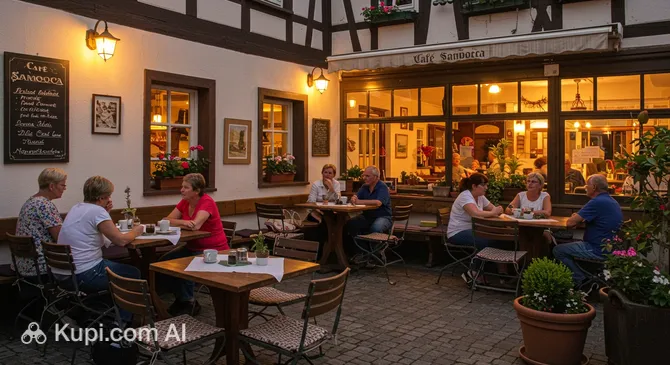
For those who want to take a break and enjoy the atmosphere of the town over a cup of aromatic drink, Cafe Samokka is an excellent choice. This establishment is famous for its coziness and hospitality, offering visitors not only delicious coffee but also local and European cuisine. Both locals and tourists often gather here to discuss the day's impressions in a relaxed setting.

Cafe Samocca. Illustration.
Source: Kupi.com AI

Traveler photos:

One cannot forget the main health center—Badegärten. This thermal complex attracts those who come to Bad Schlema for the healing power of radon waters and relaxation. The architecture of the complex, reminiscent of Roman baths, and the variety of saunas and pools make it an ideal place to recover after long walks in the mountains of Saxony.

Local Cuisine

The local cuisine of Aue-Bad Schlema is a gastronomic mirror of the Ore Mountains: hearty, substantial, and incredibly tasty. Saxon traditions are honored here, so on restaurant menus, you will often find dishes prepared according to old recipes that are perfect for restoring energy after walks in the fresh mountain air. The town's gastro scene harmoniously combines rustic coziness with modern European trends.

The basis of the local table is meat delicacies. Travelers should definitely try the pork knuckle with a crispy crust or the aromatic roast game, which is prepared masterfully in this forested region. Famous potato dumplings and juicy homemade sausages serve as a constant side dish to hot meals. Portions here are typically generous, so no one will go hungry.

For those with a sweet tooth and lovers of cozy gatherings, the region offers excellent fresh pastries, particularly traditional Saxon cakes. It is best to enjoy them with a cup of aromatic coffee. A wonderful place for such a gastronomic break is Cafe Samokka. This establishment is known not only for its delicious food but also for its special atmosphere of friendliness, where you can try both local and pan-European dishes.

Among drinks, freshly brewed beer takes the lead, served in numerous pubs and taverns, such as the town-popular Lotters Wirtschaft. If you prefer street food or want to buy products to go, check out the farmers' markets. There you can find excellent homemade cheeses, fresh vegetables, and seasonal berries, and during city fairs—try traditional German sandwiches right on the street.

Travel Tips

Thorough preparation for your trip to this picturesque corner of Saxony will help you avoid minor troubles and fully focus on wellness and relaxation. We have collected a list of practical recommendations for you that will make your stay in Aue-Bad Schlema as comfortable and carefree as possible.

  1. Clothing and belongings: The weather in the Ore Mountains is changeable, so the best strategy is to dress in layers (the "onion principle"). Even in summer, evenings can be cool, so a windbreaker or a light sweater is a must. Given the hilly terrain of the town and the presence of beautiful parks, bring comfortable flat shoes for walking. If you plan to visit the Badegärten thermal complex, do not forget your swimwear and rubber flip-flops.

  2. Transport: The town is compact enough for walking, especially in the resort area. However, Aue and Bad Schlema are connected by a network of buses and regional trains (the Erzgebirgsbahn line), which run strictly on schedule. Tickets can be bought at vending machines at stations or from the driver. Taxi apps are not as active here as in large cities; it is more reliable to order a car by phone or find a taxi stand near the station.

  3. Finances: The official currency is the Euro. Despite the fact that Germany is a modern country, in small towns like Aue-Bad Schlema, the cult of cash (Bargeld) is still strong. In small cafes, bakeries, or souvenir shops, cards may not be accepted, so always carry small denomination banknotes. It is customary to leave a tip of 5–10% or simply round up the bill.

  4. Health and safety: The town is very quiet and safe; you can walk here without fear even after dark. Pharmacies (Apotheke) are easily recognized by the red letter "A"; a schedule of duty pharmacies working at night is usually posted on the doors. Tap water is drinkable, but in Bad Schlema there are special pump rooms with mineral water—it should only be consumed in accordance with the recommendations of specialists.

  5. Communication: The main language is German. Staff in hotels and major spa centers often speak English, but in ordinary shops or on the street, it can be more difficult to make yourself understood. We recommend downloading an offline translator. Locals will appreciate it if you learn a couple of phrases, for example, "Danke" (thank you) or "Entschuldigung" (excuse me). Wi-Fi is available in most cafes and hotels, but the signal may drop in nature.

  6. Local etiquette: In the Bad Schlema resort area, especially in the Kurpark, it is customary to observe peace and quiet. When entering a shop or restaurant, be sure to greet the staff. An interesting feature of the region: instead of the standard "Guten Tag," the traditional miners' greeting "Glück Auf" is often used—using this phrase will immediately win over the locals.

  7. What to avoid: Do not make noise on Sundays or during quiet hours (Ruhezeit); Germans are very protective of their right to rest. Also, avoid walking on bicycle paths—this is considered a serious violation of the rules and may cause dissatisfaction among cyclists.

  8. Additional tip: Pay attention to the "guest card" (Gästekarte). Since Bad Schlema is a resort, tourists pay a small resort tax, but in return, they receive a card giving the right to free travel on the region's public transport or discounts on visits to museums and concerts. Check this when checking into your hotel.

By following these simple tips, you can easily blend into the steady rhythm of life in Aue-Bad Schlema and get the most out of your trip. We wish you a pleasant stay and unforgettable impressions of getting to know Saxon traditions!

Entertainment & Nightlife

Nightlife in Aue-Bad Schlema has its own unique character, distinct from noisy metropolises. Here you will not find districts with endless rows of nightclubs operating until dawn. Instead, the town offers an atmosphere of comfort, where evening entertainment is focused on conversation, gastronomy, and cultural events. It is an ideal place for those who appreciate a relaxed holiday, live music in an intimate setting, and traditional German hospitality.

The center of evening activity is the Aue district, especially the streets around the historical center and the market square (Altmarkt). It is here that popular local pubs (Kneipe) and bars are located, where you can try Saxon beer and spend time in friendly company. In the resort part of Bad Schlema, evenings are even quieter: it is customary here to stroll along the illuminated alleys of the Spa Park or attend evening sessions in the thermal complexes, which often stay open until late.

For the start of the evening or a pleasant conclusion to a walk, Cafe Samokka is a great fit. Although this establishment is better known as a daytime spot, its cozy atmosphere and regular cultural evenings make it a popular meeting place. A relaxed atmosphere reigns here, suitable for quiet conversation over a cup of coffee or a glass of wine. If you are looking for larger-scale spectacles, pay attention to the program of the Kulturhaus Aue—the town's main concert venue, where performances, theatrical productions, and dance evenings take place regularly.

Practical tips for an evening out:

  • Opening hours: Most bars and restaurants close around midnight, and the kitchen may stop serving as early as 21:00–22:00. Plan your dinner in advance.
  • Dress code: A casual style is accepted in Aue-Bad Schlema. Even in restaurants and at concerts, you will feel comfortable in plain, neat clothes; evening gowns are a rarity here.
  • Safety and transport: The town is considered very safe, and night walks do not cause concern. However, public transport is rare at night. If you stay out late, it is better to have the number of a local taxi service handy, as catching a car on the street can be problematic.

Daytime entertainment in the city is also worth noting and can be an excellent prelude to the evening. Fans of unusual experiences should visit the unique Zoo of Miniature Animals, which features the smallest representatives of fauna from all over the world. Additionally, the town has museums dedicated to the history of uranium mining and spa heritage, and picturesque parks are ideal for active recreation before a quiet evening.

Parks & Museums

Aue-Bad Schlema offers travelers an amazing combination of the natural wealth of the Ore Mountains and a rich cultural life. The city, which united an industrial center and a resort, is proud of its spacious green oases and museums that carefully preserve the memory of crafts, the geological past, and the industrial heritage of the region.

The main natural gem of the city is rightfully considered the Spa Park (Kurpark) in Bad Schlema. This unique space, created during a large-scale land reclamation, is now a picturesque landscape garden covering more than 30 hectares. Here, tourists will find well-kept terraces, cascading fountains, and themed zones such as the Rose Garden. A special feature of the park is the "Planetary Trail," where you can take an educational walk while studying a scale model of the solar system. It is an ideal place for a peaceful rest and restoring peace of mind.

In the Aue part of town, the City Park (Stadtpark), located on the slopes of Heidelsberg Mountain, is worth noting. This is a historical green zone with century-old trees, winding paths, and cozy benches. The park is great for those who want to enjoy the silence and panoramic views of the city's architecture hidden in the Mulde River valley. In spring, it is especially beautiful thanks to the blooming rhododendrons, turning the slopes into a bright sea of flowers.

The cultural program should begin with a visit to the City Museum of Aue (Stadtmuseum Aue), located near the center. The museum's exhibition reveals the city's rich history, paying special attention to two key aspects: the discovery of kaolin, which started the production of the famous Meissen porcelain, and the development of cutlery production. Here you can see rare historical exhibits and learn how a small town turned into an important industrial hub of Saxony.

No less interesting is the Museum of Uranium Mining (Museum Uranbergbau), which tells the story of a complex and large-scale period in the region's history associated with the activities of the "Wismut" enterprise. The exhibitions clearly demonstrate the geological features of the Ore Mountains, mining technologies, and the process of transforming a former mining district into a flourishing resort. This place allows for a deeper understanding of the character and resilience of the local residents.

Among other attractions combining nature and educational leisure, the Zoo of Miniature Animals stands out. Although it is not a classic museum, it is an important cultural and educational site in the city, where you can get acquainted with rare species of fauna in a format convenient for family visits.

Insider tip: If you find yourself in the Spa Park, look for the Carillon (Glockenspiel)—a carillon made of Meissen porcelain. Three times a day, its melodic chime echoes through the park, creating a magical atmosphere. This place is rarely mentioned in brief guidebooks, but it is here that you can feel the true spirit of Saxon elegance.

Getting Around

The public transport system in Aue-Bad Schlema is integrated into the unified transport network of Central Saxony (VMS). This means that travelers do not need to figure out different types of tickets for each mode of transport: a single travel document applies here, allowing for convenient combinations of buses and trains. Since the city is not a metropolis, there is no subway system; however, the railway connection is so well-developed that it completely compensates for its absence.

The main transport hub is the railway station in the Aue district. Regional Erzgebirgsbahn trains arrive here, connecting the town with neighboring settlements in the Ore Mountains. Of particular note is the City-Bahn line (light rail or tram-train), which connects Aue with the major city of Chemnitz. These comfortable low-floor trains run regularly and are ideal for those who want to take a day trip around the region without a car.

To move directly between the Aue and Bad Schlema districts, as well as for trips to attractions, city and regional buses are used. The bus network covers all key points, including the Spa Park and residential quarters. The schedule is followed with German punctuality; however, it is worth considering that on weekends and late evenings, service intervals increase. The current schedule can always be found at stops (yellow or white signs) or in the VMS mobile application.

Fare payment is based on a zonal system. Tickets can be purchased at vending machines at railway stations (accepting cards and cash) or directly from the bus driver (here it is better to have change). It is important to remember: a purchased ticket must be stamped immediately upon entering the transport unless it indicates a specific validity time. For tourists, a day ticket (Tageskarte) is a profitable option, allowing an unlimited number of trips during the day in the selected fare zones.

An important nuance for resort guests: if you stay in hotels or sanatoriums in the Bad Schlema area and pay the resort tax, you are issued a "Guest Card" (Gästekarte). Often this document entitles you to free travel on public transport within a certain zone or on special resort routes. Be sure to check the conditions for using the card at your hotel reception upon check-in, as this can help you save significantly.

As an alternative to public transport, you can use a taxi. Taxi stands are located at the railway station and in the town center, but it is more reliable to order a car by phone, as "catching" one on the street can be difficult. Given the hilly terrain, the rental of electric bicycles (E-Bikes) is popular, allowing you to easily overcome climbs and enjoy picturesque views without excessive physical effort. Car sharing is poorly represented in the city, so for independent trips, it is better to rent a car in major neighboring cities.

Accommodation

The choice of accommodation in Aue-Bad Schlema directly depends on the goals of your trip. Since the town combines a lively regional center and a quiet resort area, accommodation options range from practical city hotels to cozy sanatoriums and spa hotels focused on total relaxation.

If the main goal of your trip is health improvement and outdoor recreation, we highly recommend looking for accommodation in the Bad Schlema area. This part of the town is famous for its quietness and proximity to the Spa Park. Hotels specializing in wellness services are located here: they often offer guests not only accommodation but also direct access to health treatments or special packages for visiting thermal complexes.

For those who plan to actively travel around the Ore Mountains or have come for a business visit, it will be more convenient to stay in the Aue area. This is the historical and transport heart of the city. Staying here provides walking distance to the railway station, main shops, and restaurants. Classic mid-range hotels and small budget guesthouses predominate in Aue, where you can comfortably rest after a busy day.

In addition to hotels, holiday apartments (Ferienwohnungen) are very popular in the region. They are an excellent choice for families with children or tourists who prefer to cook for themselves. Such options are often located in picturesque private houses and allow you to feel like a local resident.

The price range in the town can be described as moderate, which advantageously distinguishes it from the large tourist centers of Saxony. However, it is worth considering seasonality: during the Christmas markets in the Ore Mountains or the peak summer season, the best options are booked quickly. We advise booking your accommodation in advance using popular online aggregators or contacting hotels directly, which sometimes allows you to get a better offer.

Nearby Cities

For those who want to explore the surrounding area, Aue-Bad Schlema serves as an excellent starting point for day trips to several interesting nearby places:

CityPopulationDistance
Schneeberg13 8945 km
Schwarzenberg16 7237 km
Zwonitz11 9939 km
Stollberg11 00015 km
Wilkau-Hasslau9 78416 km

These nearby destinations provide an insight into the diverse culture and landscapes of the region. Here are a few options for a one-day trip:

Zwickau is the nearest major city, often called the "city of cars and Robert Schumann." Just a 20-minute drive from Aue-Bad Schlema, a magnificent historical center and the famous August Horch Museum, dedicated to the history of car manufacturing (this is where the Audi brand originated), await you. Music lovers can visit the house-museum of the great Romantic composer who was born in these parts.

Chemnitz, Saxony's third-largest city, offers a unique combination of industrial heritage and modern art. The city, formerly known as Karl-Marx-Stadt, has preserved the famous monumental bust of Karl Marx. Today, Chemnitz attracts tourists with its museums, such as the Chemnitz Art Collections and the Museum of Industry, as well as its renovated city center with interesting architecture.

Glauchau is worth visiting for its unique palace complex. This is a rare example of a "double castle" (Vorderglauchau and Hinterglauchau), where you can see a combination of Renaissance and Gothic styles and walk through the picturesque castle park. The city is distinguished by its peaceful atmosphere and beautiful views of the Mulde River valley.

Shopping & Souvenirs

Shopping in Aue-Bad Schlema is an opportunity to immerse yourself in the atmosphere of a traditional Saxon province. You won't find massive fashion metropolises with luxury boutiques here; however, the town offers an excellent selection of shops for daily needs and, most importantly, unique regional products. The main shopping life is concentrated in the Aue district, which has historically been the commercial center, while the resort part of Bad Schlema is more focused on souvenir shops and small stores for vacationers.

The main shopping artery of the town is the area around the market square (Altmarkt) and the adjacent Bahnhofstraße in the Aue section. This is a pedestrian zone where it is pleasant to stroll while looking at the shop windows. Shops selling clothes, shoes, bookstores, pharmacies, and cozy bakeries are located here. Unlike the noisy shopping streets of large cities, a calm atmosphere reigns here, and the service is distinguished by the attentiveness and friendliness typical of small towns in the Ore Mountains.

For those who prefer to shop in one place, the modern Simmel-Center shopping mall operates in the city. It is located near the center of Aue and is not just a supermarket, but an entire complex with various shops, cafes, and services. It is a convenient place to buy groceries, household goods, or electronics. The architecture of the center is interestingly integrated into the urban landscape, combining modern elements with the industrial past of the region.

Local markets deserve special attention. The weekly market on the Altmarkt square is where farmers from neighboring villages sell the freshest products: seasonal vegetables, homemade cheeses, honey, and meat delicacies. If your visit falls in December, you will be lucky enough to see a traditional Christmas market. Saxony and the Ore Mountains are famous for their Christmas traditions, and local fairs offer a huge selection of handicrafts and holiday treats.

Speaking of souvenirs, Aue-Bad Schlema is the ideal place to buy the famous Ore Mountains folk art (Erzgebirgische Volkskunst). Be sure to pay attention to:

  • Wooden products: Nutcrackers, incense smokers (Räuchermännchen) in the form of little human figures, and Christmas pyramids. This is the region's calling card, known worldwide.
  • Lace: Traditional textiles and Plauen lace, which is produced in neighboring districts.
  • Local liqueurs: Herbal infusions, such as "Lauterbacher Tropfen," make an excellent gastronomic gift.
  • Minerals: Given the region's mining past, you can often find beautiful specimens of local stones in souvenir shops.

Most shops operate according to the classic German schedule: Monday to Friday from 09:00 to 18:00 (large supermarkets until 20:00), on Saturday the working day is often shortened to 12:00 or 16:00. Sunday is a holiday for all shops, except for some bakeries and kiosks at the station. As for payment, cards (Visa, Mastercard) are accepted without problems in supermarkets and large centers; however, in small souvenir shops, cafes, and at the market, it is strongly recommended to have cash Euros with you, as terminals may be absent.

The Tax Free system (VAT refund) is available for tourists from non-EU countries when purchasing goods for a certain amount in one receipt. However, it should be noted that in a small town, not all shops support this system. Look for the "Global Blue" or "Tax Free" sticker in the window or check the possibility of issuing a tax refund form with the seller before purchasing.
Nearby cities

Reached the end of the page?

That means the route is fully explored