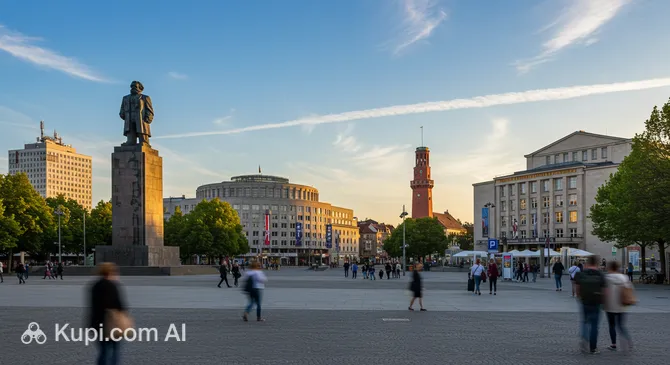
Chemnitz is a dynamic and multifaceted city, comfortably situated in the heart of the Free State of Saxony. Located just 70 kilometers from Dresden and near the Czech border, it serves as an excellent starting point for traveling around the region. Germany reveals an unexpected side here: the city, standing on the banks of the Chemnitz River, harmoniously combines industrial heritage with picturesque hills and extensive green parks.
Chemnitz. Illustration.
Source: Kupi.com AI
With a population of about 248,000, Chemnitz is the third-largest city in the region. It is an important cultural and educational center where the past and future intertwine on every street. The fascinating history of Chemnitz, which was known worldwide in the 20th century as Karl-Marx-Stadt, has left a deep mark on its architectural appearance. Today, historic buildings sit alongside monuments of the modernist era, creating a unique urban landscape.
The city attracts travelers with its well-deserved reputation as the "German Capital of Modernism." Here, you won't find the tiring bustle of huge metropolises, but rather a rich cultural life, many interesting museums, theaters, and art galleries. Chemnitz is worth a visit for its special atmosphere of comfort and dynamics—it is an ideal destination for those who want to discover new, non-obvious facets of German cities and enjoy leisurely walks.
Weather Overview
The climate in the city can be characterized as moderate, without extreme temperature fluctuations. Summer here is usually mild and comfortable: in the warmest months, July and August, the daytime air temperature warms up to an average of +23...+24°C. This is an ideal time for sightseeing and walking in the parks, as sweltering heat is rare.
Winters in Saxony are cool, but generally not harsh. In January and December, the thermometer stays around +1...+3°C, although slight frosts are possible at night. Precipitation falls fairly evenly throughout the year, but its intensity is low. December is often the gloomiest month: statistics show up to 18 days with precipitation, so an umbrella or raincoat will definitely be useful in winter.
Expect a pleasant warm summer and a cool winter with frequent variable cloudiness. To choose the best dates for your trip and prepare for nature's whims, we recommend checking the forecast for the weather in Chemnitz during your visit.
Average monthly temperature
Average monthly precipitation
Interesting Facts
Chemnitz is a city that knows how to surprise even experienced travelers. In addition to well-known landmarks, it hides many curious details and stories that give this Saxon corner a special charm and uniqueness.
Karl Marx Monument. Illustration.
Source: Kupi.com AI
Traveler photos:
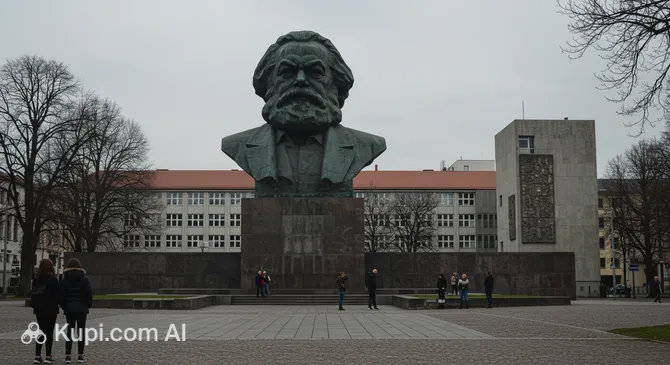
During the Soviet period of GDR history, the city was named Karl-Marx-Stadt, and this legacy is still alive today. A huge bronze head is installed here—the Karl Marx Monument, over 7 meters high, which is the second-largest bust in the world. Locals affectionately and ironically call the giant "Nischel," which means "head" in the Saxon dialect, and consider it the unofficial symbol of the city.
The economic prosperity of Chemnitz began in the 12th century thanks to the unique privilege of bleaching cloth, which turned it into one of the leading textile centers in Europe. You can learn more about this glorious industrial past and see rare exhibits by visiting the Chemnitz Museum of Industry.
The city is closely linked with the names of great creators and is considered a treasure trove of modernist architecture. The famous Belgian architect Henry van de Velde designed the Villa Esche here—a true masterpiece of Art Nouveau. Originally built as a residence for a manufacturer, today it serves as a museum and cultural center.
Contrary to stereotypes about industrial cities, Chemnitz is often called the "Green Heart of Saxony." There are more than 1,000 hectares of parkland here. A particular source of pride is the Chemnitz Botanical Garden, which houses unique collections of plants from all over the world, creating an oasis of quiet in the middle of the city's hustle and bustle.
Legends exist about mysterious underground tunnels beneath the Old Town. It is believed that an extensive network of passages was used in the Middle Ages by monks and merchants to store goods, including beer. Some of these historic tunnels have been preserved and are available today as part of special guided tours.
How to Get There
Chemnitz, located in the heart of Saxony, has excellent transport accessibility, although the city itself does not have its own passenger airport. Travelers will need to choose one of the neighboring large transport hubs and then cover the remaining distance by train, bus, or car. You can find more details on how to get to Chemnitz by exploring various routes and choosing the most convenient option for yourself.
The nearest airport to the city is Dresden International Airport (IATA: DRS). It is not in Chemnitz, but in neighboring Dresden, at a distance of about 68 km. This is a convenient option for those who appreciate short transfers: the journey by taxi or shuttle will take approximately 2 hours. The airport serves many flights and is an important regional hub.
Another popular option is Leipzig/Halle Airport (IATA: LEJ). It is located in the city of Leipzig, about 82 km from Chemnitz. The travel time by car will be about 2.5 hours. It is a modern airport with good passenger traffic, receiving flights from many European cities.
For international travelers, Václav Havel Airport Prague (IATA: PRG) can also be convenient. Despite being in another country (Czech Republic) and another city (Prague), the distance to Chemnitz is about 125 km. The journey will take approximately 3.5 hours, but this airport offers the widest choice of international destinations.
For clarity, here is a summary of the main airports:
Railway connection is another comfortable way to get to the region. Although direct long-distance trains (ICE/IC) do not always go directly to Chemnitz, it is convenient to travel via large transfer hubs in neighboring cities.
One of the key transfer points is Dresden Central Station. It is located in Dresden, about 68 km from Chemnitz. Many high-speed trains arrive here, and from here it is easy to transfer to a regional express to Chemnitz. Another important transport hub is Leipzig Central Station, located 82 km away. It is one of the largest stations in Europe by area, handling a huge flow of passengers and providing excellent connections to Chemnitz.
Below is information on the nearest major railway stations:
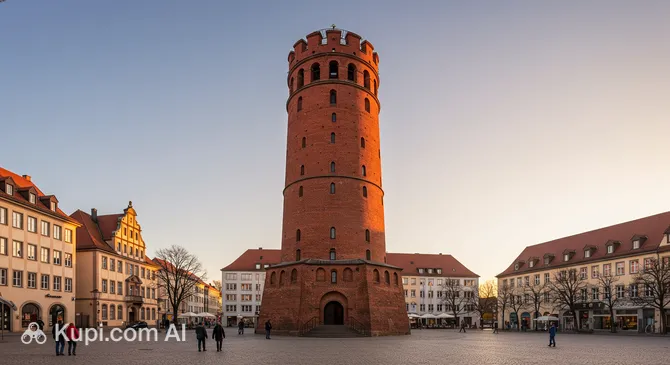
Chemnitz offers tourists a rich itinerary where medieval architecture meets modern cultural spaces. One of the most recognizable historical buildings is the Red Tower. This oldest structure in the city, dating back to the 12th century, was once part of powerful defensive fortifications. The tower got its name from the upper tier, built of bright red brick, which contrasts with the dark stone base. Today, it serves as a symbol of the city's resilience and a popular spot for photos.
Red Tower. Illustration.
Source: Kupi.com AI
Traveler photos:
Art lovers should head to Theater Square, home to the Chemnitz Art Collections. This museum is known far beyond the region for its extensive collection of German Expressionism, including works by local native Karl Schmidt-Rottluff. The majestic museum building also features unique collections of textiles and sculpture, making it a must-visit for all art enthusiasts.
Nearby is another architectural and cultural masterpiece—the State Museum of Archaeology Chemnitz, known as smac. It occupies the former Schocken department store building, built in the style of classical modernism by the famous architect Erich Mendelsohn. Inside, visitors can expect a fascinating journey through millennia: interactive exhibits tell the story of human development in Saxony from the Paleolithic to the present day.
For those who want to combine educational leisure with entertainment, the DASETIETZ Cultural Center is ideal. This modern cultural hub, located in a historic commercial building, houses the city library, the New Saxon Gallery, and the Museum of Natural History under one roof. The highlight of the center is the impressive atrium, where you can see the "Petrified Forest"—a unique collection of fossilized tree trunks that are millions of years old.
Local Cuisine
Local cuisine in Chemnitz is a true gastronomic adventure that will appeal to fans of hearty and warming food. Saxon culinary traditions are famous for their rich flavors and generous portions. A hallmark of the region is Sauerbraten—tender beef that is marinated for several days in vinegar with spices and then slow-stewed. This dish is usually served with potato dumplings and braised red cabbage, creating the perfect combination of flavors for a cool day.
Those with a sweet tooth and fans of unusual breakfasts should look out for Quarkkäulchen. These are appetizing Saxon curd pancakes that are fried until golden brown and sprinkled with sugar and cinnamon or served with apple sauce. Local delicacies such as smoked sausages, fresh homemade bread, and seasonal dishes made from game and wild mushrooms can often be found on the menus of cozy restaurants in the Old Town or at farmers' markets.
Boulderlounge Chemnitz. Illustration.
Source: Kupi.com AI
Traveler photos:
Street food also holds an important place in the city's food culture. Walking through the streets, it's impossible to pass by the stalls with aromatic German sausages—Bratwurst, which are prepared here with special skill. During city festivals and fairs, the range expands: roasted chestnuts, spicy flatbreads with onions, and a variety of sweet pastries appear.
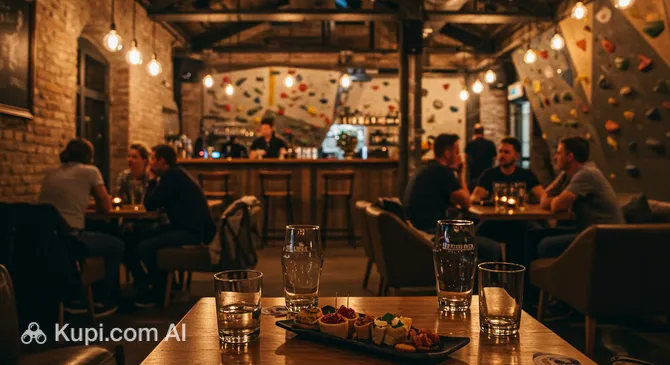
As for drinks, Chemnitz is proud of its Saxon beer, brewed according to old recipes. In addition, local fruit schnapps are popular, perfectly complementing a heavy dinner. The city's gastronomic scene is diverse: there are both traditional taverns and modern establishments, such as Boulderlounge Chemnitz, where you can relax and have a snack in a casual setting.
Travel Tips
Chemnitz is a welcoming and modern city, but as with any trip, a little preparation will make your stay much more comfortable and save you from unnecessary hassle. We have collected a list of useful recommendations for you to help you feel confident in Saxony and enjoy your trip from the very first minutes.
Clothing and essentials. The weather in the region is quite changeable, so the principle of layering is your best friend. Even in summer, it's worth taking a light jacket or jumper for evening walks, and a compact umbrella will be useful in any season. For exploring the historical center, be sure to choose comfortable flat shoes, as cobblestones are frequent, and walking here is very pleasant.
Transport. The CVAG public transport system (trams and buses) works efficiently and covers the whole city. Tickets can be purchased at machines at stops (menus often have an English language option) or via mobile apps. The city center is compact and is best explored on foot. Taxis can be found at ranks or called by phone; popular international taxi apps are not as active here as in metropolises, so it's better to have the number of a local service at hand.
Finances. The currency is the Euro. Although cards are accepted in supermarkets and restaurants, Germany is famous for its commitment to cash. Always have small bills and coins with you to pay in small bakeries, souvenir shops, or street food stalls. Tips (Trinkgeld) are welcome: it is customary to round up the bill amount or leave 5–10% for good service.
Health and safety. Chemnitz is a quiet city, but standard vigilance in crowded places should not be lost. Pharmacies are easily recognized by the red letter "A," and on-call branches work around the clock (the list of on-call pharmacies usually hangs on the door of any closed pharmacy). The emergency services number is 112. Tap water is drinkable; it is of high quality and safe here.
Communication. The official language is German. Young people and hotel staff usually speak English well, but the older generation may not be as fluent. We recommend downloading offline maps and a translator in advance. Locals will really appreciate it if you learn a few courtesy phrases: "Guten Tag" (Good day) and "Danke" (Thank you). Free Wi-Fi is available in many cafes and public areas in the center.
Local etiquette. Germans value punctuality and compliance with rules. When entering a small shop or elevator, it is customary to greet those present. Remember that Sunday is a traditional day of rest (Ruhetag): most shops and pharmacies will be closed, and only catering establishments and emergency services will be working, so plan your shopping for weekdays or Saturday.
What to avoid. Never walk on cycle paths—it's not only annoying for cyclists but can also be dangerous, as cycling is active here. Also strictly obey traffic signals: crossing the street on a red light is considered bad manners and a sign of disrespect for others, even if there are no cars on the horizon.
Local life hack. If you are arranging to meet friends or get lost, use the "Nischel" (the huge Karl Marx monument) as a landmark. It is the city's most famous meeting point, which is impossible to miss, and any passerby will unerringly point you in its direction.
We hope these practical tips help you plan a perfect trip without extra worries. Chemnitz is open to guests and ready to give you many bright impressions, interesting discoveries, and warm memories!
Entertainment & Nightlife
Entertainment and nightlife:
Although Chemnitz is often perceived as an industrial and working-class city, it reveals a completely different side when evening falls. Thanks to the presence of a large Technical University, a lively and democratic nightlife culture has formed here, catering to students and young people. Parties here take place without unnecessary pretension, and the atmosphere in the venues is friendly and relaxed.
The epicenter of evening activity is the Brühl boulevard area and the adjacent streets of the city center. In recent years, this quarter has been actively gentrifying, turning into a trendy space with cafes, bars, and creative studios. It's a great place to start the evening with a cocktail or a glass of local beer. The crowd in the establishments is diverse, and the dress code in most places is non-existent or boils down to simple "casual," so you'll feel comfortable in jeans and comfortable shoes.
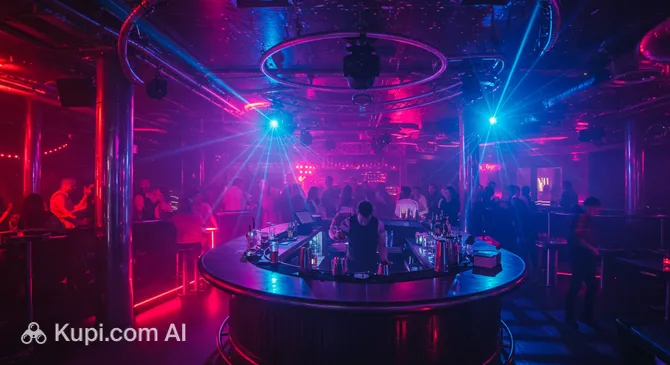
pentagon3. Illustration.
Source: Kupi.com AI
Traveler photos:
Fans of dancing and loud music should check out the city's iconic spots. One of the oldest and most famous clubs is pentagon3. This venue with a long history regularly hosts themed parties, live music concerts, and DJ sets of various genres, from indie rock to electronics. The club is popular among both students and a more mature audience who appreciate high-quality sound and a relaxed atmosphere.
If you prefer a quieter form of relaxation, stop by the Bob Sharkey bar. It's a great place to meet friends where you can not only drink but also grab a bite to eat. For those who get hungry during a night walk, there are establishments in the city with late-night kitchens. For example, the Taste of Asia restaurant offers hearty dishes that will be a great end to a busy day or the start of a long night.
Practical tips and safety:
Opening hours: Bars are usually open until 01:00–02:00, while clubs come alive after 23:00 and operate until morning on Fridays and Saturdays. Life is quieter on weekdays.
Prices: Chemnitz will pleasantly surprise you with the cost of entertainment—entry fees and drink prices here are noticeably lower than in Berlin or Munich.
Transport: Special night bus lines (Nachtbus) run through the city at night, departing from the central stop, Zentralhaltestelle. Taxis are easy to call via apps or by phone; trips around the city are relatively inexpensive.
Safety: The central districts and the university area are considered safe for night walks. However, as in any city, you should avoid unlit outskirts and parks alone at night.
Daytime leisure in Chemnitz is also diverse and suitable for travelers of all ages. Families with children and fans of active recreation will enjoy the Jump 'n Play indoor park, where they can jump on trampolines and complete obstacle courses. And for a quiet outdoor break, the Chemnitz Park Railway is perfect—a unique attraction that lets you ride a miniature train through the picturesque Küchwald park.
Parks & Museums
Chemnitz, often called "Saxon Manchester" due to its rich industrial past, today surprises guests with an abundance of greenery and cultural spaces. The city harmoniously combines industrial monuments converted into modern museums with picturesque landscape parks, creating a unique environment for educational and relaxing leisure.
One of the city's main green arteries is the City Park (Stadtpark), stretching for several kilometers along the Chemnitz River. This is a favorite place for locals for morning jogs, picnics, and leisurely walks in the shade of ancient trees. The park smoothly transitions into natural areas, creating the feeling of a rural getaway right within the city limits. Equally popular is the Küchwald Park (Küchwaldpark)—a true forest area in the center of Chemnitz. An atmosphere of tranquility reigns here, and wide alleys lead to an open-air stage and cozy clearings where city events are often held.
For plant lovers, the Botanical Garden, located in the north of the city, is of particular interest. It is known for its futuristic greenhouses, resembling dunes, where the climate of various natural zones is maintained. Here you can see rare species of cacti, tropical plants, and alpine flora collected from all over the world.
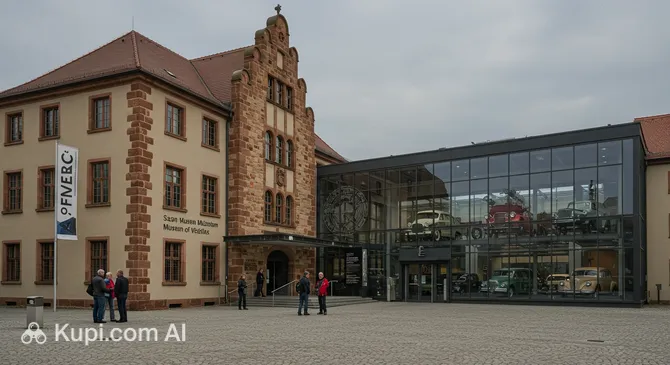
The cultural landscape of Chemnitz is inextricably linked with technical progress. A must-visit for everyone interested in the history of transport is the Saxon Museum of Technology. It is located in the historic "Stern" garage building—one of the first high-rise garage complexes in Germany. The museum's exhibition features hundreds of unique cars, motorcycles, and bicycles, many of which were produced right here in Saxony, demonstrating the engineering genius of the region.
Saxon Museum of Vehicles. Illustration.
Source: Kupi.com AI
Traveler photos:
You can immerse yourself in the era when the city was the textile and machine-building capital at the Museum of Industry. Located in a former foundry, it impresses with its scale: real steam engines, old machine tools, and robots operate here. This is not just an exhibition of mechanisms, but a story about the fates of people and the social history of the region. Architecture and art lovers should dedicate time to Villa Esche—a gem of Art Nouveau designed by Henry van de Velde. The interiors and exhibition of the villa allow you to dive into the atmosphere of sophistication of the early 20th century.
Insider tip: If you want to see an "open-air museum," take a walk in the Kaßberg district. This is one of the largest quarters in Europe built in the style of Art Nouveau and the Wilhelminian era. The facades of the houses here are richly decorated with stucco, and every street preserves the spirit of aristocratic Chemnitz from previous centuries.
Getting Around
Public transport in Chemnitz is characterized by German punctuality and thoughtfulness, making moving around the city easy even for those here for the first time. The main operator is CVAG, and the entire network is integrated into the Central Saxony Transport Association (VMS). There is no classic metro in the city, but its functions are successfully performed by an extensive network of trams and buses covering both the historic center and distant residential areas.
A unique feature of the local transport system is the so-called "Chemnitz Model" (Chemnitzer Modell). This is an innovative system of tram-trains (City-Bahn) that move on tram tracks in the city center and switch to railway tracks outside of it. For tourists, this means the possibility of getting from the central square directly to the picturesque suburbs or neighboring towns without transfers, which is very convenient for day trips.
The heart of the transport network is Zentralhaltestelle (Central Stop). This is where almost all tram and bus routes intersect. It is the main landmark for a traveler: if you are lost or don't know how to get to the desired point, head here—from the Central Stop you can get anywhere. An information center is also located here to help plan your route.
The fare payment system is unified within the VMS tariff zone. All of Chemnitz usually falls into one tariff zone (Zone 13). For tourists, the Day Ticket (Tageskarte) is often the most advantageous option, allowing unlimited travel throughout the day. Single tickets (Einzelfahrt) valid for one hour with the possibility of transfers are also available. If you are planning a group trip, pay attention to group day tickets.
Tickets can be purchased in several ways. The easiest is at the yellow machines installed right inside the trams and at many bus stops. Please note: machines inside transport often accept coins and cards, but not always banknotes. It is also convenient to use mobile apps such as VMS Mobil or DB Navigator, which saves you from searching for change.
Important tip: a paper ticket purchased from a machine or ticket office must be validated immediately upon entering the transport if it does not already have a date and time stamp. Validators are usually orange or blue. A ticket without a stamp is considered invalid, and fines for fare evasion in Germany are quite high.
At night, when the main transport stops running (usually around midnight), special night buses take over. They run on a ring system and meet at the Central Stop at fixed times for convenient passenger transfers. This allows you to return to your hotel safely and inexpensively after a late dinner or party.
As an alternative to public transport, taxi services operate in Chemnitz. A car can be found at special ranks by the station and in the center or called by phone. Popular international taxi apps are used here less frequently than local dispatch services. For those who enjoy active recreation, bike rentals (e.g., the nextbike system) are available, with stations scattered throughout the city, which is especially pleasant given the abundance of parks and green areas.
Accommodation
Where to stay:
Chemnitz offers travelers a wide selection of accommodation options that will pleasantly surprise you with their variety and affordability. Unlike tourist-crowded metropolises, you can find excellent housing here at reasonable prices. The city's hotel stock ranges from functional business hotels of large international chains to cozy family guesthouses and modern apartments, ideal for long-term stays.
For those visiting the city for the first time, the Center (Zentrum) district is the best choice. By staying here, you will be within walking distance of major transport hubs and attractions. Living in the center is also convenient due to the developed infrastructure: numerous cafes, restaurants, and shopping centers, such as the Galerie Roter Turm, are nearby. This is an ideal location for those who want to do everything: see museums during the day and dive into the nightlife in the evening without spending time on long commutes.
If you are looking for a quieter and more atmospheric setting, pay attention to the Kaßberg district. This is one of the city's most prestigious neighborhoods, known for its magnificent Art Nouveau and Wilhelminian style architecture. Hotels and apartments here are often located in historic buildings surrounded by greenery. Staying in this area will allow you to feel the spirit of old Chemnitz and enjoy the peace, while being just a few minutes' drive from the center.
The price range in Chemnitz is generally lower than in neighboring Dresden or Leipzig. Tourists can expect the following categories:
Budget segment: Inexpensive hostels and economy hotels offering clean rooms with basic amenities.
Middle class: Comfortable three- and four-star hotels, often catering to business travelers, with good breakfasts and Wi-Fi.
Apartments: A popular option for families and groups, allowing you to save on meals and feel like a local.
While housing shortages in Chemnitz are rare, we recommend booking a room in advance, especially if your trip coincides with the summer months or during major city festivals. Most accommodation facilities are available on popular online booking platforms, making it easy to compare prices and read reviews before making a decision.
Nearby Cities
For those who want to explore the surroundings, Chemnitz serves as an excellent starting point for day trips to several interesting nearby places. The city's location at the foot of the Ore Mountains makes it easy to combine urban tourism with immersion in the history and nature of Saxony.
Just half an hour's drive away is Zwickau—a city known as the cradle of Saxon automobile manufacturing. The famous composer Robert Schumann was born here, and today tourists can visit his house-museum. The city also attracts fans of engineering with the August Horch Museum, which presents the rich history of the Audi and Trabant brands.
Fans of medieval architecture and geology should head to Freiberg. This ancient "silver city" is famous for its mining past, which brought wealth to Saxony. The historic center with its magnificent cathedral and the world's oldest mining university creates a unique atmosphere of learning and tradition.
For those who want to enjoy mountain landscapes and folk crafts, Annaberg-Buchholz is an ideal destination. This city is considered the capital of the Ore Mountains. It is famous for the majestic St. Anne's Church and unique woodcarving traditions, which are especially vibrant during the Christmas markets.
City
Population
Distance
Floeha
10 762
11 km
Limbach-Oberfrohna
24 029
12 km
Zschopau
9 214
14 km
Hohenstein-Ernstthal
14 607
15 km
Stollberg
11 000
17 km
These nearby destinations provide an insight into the diverse culture and landscapes of the region, making your journey through Saxony even more rewarding and memorable.
Shopping & Souvenirs
Shopping in Chemnitz is a pleasant and untiring activity that allows you to combine walks through the historical center with the search for interesting purchases. The city does not claim to be a fashion capital, but it offers excellent conditions for those who value comfort and variety. Large modern shopping complexes and cozy boutiques harmoniously coexist in Chemnitz, and the compactness of the center allows you to visit the main shops on foot without spending time on long commutes.
The heart of the city's commercial life is the area around the Market Square (Markt) and Innere Klosterstraße. This pedestrian zone attracts tourists with its atmosphere: here you will find shops of famous European brands of clothing, shoes, and accessories, as well as small shops with unique goods. Walking along these streets, you can not only update your wardrobe but also enjoy the architecture of the restored center.
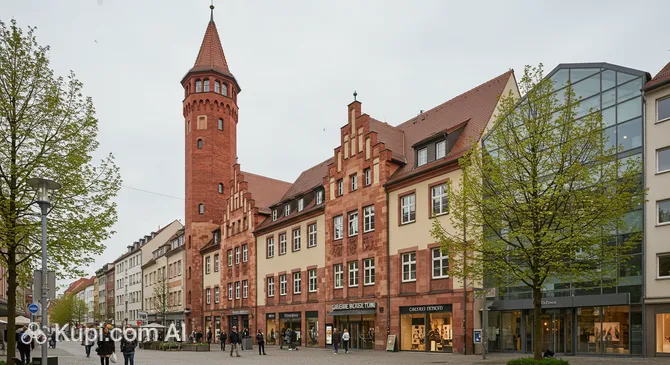
For those who prefer to shop under one roof, Chemnitz offers several impressive shopping centers. The most popular and central is the Galerie Roter Turm. This complex got its name due to its proximity to the city's historical symbol—the ancient Red Tower, which can be seen right at the entrance to the mall. The gallery brings together dozens of shops, a cinema, and a food court, and is a favorite meeting place for city residents. Another large mall, Sachsen-Allee, is located a bit further from the center but is famous for its huge selection of goods and convenient parking, making it an excellent option for large-scale shopping.
Galerie Roter Turm. Illustration.
Source: Kupi.com AI
Traveler photos:
Markets give the city a special character. The main Weekly Market (Wochenmarkt) takes place in the square by the City Hall. Here, local farmers offer the freshest products: Saxon cheeses, meat delicacies, seasonal fruits, and flowers. It is an ideal place to try real street food and feel the city's lively rhythm. In the pre-Christmas period, this square is transformed, becoming home to one of the most beautiful fairs in the Ore Mountains.
When choosing souvenirs, pay attention to folk crafts from the neighboring Ore Mountains (Erzgebirge) region. Wooden nutcrackers, Christmas pyramids, and incense smokers (Räuchermännchen) are true works of art that make wonderful gifts. Also popular are souvenirs featuring the "Nischel"—this is how locals affectionately call the giant Karl Marx Monument. In souvenir shops, you can find everything from miniature busts of the philosopher to T-shirts with ironic prints. Foodies should bring back local mustard or a bottle of Saxon beer.
Shops in Chemnitz usually operate from Monday to Saturday from 10:00 to 20:00. Large shopping centers follow this schedule strictly, while small boutiques may close a bit earlier, around 18:00 or 19:00. It is important to remember that Sunday in Germany is a day of rest, and almost all shops, including grocery supermarkets, are closed. Bank cards are widely accepted for payment, but it is better to have cash euros on hand at markets and in small kiosks.
Tourists residing permanently outside the European Union can use the Tax Free system. When buying goods for an amount over 50 euros in one store, look for the Global Blue logo or ask the seller for a special VAT refund form (Tax Free Form). After completing the documents and presenting your purchases at customs when leaving the EU, you will be able to get a part of the spent funds back.