Support

Villa Esche

About

Imagine a perfect balance between architecture, interior design, and functionality—this is exactly what Villa Esche looks like. This magnificent Art Nouveau mansion, located in the city of Chemnitz, is one of the most significant works by the Belgian master Henry van de Velde in Germany. Built in 1903 for the textile tycoon Herbert Esche, the villa was conceived as a "total work of art," where every door handle and every piece of furniture harmonizes with the building's overall appearance.
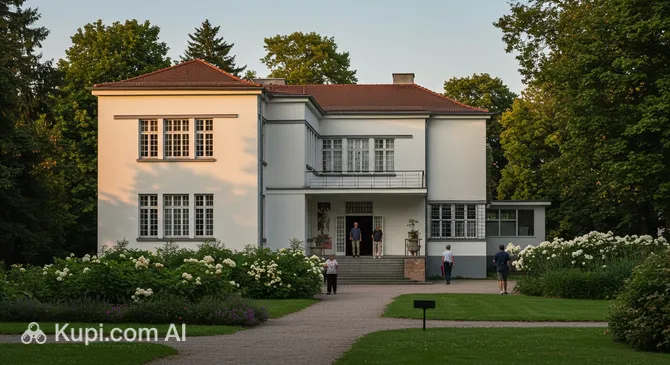
Villa Esche
Villa Esche. Иллюстрация. Источник: Kupi.com AI

Today, it houses the country's first museum entirely dedicated to the work of van de Velde. Visitors can see unique "living spaces" (Lebensräume), including the music lounge and dining room, which have retained their original finishes and furniture covered in exquisite white lacquer. The villa is rightfully considered a historical monument of European significance, standing alongside the greatest achievements of modernism.

On the second floor, a permanent exhibition awaits guests in the former bedrooms and children's rooms. It features silver, textiles, porcelain from the Meissen Porcelain Manufactory, and even stained-glass windows created from sketches by the great artist. Villa Esche is not just a museum, but a living communication center where the spirit of the early 20th century meets modern cultural events.

Contacts

To find out the latest information about events and visiting Villa Esche, you can use the official communication channels. This architectural masterpiece in Chemnitz always welcomes guests who appreciate fine art and design. Below are the main contact details for reaching the museum complex administration.

How to contactContact
AddressParkstraße 58, 09120 Chemnitz, Германия
Phone+49 371 4508510
Websitewww.villaesche.de

What to Do

Visiting Villa Esche is primarily a sensory experience of immersion into the early modern era. Be sure to take time for a detailed inspection of the interiors: here you can see rare furniture, silver utensils, and exquisite stained-glass windows, restored with amazing precision. Tours conducted by passionate guides will help you learn the secrets of the industrial heritage of Chemnitz and the history of the friendship between the architect and the owners' family.

On the second floor, don't miss the cabinet exhibition dedicated to the Esche family. It tells a fascinating story of past industrial espionage: it turns out the company's success began with copying French knitting machines from memory! Such details make the visit more than just an architectural walk, but a real journey through time into the world of great ambitions and innovations of the beginning of the last century.

After the cultural program, be sure to stop by the Remise restaurant, located in the former stables. In summer, there is a terrace where you can enjoy fine dishes surrounded by the greenery of the park. You can finish your walk in the nearby Kaßberg district to compare the villa's strict elegance with other examples of Belle Époque that this corner of Europe is famous for.

Getting There

Finding Villa Esche is easy, even though it is located in a quiet suburban area at Parkstraße 58. If you prefer comfort, it is most convenient to get here from the center of Chemnitz by taxi or rented car. The drive via Richard-Wagner-Straße takes about 10–15 minutes, and parking is provided on the complex grounds for the convenience of visitors.

For those choosing public transport, trams or buses going to stops in the Parkstraße area are suitable. It is recommended to check the current schedule and route numbers on information boards in advance. Using a navigator with coordinates 50.8150033, 12.9008296 will help you find your way through the picturesque streets without error.

Walking enthusiasts should allow about 30–40 minutes for the trip from the city's central squares. The route can be planned so that you see other iconic places along the way, such as the industrial Kaßberg district or the famous Red Tower. Such a walk will allow you to better feel the city's atmosphere before immersing yourself in the world of Art Nouveau.

Ближайший город: Chemnitz

History & Facts

The history of Villa Esche began in 1902–1903 when the prominent Belgian architect Henry van de Velde received a commission from the industrialist Herbert Esche. The Esche family owned a thriving textile factory and wanted to build a home that would embody their status and progressive views on art. Van de Velde was given full freedom of action, allowing him to realize the concept of Gesamtkunstwerk—a unified artistic ensemble where architecture and interior merge into one.

Curiously, the wealth of the Esche dynasty was built with a touch of adventure. Legend has it that Herbert's great-grandfather, during a trip to France, managed to memorize the mechanism of complex knitting machines and upon his return recreated them from memory, launching stocking production in Germany. It was these funds that allowed him, decades later, to invite the best designer of the era to build the family residence, which became van de Velde's first Jugendstil work in this region.

In the years following the world wars and during the socialist period, the villa changed hands many times and gradually lost its original luster and original interior details. However, in the early 2000s, a large-scale scientific restoration was carried out, returning the building to its historical appearance. Today, it is not just a museum, but a monument of European significance, clearly demonstrating the transition from decorative Art Nouveau to the functionality that later formed the basis of the Bauhaus school.

Time Needed

To leisurely explore the exhibitions of Villa Esche, enjoy the interior details, and stroll through the adjacent garden, usually 1.5 to 2 hours are required. This time is quite sufficient for participating in a guided tour and independently studying the Esche family's private rooms on the second floor.

If you plan to conclude your visit with lunch or a cup of coffee in the cozy restaurant located in the former stables, it is worth setting aside about 3 hours for the visit. The peaceful atmosphere of this place invites long contemplation and discussion of the van de Velde artworks you've seen.

Working Hours

When planning your visit, keep in mind that Villa Esche welcomes guests on a limited schedule. The museum is usually open to the public on Friday, Saturday, and Sunday from 10:00 AM to 6:00 PM. From Monday to Thursday, the villa's doors are mostly closed to general tourists, as the premises may be used for private events and symposia.

Since the opening hours may change depending on the season or special exhibitions, we strongly recommend checking the current information on the attraction's official website before your trip. This will help you avoid overlaps and plan your day in the city as effectively as possible.

DayWorking hours
понедельникЗакрыто
вторникЗакрыто
средаЗакрыто
четвергЗакрыто
пятница10:00–18:00
суббота10:00–18:00
воскресенье10:00–18:00

Nearby

A walk around Villa Esche allows for a deeper acquaintance with the rich cultural heritage of Chemnitz. Exploring this area reveals to tourists a wonderful combination of past industrial power and modern spaces for relaxation and inspiration.

Near Henry van de Velde's architectural masterpiece, you will find both cozy park areas and interesting technical monuments that make a visit to this part of Germany as fulfilling as possible. Below are the most noteworthy sites located within walking or driving distance.

NameDistance
German Games Museum0.8 km
Industrial Museum Chemnitz1 km
Boulderlounge Chemnitz1.4 km
Saxon Museum of Vehicles1.4 km
Gunzenhauser Museum1.8 km
Old Town Hall2.3 km
Museum of Natural History Chemnitz2.3 km

Reached the end of the page?

That means the route is fully explored