Support

Altenburg

About

Altenburg is a charming and cozy town nestled in the picturesque hills of Thuringia, right on the border with Saxony. This compact settlement, home to just over 32,000 people, is free from the exhausting hustle and bustle of a capital city but is filled with authentic German flavor and hospitality. A trip to Germany would be incomplete without a visit to this corner, where ancient streets and elegant squares create a unique atmosphere of peace and comfort.
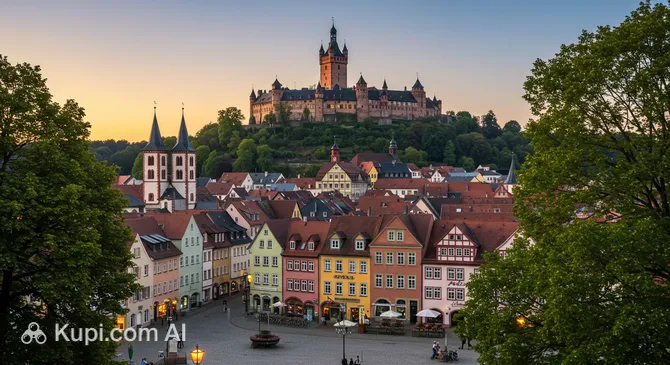
Altenburg. Illustration.
Source: Kupi.com AI

The town's cultural and architectural wealth can impress even the most seasoned traveler. Altenburg's rich history spans over a thousand years, and this heritage is carefully preserved by the locals. Here, medieval traditions and the rhythm of modern life are whimsically intertwined. Walking through the center, you will see magnificently preserved historical buildings, majestic palaces, and unique museums with world-class collections that allow you to literally feel the breath of the centuries.

Altenburg is ideal for those who appreciate leisurely walks and want to discover new gastronomic horizons in cozy cafes. Thanks to its favorable geographical location, the town serves as an excellent starting point for exploring the region: from here, it is just a stone's throw to Leipzig and other major centers. Come here to rest your soul, enjoy a safe and friendly environment, and touch the true culture of the region.

Weather Overview

The city's climate can be described as moderate, making a trip here comfortable at almost any time of year. The warmest and most pleasant period for long walks is summer: in June, July, and August, the average temperature ranges from 18.5°C to 19.8°C, and during the day, the air often warms up to 23–24°C. Spring arrives gradually, and by May, daytime highs reach a pleasant 17.8°C, bringing the city to life with greenery.

The autumn-winter season is cool, but severe frosts are rare here. In January and December, the average temperature stays around 2.2–3.2°C, sometimes dropping to 0°C at night. When planning your trip, consider humidity: precipitation occurs fairly regularly throughout the year. For example, December records up to 17 days with precipitation, while September is one of the driest months (about 10 rainy days).

In general, expect a warm summer with occasional rain and cool, mild winters without extreme cold. To plan your wardrobe properly and choose the best dates for excursions, we recommend checking what weather in Altenburg is forecasted for the time of your visit.

Average monthly temperature

Average monthly precipitation

Interesting Facts

In addition to its main architectural landmarks, Altenburg holds many fascinating secrets and unexpected statuses that make it a unique city. Here are a few facts that will help you see this place in a new light and appreciate its cultural contribution.

  • Home of the National Game: Altenburg is officially recognized as the birthplace of the card game "Skat." It was here that the rules of this pastime, now considered the national card game of Germany, were devised. In honor of this event, a specialized museum operates in the city, and players gather annually for major tournaments.

  • Renaissance Treasury: The local Lindenau Museum houses a true sensation in the art world—one of the most significant collections of Italian Renaissance painting outside of Italy. The city owes this wealth to its famous native, the patron Bernhard von Lindenau.

  • Secrets of the Ducal Castle: The majestic Residenzschloss is interesting not only for its grand state rooms. Hidden within the complex are quite unexpected objects: from ancient dungeons and a rich porcelain collection to a unique historical barber shop that allows you to imagine the daily life of past eras.

  • Tower of Arts: The city's old water tower was not demolished but given a second life, turning into the "Tower of Arts" (Kunstturm). Today, it is a creative space with exhibition halls and an observation deck offering breathtaking panoramic views of the city.

How to Get There

Planning a trip to Thuringia starts with choosing the optimal route. Altenburg is conveniently located in central Germany, allowing you to reach it by various modes of transport, combining flights and land travel. You can find out more about how to get to Altenburg by studying all available options, and below we look at the most popular transport hubs located nearby.

Altenburg itself does not have its own passenger airport, so travelers usually fly into nearby major cities. The closest and most convenient option is Leipzig/Halle Airport (LEJ), located just 49.9 km from the destination. This is a modern regional hub that accepts many flights. A trip from here to Altenburg by car or taxi usually takes about 45–50 minutes in light traffic.

An alternative option could be Dresden International Airport (DRS), located in Dresden about 94.6 km away. The journey by car from this airport along the autobahn will take approximately 1 hour 15 minutes. For those arriving from afar, the large international hub Berlin Brandenburg Airport (BER) is a great choice. It is 169.2 km from the city, and a car transfer takes about 2 hours 15 minutes. Its wide geography of flights makes it popular among tourists despite the greater distance.

For clarity, here is a summary of the main airports used to reach the region:

AirportPassenger trafficDistance
Leipzig/Halle Airport2.2 mln50 km
Karlovy Vary Airport37 90094 km
Dresden International Airport929 92895 km
Erfurt Airport138 002104 km
Vaclav Havel Airport Prague16.4 mln163 km

Railway connection is another popular way to reach this region. Major high-speed trains (ICE) usually arrive at the main stations of neighboring metropolises, from where you can transfer to a regional train to Altenburg or take a taxi. One of the key points is Leipzig Hauptbahnhof. It is 50.2 km from Altenburg. By car, this path takes about 50–60 minutes; however, the convenient regional train connection (S-Bahn) allows you to reach the city even faster and more comfortably.

You can also use the Erfurt Hauptbahnhof, located in the capital of Thuringia. The distance to Altenburg is 98.3 km, which will require about 1 hour 20 minutes by road transfer. Both stations offer a high level of service and convenient connections for further travel.

Below is a table with the nearest major railway hubs:

StationPassenger trafficDistance
Leipzig Hauptbahnhof43.8 mln50 km
Dresden Hauptbahnhof21.9 mln95 km
Erfurt Hauptbahnhof16.8 mln98 km
Halle (Saale) Railway Station12.8 mln124 km
Eisenach Hauptbahnhof1.8 mln148 km

Main Attractions

Altenburg, despite its modest size, boasts an impressive concentration of historical monuments and cultural sites. Often called the "cradle of Skat," the city offers tourists a route filled with architectural discoveries and unique museums. Here is a list of places you should definitely include in your visit program.

The undisputed centerpiece of the city is the Residenzschloss (Castle Museum). This majestic palace complex rises on a porphyry rock and served as the home of the Dukes of Saxe-Altenburg for centuries. Tourists are drawn here not only by the luxurious Baroque halls and the palace church with an organ that, according to legend, Bach himself played, but also by the Playing Card Museum located inside. Here, you will learn everything about the history of the game "Skat" and see rare decks from all over the world, making the visit interesting even for those who are not fond of gambling.

For art lovers, the Lindenau Museum will be a true discovery. The building, reminiscent of an Italian palazzo, houses one of the most valuable collections of early Italian Renaissance art outside of Florence. Bernhard von Lindenau's collection includes works by masters of the 13th–15th centuries, as well as ancient ceramics and casts of famous sculptures. This place allows you to experience world-class high art in a quiet and peaceful atmosphere, without the queues typical of capital museums.

The Red Spires (Rote Spitzen) are rightfully considered the symbol of the city. These two pointed red-brick towers are all that remains of a medieval Augustinian monastery founded in the 12th century, where Emperor Frederick Barbarossa once stayed. The towers are visible from almost any point in the city and serve as an excellent landmark. The building is considered one of the oldest examples of brick architecture in Northern Europe and impresses with its austere monumentality against the backdrop of cozy city streets.

Fans of unusual urban details should seek out the Skat Fountain (Skatbrunnen). This is perhaps the only monument in the world dedicated to a card game. It was built in the early 20th century with donations from the Skat Players' Association and is decorated with sculptures of jacks locked in battle. There is a local belief: if you wash your cards in the waters of this fountain, luck in the game is guaranteed. It is a great spot for a fun commemorative photo that highlights Altenburg's unique status.

Local Cuisine

A gastronomic journey to Altenburg promises to be rich and homey, as the local cuisine is based on hearty Thuringian traditions. The main culinary calling card of the city is the famous "Altenburger Ziegenkäse". This soft goat cheese with a unique, rich flavor is produced according to ancient recipes. It is typically tasted with fresh, fragrant bread, vegetables, or pickled snacks—an ideal option for a light snack or a picnic.

It is impossible to imagine a visit to this region without tasting meat delicacies. Be sure to order the classic Thuringian sausages (Thüringer Rostbratwurst). Local establishments masterfully cook them over an open fire, which gives the dish a unique smoky aroma. They are usually served with traditional sauerkraut or smooth mashed potatoes. Additionally, during the season, hearty homemade soups and game roasts, for which the surrounding forests are famous, often appear on restaurant menus.

As for drinks, there is a special cult of local liqueurs here. A special place is held by the legendary "Altenburger Liqueur." This traditional drink is made at an old distillery and is considered an excellent digestive after a heavy meal. Tourists can not only try various varieties in tasting sets but also purchase a bottle as an authentic souvenir.

The food culture in the city is closely linked to farmers' markets and street festivals. Locals prefer to buy fresh products—from honey and pastries to meat delicacies—directly from market stalls. If you are lucky enough to be in Altenburg during one of the gastronomic festivals, do not miss the chance to try street food and chat with artisans who proudly share the secrets of preparing Thuringian dishes.

Travel Tips

A trip to Altenburg promises to be peaceful and filled with cultural discoveries, but as in any old German town, there are nuances. To make your trip as comfortable and hassle-free as possible, we have prepared a list of practical recommendations considering local specifics.

  1. Clothing and footwear for walking. The historical center of the city is paved with old cobblestones, so forget about high heels—comfortable shoes with flat soles or sneakers will be your best choice. The weather in Thuringia can be changeable: even in summer, it is recommended to have a light windbreaker or umbrella, as rain is not uncommon here.

  2. Getting around the city. Altenburg is compact enough that most attractions are within walking distance of each other. Public transport is represented by an extensive bus network that runs strictly on schedule (tickets can be bought from the driver). Renting a car inside the city is not necessary, as parking in the center can be paid and time-limited.

  3. Financial matters. The currency is the Euro (EUR). It is important to remember that in Germany, especially in small towns, the culture of using cash (Bargeld) is still very strong. Many cozy bakeries, souvenir shops, or small museums may not accept cards. Always carry small bills and coins. It is customary to leave a tip by simply rounding up the bill or adding 5–10%.

  4. Communication and language. The main language of communication is German. In tourist spots, staff often speak English, but in ordinary shops or at the market, this is not guaranteed. We recommend learning a few basic phrases ("Danke", "Bitte", "Guten Tag") or installing an offline translator on your phone. Free Wi-Fi is available in some cafes and hotels, but for stable connectivity, it's better to buy a local prepaid SIM card at a supermarket or mobile shop.

  5. Shops and Sunday. Keep the "Sunday factor" (Ruhetag) in mind. On this day, almost all supermarkets, pharmacies (except duty ones), and clothing stores are closed. Only cafes, restaurants, and some bakeries in the morning are open. Plan your food and souvenir shopping in advance, on Friday or Saturday.

  6. Safety and health. Altenburg is a safe and quiet town where you can walk even late in the evening. However, standard precautions won't hurt: keep an eye on your belongings in crowded places. Pharmacies are easily recognized by a large red letter "A". If a pharmacy is closed, there is always an address on the door of the nearest duty point working 24/7.

  7. What to avoid. Never walk on bicycle paths (usually marked by color or markings on the sidewalk)—this can cause sharp dissatisfaction from cyclists and even lead to a collision. Also, strictly follow road crossing rules: crossing on a red light, even if there are no cars, is considered bad form and can result in a fine.

  8. Local hack. Since Altenburg is the city of playing cards, a deck of Skat cards bought from a local shop makes an excellent and inexpensive souvenir. Also, note that many museums in Germany, and here in particular, may be closed on Mondays, so check opening hours before your visit.

Following these simple rules will help you quickly adapt to the local rhythm of life and feel not just like a tourist, but like a welcome guest. Altenburg opens up to those who respect its traditions and are ready to enjoy its slow, cozy atmosphere.

Entertainment & Nightlife

Altenburg's nightlife differs significantly from that of noisy metropolises due to its intimate nature and that very cozy atmosphere known in Germany as "Gemütlichkeit." Here, you won't find massive dance clubs or 24-hour raves. An evening in this town is primarily about heartfelt conversation in atmospheric pubs, gastronomic pleasures, and cultural events. Most activity after sunset takes place in the historical center, around the Market Square (Markt), where ancient architecture under the glow of streetlights creates the perfect backdrop for romantic walks.

The Landestheater Altenburg is rightfully considered the center of cultural leisure. It is not just a stage, but the heart of the region's creative life, regularly hosting operas, ballets, and high-level symphonic concerts. After performances, the audience is often in no hurry to disperse, moving to nearby establishments. One such popular meeting place is Kulisse—a restaurant and bar with a picturesque beer garden located in the immediate vicinity of the theater. This venue is ideal for discussing the performance over dinner or a drink in a lively yet sophisticated setting.

If you're in the mood for a more informal atmosphere and fun, it's worth checking out Finnegan's Irish Pub. This place is famous for its lively character, a wide selection of beers and whiskies, and regular music nights that gather fans of folk and rock. The crowd in Altenburg's venues is predominantly local and very friendly. The dress code in bars is casual, but for a visit to the theater or a high-end restaurant, it's better to choose a smart casual style.

It is important to keep in mind the operating hours: the kitchens of many restaurants close as early as 9:00 PM or 10:00 PM, although bars may host guests until midnight, especially on Fridays and Saturdays. Prices here remain very moderate compared to major tourist centers, making evening relaxation budget-friendly.

In terms of safety, Altenburg is a very peaceful town where you can walk safely after dark. However, tourists should plan their return to the hotel in advance. Night bus routes are poorly developed here, and it is almost impossible to hail a car on the street at night. We recommend saving the number of a local taxi service in advance, as ride-hailing apps may not always be able to find an available driver quickly at a late hour.

An evening program in Altenburg is often the logical conclusion to a busy day. After visiting the majestic Residenzschloss, touring the Playing Card Museum, or enjoying a tasting at a local brewery, a quiet dinner in the city center will allow you to finally immerse yourself in the measured and dignified pace of life in Thuringia.

Parks & Museums

Altenburg pleasantly surprises guests with its harmonious blend of green oases and rich cultural life. The urban environment is designed so that after exploring historical exhibitions, you can immediately relax in the shade of century-old trees or by the water. For tourists, this is a great opportunity to balance educational leisure with relaxed walks in the fresh air.

Among the natural areas, the Castle Park (Schlosspark) deserves special attention. This magnificent example of English-style landscape design surrounds the ducal residence and invites you for a leisurely promenade. Here, you will find winding paths, ancient trees, and elegant buildings such as the Orangery and the Tea House. It is the perfect place to enjoy the silence and admire the castle's architecture from new angles.

Another important recreational zone is the area around the Great Pond (Großer Teich). This is a favorite spot for locals, where you can not only walk along the embankment but also rent a boat during the warm season. In the center of the water is the unique Island Zoo (Inselzoo)—the only one of its kind in Germany. Located on an island in the middle of the pond, it is home to many species of birds and small animals, making it a wonderful point to visit, especially if you are traveling with family.

The city's cultural landscape is unimaginable without the Lindenau Museum. This institution holds the status of a world-class museum thanks to its precious collection of early Italian Renaissance art. It features works by masters from the 13th to 15th centuries that are rarely found outside of Italy. In addition to painting, the gallery is proud of its collection of ancient ceramics and artistic casts, offering visitors a deep dive into the history of classical art.

Fans of natural history and unusual artifacts should check out the Mauritianum. This natural history museum is known far beyond the region for its most famous and somewhat eerie exhibit—the "Rat King" (a mummified group of 32 rats with their tails tangled), found in a local mill's chimney in 1828. The main exhibition of the museum fascinatingly tells the story of the region's flora and fauna, emphasizing Thuringia's biodiversity.

Insider tip: If you are looking for solitude, peek into the historic Botanical Garden (Botanischer Garten). It often remains in the shadow of the larger parks, but it is here that you can see rare plants and enjoy the "secret garden" atmosphere hidden from the main tourist routes.

Getting Around

The transport system of Altenburg is characterized by typical German efficiency and simplicity for small towns. Since the town is quite compact, there are no metro or tram lines. The main means of transport for locals and tourists are buses. The route network covers both the historical center and outlying areas, as well as connecting the town with nearby settlements. The central hub where many routes intersect is the bus station (Busbahnhof) and stops around the Market Square.

The city's public transport is integrated into the MDV (Mitteldeutscher Verkehrsverbund) transport association. This is very convenient for travelers, as a unified tariff system allows the same tickets to be used for buses in the city and regional trains (S-Bahn) running between Altenburg and Leipzig. The railway station is located some distance from the center, so most tourists reach the sights from there by city bus.

The fare payment system is standardized. For a single trip, you will need an Einzelfahrkarte (valid for 1 hour). If you plan to travel a lot during the day, it is more economical to purchase a Tageskarte (day pass). Tickets can be bought from machines at the station, at special service centers, or directly from the bus driver upon boarding (in which case it's better to have change). Mobile apps like MOOVME or DB Navigator are also gaining popularity, where you can buy a ticket online and simply show it on your phone screen.

An important point for tourists in Germany: a purchased paper ticket must be stamped (validated) before starting the journey if the exact time of validity is not indicated on it at the time of purchase. Validators are usually located inside buses or on station platforms. Fines for "fare dodging" (even unintentionally) are quite substantial, so be careful.

As an alternative to public transport, taxi services operate in Altenburg. It is important to remember that it is not customary to "hail" a car on the street here: a car should either be ordered by phone or found at specially equipped stands (e.g., at the station). Apps like Uber may not work here or may have a limited number of cars, so it is better to rely on local dispatch services.

For active leisure fans, bicycle rental is available, though it is not as widespread as in large metropolises. Given the town's hilly terrain, a bike ride may require some physical fitness. Nonetheless, it's a great way to see the surroundings, for example, to reach the Island Zoo. Still, the best way to get to know Altenburg remains walking: distances between the main sights are small, and the historical streets invite a leisurely stroll.

Accommodation

The choice of accommodation in Altenburg perfectly reflects the city's cozy and intimate character. Here, you won't find massive chain hotel skyscrapers or noisy resort complexes. The backbone of the hotel stock consists of small private hotels, traditional German guesthouses (Gasthof), and family hotels, often located in restored historical buildings. This allows tourists not just to spend the night, but to immerse themselves in the authentic atmosphere of Thuringia.

The most attractive area for staying is the historical center (Altstadt). By staying near the Market Square (Markt) or close to the Residenzschloss, you will be within walking distance of the main attractions, museums, and restaurants. This is an ideal option for those who want to enjoy evening strolls through the ancient streets. The railway station area also offers several accommodation options; this is convenient for transit travelers, although the walk to central tourist sites will take about 15–20 minutes.

In recent years, apartment rentals have been gaining popularity in Altenburg. This is an excellent choice for families or groups of friends who prefer independence and the ability to cook for themselves. Many apartments are set in old houses with high ceilings, which adds a special charm to the trip. The price range in the city can be described as budget and mid-range. The cost of living here is noticeably lower than in neighboring large tourist centers like Leipzig or Dresden, while the level of service and cleanliness remains traditionally high for Germany.

Regarding booking, while rooms are usually available on ordinary days, it is worth planning your trip in advance. This is especially relevant during the summer season and on days of major events, such as international Skat tournaments or city festivals, when demand for housing increases sharply. Most local hotels are represented on popular online platforms, but some small guesthouses may offer better terms for direct booking through their own websites or by phone.

Nearby Cities

For those looking to expand their travel horizons, Altenburg serves as an excellent starting point for exploring the region. The city's location in central Germany and its developed transport network make it easy to reach neighboring cultural centers, each with its own unique character and history.

Just a half-hour drive away is Gera—Thuringia's third-largest city and the birthplace of the famous artist Otto Dix. Fans of automotive history and classical music should head to Zwickau, home to the August Horch Museum and the Robert Schumann House. Those seeking a medieval spirit are recommended to visit Zeitz, known for its majestic Moritzburg Castle and mysterious system of underground passages.

CityPopulationDistance
Frohburg12 47011 km
Meuselwitz10 06511 km
Schmolln13 74112 km
Borna19 42515 km
Meerane14 20816 km

These trips will allow you to see the diversity of architecture and landscapes in Saxony and Thuringia, making your holiday even more rich and memorable.

Shopping & Souvenirs

Shopping in Altenburg is a calm and pleasant activity, free from the rush of large metropolises. The city offers a great balance between necessary modern goods and unique local products. You won't find endless blocks of luxury boutiques here, but you can enjoy the atmosphere of cozy shops where owners often greet customers personally and are ready to help with choices. This is an ideal place for those who value quality and authenticity.

The heart of the city's commercial life is the historical center, especially the Market Square (Markt) area. From here, picturesque pedestrian zones fan out, where clothing stores, bookshops, pharmacies, and small boutiques with home goods are concentrated. A walk through these streets allows you to combine shopping with sightseeing, making the shopping process part of the cultural program.

If you need well-known brands and a more familiar shopping format under one roof, it's worth visiting Schloss-Center Altenburg. This shopping center is located near the castle and offers a good selection of fashion, shoe, electronic, and drugstore shops. A large supermarket is also located here, convenient for buying groceries or essentials.

For those looking for fresh regional products, the weekly market on the Market Square is a must. Usually on Wednesdays and Saturdays, local farmers bring seasonal vegetables, fruits, honey, and meat delicacies here. This is the best place to get a true taste of Thuringia and buy products directly from the producers.

Speaking of souvenirs, you cannot leave Altenburg without playing cards. In the town considered the birthplace of the game "Skat," you can purchase unique collector's decks in specialized shops or museum gift shops. Gastronomic souvenirs are no less popular: look out for the famous Altenburg goat cheese (Altenburger Ziegenkäse), spicy local mustard, and traditional herbal liqueurs produced at the city distillery.

Shops in the center usually operate from Monday to Friday from 09:00 or 10:00 to 18:00. On Saturday, many retail outlets close significantly earlier—around 13:00 or 14:00, although major supermarkets may stay open longer. Sunday in Germany is an official day off, so all shops, except for duty bakeries and kiosks at the station, will be closed. Regarding payment, major chains accept cards, but small shops, cafes, and the market often prefer cash, so keep small bills with you.

Tourists residing permanently outside the European Union can use the Tax Free system (VAT refund) for purchases over a certain minimum (usually 50 euros) on a single receipt. Look for "Global Blue" stickers or similar signs in shop windows and don't forget to ask the seller for a special tax refund form when leaving the country.

Nearby cities

Reached the end of the page?

That means the route is fully explored