Support

Bingen am Rhein

About

Bingen am Rhein is a charming town and a true gem on the map of Germany, nestled comfortably on the picturesque banks of the Rhine in the federal state of Rhineland-Palatinate. It is situated where the Nahe River flows into the majestic Rhine, creating a unique natural landscape. From here, breathtaking views open up to the famous Rhine Valley, one of Europe's most romantic spots, which has inspired artists and poets for centuries.
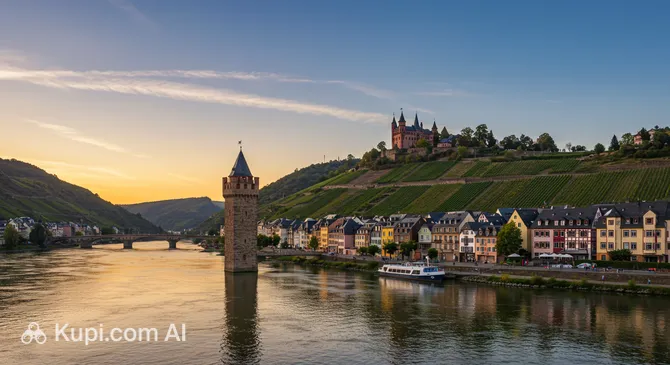
Bingen am Rhein. Illustration.
Source: Kupi.com AI

With a population of about 25,757 people, Bingen am Rhein is considered relatively small, but its historical and cultural heritage is truly grand. The town is famous for its beautifully preserved old center, where you can admire traditional half-timbered houses and ancient churches. Iconic landmarks include the legendary Mouse Tower (Mäuseturm), located on a small island in the middle of the Rhine, and the majestic Klopp Castle (Burg Klopp), which offers panoramic views of the town and the river.

The atmosphere of Bingen is steeped in history, tranquility, and the charm of the Rhine wine region. Strolls through the narrow streets of the old town, river cruises along the Rhine, and an introduction to the rich culture of winemaking will provide an unforgettable experience. Bingen am Rhein is the perfect place for those seeking inspiration, romance, and authentic German character. Come and discover this amazing corner of Germany!

You can find more interesting facts on the history of Bingen am Rhein page.
Weather Overview

The weather in Bingen am Rhein features a temperate climate. Summers are generally warm: average temperatures in the hottest months, July and August, hover around 19-20°C, with maximum daily values reaching up to 23-24°C. Winters in the town are cool, with average temperatures in January and December around 2.7-3.5°C, and nightly minimums can drop to 0-1°C. Rainfall, while not heavy (averaging 2-3 mm per month), occurs quite frequently throughout the year: the number of rainy days varies from 9 in September to 16 in December. Overall, you can expect a warm summer with occasional rain and cool, damp winters.

For a more detailed forecast and weather information by month, you can visit the Bingen am Rhein Climate page.

Average monthly temperature

Average monthly precipitation

Interesting Facts

Beyond its picturesque landscapes and famous wines, Bingen am Rhein holds many curious stories and details that make it even more attractive to travelers. A town with a rich past is ready to share its secrets with those willing to listen.

  • Roman Heritage and the "Hole in the Rock": The town of Bingen am Rhein was founded by the Romans and was originally called Bingium. According to one version, this name comes from a Celtic word meaning "hole in the rock." This is a direct reference to the Binger Loch—a narrow and dangerous stretch of the Rhine near the town, which for centuries posed a serious threat to navigation due to its whirlpools and rocks.

  • The Legend of the Mouse Tower: One of Bingen's most famous and slightly dark legends is associated with the Mouse Tower (Mäuseturm), picturesquely standing on a small island in the middle of the Rhine. Legend has it that in the 10th century, the cruel and greedy Archbishop of Mainz, Hatto II, locked the poor in a barn and set it on fire during a terrible famine, comparing their dying screams to the squeaking of mice. As punishment for this atrocity, according to the legend, a vast army of mice attacked the archbishop, and he sought refuge in the tower on the island, but the rodents reached him there too, eating him alive.

  • Klopp Castle – Witness to Eras: Klopp Castle (Burg Klopp) towers majestically over the town. Originally a Roman fortress, it later became a residence for the Archbishops of Mainz. Throughout its long history, the castle was repeatedly destroyed and rebuilt. Today, it houses the town's administration, and its observation decks offer some of the best panoramic views of Bingen, the Rhine Valley, the vineyards, and the famous "Rhine Bend."

  • Town of Festivals: Bingen am Rhein is known far beyond the region for its vibrant festival life. Every year, many bright events take place here, attracting thousands of guests. Among the most famous are the international jazz festival "Bingen swingt," the traditional winemakers' festival, the colorful "Rhine in Flames" (Rhein in Flammen) fireworks show, and the sparkling wine festival.

How to Get There

There are various ways to reach this picturesque corner of Germany, but most often tourists choose a combination of air travel and ground transport. The town is conveniently located relative to major transport hubs. You can find out all the ways to get to the city and plan your ideal route on a dedicated page.

There is no airport in Bingen am Rhein itself, so travelers usually fly into neighboring large cities. The most convenient and popular option is Frankfurt Airport (IATA: FRA), located in the city of Frankfurt am Main. It is one of Europe's largest international aviation hubs, receiving flights from all over the world. It is located approximately 47.4 km from Bingen am Rhein. The journey from there by taxi or transfer takes about 1 hour and 30 minutes.

An alternative option, especially for budget travelers, could be Frankfurt-Hahn Airport (IATA: HHN). Despite the name, it is located some distance from Frankfurt, but it is quite close to Bingen—only 46.0 km away. This is a regional airport serving fewer passengers but convenient due to its proximity. Travel time by car is approximately 1 hour and 30 minutes.

For clarity, here is summary information on the main airports:

AirportPassenger trafficDistance
Frankfurt-Hahn Airport1.9 mln46 km
Frankfurt Airport61.6 mln47 km
Frankfurt Egelsbach Airport80 00053 km
Mannheim Airport40 00070 km
Cologne Bonn Airport10 mln116 km

The railway network in Germany is excellently developed, making the train a great choice for the final leg of the journey. While Bingen has its own stations, many tourists use larger hub stations nearby for transfers or as a point of arrival for high-speed trains.

A key transport hub for the region is Frankfurt (Main) Hauptbahnhof (IATA: ZRB) in Frankfurt am Main. It is a massive station with colossal passenger traffic, receiving trains from all over Europe. It is located about 56.5 km from Bingen am Rhein, and a car trip from the station to the town takes about 1 hour and 45 minutes, although a direct regional train will be significantly faster.

Another important hub is Koblenz Hauptbahnhof (IATA: ZFF), located in the city of Koblenz, 48.3 km from Bingen. This is a large station convenient for those traveling along the Rhine. A car transfer from here takes about 1 hour and 30 minutes.

Below is information about the nearest major railway stations:

StationPassenger trafficDistance
Koblenz Hauptbahnhof14.6 mln48 km
Frankfurt (Main) Hauptbahnhof127.8 mln57 km
Kaiserslautern Station4.5 mln60 km
Mannheim Hauptbahnhof36.5 mln68 km
Bonn Hauptbahnhof24.5 mln103 km

Besides planes and trains, you can comfortably reach Bingen am Rhein by car using the high-quality German autobahns. It is also worth considering river transport—cruise ships along the Rhine often make a stop in this picturesque town.

Main Attractions

Bingen am Rhein, picturesquely situated at the confluence of the Rhine and Nahe rivers, is famous not only for its wines but also for its rich history reflected in its landmarks. Travelers here can expect both medieval legends and modern cultural spaces.

One of the most recognizable landmarks of Bingen am Rhein is the legendary Mouse Tower (Mäuseturm). This former customs tower, located on a small island in the middle of the Rhine, is shrouded in many legends, the most famous of which tells of the cruel Archbishop Hatto II. Today, the tower is a picturesque symbol of the town and a popular photo spot, embodying the region's rich history.

Towering over the town, Klopp Castle (Burg Klopp) offers not only a dive into history but also spectacular panoramic views of the Rhine and surrounding vineyards. The castle has been destroyed and restored several times, and today it houses the town's administration. Tourists are drawn to the opportunity to walk through the castle grounds, enjoy the views, and feel the medieval atmosphere.

The Basilica of St. Martin (Basilika St. Martin) is an impressive religious monument with history dating back to the early Middle Ages. The current building combines Romanesque and Gothic elements, and its interior is decorated with valuable works of art. For tourists, the basilica is interesting for its architecture, historical significance, and as a place of spiritual peace.

The Museum am Strom – Historical Museum of Bingen (Museum am Strom) also deserves attention. It is dedicated not only to the town's history but also to the life and work of the famous abbess Hildegard of Bingen, one of the most remarkable women of the Middle Ages. The museum's exhibitions tell the story of Bingen's Roman past, the era of Rhine Romanticism, and, of course, Hildegard's legacy. This place attracts those interested in history, culture, and outstanding personalities.

For connoisseurs of local traditions and gastronomy, RheinWeinWelt is an interesting destination. This space is dedicated to the wines of the Rheinhessen region, offering visitors the chance to get to know the variety of local sorts and learn more about winemaking. It is a great place to taste high-quality German wines and purchase unique souvenirs. Here, you can gain a deeper understanding of the winemaking culture so vital to Bingen am Rhein.

RheinWeinWelt. Illustration.
Source: Kupi.com AI

Traveler photos:

Local Cuisine

The cuisine of Bingen am Rhein is a true gastronomic journey, combining the best traditions of Rhine and Palatinate culinary arts. Surrounded by picturesque vineyards, the town is famous for its hearty dishes and, of course, its magnificent wines. The culinary scene here is characterized by authenticity and a love for local products.

Among the dishes that are a must-try in Bingen are hearty meat delicacies, dishes made from fresh river fish caught in the Rhine and Nahe, as well as the famous Rhine sausages and fragrant sauerkraut. Special attention is paid to seasonal vegetables that complement every meal. Local chefs masterfully combine traditional recipes with modern culinary techniques, creating unique taste experiences.

The main pride of the region is undoubtedly the local wines. The vineyards spreading across the hills around the town give the world excellent Riesling, as well as full-bodied reds and refined sparkling wines. Be sure to drop into one of the cozy wine taverns (Weinstube) or visit a traditional wine festival to fully enjoy this noble drink. Besides wine, you can refresh yourself with local juices or other non-alcoholic beverages, although it is the wine that is Bingen's calling card.

RheinWeinWelt. Illustration.
Source: Kupi.com AI

Traveler photos:

The food culture in Bingen am Rhein is closely linked to winemaking and traditions of hospitality. Locals and tourists alike enjoy spending time in traditional restaurants and wine cellars, where you can not only eat well but also sample local wines. One such place to get acquainted with the world of Rhine wines is RheinWeinWelt. Town markets and street fairs offer the freshest farm products: homemade cheeses, freshly baked bread, sausages, as well as seasonal fruits and vegetables. The autumn festivals of young wine and farmers' markets are particularly colorful, turning the town into a true celebration of taste. Those with a sweet tooth will appreciate the local apple and plum cakes, as well as traditional German buns and strudels.

Travel Tips

Welcome to charming Bingen am Rhein! To make your trip through this picturesque German town as comfortable as possible and leave you with only pleasant impressions, we have prepared a few practical tips.

  1. Clothing and Essentials:

    The weather in Bingen, as in the entire Rhineland-Palatinate region, is temperate. In summer, bring light clothing, but don't forget a sweater or light jacket for evening walks along the Rhine. In winter, warm clothes will be required. A key wardrobe element is comfortable shoes, as the town has many cobblestones and hilly streets, along with wonderful routes for hiking. Don't forget an umbrella or raincoat, especially in spring and autumn. For electrical appliances, you will need a Type F adapter (standard Europlug). When visiting churches, such as the Basilica of St. Martin, choose modest clothing that covers shoulders and knees.

  2. Local Transport:

    Bingen am Rhein is a small town, and many of its attractions, including the Rhine embankment and Klopp Castle, are easily explored on foot. To move around the town and its surroundings, you can use local buses. If you plan to explore the Rhine Valley with its many castles, consider regional trains (DB – Deutsche Bahn). Renting a car is not necessary for Bingen itself but may be convenient for broader trips around the region. Taxis are available, and you can also check for ride-hailing apps.

  3. Finances:

    The official currency in Germany is the Euro (EUR). You can exchange money at banks, but it's better to have some cash on hand upon arrival. Credit and debit cards (Visa, Mastercard) are widely accepted in shops, restaurants, and hotels. American Express may not be accepted everywhere. ATMs (Geldautomat) are easy to find. Tipping (Trinkgeld) in restaurants is welcome—usually 5-10% of the bill if you are satisfied with the service, or you can simply round the amount up.

  4. Health and Safety:

    Bingen am Rhein is considered a safe town. Observe standard precautions: keep an eye on your belongings, especially in crowded places. Pharmacies (Apotheke) are available in town; information about on-duty pharmacies (Notdienst Apotheke) operating at night and on weekends can be found on the door of the nearest pharmacy or online. Be sure to get travel medical insurance before your trip. The emergency number is 112.

  5. Communication:

    The official language is German. In tourist spots, many people speak English, but knowing a few basic phrases in German (e.g., "Hallo" – hello, "Danke" – thank you, "Bitte" – please) will be very helpful and appreciated by locals. SIM cards can be purchased in supermarkets or mobile stores. Wi-Fi is available in most hotels and many cafes. For planning train trips, the DB Navigator app is very useful.

  6. Local Etiquette:

    Germans value punctuality and order. When meeting, it is customary to shake hands and make eye contact. Standard greetings are "Guten Tag" (Good day) or "Hallo" (Hello). Try not to be loud in public places. If you are invited to a home, a small souvenir or flowers would be appropriate.

  7. What to Avoid:

    Try not to loudly discuss sensitive historical topics without proper context and respect. Also, avoid excessively noisy behavior in public places, especially in residential areas in the evening and at night, as Germans highly value "Ruhezeit" (quiet time).

  8. Special Tip for Bingen:

    Bingen am Rhein is the heart of a winemaking region. Be sure to take the opportunity to taste local wines, especially the famous Riesling. Visit one of the local wine shops (Vinothek) or, if you're lucky, catch one of the wine festivals, such as the famous Binger Winzerfest, which usually takes place in late August or early September. And, of course, don't miss the chance to take a river cruise on the Rhine to admire the Mouse Tower and surrounding castles from the water.

We hope these tips help you plan an unforgettable trip to Bingen am Rhein. Enjoy the beauty of this town, its history, and its hospitality!

Entertainment & Nightlife

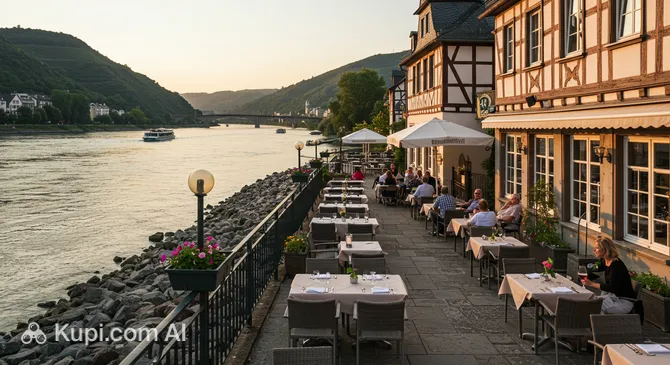
Bingen am Rhein, a charming town at the confluence of the Rhine and Nahe, offers its guests a cozy and soulful atmosphere for evening relaxation rather than the boisterous club life of major metropolises. Nightlife here is centered around traditional German beer halls, wine cellars (Weinstuben), where you can enjoy the famous Rhine wines, and welcoming restaurants.

The main areas for evening strolls and social gatherings are the Rhine embankment (Rheinufer) and the streets of the historical Old Town (Altstadt). Here, you will find many establishments where you can spend a pleasant evening. The atmosphere in most places is quite relaxed and informal, with the dress code usually being casual. The crowd is mixed—from locals to tourists, especially during the warm season and wine festivals.

Although the choice of loud nightclubs in Bingen is limited, you can always find bars open until late in the evening where you can chat with friends over a glass of local beer or wine. For dinner or a late snack, look for places like the Café-Restaurant Stadt Frankfurt, which offers traditional cuisine in a cozy setting. Another interesting spot is RheinWeinWelt, where you can immerse yourself in the world of local wines.

Café-Restaurant Stadt Frankfurt. Illustration.
Source: Kupi.com AI

Traveler photos:

The best time to visit bars and restaurants is Friday and Saturday evenings when the town comes alive. Average prices for drinks and food are quite reasonable. Moving around the town center at night is convenient on foot. If you are staying on the outskirts, you can always call a taxi; it is a safe and reliable way to get to your hotel. The central areas of Bingen are considered safe for nighttime walks, though standard precautions should always be observed.

During the day, Bingen am Rhein also offers a variety of entertainment. You can visit the Historical Museum on the river (Museum am Strom – Museum an der Hildegard von Bingen), stroll through the picturesque Kulturufer Bingen park, which offers beautiful views of the Mouse Tower and the Niederwald Monument on the opposite bank, or explore the ruins of Klopp Castle overlooking the town. For theater fans, it's worth checking the schedules of local cultural centers, which may host concerts or plays.

Parks & Museums

Bingen am Rhein offers its guests a charming combination of picturesque green areas for relaxation and a rich cultural heritage reflected in its museums and historical monuments.

The town is famous for its well-maintained outdoor spaces. The Rhine Embankments (Rheinanlagen) are an ideal place for leisurely walks along the great river, offering magnificent views of the vineyards and the famous Mouse Tower. It is also worth visiting the Park on the Rochusberg (Park auf dem Rochusberg), which not only provides panoramic views of the town and the Rhine Valley but is also home to the picturesque St. Roch's Chapel. Another notable area is the Bingen Cultural Waterfront (Kulturufer Bingen), which combines art, nature, and relaxation, offering themed gardens and installations.

To learn about the town's history and culture, you should definitely visit the Historical Museum am Strom – Hildegard von Bingen Museum. Located in a former power station building, this museum is dedicated not only to the life and work of the famous abbess Hildegard of Bingen but also to the centuries-long history of the town, the region's winemaking, and the significance of the Rhine. The museum's exhibits will be of interest to everyone who wants to understand Bingen's past and present more deeply.

In addition to museums, the town itself is a living piece of history. Klopp Castle (Burg Klopp) towers over Bingen, offering breathtaking views. Although it now houses the town's administration, its towers and part of the fortifications are open for inspection and serve as a reminder of its medieval past. One cannot fail to mention the legendary Mouse Tower (Mäuseturm), located on an island in the middle of the Rhine—one of the most recognizable symbols of the region.

For a special experience, head up to the Rochusberg towards evening—the sunsets over the Rhine from here are simply unforgettable. And while walking along the Kulturufer, pay attention to the Sculpture Garden, where you can find interesting works by modern artists.

Getting Around

Getting around Bingen am Rhein and its surroundings is quite convenient thanks to a well-developed public transport system. The backbone of the transport network consists of buses that connect different areas of the town and nearby settlements. Furthermore, Bingen is an important railway hub, and regional trains (such as Deutsche Bahn) play a key role in connecting with other cities along the Rhine and throughout Germany.

The fare system in Bingen am Rhein is integrated into the Rhein-Nahe-Nahverkehrsverbund (RNN) transport association. This means that RNN tickets are valid on both buses and regional trains within the tariff zones. Various types of tickets exist: single (Einzelfahrkarte), day (Tageskarte), as well as longer-term tickets, such as weekly or monthly, which can be advantageous for longer stays. The ticket price depends on the number of tariff zones crossed. Tickets can be purchased at machines at stations and some stops, directly from bus drivers (usually only single tickets), at RNN or DB customer service centers, or via mobile apps like DB Navigator.

Tourists should note a few practical points. Tickets bought from machines generally need to be validated (stamped) before starting the journey in special devices located on platforms or inside the transport. Tickets purchased from the driver are usually already validated. Public transport runs regularly throughout the day, but intervals may increase in the evenings and on weekends. It is recommended to check schedules at stops or on official transport company websites in advance.

Besides public transport, other ways to get around are available in Bingen am Rhein. Taxis can be found at special stands or called by phone. Given the picturesque surroundings and the presence of bike paths along the Rhine, bicycle rental is a popular and pleasant alternative, allowing you to explore the region at your own pace. River ferries also play an important role, providing not only crossings to the other bank of the Rhine (for example, to Rüdesheim) but also offering enjoyable river trips with magnificent views of castles and vineyards.

A feature of Bingen's transport system is its close connection to the Rhine. Using ferries and excursion boats is not just a way of moving around but a part of the tourist experience, allowing you to enjoy the beauty of the Rhine Valley. The town's main railway station, Bingen (Rhein) Hbf, serves as the primary transport hub, from where it is easy to reach most interesting places both within the town and beyond its borders.

Accommodation

When planning a trip to Bingen am Rhein, you will find a variety of accommodation options to suit different preferences and budgets. The town offers traditional hotels as well as cozy guesthouses (Gästehäuser) and holiday apartments (Ferienwohnungen), which are particularly popular among families and those who prefer more independence.

When choosing a place to stay, tourists often prefer areas near the Rhine embankment, which offer picturesque views and easy access to river cruise docks. The historical town center (Altstadt) is also popular, where you can experience the authentic atmosphere and be within walking distance of many attractions, cafes, and restaurants. While specific famous hotels are not listed in the provided data, the town features a wide selection ranging from budget to more comfortable options.

To ensure the best choice and most favorable prices, especially if your trip coincides with the peak tourist season—such as during the numerous wine festivals or in the summer months—it is recommended to book your accommodation well in advance. The price range varies from economical options to mid-range and high-end offers, depending on the level of comfort, location, and services provided. Most hotels and apartments in Bingen am Rhein can be found and booked through popular international online platforms, as well as directly on hotel websites or by contacting private rental owners.

Nearby Cities

For those looking to explore the surroundings, Bingen am Rhein serves as an excellent starting point for day trips to several interesting nearby locations.

For example, a trip to Mainz (25 km), the capital of Rhineland-Palatinate, will allow you to get to know the city's rich history, its famous cathedral, and Gutenberg's heritage. Elegant Wiesbaden (27 km), the capital of Hesse, attracts with its thermal springs, luxurious Kurhaus, and casino. And the charming Bad Kreuznach (14 km) offers relaxation in a spa town atmosphere with its unique bridge houses and salt graduation towers. Below is a table with these and other options for your convenience.

CityPopulationDistance
Rudesheim am Rhein9 9223 km
Geisenheim11 7045 km
Oestrich-Winkel11 8699 km
Ingelheim am Rhein35 48611 km
Bad Kreuznach51 69514 km

These nearby destinations provide a glimpse into the diverse culture and landscapes of the region.

Shopping & Souvenirs

Bingen am Rhein offers its guests pleasant shopping opportunities, primarily focused on local goods, souvenirs, and regional products. Although the town is not a major center for fashion or electronics, you can find charming little shops and unique items here, especially those related to the rich winemaking culture of the Rhine region.

The main shopping spots are concentrated in the historical center of Bingen. Strolling through its cozy streets, you will find small boutiques, souvenir shops, stores with local delicacies, and, of course, wine shops. The main pedestrian zones, such as Salzstraße and Schmittstraße, are popular places for shopping where you can find clothing, books, jewelry, and home goods.

In Bingen am Rhein, there are no large shopping malls in the traditional sense. Shopping here is more intimate, with an emphasis on individual stores and family businesses. If you are looking for a wide range of international brands, a trip to larger neighboring cities like Mainz or Wiesbaden might be necessary.

Special attention should be paid to the local markets. Periodically, the town may hold a weekly market (Wochenmarkt), where farmers and craftsmen offer fresh produce, seasonal fruits and vegetables, cheeses, meat products, and flowers. This is a wonderful opportunity to immerse yourself in the local atmosphere and purchase high-quality regional goods. During the pre-Christmas period, the town also delights guests with a traditional Christmas market.

As souvenirs from Bingen am Rhein, it is definitely worth bringing back some of the famous Rhine wines. This region is renowned for its Rieslings and other varieties. Also popular are items related to local landmarks, such as those featuring the Mouse Tower (Mäuseturm) or dedicated to St. Hildegard of Bingen. You can find interesting ceramics, local liqueurs, and traditional German sweets.

Shops in Bingen am Rhein usually operate from Monday to Saturday. Standard opening hours are approximately from 9:00-10:00 to 18:00-19:00. Some small shops may have a lunch break. On Saturday, many retail outlets close earlier, around 14:00 or 16:00. Sunday is generally a day off for most shops, except for some souvenir stores or shops on tourist routes. Both cash in Euros and bank cards (EC cards, Visa, Mastercard) are accepted for payment. However, in small shops and at markets, cash may be preferred.

Tourists from non-EU countries can take advantage of the VAT refund system (Tax Free). To do this, when making a purchase of a certain amount in a participating store, you must ask for a special Tax Free form. This form, along with the goods, will need to be presented at customs when leaving Germany or the EU to receive the tax refund.

Reached the end of the page?

That means the route is fully explored