Support

Fulda

About

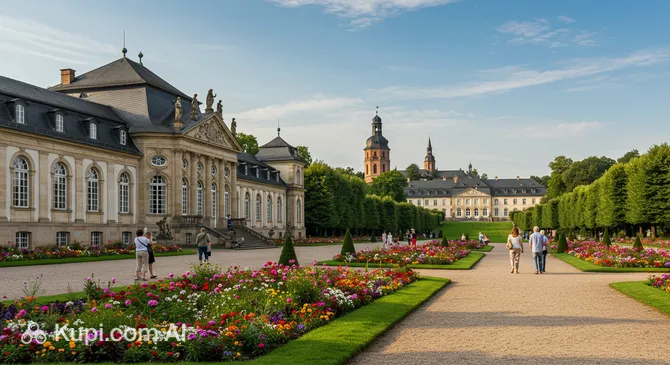
Fulda. Illustration.
Source: Kupi.com AI

Fulda is a true hidden gem in the heart of the state of Hesse. This cozy city, sprawling along the banks of the river of the same name, is famous for its architectural splendor and a special, peaceful atmosphere. Here, ancient traditions blend harmoniously with modern comfort, making the city an ideal destination for those seeking inspiration and tranquility.

Thanks to its central geographical position, Fulda serves as a convenient starting point for travels across Germany. While not a huge metropolis—with a population of about 68,500 people—it is precisely this compactness that gives it a special charm. It is an important cultural and university center where a sense of safety and coziness prevails, and the climate invites long walks through picturesque parks at any time of year.

The rich history of Fulda has left an indelible mark on its appearance, turning the city into a veritable open-air museum. Fulda is often called the Baroque city: the majestic Cathedral of St. Salvator and the luxurious City Palace with its famous gardens amaze even seasoned travelers. Every cobblestone here holds its own legends, inviting guests to immerse themselves in the past.

This city is definitely worth a visit to enjoy authentic German cuisine, see unique architectural monuments, and feel the warmth of the local residents. Fulda reveals itself to travelers as a welcoming and picturesque corner that you will want to return to again and again.

Weather Overview

The city's climate can be described as moderate and quite comfortable for travelers who do not like extreme heat or severe frost. Summer in Fulda is usually mild: in July and August, the average daytime temperature reaches a pleasant 22–23°C, creating ideal conditions for walking through parks and exploring Baroque architecture.

The winter period here is cool, but severe cold is rare. In January and December, the thermometer hovers around 0°C – +3°C, sometimes dropping slightly below zero at night. If you want to know the exact forecast for your travel dates, detailed weather in Fulda will help you pack correctly and plan your excursions.

Expect a warm summer with occasional precipitation and cool winters with frequent overcast days. Rain (or snow in winter) is not uncommon in any season: statistics show between 11 and 17 wet days each month, so a light umbrella or raincoat will be useful companions on your trip.

Average monthly temperature

Average monthly precipitation

Interesting Facts

Beyond its main attractions, Fulda holds many fascinating secrets and unique features that reveal themselves only to inquisitive travelers. This city can surprise you not only with its architecture but also with its rare museums and vibrant traditions.

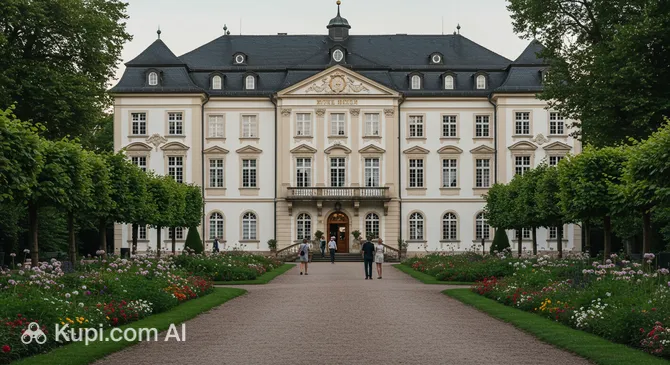
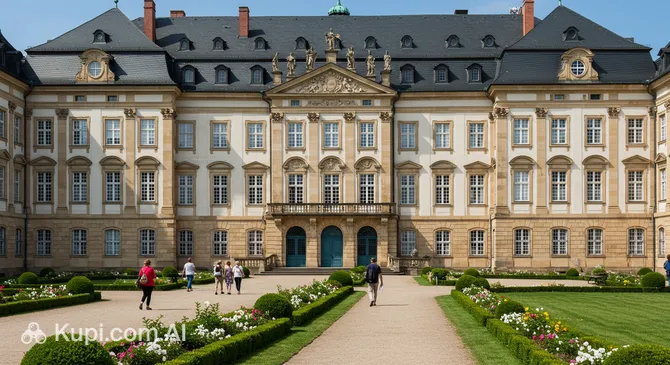
Fulda City Palace. Illustration.
Source: Kupi.com AI

Traveler photos:

  • Fulda is often called the "Baroque pearl of Hesse" thanks to its remarkably cohesive architectural ensemble, which has miraculously survived to this day. The luxurious City Palace of Fulda, the majestic cathedral, and ancient houses create a setting that transports guests back to the era of lavish balls and aristocratic receptions.

  • It is home to the unique German Fire Brigade Museum, whose exhibition is considered one of the most interesting of its kind. Visitors can see rare historical exhibits and learn many surprising facts about firefighting throughout the centuries.

  • The city is one of the country's most important spiritual centers: its history began as far back as 744 with the founding of a Benedictine abbey. To this day, Fulda attracts thousands of pilgrims wishing to honor the relics of Saint Boniface, which rest in the famous cathedral.

  • One of the most colorful traditions is the celebration of Fastnacht—the local version of Carnival. During these days, the city streets are filled with music and joy, colorful costume parades take place, and theatrical performances are staged in the squares, immersing spectators in a festive atmosphere.

How to Get There

Fulda is located in the very heart of Germany, making it easy to reach from various corners of the country and Europe. The city boasts excellent transport accessibility, whether by car, train, or flying through neighboring major aviation hubs. You can find out more about how to get to Fulda by exploring all available routes and transport options.

Since Fulda itself does not have its own airport, most travelers fly into nearby international hubs. The most convenient and popular option is Frankfurt Airport (IATA: FRA). It is one of Europe's largest airports with a huge passenger flow, receiving flights from all over the world. It is located in Frankfurt am Main, approximately 98.5 km from Fulda. The journey from the airport by train or car takes about an hour and a bit.

Another option for flying in is Nuremberg Airport (IATA: NUE). It is located in the city of Nuremberg, at a distance of about 154.6 km from Fulda. This is a medium-sized international airport that may be convenient if you are flying from certain European cities. The journey from here to Fulda takes longer—about two hours by ground transport.

For convenience, here is summary information on the main airports located relatively close to the city:

AirportPassenger trafficDistance
Kassel-Calden Airport107 61597 km
Frankfurt Airport61.6 mln99 km
Frankfurt Egelsbach Airport80 00099 km
Erfurt Airport138 002102 km
Paderborn Lippstadt Airport818 378139 km

Railway communication in the region is excellently developed. If you are planning a trip by train, you should pay attention to the major transport hubs in the vicinity. One of the key ones is Frankfurt (Main) Hauptbahnhof. Please note that this station is not in Fulda, but in the city of Frankfurt am Main, at a distance of about 88 km. It is one of the busiest stations in Europe, with high-speed trains departing regularly towards Fulda.

Another important hub is Kassel-Wilhelmshöhe station. It is located in the city of Kassel, approximately 85.7 km from Fulda. This station is often used as a transfer point for ICE high-speed trains running through Germany. Travel time from these stations to Fulda by train is usually minimal thanks to the high-speed rail lines.

Below is a table with the nearest major railway stations for planning your route:

StationPassenger trafficDistance
Eisenach Hauptbahnhof1.8 mln66 km
Kassel-Wilhelmshöhe Station10.9 mln86 km
Frankfurt (Main) Hauptbahnhof127.8 mln88 km
Erfurt Hauptbahnhof16.8 mln106 km
Mannheim Hauptbahnhof36.5 mln148 km

Main Attractions

Fulda is a city where every corner breathes history, and a walk through the center feels like a journey back in time. The Baroque architectural ensemble has been remarkably well-preserved here, creating unique backdrops for your holiday. It is best to start exploring the city from its heart, where the main symbols of former greatness are concentrated.

The central point of attraction for tourists is the majestic Cathedral Square (Domplatz) Fulda. This spacious open area serves as the link between the famous Cathedral and the City Palace. The square impresses with its scale and solemnity; it is here that the main city open-air concerts take place, featuring international stars. For the traveler, this is an ideal spot for panoramic photos and starting a walking route through the historic quarter.

If you want to take a break from the city bustle, be sure to visit the picturesque Castle Garden. This park, laid out in the 18th century, is a magnificent example of landscape art with terraces, fountains, and elegant sculptures. In summer, thousands of roses bloom here, creating an incredible fragrance, while the orangery hosts exhibitions and events. A walk along the garden paths will provide a sense of calm and allow you to enjoy views of the Baroque architecture from a new perspective.

Schloss Garden. Illustration.
Source: Kupi.com AI

Traveler photos:

For families with children and fans of interactive leisure, the Children's Academy of Fulda will be a real discovery. It is the oldest independent children's museum in Germany, whose main pride is the "Walking Heart"—a huge model of a human heart that you can actually walk inside. The exhibition is built on the principle of "touching allowed": here, young explorers can learn about the laws of physics, biology, and art through play. This place guarantees vivid impressions not only for children but for adults as well.

Technology and history buffs should stop by the German Fire Brigade Museum. Its collection includes unique exhibits, from old hand pumps and leather buckets to 20th-century fire engines. The museum tells the detailed story of firefighting, demonstrating the evolution of equipment and the heroism of rescuers. This is one of the most comprehensive and interesting thematic collections in Europe, appealing to a wide range of visitors.

Local Cuisine

Fulda's culinary traditions are a vibrant reflection of the rich culture of the Hesse region. The city's gastronomic scene successfully combines hearty rural classics with refined flavors that will satisfy even the most discerning gourmets. A journey here is unimaginable without trying the local hit—"Handkäse mit Musik". This is a marinated cheese served with onions, vinegar, oil, and caraway seeds, usually accompanied by fresh farmhouse bread.

Meat delicacies hold a special place on the menus of local establishments. Be sure to try "Ahle Wurscht"—a traditional hard-cured sausage whose recipe is passed down through generations. It can often be found at farmers' markets and in cozy bistros. Depending on the season, restaurants offer special treats: in spring, asparagus with new potatoes is the queen of the table, while in autumn, the focus shifts to game dishes and forest mushrooms.

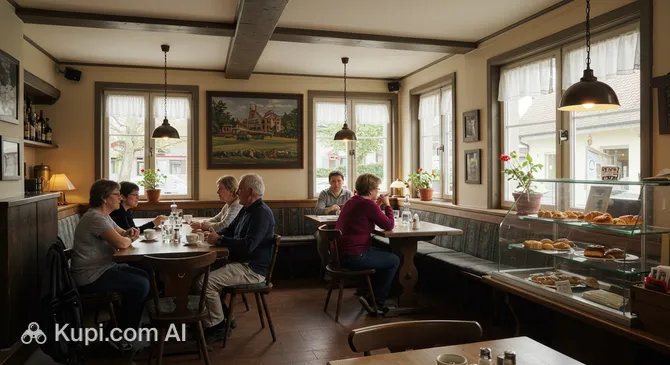
Café Glück Fulda. Illustration.
Source: Kupi.com AI

Traveler photos:

For those with a sweet tooth, Fulda has prepared its signature dessert—"Fuldaer Torte". This delicate cake with nuts and buttercream is the perfect accompaniment to a cup of aromatic coffee. If you are looking for a cozy place to enjoy desserts or a light breakfast, you should check out Cafe Glück Fulda, which is famous for its welcoming atmosphere.

As for drinks, there is a cult of apple wine (cider) here, popular throughout Hesse. It is drunk from special ribbed glasses and is very refreshing after long walks. Naturally, like in any German city, quality beer is respected in Fulda. Local pubs and bars, such as heimat. Coffee, Kitchen, Pub, offer an excellent selection of drinks and snacks in a modern setting where both locals and tourists love to gather.

Street food and city festivals are a separate chapter of Fulda's gastronomic life. The aromas of grilled sausages and fresh pretzels often waft through the squares. The city regularly hosts gastronomic festivals and wine fairs, turning the historic center into one large open-air tasting venue. For those who prefer a more substantial dinner with grilled meats, the Toro Negro Grill Restaurant is an excellent choice.

Travel Tips

A trip to Fulda promises to be peaceful and inspiring, as the city is compact and offers a high level of comfort for guests. To ensure your visit to the "Baroque pearl" of Hesse goes perfectly, we have prepared a list of useful recommendations to help you feel right at home here.

  1. Clothing and Footwear for Walking. Fulda's historic center is paved with old cobblestones, so be sure to bring comfortable flat-soled shoes—heels will be inappropriate and uncomfortable here. The climate is changeable, so even in summer, it's worth having a light windbreaker and a folding umbrella. If you plan to enter the Cathedral or monastery complexes, remember the modest dress code: shoulders and knees should be covered.
  2. Transport Accessibility. Fulda is a city best explored on foot; the main attractions of the Baroque Quarter are within walking distance of each other. For trips to distant areas (for example, to the Fire Brigade Museum), you can use the buses of the local company RhönEnergie (part of the RMV association). Tickets are bought from the driver or in machines. Taxis are easy to find at the railway station (Bahnhof), and apps like Uber don't work as stably here as in megacities; it's better to use local services or FreeNow.
  3. Finances and Cash. The currency is the Euro (€). Despite digitalization, Germany remains a country that loves cash (Bargeld). In souvenir shops, small bakeries, or street food kiosks, cards may not be accepted, so always keep small denomination bills and coins on you. Tips in restaurants are usually left at 5–10% of the bill, simply by rounding up the amount when paying the waiter.
  4. Health and Safety. Fulda is a very safe and quiet city where you can walk even late in the evening. Pharmacies are marked with a large red letter "A" (Apotheke). They usually close around 6:30 PM and do not work on Sundays, but there is always one duty pharmacy in the city operating 24/7 (the address of the duty one is posted on the doors of any closed pharmacy).
  5. Communication and Language. The official language is German. In the tourist center, hotels, and museums, staff speak English well, but in small shops, knowing a few phrases in German ("Guten Tag" — Good day, "Danke" — Thank you) will be met with warmth. Free Wi-Fi is available around the station, on central squares, and in many cafes. A SIM card can be bought in supermarkets or mobile shops, but a passport will be required for registration.
  6. Local Etiquette. In Fulda, as in all of Germany, silence and order are valued. Sunday (Sonntag) is a sacred day of rest (Ruhetag): almost all shops, including grocery stores, are closed; making noise on the street or in residential areas is not common. It is customary to greet the shopkeeper when entering small stores.
  7. What to Avoid. The main safety rule on the streets: never walk on bicycle paths. They are often highlighted with color or markings on the sidewalk. Cyclists ride fast and expect a clear path. Also, do not cross the road on a red light, even if there are no cars—it is considered bad manners and can result in a fine, and locals might point it out.
  8. Tip for Explorers. Fulda is located at the foot of the Rhön mountain range. If you have a free day, be sure to rent a car or take a train/bus to the Rhön Biosphere Reserve. This place is known as the "Star Park" (Sternenpark)—one of the few places in Europe with minimal light pollution, where an incredible view of the starry sky opens up at night.

Following these simple rules will help you avoid minor troubles and focus entirely on the beauty of the Baroque architecture and the hospitality of the local residents. May your trip to Fulda become a source of bright and warm memories!

Entertainment & Nightlife

Despite its reputation as a quiet Baroque city, Fulda knows how to surprise with its lively evening atmosphere. Thanks to the university and a large number of young people, the nightlife here is democratic, vibrant, and cozy. The epicenter for locals and tourists alike is the so-called "Bermuda Triangle" (Bermuda-Dreieck) in the old town. This quarter, covering Karlstraße and Kanalstraße, is where bars, traditional pubs, and cocktail lounges are located literally door-to-door. In summer, the fun spills out onto open terraces, creating the feeling of one big open-air celebration.

An evening in Fulda typically begins with a leisurely dinner. The city's gastronomic map is diverse: from hearty German taverns to exotic venues. An excellent choice to start is the Chaang Noi restaurant, which offers Thai cuisine. It has a pleasant interior and a relaxed atmosphere perfect for socializing before heading out to the bars. Most nightlife venues in the city favor a casual style, so a strict dress code is usually not necessary unless you plan to visit elite private clubs.

Daytime leisure in the city can also be quite exciting and varied. If you want to combine a walk with some shopping, you should visit Emaillierwerk. This is a unique shopping center located in a restored building of a former enamel factory. Here, industrial architecture blends harmoniously with modern shops, creating an interesting location not just for shopping but also for photo shoots.

For those who prefer active recreation or are looking for entertainment for a group, the Fulda Trampoline Park is a great option. This place allows you to return to childhood for a while, release energy, and get an adrenaline rush while taking a break from classic sightseeing routes.

When planning a night out, keep a few practical nuances in mind. Fulda is a safe city, and walking through the illuminated center at night is quite comfortable. The main bar activity occurs on Friday and Saturday, when venues stay open until 3–4 AM; on weekdays, things quiet down closer to midnight. Drink prices here are lower than in neighboring Frankfurt, which is a pleasant surprise for travelers. If you stay out late, it's better to order a taxi by phone or through local apps, as catching a car on the street at night can be difficult.

Parks & Museums

Fulda harmoniously combines the grandeur of Baroque architecture and the coziness of green spaces, offering tourists a rich cultural program and opportunities for peaceful relaxation in nature. The city carefully preserves its historical heritage in museums, while its parks serve as the perfect place to recharge after excursions.

The main green oasis in the city center is rightfully considered the Castle Garden (Schlossgarten). This magnificent park, laid out in the Baroque style and later supplemented with elements of English landscape design, invites you to walk along perfectly manicured alleys and admire the fountains. Another significant natural area is the Fuldaaue park—an extensive recreational territory with lakes, lawns, and walking paths. It is a favorite spot for locals for picnics, morning jogs, and boating in the warmer months.

The cultural life of the city is centered around its rich exhibitions. An essential stop for art and history lovers is the City Palace of Fulda. Besides admiring the exterior, it is worth visiting its historical halls, which have been turned into a museum. Here you can see luxurious 18th-century interiors, a porcelain collection, and the famous Mirror Cabinet, immersing you in the life of the prince-abbots.

For those who want to dive deeper into the region's history, the Vonderau Museum opens its doors. It is the city's largest museum, combining three directions: cultural history, natural history, and art. The exhibition covers the period from the Stone Age to the present day, featuring unique archaeological finds and paintings by local artists. Also noteworthy is the Dommuseum (Cathedral Museum), which houses sacred relics and treasures related to the history of the Cathedral and Saint Boniface.

If you are looking for seclusion and panoramic views, we recommend climbing up to the Frauenberg monastery. The monastery garden, situated on a hill, offers not only silence and peace but also perhaps the best view over the roofs of the old town and the surroundings of the Rhön mountains.

Getting Around

Fulda's transport system is characterized by German punctuality and comfort, although it does not match the scale of a metropolis. Since the city is quite compact, the historic center with its Baroque attractions is best explored on foot. However, if you need to reach distant areas, a hotel on the outskirts, or the picturesque surroundings, an extensive network of bus routes is at your service.

It is important to know that in Fulda there is no metro, trams, or trolleybuses. The only form of urban public transport is the bus. The route network covers the entire city and the nearest suburbs, with the local company acting as the operator. The heart of the transport system is the Central Bus Station (ZOB), located in the immediate vicinity of the Main Railway Station. Most routes connecting the center with residential areas and shopping zones depart from here.

Fulda is part of the RMV (Rhein-Main-Verkehrsverbund) transport association, so a unified fare system applies here, common to the entire Rhine-Main region. For tourists, the most advantageous option is often a day ticket (Tageskarte), which allows for unlimited travel during the day and pays for itself after just the second or third trip. If you are traveling in a group of up to 5 people, look for the group day ticket (Gruppentageskarte)—it is the most economical way to get around.

Tickets can be purchased in several ways. The simplest is to buy a ticket directly from the driver when boarding the bus (entry is only through the front door). Note: drivers mainly accept cash, so try to have small bills or coins with you. Tickets are also sold in special machines at major stops and at the station (the menu often has language options) or through the RMVgo mobile app, which saves you from looking for change.

Unlike large megacities where transport runs around the clock, night service in Fulda has its own characteristics. Main bus lines are active throughout the day, but intervals increase in the evening. At late hours and on weekends, so-called AST (Anruf-Sammel-Taxi)—collective taxis—operate on some routes, following bus paths but requiring advance booking by phone (usually 30 minutes before the trip).

As an alternative to buses, regular taxis are popular. Taxi stands can easily be found at the railway station and on central squares. Taxis operate by meter, but card payment is not possible in all vehicles, so it's better to clarify this before boarding. Taxi apps work here, but classic phone orders or picking one up at a stand are often more reliable.

Bicycles hold a special place in the city's transport life. The terrain is conducive to cycling, and the infrastructure for it is excellently developed. Many tourists prefer to rent a bicycle for trips around the city and along the Fulda River. Rental points can be found near the station, allowing you to combine active recreation with sightseeing.

Accommodation

Fulda offers travelers a decent selection of accommodation options to suit both budget tourists and those accustomed to a high level of comfort. The city is dominated by cozy mid-range hotels and family guesthouses (Gasthof), where you can experience traditional German hospitality. For luxury lovers, elegant four-star hotels are available, often located in historic buildings, while budget-conscious travelers can stay in inexpensive hostels or rent apartments.

When choosing a place to stay, consider the purpose of your visit, although thanks to the city's compactness, almost any location will be convenient. The most prestigious and picturesque area is considered the Baroque Quarter and the surroundings of the Cathedral. Staying here, you will wake up with a view of the main attractions and can walk through the ancient streets until late in the evening. Another popular area is near the Railway Station (Bahnhof). This is a practical choice for those planning day trips around the region or visiting Fulda on business: modern chain hotels and excellent transport links are concentrated here.

Hotel am Schlossgarten Fulda. Illustration.
Source: Kupi.com AI

Traveler photos:

The price range for accommodation in Fulda can be described as moderate, especially compared to neighboring Frankfurt am Main. Most offers fall into the "mid-range plus" category, where for a reasonable price you get a clean room, a hearty breakfast, and quality service. Booking is best done through popular online platforms, although many small family hotels also happily accept direct bookings via phone or their own websites.

An important planning tip: despite its quiet pace of life, Fulda often becomes the center of major events. During the "Musical Summer," Christmas markets, or major religious conferences, demand for accommodation increases sharply. To guarantee yourself the best option at a good price, it is recommended to book your room well in advance—ideally several months before your trip during peak seasons.

Nearby Cities

For those who want to explore the surrounding area, Fulda serves as an excellent starting point for day trips to several interesting nearby locations:

CityPopulationDistance
Petersberg16 0692 km
Kunzell16 8293 km
Eichenzell11 1457 km
Grossenluder8 58311 km
Neuhof10 84312 km

Among the listed destinations, Bad Hersfeld deserves special attention. This city is known far beyond the region for its annual theater festival, held in the picturesque ruins of an ancient monastery. Additionally, it is a popular resort with healing springs and a cozy historic center, pleasant for a stroll at any time of year.

Fans of wellness retreats should visit Bad Salzungen. This is one of Germany's oldest salt spas, located on the shores of the beautiful Burgsee Lake. The city's main pride is the powerful graduation towers—structures for salt evaporation that create a unique microclimate beneficial for breathing.

If you are interested in the history of technology, a short trip to Hünfeld is a great choice. The city is closely linked to the name of Konrad Zuse, the creator of the first programmable computer, and there is a museum dedicated to his inventions. These nearby destinations provide insight into the diverse culture and landscapes of the region.

Shopping & Souvenirs

Shopping in Fulda is a pleasant and relaxed activity that perfectly complements walks around the historical sights. The city is characterized by its compactness, so most shops are within walking distance of each other. Here you won't find the endless hustle of megacities, but instead, you can enjoy a cozy atmosphere where modern brands sit alongside ancient family shops and boutiques.

The main shopping artery of the city is considered the area around the central axis leading from the railway station deep into the old town. The pedestrian zone, which includes Bahnhofstraße, flows smoothly into University Square Fulda. This is where the life of the city is concentrated: department stores, clothing shops of famous European brands, bookstores, and perfume boutiques. If you turn onto the neighboring streets, such as Marktstraße or into the Baroque Quarter, you can find more exclusive shops with designer clothing, jewelry, and antiques.

For those who prefer to shop in one place, Fulda has several noteworthy shopping centers. One of the most popular is Emaillierwerk. This mall is located in a unique building of a former enamel factory, giving it a special industrial charm. Inside you will find a wide selection of fashion, electronics, and sporting goods stores. It is a great place to update your wardrobe in any weather.

Another important point on the shopaholic's map is the Kaiserwiesen Fulda shopping center. It is located slightly away from the historical core but is easily accessible. Large hypermarkets, shoe stores, and home goods shops are represented here. This place is more focused on practical shopping but also offers a good choice of cafes to rest between visits to the shops.

Of particular note are the city markets, which are an integral part of local culture. The traditional Weekly Market (Wochenmarkt) usually takes place on Gemüsemarkt square on Wednesdays and Saturdays. Here, farmers from the Rhön region offer the freshest products: seasonal fruits, vegetables, homemade cheeses, and meat delicacies. This is the best place to feel the true taste of the region and buy edible gifts.

Speaking of souvenirs, you should bring back something authentic from Fulda. First and foremost, pay attention to the gastronomic specialties of the Rhön region: the famous cured sausage, honey, or local herbal liqueurs and schnapps, which are often sold in beautiful gift bottles. Souvenirs with Baroque symbols and those related to Saint Boniface are also popular. In the small shops of the old town, you can find high-quality ceramics and handmade items by local craftsmen.

When planning your shopping, remember the typical working schedule of German shops. Major department stores and shopping centers in the center are usually open from 10:00 to 19:00 or 20:00 from Monday to Saturday. Smaller boutiques may close earlier, around 18:00, and work on a shortened schedule on Saturdays. Sunday is a day off, when almost all shops are closed, except for some bakeries and kiosks at the station.

Regarding payment, credit cards (Visa, Mastercard) are accepted without issues in large shopping centers and chain stores. However, Germany still loves cash: in small cafes, souvenir shops, or at the market, a card might not work, or there may be a minimum limit for cashless payment (e.g., from 10 or 20 euros). Tourists from non-EU countries can use the Tax Free system when buying goods over a certain threshold (usually 50 euros) in stores marked with a special sign and get part of the VAT back when leaving the country.
Reached the end of the page?

That means the route is fully explored