Support

Luneburg

About

Lüneburg is a true treasure for history and architecture enthusiasts, nestled in northern Germany, just a half-hour drive from Hamburg. This charming city, located along the Elbe River region according to historical records, looks as if it stepped out of a medieval fairy tale: its picturesque alleys, cobblestone streets, and characteristic crooked houses hold the traces of a thousand-year history.

With a population of approximately 76,000 people, Lüneburg is rightfully considered one of the most beautiful cities in the state of Lower Saxony. It wonderfully combines perfectly preserved medieval buildings with modern life. Despite its venerable age, the city is full of young people and students, giving it a special, lively, and dynamic atmosphere.
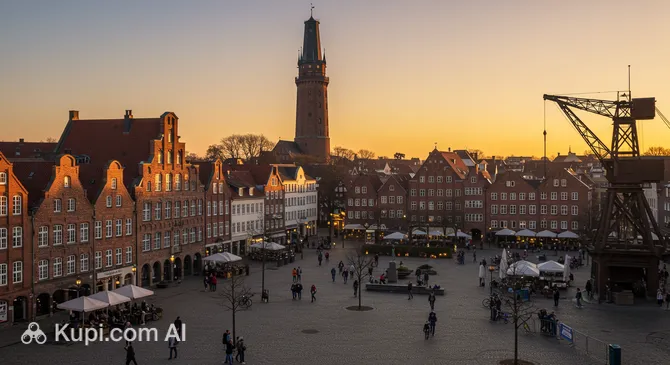
Lüneburg. Illustration.
Source: Kupi.com AI

The main pride and source of Lüneburg's former wealth is its glorious Hanseatic past. The city was a true "salt capital" of Northern Europe, and it was the "white gold"—salt mined here for centuries—that brought prosperity and allowed it to become an important member of the powerful Hanseatic League. Echoes of this era are still visible today in the magnificent Brick Gothic buildings of the historic center.

Lüneburg is an ideal destination for those who want to immerse themselves in the atmosphere of medieval Europe, take a leisurely stroll through authentic streets while admiring half-timbered houses, and enjoy the unique charm of northern life. Visit this enchanting city to discover its unique heritage, hospitality, and unmistakable atmosphere.

You can find more interesting facts on the Lüneburg city history page.
Weather Overview

The climate in Lüneburg is temperate, with clearly defined seasons. Summers are generally warm and quite comfortable, although not without rain—on average, precipitation occurs about 11–14 days per month during the summer period, though the total amount is usually small. Winters in Lüneburg are cool, with average temperatures hovering a few degrees above freezing. Winter months are also characterized by frequent but typically not very heavy precipitation; the number of days with precipitation can reach 13–15 per month. Overall, expect a warm summer with occasional rain and cool, damp winters.

To better prepare for your trip and get more detailed information about the weather conditions in different months, we recommend visiting the Lüneburg Climate page.

Average monthly temperature

Average monthly precipitation

Interesting Facts

Beyond its well-known landmarks, Lüneburg hides many surprising stories and facts that make it truly unique. Ready to learn a few of them?

Lüneburg Old Town. Illustration.
Source: Kupi.com AI

Traveler photos:

  • Lüneburg owes its centuries of prosperity to salt mining, which was referred to here as "white gold." Legend has it that soil subsidence over the old salt mines caused many houses in the Lüneburg Old Town to develop a characteristic tilt, which has become one of its architectural signatures. You can learn more about this vital chapter of the city's history at the German Salt Museum.

  • In the Middle Ages, Lüneburg was one of the key members of the Hanseatic League—a powerful trading alliance in Northern Europe. Thanks to its rich salt deposits, the city played a crucial role in supplying salt to vast territories, including Scandinavia, which brought it significant influence and wealth.

  • Lüneburg boasts one of the highest densities of restaurants, cafes, and bars per capita in all of Germany. This concentration is not only due to its tourist appeal but also to the large number of students at the local university, who create a vibrant and youthful atmosphere.

  • The biography of the famous 19th-century German poet and publicist Heinrich Heine is closely linked to Lüneburg. Although his ancestral home, which he visited many times, now functions as a cultural center, the city proudly honors the memory of the great writer with regular themed events and festivals.

How to Get There

When planning a trip to this picturesque corner of Lower Saxony, it is worth thinking about your route in advance. The city is conveniently located near major transport arteries, making it easily accessible for travelers. You can find out more about how to get to Lüneburg by checking the main arrival options through nearby airports and train stations.

The most convenient way to arrive by air is via Hamburg Airport (IATA: HAM). Please note that this international airport is not located in Lüneburg itself, but in the neighboring city of Hamburg, approximately 51 km away. It is a major aviation hub with high passenger traffic. A taxi or transfer from there will take roughly 50–60 minutes, depending on traffic.

An alternative option is Hannover Airport (IATA: HAJ). It is also located in another city—Hannover—about 100 km from Lüneburg. This is another significant international airport receiving many flights. Travel time by car from this airport is about an hour and a half.

For your convenience, here is a summary of the main airports:

AirportPassenger trafficDistance
Hamburg Airport13.6 mln51 km
Lübeck Blankensee82 55065 km
Hannover Airport5.3 mln100 km
Bremen Airport1.8 mln111 km
Laage Airport148 000143 km

If you prefer rail travel, you should look for major hub stations in the region. One of the key ones is Hamburg Hauptbahnhof. It's important to keep in mind that it is located in Hamburg, 43.5 km from Lüneburg. From here, you can quickly reach your destination by regional train (travel time is only 30–40 minutes) or by taxi (about 45–50 minutes).

You can also use Hannover Main Station, located in Hannover (approximately 107 km from Lüneburg). This is a major railway hub providing connections to many European cities. The train journey to Lüneburg takes just over an hour, while a car ride takes about 1 hour and 20 minutes.

Below is a table with the nearest major railway stations:

StationPassenger trafficDistance
Hamburg Hauptbahnhof200.8 mln44 km
Messe Bahnhof (Messe-Bf) Station101 km
Hanover Main Station91.3 mln107 km
Bremen Hauptbahnhof43.8 mln109 km
Rostock Hauptbahnhof6.6 mln146 km

Main Attractions

Lüneburg, a charming city in Lower Saxony, is rich in history and offers tourists many interesting places to visit. Its medieval appearance, shaped by centuries of salt mining, has been preserved to this day and attracts travelers from all over the world.

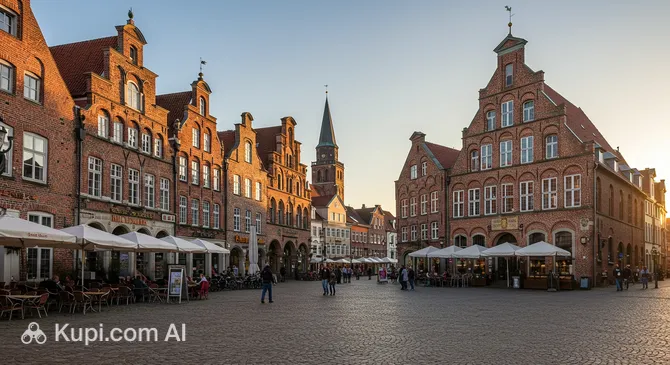
Am Sande Square. Illustration.
Source: Kupi.com AI

Traveler photos:

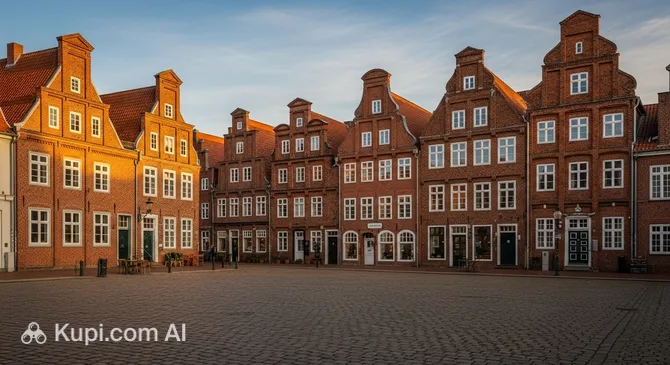
One of the city's main gems is Am Sande Square. This is Lüneburg's historical center, surrounded by magnificent Brick Gothic buildings with characteristic stepped gables. Once a bustling trade hub, today it is a popular place for walking, where you can admire the architecture and feel the spirit of an old Hanseatic city. Of particular note are the former Chamber of Commerce building (Altes Kaufhaus) and St. John's Church with its slightly leaning tower.

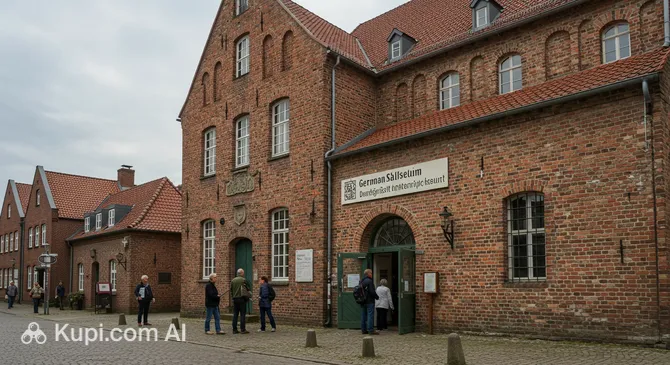
It is impossible to imagine Lüneburg without its salt-related history, and the best way to learn about it is to visit the German Salt Museum. Located on the site of former salt works, the museum tells the fascinating story of "white gold" and its role in the city's prosperity over the centuries. Exhibits demonstrate ancient mining and processing technologies, as well as the daily lives of salt workers. This site is engaging for both adults and children.

German Salt Museum. Illustration.
Source: Kupi.com AI

Traveler photos:

A walk through the Lüneburg Old Town is a must. The city boasts a vast number of exceptionally well-preserved medieval buildings. Narrow streets, half-timbered houses, and the picturesque banks of the Ilmenau River create a unique atmosphere. You can wander here for hours, discovering cozy courtyards and historical details.

Lüneburg Old Town. Illustration.
Source: Kupi.com AI

Traveler photos:

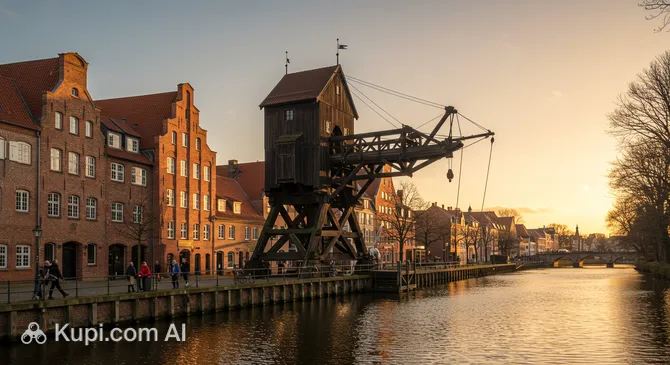
The symbol of Lüneburg's salt trade is the Old Crane on the banks of the Ilmenau. This wooden harbor crane, built in the 14th century (and rebuilt several times), was used to load salt onto ships. Today, it is one of the city's most photographed landmarks, serving as a reminder of its rich commercial past.

Old Crane of Lüneburg. Illustration.
Source: Kupi.com AI

Traveler photos:

For those who want to see Lüneburg from a bird's-eye view, it is recommended to climb the Lüneburg Water Tower. Its observation deck offers a magnificent panoramic view of the Old Town's red roofs, the winding Ilmenau, and the surrounding countryside. The tower itself is an interesting architectural structure from the early 20th century.

Local Cuisine

Lüneburg's gastronomic scene is a true immersion into cozy North German cuisine, where hearty, soul-warming dishes and centuries-old traditions are cherished. The city's historical past, tied to salt mining, has left its mark on local culinary delights, making them particularly attractive to gourmands.

You must try the famous "Aalsuppe"—a thick and aromatic eel soup that is a signature dish of the region. Dishes made from game and seasonal vegetables are also popular, reflecting the richness of the local nature. Don't miss the chance to taste local salted delicacies: smoked fish, pickled vegetables, and, of course, pickles are prepared here with exceptional skill.

Among drinks, regional beer holds a special place and can be sampled in the city's numerous pubs and bars. It pairs perfectly with the famous "Lüneburg Bread" (Lüneburger Brot)—aromatic baked goods prepared according to ancient recipes. Non-alcoholic options include traditional juices and lemonades.

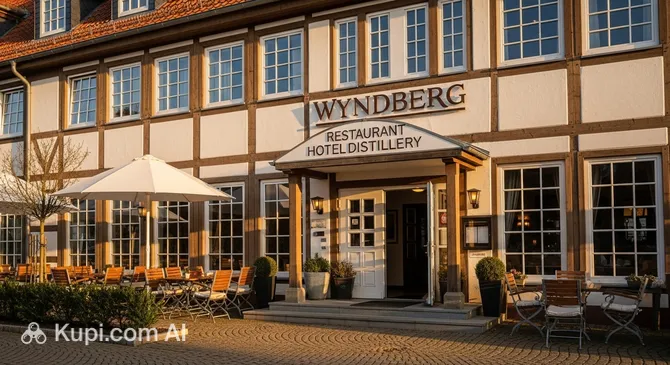
Wyndberg Hotel Restaurant Distillery. Illustration.
Source: Kupi.com AI

Traveler photos:

Locals and tourists alike enjoy their meals in traditional restaurants serving classic dishes or in cozy cafes perfect for a cup of coffee and local pastries. One such authentic spot where you can get acquainted with local food and drink is the Windberg Restaurant-Hotel-Distillery. Farmers' markets offer fresh cheeses, sausages, and sweets directly from the producers. Throughout the year, Lüneburg hosts various gastronomic festivals; the Christmas markets are especially atmospheric, featuring hot mulled wine and fresh pastries, creating a unique festive experience for the palate.

Travel Tips

Welcome to charming Lüneburg! To make your journey through this historic Hanseatic city as comfortable and pleasant as possible, we have prepared some practical tips. They will help you navigate better and enjoy every minute of your stay.

  1. Clothing and Essentials: The climate in Germany is temperate, so choose seasonal clothing for your trip to Lüneburg. In summer, light clothing will be comfortable, but don't forget a sweater or jacket for evening walks. In autumn and spring, the weather is changeable, so layering and a waterproof jacket or umbrella will be useful. In winter, warm clothing is necessary. A key point is comfortable shoes, as Lüneburg's historical center with its cobblestones is best explored on foot. Don't forget an adapter for electrical appliances (Type F, Euro socket). A special dress code is usually not required for visiting churches, but modest attire is appreciated.

  2. Getting Around the City: Lüneburg is a fairly compact city, and its historical center is easy to explore on foot. This is the best way to soak up its atmosphere. Bicycles are also popular and can be rented. Public transport consists of buses that connect different parts of the city. Taxis are available and can be called via apps. Renting a car might be useful if you plan to explore the surrounding Lower Saxony countryside, but for moving around Lüneburg itself, it likely won't be necessary.

  3. Finances: The official currency in Germany is the Euro (EUR). You can exchange money at banks or exchange offices, but bank rates are usually more favorable. Bank cards (Visa, Mastercard) are accepted in most shops, restaurants, and hotels. International cards should work without issues. ATMs (Geldautomat) are easy to find throughout the city. A rough daily budget (excluding accommodation) could be 50–100 Euros. Tipping in restaurants is welcome (usually 5–10% of the bill if you liked the service)—it's customary to either round up the bill or leave the change.

  4. Health and Safety: Lüneburg is a safe city, but standard precautions should be followed: watch your belongings in crowded places. Pharmacies (Apotheke) are easy to find; look for the sign with the red letter "A". Information about on-duty pharmacies (Notdienst Apotheke) operating at night and on weekends is usually posted on every pharmacy door. In case of emergency medical assistance, tourists should call the emergency number 112. It is recommended to have travel medical insurance.

  5. Communication: The official language is German. In tourist areas, hotels, and among the youth, many people speak English. However, knowing a few basic phrases in German will be very helpful and appreciated by locals: "Hallo" (Hello), "Guten Tag" (Good day), "Danke schön" (Thank you very much), "Bitte schön" (You're welcome), "Entschuldigung" (Excuse me). You can buy a local SIM card at supermarkets or mobile phone shops. Wi-Fi is available in most hotels, cafes, and restaurants; public hotspots can also be found sometimes.

  6. Local Etiquette: Germans value punctuality, so try not to be late for appointments. When meeting or greeting, it is customary to shake hands and make eye contact. Using the informal "Du" (you) is common among young people and in informal settings, but with strangers or elders, it's better to use the formal "Sie" (you). Try not to be noisy in public places, especially on transport. Important: Do not cross the road on a red light, even if there are no cars—this is considered a serious violation.

  7. What to Avoid: Try not to walk on bicycle lanes—they are intended exclusively for cyclists, and pedestrians on them can create dangerous situations. Also, be careful with loud talking and laughing in public places, especially in churches and memorial sites; show respect for the quiet.

  8. Lüneburg Specialty: The city has a rich history related to salt mining. Be sure to visit the German Salt Museum (Deutsches Salzmuseum) to learn more about the "white gold" that brought Lüneburg its prosperity. Also, note that many shops in Germany, including Lüneburg, are closed on Sundays, so plan your shopping in advance.

We hope these tips help you plan an unforgettable trip to Lüneburg and get the most out of discovering this beautiful city with its unique architecture and rich history!

Entertainment & Nightlife

Lüneburg, known for its medieval charm, also offers a variety of opportunities for evening and nighttime leisure. Thanks to its large student population, the city comes alive after sunset, offering entertainment for every taste—from cozy bars to lively clubs.

The main concentration of nightlife is found in the historical city center, especially around Schröderstraße and Auf dem Meere, as well as around Am Sande square. Here you will find many bars, pubs, and cafes where you can enjoy a pleasant evening. The atmosphere in most establishments is quite relaxed and informal; there is usually no dress code, especially in student-oriented bars. The crowd is a mix of students, locals, and tourists.

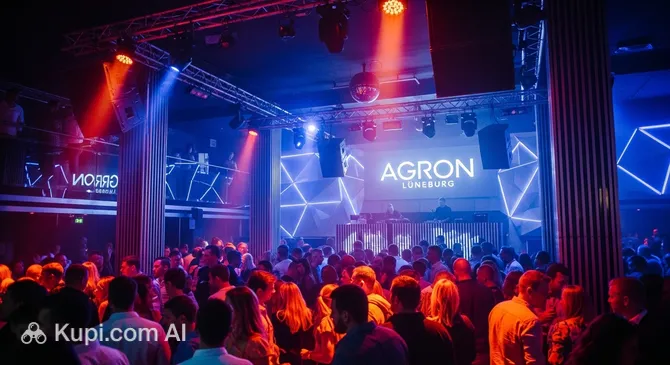
Among the popular spots for an evening out are Pacos bar, known for its selection of drinks and pleasant atmosphere, and Bar Feierabendkultur, where you can unwind after a busy day. If you're in the mood for dancing and a more active night, check out the AGRON Lüneburg nightclub, which attracts fans of modern music. Some restaurants, such as the Windberg Restaurant-Hotel-Distillery, offer exquisite dining before you head out to explore the city's nightlife.

AGRON Lüneburg. Illustration.
Source: Kupi.com AI

Traveler photos:

The best time to visit bars is after 8:00 PM, while clubs usually start filling up closer to midnight, especially on Fridays and Saturdays. Average prices for drinks and club entry are moderate, which is typical for university cities in Germany. You can get around the city at night by taxi, which are easy to call or find at designated stands. Public transport runs less frequently at night, so it's worth checking the schedule in advance.

Lüneburg is considered a quite safe city; however, as anywhere else, basic precautions should be taken, especially at night: keep an eye on your belongings and avoid poorly lit or deserted areas. Walking along the main central streets is generally safe.

During the day, Lüneburg also keeps you entertained. You can visit numerous museums, such as the German Salt Museum, which tells the story of the city's rich salt-mining history, or the Museum Lüneburg. Stroll through the charming Lüneburg Old Town, admire historical buildings like the Old Crane on the Ilmenau River, or relax in the Lüneburg Kurpark.

Parks & Museums

Lüneburg is a city where history harmoniously blends with nature, offering guests both peaceful green spaces for relaxation and a rich cultural heritage reflected in its numerous museums and historical monuments.

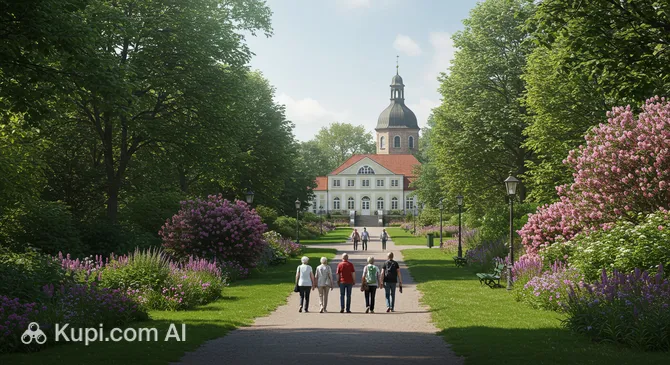
One of the city's main green oases is the Lüneburg Kurpark. It is a wonderful place for leisurely strolls, outdoor relaxation, and enjoying well-kept flower beds and shaded avenues. Here, you can escape the city bustle and recharge your energy. In addition to the Kurpark, pleasant walking areas can be found along the Ilmenau River, which flows through the city and creates picturesque landscapes.

Kurpark Lüneburg. Illustration.
Source: Kupi.com AI

Traveler photos:

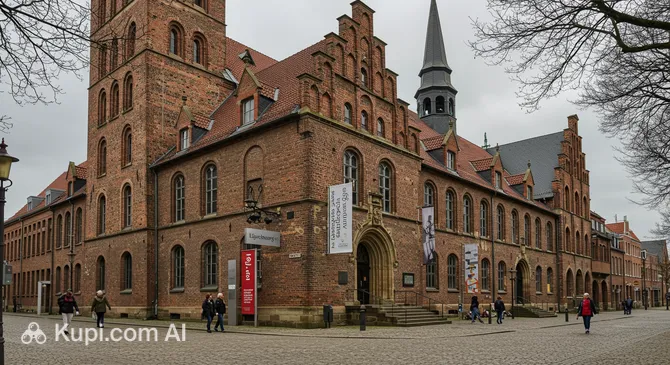
Lüneburg takes pride in its museums, each revealing the history and culture of the city and region in its own way. Salt mining played a key role in Lüneburg's history, and you can learn more about this at the German Salt Museum. The museum's exhibition tells an engaging story of "white gold" and its significance for the city's prosperity over the centuries.

German Salt Museum. Illustration.
Source: Kupi.com AI

Traveler photos:

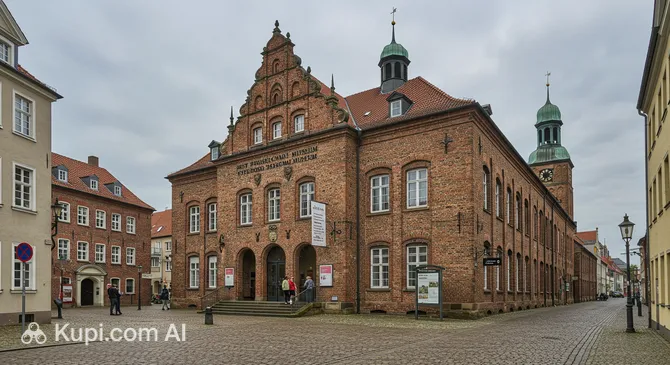
Another important cultural center is the Museum Lüneburg. It offers a comprehensive look at the history of the city and its surroundings, from archaeological finds to works of art and everyday objects, allowing visitors to gain a deeper understanding of Lüneburg's development.

Lüneburg Museum. Illustration.
Source: Kupi.com AI

Traveler photos:

For those interested in a broader cultural context, the East Prussian State Museum is worth a visit. It preserves and presents the culture and history of this former German region, offering unique exhibits and narratives.

East Prussian Regional Museum. Illustration.
Source: Kupi.com AI

Traveler photos:

Beyond the museums, the Lüneburg Old Town itself is a living open-air museum. Its beautifully preserved medieval brick houses, the historic Am Sande Square, and the famous Old Crane on the Ilmenau are testaments to the city's rich past. Significant sites such as the majestic St. Michael's Church, where a young Johann Sebastian Bach once sang, and the peaceful Lüne Abbey with its textile workshops and gardens, should not be missed.

For an authentic experience, take a walk through the lesser-known streets of the Old Town away from the main tourist routes—there you can discover charming courtyards and unique details of ancient architecture. Also, don't miss the chance to climb the Lüneburg Water Tower for a panoramic view of the entire city and its surroundings.

Getting Around

Public transport in Lüneburg is well-developed and provides a convenient way to get around the city and its surroundings. The transport system is primarily based on buses, providing regular connections between various districts.

The main form of public transport in Lüneburg is the bus network (Stadtbus), managed by the KVG Lüneburg company. Routes cover the historical center as well as newer districts, the university, and the suburbs. An important feature is Lüneburg's integration into the Hamburg Transport Association (HVV – Hamburger Verkehrsverbund), which significantly simplifies trips to Hamburg and other towns in the region using a single ticket system.

The fare system in Lüneburg and within the HVV offers various ticket types: single trips, day tickets (Tageskarte), which are often cost-effective for multiple trips in a day, weekly (Wochenkarte) and monthly passes, as well as group tickets. The cost depends on the number of tariff zones crossed. Tickets can be purchased from machines at major stops, directly from the bus driver (usually only single and day tickets), at KVG service centers, or via the HVV mobile app.

Tourists should keep a few practical points in mind. Tickets not purchased from a driver—for example, those from a machine that are not intended for immediate use—often require validation (stamping) in special devices on the bus or platform before the journey begins. Bus schedules are generally reliable; intervals are shorter during the day and longer in the evenings and on weekends. Current schedules are available at stops, on the KVG website, and in the HVV app.

In addition to buses, other ways of getting around are available in Lüneburg. Taxis can be found at stands near the station and in the city center or called by phone. Given Lüneburg's compact and picturesque nature, renting a bike is an excellent alternative—a popular way to explore the city, especially in good weather. There are several bike rental points in the city. Car-sharing services may also be available for more flexible trips.

Accommodation

Lüneburg offers a variety of accommodation options to suit every budget and preference. Here, you can find cozy family-run hotels and traditional guest houses (Pensionen), as well as modern holiday apartments (Ferienwohnungen). The city features hotels of various categories, from budget options to more refined boutique hotels that ensure a comfortable stay.

The historical city center—the Lüneburg Old Town (Altstadt)—is particularly popular with travelers. Staying here allows you to immerse yourself in the medieval atmosphere while being within walking distance of the main attractions, such as Am Sande Square or the German Salt Museum, as well as numerous cafes and restaurants. You can also consider staying in quieter districts, from which the center is easily accessible by public transport.

Lüneburg Old Town. Illustration.
Source: Kupi.com AI

Traveler photos:

The price range for accommodation in Lüneburg varies from budget to mid-range and high-end, depending on the type of accommodation, its location, and the season. It is recommended to book your stay in advance, especially if your trip coincides with the peak tourist season (summer months, Christmas markets) or during major events. The most common booking methods are through popular online platforms or direct booking via hotel websites, which can sometimes provide better deals.

Nearby Cities

For those who want to explore the surroundings, Lüneburg serves as an excellent starting point for day trips to several interesting nearby locations:

CityPopulationDistance
Adendorf10 9035 km
Lauenburg11 64417 km
Winsen35 63018 km
Geesthacht31 53921 km
Bad Bevensen9 40022 km

These nearby destinations offer a glimpse into the diverse culture and landscapes of the region. Each of these trips will provide new experiences and complement your journey through Germany.

Shopping & Souvenirs

Lüneburg offers a pleasant and varied shopping experience, especially in its charming historical center. While the city is not famous for specific global goods, you will find a successful mix of well-known chain stores, cozy boutiques, souvenir shops, and stores selling local products. Shopping in Lüneburg is also an opportunity to enjoy the beautiful architecture of an old Hanseatic city.

The city's main shopping arteries are concentrated in the Lüneburg Old Town. The primary shopping streets are Grapengießerstraße, Bäckerstraße, and Große Bäckerstraße. These predominantly pedestrian streets offer a wide selection of clothing, footwear, accessories, books, and more. It is also worth checking out the shops around the picturesque Am Sande Square, where you can combine shopping with a break at one of the many cafes.

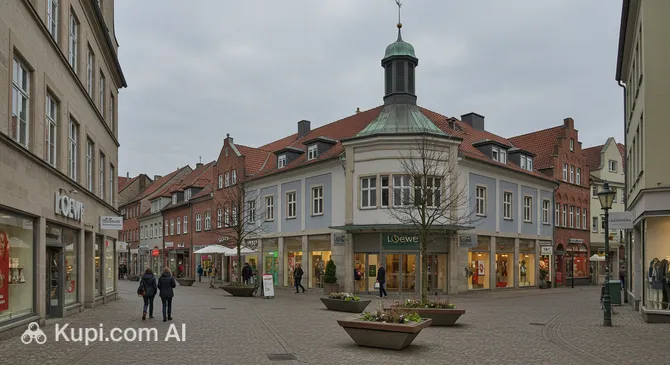
Loewe Center. Illustration.
Source: Kupi.com AI

Traveler photos:

For those who prefer shopping centers, Lüneburg has the Löwe-Center. This is a modern shopping complex where various stores offering clothing, electronics, home goods, and much more are gathered under one roof. You can also find a food court and other amenities for a comfortable visit.

Be sure to visit the weekly market (Wochenmarkt) at the Market Square (Marktplatz) in front of the historic Town Hall. It usually operates on Wednesdays and Saturdays. Here you can buy fresh local products—vegetables, fruits, cheeses, meat, pastries, flowers—and sample regional delicacies. It's a great place to experience the local flavor and pick up something delicious.

As souvenirs from Lüneburg, it's worth bringing home products related to its rich salt-mining history. Look for decorative salt shakers, various types of salt, or even salt lamps—you might find something interesting at the souvenir shop at the German Salt Museum. Locally crafted items, ceramics, postcards, and magnets with city views are also popular. Since Lüneburg is the filming location for the popular German TV series "Rote Rosen" ("Red Roses"), you can also find souvenirs related to the show.

Shops in Lüneburg generally open from Monday to Saturday, roughly from 9:00-10:00 AM to 6:00-8:00 PM. Large supermarkets and shops in shopping centers may stay open longer. On Sundays and public holidays, most shops are closed, except for some souvenir shops and stores at the train stations. Cash (Euro) and bank cards (Visa, Mastercard) are accepted. Debit cards (EC-Karte) are also very common in Germany.

For tourists from non-EU countries, a Tax Free system is available for purchases above a certain amount (usually from 50 Euros, but it's best to check current conditions). Look for shops with the "Tax Free Shopping" sign. To process a VAT refund, you must obtain a special Tax Free form from the seller, which will then need to be presented at customs when leaving the EU to receive a stamp.

Nearby cities

Reached the end of the page?

That means the route is fully explored