Support

Montabaur

About

Montabaur is a charming town that looks like it stepped right out of an old fairytale. Located in the picturesque region of Rhineland-Palatinate, it attracts travelers with its authentic atmosphere and a harmonious blend of architectural heritage and modern life. If your goal is to experience a real, cozy Germany without the hustle and bustle of major metropolises, this town will be the perfect spot on your itinerary.
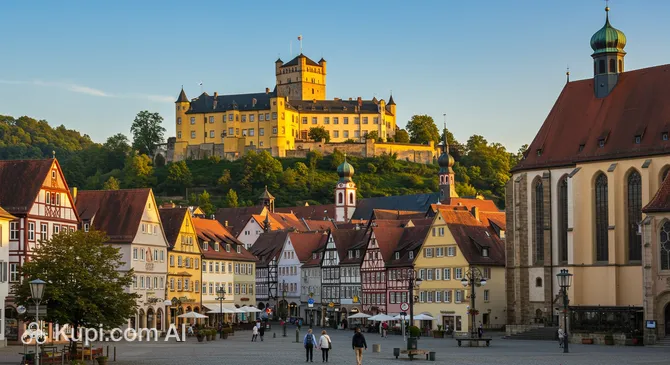
Montabaur. Illustration.
Source: Kupi.com AI

Geographically, the town is nestled in the hills of the Westerwald natural region, roughly halfway between the major hubs of Cologne and Frankfurt. Despite its relatively small population of about 14,400 people, Montabaur serves as an important administrative center for the district. A sense of tranquility prevails here, yet the streets are full of life, and the exceptional well-kept urban environment never fails to impress guests.

The main symbol of the town, visible from afar, is the majestic yellow castle (Schloss Montabaur), which towers over the rooftops like a guardian. Strolling through the cobbled streets among neat half-timbered buildings, it is easy to feel the spirit of the past. The ancient history of Montabaur can be traced in every detail of the old town, where traditions and cultural monuments are carefully preserved.

However, the town is interesting not only for history buffs. Montabaur is famous for its modern designer outlet, which draws shopping enthusiasts, and also serves as an excellent starting point for exploring the natural beauty of the Westerwald. Whether it's a leisurely stroll through the historic center, a visit to fashionable boutiques, or dinner in a cozy cafe, this town is sure to leave you with warm memories.

Weather Overview

The climate in this region can be described as moderately warm, making travel comfortable in any season if you prepare correctly. Summer in the city is pleasant and not too hot: in July and August, the average temperature is about 19°C, and daytime highs rarely exceed 24°C. This is the best time for long walks and outdoor sightseeing.

Winters here are mild but quite damp. In January and December, the average temperature stays around 2.5–3.5°C, and night frosts occur but are not severe. A characteristic feature of the local climate is the regularity of precipitation: even in the driest months, such as September, there are about 10 rainy days, and in winter this number increases to 18.

When planning your trip, keep in mind that an umbrella or waterproof jacket will come in handy at any time of year. To choose the perfect dates for your trip, we recommend checking the expected weather in Montabaur during your vacation. Overall, expect warm summers with occasional rain and cool, rather damp winters.

Average monthly temperature

Average monthly precipitation

Interesting Facts

In addition to its main attractions, Montabaur holds many fascinating details and stories. This town can surprise even an experienced traveler if you look a little closer.

  • A Beacon for Travelers. The bright yellow Montabaur Castle is impossible to miss—it has become a recognizable symbol for everyone passing through the region. The majestic structure is clearly visible from afar, serving as a landmark for passengers on the Cologne–Frankfurt high-speed railway as well as for motorists on the A3 autobahn.

  • Modern Life within Ancient Walls. Although the castle's history dates back to the early Middle Ages, today it serves entirely new functions. Inside its historical walls is a prestigious hotel and a large conference center, merging centuries-old traditions with the modern pace of business.

  • Legends of the Old Town. The historic center, with its picturesque half-timbered houses, is more than just beautiful architecture. According to local lore, some of these ancient buildings hide secrets of knightly adventures and even hidden treasures, adding a touch of mystery to a walk through the town.

  • Special Status. Montabaur is officially recognized as a state-approved tourist center. This honorary title highlights its exceptional cultural and historical value to the entire state of Rhineland-Palatinate, setting it apart from other small towns in the region.

How to Get There

When planning a trip to this picturesque corner of the Rhineland-Palatinate region, it is important to think about logistics in advance. The town is conveniently located between major transport hubs, making the journey comfortable. You can find more about how to get to Montabaur by exploring all available options, and below we look at the main ways to arrive via the nearest airports and stations.

Montabaur does not have its own airport, so travelers usually fly into nearby large cities. One of the most convenient options is Frankfurt Airport (FRA), located in Frankfurt am Main. It is the largest aviation hub, situated about 68 km from your destination. The journey from there by taxi or bus takes about 2 hours.

Another popular alternative is Cologne/Bonn Airport (CGN), located in Cologne. The distance to Montabaur is about 70 km, and travel time by road is also just over 2 hours. It is also worth mentioning Frankfurt-Hahn Airport (HHN), which often handles budget flights; it is located 67 km from the town.

For clarity, here is a summary of the main airports:

AirportPassenger trafficDistance
Frankfurt-Hahn Airport1.9 mln67 km
Frankfurt Airport61.6 mln68 km
Cologne Bonn Airport10 mln70 km
Frankfurt Egelsbach Airport80 00079 km
Mannheim Airport40 000118 km

If you prefer ground transport, you should pay attention to the railway connections. The nearest major station on the list is Koblenz Hauptbahnhof, located in the city of Koblenz. It is only 19.3 km from Montabaur, and a taxi or bus ride from there will take about 50 minutes.

Many tourists also choose a route through Frankfurt (Main) Hauptbahnhof. This major transport hub is located in Frankfurt am Main, approximately 70 km from Montabaur. From here, you can continue your journey by regional transport or taxi, which takes about 2 hours.

Below is information about the nearest railway stations:

StationPassenger trafficDistance
Koblenz Hauptbahnhof14.6 mln19 km
Bonn Hauptbahnhof24.5 mln61 km
Frankfurt (Main) Hauptbahnhof127.8 mln70 km
Messe/Deutz Station82 km
Cologne Central Station113.2 mln83 km

Main Attractions

Montabaur offers a wonderful combination of historical heritage and modern culture. Walking through the town, you can take a journey through time: from medieval fortifications to the futuristic architecture of shopping centers. Here are the main places worth including in your itinerary.

Schloss Montabaur is the undisputed landmark of the town and its most recognizable symbol. This majestic Baroque complex with its bright yellow facade is visible for many kilometers. The castle's history dates back to the 10th century, and it acquired its current appearance between 1687 and 1709, when it served as a residence for the Electors of Trier. Today, it houses a hotel and an academy, but tourists can walk the grounds, enjoy the architecture, and take in the magnificent views of the surrounding Westerwald.

Wolfsturm is the most powerful surviving part of the medieval city fortifications. The 20-meter tower, built in the 14th century, was once part of the city wall that protected residents from enemies. This place has a dark but fascinating history: in the past, the tower was used as a prison, including during the witch hunts. Now it is an important historical monument that allows you to feel the spirit of a medieval town.

The Old Town Hall "Red Lion" (Roter Löwe) is located in the heart of the Old Town on the Market Square. This impressive red-brick Neo-Gothic building was built in 1868 on the site of older structures. The name "Red Lion" symbolizes judicial power and strength, historically associated with this site. The town hall and its surrounding half-timbered houses create an incredibly cozy atmosphere, perfect for photo sessions and leisurely walks.

The Style Outlets Montabaur represents the modern face of the town. This large outlet center attracts shopping lovers from all over the region, not just for the brands but also for its unusual architecture. The building features smooth, futuristic shapes with large glass windows, creating an interesting contrast with the historic buildings of the center. It is a great place to combine cultural activities with pleasant shopping.

Local Cuisine

The local cuisine of Montabaur is a harmonious union of the hearty traditions of the Westerwald region and the refined influences of neighboring areas. The town's gastronomic map will delight those who appreciate natural products and home comfort. The menu is based on dishes that have warmed locals for centuries: fragrant roasted game from the surrounding forests and a variety of potato casseroles, which are considered the pride of local cooks.

The famous Westerwald sausages deserve special attention. They are served as a main course with a side dish or as a snack with drinks. Strolling through the town, it is impossible to resist the smell of fresh baked goods. Local bakeries strictly follow ancient recipes, so the bread, rolls, and pies here have a unique taste. Street food lovers should try hot pretzels and traditional onion pies, which perfectly satisfy hunger during long walks.

The drink culture in Montabaur is no less interesting. The region is famous for its apple wines, which have a light and refreshing taste. For those who prefer something stronger, local producers offer a variety of herbal and fruit liqueurs—an excellent digestif after a hearty meal. And, of course, a meal is often accompanied by a glass of quality beer, as Germany is famous for its brewing traditions.

The best way to get to know the town's gastronomy is in the cozy restaurants of the old center, where a friendly atmosphere prevails. If you find yourself in Montabaur on a weekend, be sure to visit the farmers' market. There you can not only buy homemade cheeses, smoked meats, and fresh honey but also chat with the locals. In the summer season, the town comes alive with gastronomic festivals featuring open-air tastings and culinary masterclasses.

Travel Tips

Preparing for your trip to Montabaur will help you enjoy its cozy atmosphere without any extra hassle. We have gathered several useful recommendations to make your visit to this picturesque corner of the Westerwald region as comfortable and worry-free as possible.

  1. Clothing and footwear. Given the city's hilly landscape and the old cobblestones in the historic center, be sure to bring comfortable flat shoes — heels would be impractical here. The weather in the region can be changeable, so even in summer it is worth having a light windbreaker or sweater for evening walks, especially if you plan to walk up to the castle, where it can be windy.
  2. Transport. Montabaur's historic center is compact and is best explored on foot. It is important to know that the high-speed train station (ICE) is located some distance from the old town; you can get to the center from there on foot (about 15-20 minutes, though there are elevation changes) or by shuttle bus. Taxis are available, but apps like Uber do not operate as actively here as in major cities, so it is more reliable to call an official local taxi.
  3. Finance. The official currency is the Euro. In the famous outlet center (The Style Outlets), bank cards are accepted everywhere. However, small cafes, bakeries in the old town, or souvenir shops in Germany often prefer cash, especially for small amounts. ATMs are easy to find in the city center and at the station. It is customary to leave a tip of about 5–10% of the bill, simply by rounding up the amount when paying.
  4. Health and safety. Montabaur is a quiet and safe city where you can walk peacefully even in the evening. Pharmacies are easily recognizable by the red letter "A" (Apotheke). If you need help after hours, look on the door of any pharmacy for a list of on-duty branches open 24/7. The single emergency number is 112.
  5. Communication and language. The main language is German. Thanks to the large train station and the outlet center, service staff generally speak English quite well. However, learning a couple of phrases in German (for example, "Guten Tag" — good day, "Danke" — thank you) will definitely win over the locals. Free Wi-Fi is available at the station and the outlet center.
  6. Local etiquette. On Sundays ("Ruhetag" — day of rest), most shops and supermarkets are closed; only restaurants and shops at the station remain open. Plan your shopping in advance. It is customary to greet the staff when entering small shops. Germans also highly value punctuality: if you have booked a taxi or a table, it is best not to be late.
  7. What to avoid. Do not walk on bike paths — it is not only a violation of the rules but also carries a risk of collision with cyclists, who ride fast here. Also, strictly follow traffic signals: crossing the road on a red light, even if the street is empty, is considered bad manners and can result in a fine.
  8. Shopping tip. If your goal is to visit the outlet center, try to plan your visit for a weekday morning. It gets very crowded on Friday evenings and Saturdays as shoppers arrive from nearby large cities, which can lead to long lines for fitting rooms and cafes.

We hope these tips help you plan the perfect trip. May Montabaur greet you with hospitality, good weather, and wonderful impressions of the local culture!

Entertainment & Nightlife

The nightlife in Montabaur, unlike that of bustling metropolises like Frankfurt or Cologne, is characterized by a measured and cozy, almost intimate atmosphere. You won't find huge night clubs with thumping bass until dawn here; however, the town offers excellent opportunities for a pleasant evening with friends. Most of the activity is concentrated in the historic center (Altstadt), where ancient half-timbered houses sit alongside modern bars and gastropubs. Evenings here are typically spent over a glass of local wine or quality beer, enjoying slow-paced conversations.

The epicenter of evening entertainment can be described as the area around the Market Square (Großer Markt) and the adjacent pedestrian zone on Kirchstraße. This is where the most popular establishments are located, coming to life after sunset. The crowd in Montabaur is diverse: from locals relaxing after work to tourists and business guests. The dress code in most places is casual, but if you plan to visit the establishments at the castle, smart casual is the way to go.

The bar located within Schloss Montabaur deserves special attention. This venue offers not only an excellent cocktail and wine list but also a unique historical atmosphere beneath the vaults of the old fortress. It is an ideal spot for a romantic date or a quiet end to the day. In the very center of the town, traditional German "kneipen" (pubs) and bistros are popular, where you can try local beers and hearty snacks. In the warmer months, life spills out onto the streets: outdoor terraces fill with people, creating a sense of a never-ending celebration.

In terms of safety, Montabaur is an exemplary town. The old town and station areas are well-lit and patrolled, making nighttime strolls comfortable and safe. However, keep in mind that public transport runs infrequently at night. If you stay out late, it's better to book a taxi in advance, as hailing a car on the street can be problematic. Bar prices are moderate: a glass of beer or wine will cost less than in the major tourist centers of Germany.

Beyond evening entertainment, the town offers a rich daytime program. Culture enthusiasts can attend local theater productions or visit small private galleries. For moviegoers, there is the cozy Kino Capitol, which retains its old-school charm but is equipped with modern technology. And if you prefer active recreation, picturesque hiking trails are available around the town, which are especially beautiful during daylight hours.

Parks & Museums

Montabaur offers travelers a harmonious blend of peaceful natural landscapes and a rich cultural program. Despite its compact size, the town and its surroundings are rich in green areas where you can escape the hustle and bustle, while local art spaces surprise even seasoned tourists with their originality.

If you are looking for a place for quiet walks in the fresh air, be sure to visit Quendelberg Park (Freizeitanlage Quendelberg). This is a true green oasis within the town limits, loved by both locals and guests. Here, centuries-old trees provide pleasant shade, and well-maintained paths are perfect for a leisurely promenade. The park is equipped with picnic areas and playgrounds, making it an excellent choice for family outings.

For those who prefer wilder nature, Montabaur serves as a gateway to the picturesque Nassau Nature Park (Naturpark Nassau). The city forest (Stadtwald) transitions smoothly into the vast areas of this reserve. Many marked trails for hiking and cycling are available here, allowing you to enjoy the pure air of the Westerwald region and the beauty of untouched landscapes.

The town's cultural life is centered not so much in classical museums as in unique art spaces. The main gem is the b-05 Cultural Center. This place boggles the imagination: former NATO military bunkers located in the forest have been transformed into contemporary art galleries. The contrast between the stark concrete architecture of the past, the living nature of the forest, and bold art installations creates a unique atmosphere. Exhibitions, performances, and meetings with artists are held here regularly.

The historic center of Montabaur itself can easily be called an open-air museum. A walk along Kirchstraße and the Market Square replaces a visit to an architectural gallery. Half-timbered houses from the 16th and 17th centuries, decorated with carvings and flowers, tell the town's story better than any display stand. Pay attention to the facade details: many buildings have preserved original elements that testify to the skill of medieval craftsmen.

Among the architectural monuments, in addition to the famous castle, the city wall and Wolfsturm are worth noting. These are surviving fragments of medieval fortifications that remind us of times when the town needed powerful protection. The tower looks impressive and adds a touch of medieval romance to the urban landscape.

Insider tip: If you have the time and desire to see the surroundings from a bird's-eye view, head to the Köppel tower on the Montabaurer Höhe hill. It's not right in the center, but the walk is worth it: the observation deck offers breathtaking panoramic views of the entire Westerwald region and the Rhine Valley, and there is a cozy hut serving local cuisine at the foot of the tower.

Getting Around

Montabaur's transport system is simple and logical, making getting around the town comfortable even for first-time visitors. Since the town is quite compact, there is no metro, trams, or trolleybuses. The backbone of public transport is made up of buses and the railway connection, which links the town with the surrounding area and major metropolises.

A key feature of the transport infrastructure is the railway station (Bahnhof Montabaur), where both ICE high-speed trains and regional trains stop. It is unique for such a small town to have direct high-speed connections to Cologne and Frankfurt. The station serves as the main transport hub from which most bus routes depart.

To move around the town and travel to neighboring villages, an extensive bus network is used, which is part of the VRM (Verkehrsverbund Rhein-Mosel) transport association. For tourists, the routes running between the station (where the outlet center is also located) and the historic town center (Altstadt) are particularly useful. The ride takes only a few minutes but helps avoid a steep climb on foot if you have luggage.

The fare system is unified within the VRM region. Tickets can be purchased in several ways:

  • From the bus driver when boarding (cash is usually accepted; it's advisable to have small bills or coins).
  • At ticket machines at the railway station (accepting cards and cash).
  • Via the DB Navigator mobile app or the VRM app, which is the most convenient option for tourists who don't want to deal with change.

The cost of a single trip within the town is about 2–3 euros. If you plan to travel around the region a lot during the day, it is more profitable to buy a day pass (Tageskarte), which allows for unlimited trips within the selected fare zone. For groups of up to 5 people, there are special group tickets (Minigruppenkarte) that significantly save on the budget.

Practical tips:

  • When boarding a bus, it is customary to show your ticket to the driver. If you bought a paper ticket without a date/time in advance, it must be validated in a special machine inside the cabin.
  • Bus schedules are strictly followed, but in the evenings and on weekends (especially Sunday), intervals increase, and some routes may stop running quite early. Always check the current schedule in the app or at stops.
  • The railway station and the town center are separated by a distance that can be covered on foot in 15–20 minutes, but keep in mind that the path toward the castle is uphill.

As an alternative to public transport, taxi services operate in Montabaur. Taxi stands are located right at the exit of the railway station and in the town center. Popular international taxi apps don't always work reliably here, so it's safer to note the number of a local dispatch service or ask the hotel reception to call a car.

For active recreation enthusiasts, bicycle rentals are available, including e-bikes, which is particularly relevant for the hilly terrain of the Westerwald region. A bicycle is a great way to see the picturesque surroundings, but it may not be the most convenient mode of transport for traveling directly over the cobblestones of the old town.

Accommodation

The choice of accommodation in Montabaur, despite the town's compact size, can satisfy a variety of traveler needs. The hotel sector here harmoniously combines historical heritage with modern comfort. Tourists can stay in atmospheric hotels located in ancient half-timbered buildings, as well as in ultra-modern business-class hotel complexes. In addition to classic hotels, cozy family pensions (Gasthofs) and apartments are popular in the area, often chosen for longer stays in the Westerwald region.

Geographically, accommodation options can be divided into two main areas, each with its own advantages:

  • Historic Center (Altstadt). The ideal choice for those who want to immerse themselves in a romantic atmosphere. By staying here, you will be within walking distance of attractions, cozy cafes, and restaurants. In the evening, it is quiet and peaceful, which is perfect for relaxing after a busy day.
  • Station and Outlet Area (ICE-Bahnhof / Outlet). This area suits travelers who value mobility and modern design. New hotels catering to business travelers and shopping enthusiasts are located here. Proximity to the high-speed railway allows for quick travel to airports or neighboring metropolises.

The most famous and impressive place to stay is, without a doubt, the hotel located directly within the walls of Schloss Montabaur. This is a unique opportunity to spend a night in a real Baroque residence, enjoying views of the town from the hilltop. For those who prefer more affordable options, small private hotels operate in the old town, where owners personally greet guests and create a homey atmosphere.

Booking tip: Montabaur is a popular destination not only for tourists but also for business people (due to its conference centers) and shopping enthusiasts. Therefore, during sale periods at the outlet, as well as during major trade fairs in Frankfurt or Cologne, the demand for housing rises sharply. We recommend booking rooms several weeks before your trip, especially if you plan to visit on a weekend.

The price range in the town can be described as moderate. The cost of living here is generally lower than in nearby large cities, but the service remains at a high German standard. Budget travelers can find inexpensive guesthouses on the outskirts, while prices at the castle hotel or business hotels near the station will correspond to 4-star levels. Booking is available through all popular international online platforms, though many small pensions in Germany also happily accept bookings directly via phone or email.

Nearby Cities

For those who want to explore the surrounding area, Montabaur serves as an excellent starting point for day trips to several interesting nearby locations:

Just 20 kilometers away is Koblenz—one of the most beautiful and ancient cities in the region. It is famous for the "German Corner" (Deutsches Eck), the confluence of the Rhine and Moselle rivers, as well as the mighty Ehrenbreitstein Fortress, accessible via a cable car over the river.

In the other direction, also very close by, is Limburg an der Lahn. This town seems frozen in time: its historic center with half-timbered houses is considered one of the best-preserved in the country, and its seven-towered cathedral on the rock is visible from afar and is truly majestic.

Nature lovers should look toward Andernach. It is one of the oldest cities in Germany, where you can see a unique phenomenon—the world's highest cold-water geyser, which erupts to a height of up to 60 meters.

CityPopulationDistance
Hohr-Grenzhausen9 36811 km
Vallendar8 80814 km
Bad Ems9 76114 km
Diez11 09215 km
Hadamar12 83616 km

These nearby destinations offer a glimpse into the diverse culture and landscapes of the region.

Shopping & Souvenirs

Shopping in Montabaur offers tourists an interesting contrast: here you can find both ultra-modern brand stores and cozy traditional shops. The town has become a real magnet for shoppers from all over the region thanks to its large outlet center, but one shouldn't overlook the charm of the historic center. For travelers, it's a great opportunity to combine a bargain hunt with a leisurely stroll through ancient streets, buying unique regional goods.

The heart of traditional trade is the historic center (Altstadt), especially the pedestrian zone around Kirchstraße and Großer Markt. Here, surrounded by half-timbered houses, are small clothing boutiques, bookstores, opticians, and jewelry salons. Shopping here is characterized by a personal touch: many stores have been managed by local families for generations, guaranteeing high-quality service and a special atmosphere.

The undisputed leader of the shopping scene is The Style Outlets Montabaur. This shopping center is located right by the ICE station and attracts thousands of visitors with its unusual architecture and wide range of products. It features over 70 brands offering clothing, sports goods, shoes, and accessories at significant discounts (usually 30% to 70%). It is an ideal place for those looking for quality items from well-known brands at reduced prices in a comfortable modern setting.

For foodies and lovers of local flavor, the weekly market (Wochenmarkt) is a must-see. It traditionally takes place on Konrad-Adenauer-Platz on Thursday and Saturday mornings. Here, farmers from the Westerwald region offer the freshest vegetables, fruits, homemade cheeses, meat delicacies, and flowers. It is the best place to feel the town's lively rhythm and try local products.

When choosing souvenirs, pay attention to the famous Westerwald ceramics (Westerwälder Salzglasur). This region is historically famous for its pottery, and the gray-blue jugs, mugs, or pots make excellent reminders of your trip. Local drinks are also worth a look: herbal liqueurs and schnapps from regional distilleries are very popular and are often sold in beautiful gift bottles.

When planning your purchases, keep in mind that Germany adheres to strict rules regarding opening hours. Shops in the town center are usually open from 09:30 or 10:00 until 18:00 (on Saturdays often until 14:00 or 16:00). The outlet is open longer—usually until 20:00 from Monday to Saturday. It is important to remember that on Sundays, almost all shops, including supermarkets and the outlet, are closed. The only exception is a few days a year (Verkaufsoffener Sonntag), which are announced in advance.

As for payment, the outlet center and large supermarkets accept major credit cards (Visa, MasterCard) without problems. However, in small boutiques in the old town, bakeries, and especially at the market, cash or local debit cards (EC-Karte) are preferred. If you reside outside the European Union, in most large outlet stores, you can obtain a Tax Free check for a VAT refund when leaving the country. Don't forget to ask for the special form at the register and have your passport with you.

Reached the end of the page?

That means the route is fully explored