Support

Stade

About

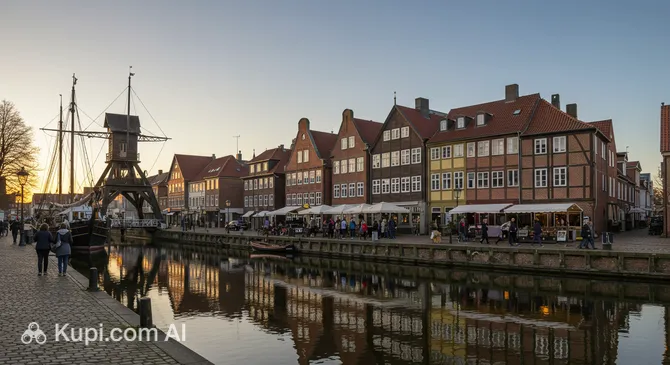
Stade is a charming ancient city, a true gem of northern Germany, nestled on the banks of the Schwinge River, just a few dozen kilometers west of Hamburg. This Hanseatic city, with a population of about 47,500, has managed to preserve its historical identity and unique atmosphere, attracting travelers with picturesque views and a rich past.

Stade. Illustration.
Source: Kupi.com AI

Walking through the narrow cobbled streets of Stade, you feel as if you have been transported back several centuries. The city is famous for its beautifully preserved half-timbered houses, which create a unique architectural ensemble. One of the main attractions is the old port (Alter Hafen), once a bustling center of trade and today a picturesque spot for walking and relaxation. Also worth noting is the Swedish Warehouse (Schwedenspeicher-Museum), which now houses a museum dedicated to the city's history.

Stade is not just a historical city; it is a place where the past harmoniously blends with the present. Here you can enjoy a leisurely pace of life, visit cozy cafes and shops, or simply admire the ships passing along the river. If you are looking for an authentic German town with a rich history and unique charm, Stade is undoubtedly worth your attention.

You can find more interesting facts on the history of Stade page.

Weather Overview

The weather in Stade is characterized by a moderate maritime climate. Summers here are generally warm and comfortable, with average temperatures in July and August around 18-19°C, while maximum values can reach 22-23°C. Winters are mild but cool, with an average temperature in January of about 3.5°C, and minimum temperatures dropping to 1.6°C. Precipitation is distributed fairly evenly throughout the year, with the highest number of rainy days in the winter months, although the amount of precipitation in millimeters remains small. Expect moderately warm summers with occasional rain and cool, humid winters.

For a more detailed forecast and weather information by month, you can visit the weather in Stade page.

Average monthly temperature

Average monthly precipitation

Interesting Facts

In addition to its picturesque streets and famous sights, Stade hides many surprising stories and little-known details that make it truly unique. Ready to learn some secrets of this ancient city?

Hanseatic Harbor. Illustration.
Source: Kupi.com AI

Traveler photos:

  • Stade is rightfully considered one of the oldest cities in northern Germany. Its history dates back to the 10th century, and by the Middle Ages, it was already a significant trading center due to its strategic position on the river.

  • Few people know that for over half a century, from 1644 to 1710, Stade was under Swedish rule. This heritage can still be seen in the architecture of some buildings and even in street names. The Schwedenspeicher ("Swedish Warehouse") museum tells the story of the Swedish period in detail.

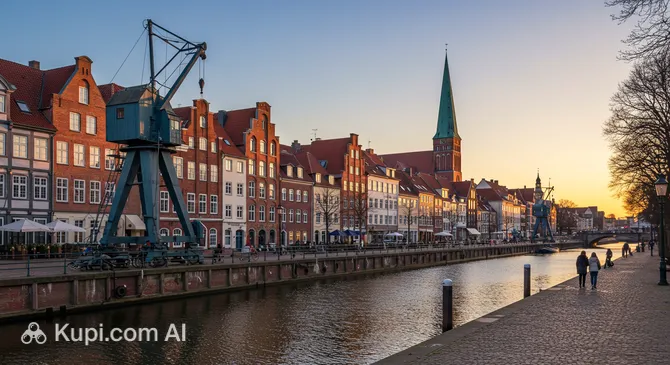
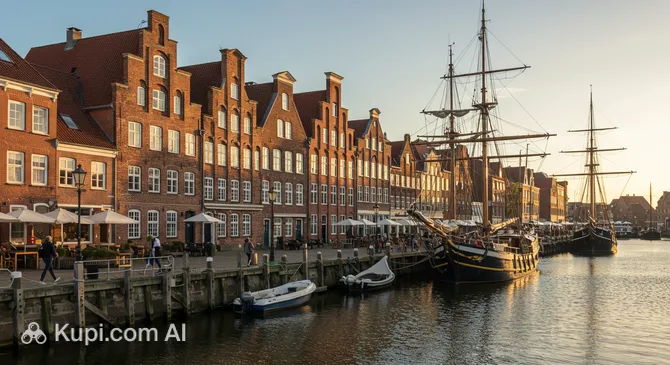
  • The city has perfectly preserved medieval structures, among which the old port Hanseatic Harbor (Hansehafen) holds a special place. Here you can see a historical port crane and even the museum ship "Greundiek" moored at the embankment.

  • Stade is famous for its original traditions. For example, the annual "Stader Hafenfest" festival attracts many guests to the waterfront, where you can taste fresh fish and other seafood delicacies. Local legends tell of mysterious ghosts of the old port and enigmatic stories from the times of Hanseatic merchants.

How to Get There

Stade is conveniently located near major transport hubs in Northern Germany, making a trip here comfortable and simple. Most often, tourists arrive via Hamburg, which is very close. You can find out more about how to get to Stade on a separate page, and below we will look at the main air and rail routes.

Stade itself does not have its own airport, so travelers usually fly into nearby major cities. The closest and most convenient option is Hamburg Airport (IATA: HAM), located in the city of Hamburg. The distance to Stade is only about 34.5 km. A taxi or transfer will take approximately 1 hour 15 minutes. This is a major international hub receiving flights from all over the world.

An alternative option could be Bremen Airport (IATA: BRE), located in the city of Bremen, about 76 km from Stade. The drive from here will take about 2 hours 15 minutes. You can also consider Hanover Airport (IATA: HAJ), however, it is located much further away — 127 km, and the car trip will require more than 3.5 hours.

For clarity, here is a summary of the main airports:

AirportPassenger trafficDistance
Hamburg Airport13.6 mln34 km
Bremen Airport1.8 mln76 km
Lübeck Blankensee82 55086 km
Hannover Airport5.3 mln127 km
Sonderborg Airport74 000154 km

Rail travel is one of the most popular ways to reach the region. Stade has its own railway station, but it is connected through major hubs. The key transfer point is Hamburg Hauptbahnhof (Central Station) in the city of Hamburg. It is located about 36 km from the center of Stade. If you decide to take a taxi from Hamburg station, it will take about 1 hour 15 minutes, but most tourists prefer to transfer here to the S-Bahn suburban train (line S3), which goes directly to Stade.

Another important hub is Bremen Hauptbahnhof in Bremen (about 72 km from Stade). A car trip from this station will take approximately 2 hours 10 minutes, but convenient regional rail connections are also available.

Below is information about the nearest major railway stations:

StationPassenger trafficDistance
Hamburg Hauptbahnhof200.8 mln36 km
Bremen Hauptbahnhof43.8 mln72 km
Messe Bahnhof (Messe-Bf) Station128 km
Hanover Main Station91.3 mln137 km
Osnabrück Hauptbahnhof12.8 mln175 km

Main Attractions

Stade, a charming Hanseatic city in Lower Saxony, offers travelers a unique opportunity to immerse themselves in the atmosphere of the Middle Ages and rich maritime history. Among its main treasures are beautifully preserved historical districts, half-timbered houses, and picturesque waterways that make it a true jewel of Northern Germany.

The heart of the city is undoubtedly the Stade Old Town (Altstadt). Strolling through its narrow cobbled streets, you will discover magnificent half-timbered houses, some several hundred years old, cozy squares, and ancient churches. This place is perfect for leisurely walks, allowing you to feel the spirit of the past and admire the magnificent architecture. The Old Town attracts visitors with its authenticity and the chance to literally touch history at every step.

Stade Old Town. Illustration.
Source: Kupi.com AI

Traveler photos:

An equally significant attraction is the Hanseatic Harbor (Hansehafen), a historical port that was once a center of bustling trade and an important link in the Hanseatic League. Today, it is an incredibly picturesque place where you can see old wooden cranes, traditional ships, enjoy the water view, and feel the fresh sea breeze. The Harbor is interesting for its rich history and preserves the charm of an old port city, offering beautiful views and excellent photo opportunities.

Hanseatic Harbor. Illustration.
Source: Kupi.com AI

Traveler photos:

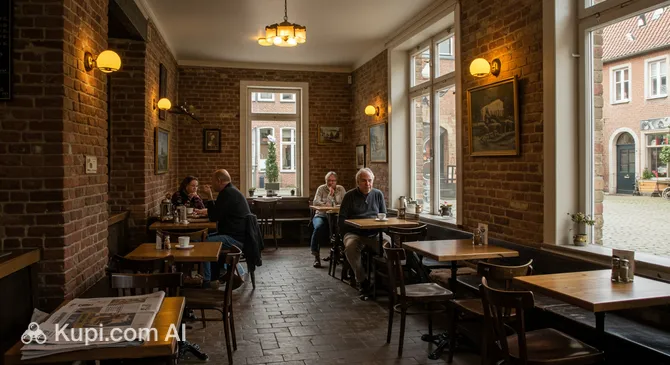
After a busy walk through the historical streets, it is pleasant to relax in one of the many cozy establishments. For example, Altstadt Café offers its guests a chance to enjoy a cup of aromatic coffee and fresh local pastries in a traditional and welcoming setting. It is a great place to catch your breath, watch the city life, and fully absorb the atmosphere of old Stade. Besides the café, the Old Town also houses important cultural sites such as the Schwedenspeicher Museum, which details Stade's history, especially its Swedish period, and the majestic Church of Saints Cosmas and Damian (St. Cosmae et Damiani Kirche) with its impressive leaning tower.

Altstadt Café. Illustration.
Source: Kupi.com AI

Traveler photos:

Local Cuisine

The gastronomic scene in Stade is a delightful blend of North German traditions and fresh seafood, shaped by its port past. Travelers will find a variety of flavors here that can surprise and delight. The city's cuisine emphasizes fresh, seasonal products, many of which come from the fertile surroundings known for their apple orchards.

Be sure to try the famous "Matjes" herring – tender, marinated according to old recipes, it is a true delicacy. It is also worth paying attention to smoked fish dishes and hearty river eel stew, prepared using recipes passed down through generations. One cannot overlook classic German bread, fresh pastries, and, of course, apple pies, as the region is famous for its apples. Those with a sweet tooth will appreciate strudels and pies with seasonal berries.

Among drinks, local cider stands out, especially popular during the autumn apple festival when it is served hot. You can also find other local beverages, including regional beers. The food culture in Stade is diverse: from cozy restaurants serving traditional dishes to street cafes on the waterfront offering the freshest seafood. One of the places to enjoy the local atmosphere is the Altstadt Café. Farmers' markets also play an important role, offering fresh produce, homemade cheeses, and sausages, allowing tourists to dive deeper into the city's gastronomic life.

Travel Tips

Planning a trip to charming Stade? To ensure your journey through this Hanseatic city goes smoothly and leaves only pleasant impressions, we have prepared some useful tips.

  1. Clothing and Essentials: The climate in Stade, as in the state of Lower Saxony as a whole, is temperate with maritime influence. In summer (June-August), the weather is usually warm, but evenings can be cool, so a light jacket or sweater will be useful. In winter (December-February), frosts and snow are possible, so warm clothes, a hat, scarf, and gloves are mandatory. Spring and autumn are changeable, so layered clothing is your best choice. Don't forget comfortable shoes for walking on the cobbled streets of the old town and an umbrella or raincoat, as rain is not uncommon here. For electronics, you will need a standard European adapter (type F).
  2. Getting Around Town: Stade is a compact city, and its historical center is ideal for exploring on foot. This is the best way to enjoy the atmosphere of ancient streets and canals. For longer distances, you can use local buses – the public transport system here is well-developed. Taxis are available but can be more expensive. Renting a car might be justified if you plan to explore the surroundings of Lower Saxony, but for moving around Stade itself, it's not necessary; besides, parking in the center can be limited and paid.
  3. Financial Matters: The local currency is the Euro (EUR). You can exchange currency at banks, but it's often more profitable to withdraw cash from an ATM (Geldautomat). Credit and debit cards (Visa, Mastercard) are widely accepted in most shops, restaurants, and hotels. However, small cafes or markets may prefer cash, so it's always useful to carry a small amount. International cards usually work without problems, but check the conditions with your bank. A rough daily budget for a tourist in Stade can vary: budget travelers can manage with 50-70 euros (excluding accommodation), while a more comfortable stay with restaurant visits and some paid attractions may require 100-150 euros and up. Tipping (Trinkgeld) in Germany is welcomed but not strictly mandatory; in restaurants, it is customary to leave 5-10% of the bill or simply round up the bill if you liked the service.
  4. Health and Safety: Pharmacies (Apotheke) are easy to find by the large red "A" sign. They work standard hours, but there is always a duty pharmacy (Notdienst Apotheke) – information about it can be found on the doors of any pharmacy. Tourists from EU countries are recommended to have a European Health Insurance Card (EHIC); others need travel medical insurance. In emergencies, call 112. Stade is a very safe city. Observe standard precautions: keep an eye on your belongings and do not leave valuables unattended.
  5. Language and Communication: The official language is German. In tourist areas, hotels, and restaurants, many people, especially youth, speak English. Knowing a few basic German phrases (e.g., "Hallo" - hello, "Danke" - thank you, "Bitte" - please/you're welcome) will be very useful and warmly received by locals. A SIM card with mobile internet can be purchased at supermarkets or mobile phone shops. Free Wi-Fi is often available in cafes and hotels. For convenience in moving around and planning leisure, mobile apps can be useful: for example, the HVV app (Hamburg Transport Association, to which Stade belongs) for public transport or local event apps for finding information about city events and festivals.
  6. Local Etiquette: It is customary to say hello ("Guten Tag" – good day, or "Moin" – a local greeting common in Northern Germany) when entering small shops or cafes. Germans value punctuality. In public places, try not to be excessively noisy. When addressing older strangers or in formal settings, use the formal "Sie" (You).
  7. What to Avoid: Avoid discussions and jokes on topics related to World War II and the Nazi past – this is a very sensitive subject. Also, do not cross the road on a red light, even if there are no cars; this is considered a violation and is frowned upon.
  8. Stade's Special Feature: Stade is a city with a rich Hanseatic history. Be sure to walk along the old port (Alter Hafen), admire the perfectly preserved half-timbered houses, and enjoy the unique atmosphere. Before your trip, check the local event calendar – the city often hosts interesting festivals and fairs, especially in the warm season.

We hope these tips help you better prepare for your trip and get the maximum pleasure from exploring beautiful Stade. This cozy city with a rich history and friendly residents will surely leave you with the warmest memories!

Entertainment & Nightlife

Stade, a charming Hanseatic city in Germany, offers its guests not only a rich history and picturesque views but also a cozy atmosphere for evening relaxation. While Stade is not famous for wild metropolitan parties, you can find pleasant places here to spend the evening and dive into the local nightlife.

The main concentration of evening entertainment is in the historical center – the Stade Old Town. Walking through its cobbled streets, you will discover many traditional pubs, cozy bars, and restaurants that create a special, welcoming atmosphere after dark. The crowd here is usually mixed – from locals to tourists enjoying a quiet evening. The dress code in most establishments is casual, perfect for relaxed rest.

Stade Old Town. Illustration.
Source: Kupi.com AI

Traveler photos:

One of the places where you can spend a pleasant evening is the Altstadt Café. Although it is primarily a restaurant, you can enjoy dinner in a pleasant setting or have a glass of wine here. In addition to it, there are other bars in the Old Town where you can try local beer or classic cocktails. Many establishments stay open until late evening, especially on weekends. Although there are few nightclubs in the traditional sense, some bars may offer music and dancing on weekends.

Practical tips for evening leisure in Stade:

  • The best time to visit bars and restaurants is Friday and Saturday evening, when the city comes alive.
  • Average prices for drinks and food are moderate, making evening leisure affordable.
  • Since the city center is compact, most establishments are easily reachable on foot. For more distant areas, you can use taxi services; they are easy to call by phone or find at special stands.
  • Stade is considered a safe city, especially its central part. Nevertheless, it is always worth observing standard precautions during night walks.

During the day, Stade also offers many interesting activities. You can explore the historical Hanseatic Harbor, visit local museums telling the city's rich past, or simply enjoy a stroll through picturesque parks. Theaters and cultural centers occasionally offer evening programs that can be a great addition to your vacation.

Parks & Museums

Stade, a charming Hanseatic city, offers its guests not only picturesque streets but also pleasant green areas for relaxation and interesting museums that immerse you in its rich history and culture. Here everyone will find something for themselves, whether it's a quiet walk in nature or an acquaintance with a centuries-old heritage.

For nature lovers and those who enjoy leisurely strolls, Stade offers several attractive spots. The old city ramparts (Wallanlagen), which surround the historical center, deserve special attention. Today, this is a well-maintained green zone, ideal for promenades, offering beautiful views of the old town. The banks of the Schwinge River, which flows through the city, can also be a pleasant place for relaxation, where you can enjoy peace and quiet.

The cultural life of Stade is concentrated in its museums. The key one is the "Schwedenspeicher" Museum (Schwedenspeicher-Museum), located in a historical 17th-century Swedish warehouse building. The museum's exhibition is dedicated to the history of the Hanseatic League, seafaring, and the archeology of the region, offering a fascinating journey into the city's past. Another interesting place is the Kunsthaus Stade, an art museum where exhibitions of contemporary and classical art are regularly held, introducing visitors to various artistic movements.

Speaking of historical heritage, one cannot fail to mention the Stade Old Town. A walk through its cobbled streets with perfectly preserved half-timbered houses is an immersion in history in itself. The heart of the old town and its hallmark is the Hanseatic Harbor—once a bustling port, and today a picturesque spot where you can admire old ships and enjoy the atmosphere of the past. It is also worth noting the Church of St. Cosmae and Damiani with its impressive architecture.

To fully experience Stade, we suggest not limiting yourself only to the main attractions. Peek into the small alleys of the Old Town, where you can discover charming courtyards and unique architectural details that don't always make it into tourist guides. Also, if time permits, take a walk along the Schwinge River outside the center—it's a great opportunity to see the city from a different, more peaceful side.

Getting Around

When planning a trip to Stade, you can count on a convenient and well-organized public transport system. The city is integrated into the Hamburg transport network (HVV – Hamburger Verkehrsverbund), which significantly simplifies travel both within Stade and its surroundings, including trips to Hamburg.

The main types of public transport in Stade are: City and regional buses: The local bus network (operated by KVG Stade) covers the city and nearby settlements. Buses run according to a schedule that can be found at stops or online. S-Bahn (suburban train): Line S3 of the Hamburg S-Bahn connects Stade with central Hamburg and other cities in the region. This is a fast and convenient way to reach the metropolis or neighboring districts. Trains run regularly throughout the day.

The fare system in Stade is also part of the HVV. This means that you can use HVV tickets for bus and S-Bahn trips. There are various types of tickets: Single tickets (Einzelkarte): for one trip. Day tickets (Tageskarte): valid for unlimited trips during the day within the selected fare zone. There are options for one person or a group of up to 5 people. Weekly and monthly passes (Wochenkarte/Monatskarte): for those planning to use transport frequently. Deutschlandticket (D-Ticket): This popular ticket costing 49 euros per month (price may change) is valid on all regional public transport across Germany, including buses and S-Bahn in Stade and the HVV. This can be a very profitable option for tourists planning to travel a lot. Tickets can be purchased from machines at S-Bahn stations, from bus drivers (usually only single or day tickets), at HVV service centers, and via the HVV mobile app.

Practical tips for tourists: Tickets purchased from machines or online are usually already validated (they show the validity period). If you buy a ticket that requires validation (for example, some old formats or special offers), it must be stamped in special devices (Entwerter) before starting the journey. However, most modern tickets do not require this. Always carry a valid ticket with you, as inspectors work regularly. Transport operating hours: S-Bahn and main bus routes usually operate from early morning until late evening. On weekends and holidays, intervals may increase, and some routes may have a reduced schedule. Night buses may run on main directions, especially on Friday-to-Saturday and Saturday-to-Sunday nights.

Alternative ways of moving around: Taxi: Available in the city, can be called by phone or found at special stands. Bicycle rental: Stade and its surroundings are great for cycling. You can find bike rental points in the city. This is a wonderful way to explore the historical center and the picturesque banks of the Elbe. Car sharing: Car sharing services may be less common than in large cities, but it's worth checking for local operators or apps if you need a car for a short term.

Overall, public transport in Stade is quite efficient and convenient for tourists, especially thanks to the integration into the HVV system and the availability of the Deutschlandticket option.

Accommodation

When planning a trip to Stade, you will find a variety of accommodation options to suit different preferences and budgets. The city offers guests cozy mid-range hotels, guesthouses (Gasthäuser), and apartments for those who prefer more independence. Options range from more economical to comfortable, ensuring a pleasant stay for every traveler.

The most popular and convenient area for tourists to stay is undoubtedly the Stade Old Town (Altstadt). Staying here puts you within walking distance of the main attractions, such as the Hanseatic Harbor, as well as numerous cafes and restaurants. Many hotels and apartments are located in this historical part of the city, offering atmospheric accommodation.

Although specific hotels were not provided in the list, you can find establishments of various categories in Stade. It is recommended to explore offers on popular online booking platforms or contact local tourist information centers. The price range can vary from budget options to mid-range and high-end hotels, especially when it comes to boutique hotels in the historical center.

To ensure the best choice and prices, especially during the peak tourist season or local festivals, it is recommended to book your accommodation in advance. Most hotels and apartments in Stade are available for booking through well-known international and German online services. Direct booking via hotel websites or by phone is also an option.

Nearby Cities

For those who want to explore the surroundings, Stade serves as an excellent starting point for day trips to several interesting nearby locations:

CityPopulationDistance
Drochtersen11 18414 km
Harsefeld14 37816 km
Wedel34 15116 km
Jork12 18316 km
Uetersen18 49617 km

Among them, Hamburg particularly stands out—Germany's second-largest city, which beckons with its lively port, rich cultural life with numerous theaters and museums, and modern architecture. No less attractive is Buxtehude, known for its fairytale charm thanks to the tale of the hare and the hedgehog, as well as picturesque half-timbered houses that create the unique atmosphere of an ancient Hanseatic town.

These nearby destinations provide an insight into the diverse culture and landscapes of the region. Each trip promises new discoveries and impressions, complementing your journey to Stade.

Shopping & Souvenirs

Shopping in Stade is a pleasant addition to exploring this charming Hanseatic city. You won't find giant malls here like in megacities, but you can enjoy shopping in the cozy atmosphere of the historical center, where modern shops stand alongside traditional stores. The city is not famous for any specific goods throughout Germany, but you can find high-quality German products and lovely souvenirs here.

The main place for shopping in Stade is certainly its Stade Old Town. Strolling through its picturesque streets, such as Hökerstraße or Große Schmiedestraße, you will discover many stores for clothing, shoes, books, jewelry, and home goods. Here you'll also find small boutiques with unique items and souvenir shops. The atmosphere of the ancient city makes the selection process particularly pleasant.

There are few large shopping centers in the traditional sense in Stade. Shopping here is more focused on individual shops located along the streets of the historical center. However, you can find several department stores or shopping galleries offering a diverse range of products under one roof, which is convenient if you have limited time.

In Stade, as in many German cities, weekly markets (Wochenmarkt) are held regularly. They are usually located on one of the central squares and offer fresh local products: vegetables, fruits, cheeses, meat delicacies, pastries, and flowers. Visiting such a market is a great opportunity to feel the local flavor and buy something delicious. Occasionally, thematic or seasonal fairs, such as Christmas markets, may take place in the city.

As souvenirs from Stade, look for items with a maritime theme, reminding of its Hanseatic past and proximity to the Elbe River. These could be model ships, decorative items with anchors or seagulls. Local handicrafts are also popular if you come across them. Of course, you can always bring back traditional German sweets, beer, or small souvenirs depicting the city's sights, such as the Hanseatic Harbor.

Shops in Stade usually operate from Monday to Saturday. Standard opening time is around 9:00-10:00, and closing is at 18:00-19:00. On Saturdays, many shops may close earlier, around 14:00-16:00. On Sundays, most shops, except for some souvenir shops and bakeries, are closed. You can pay in stores with both cash and bank cards (EC-card/Girocard, Visa, Mastercard), but it is always useful to have some cash with you, especially for small purchases or at markets.

Tourists from non-European Union countries can use the Tax Free system to refund VAT (Mehrwertsteuer) on purchases over a certain amount (usually from 25-50 euros per receipt, but better to check on the spot). To do this, when buying at participating stores (look for the Tax Free Shopping sticker), ask for a special receipt. By presenting it along with the goods at customs when leaving the EU, you can receive a tax refund.
Nearby cities

Reached the end of the page?

That means the route is fully explored