Support

Archaeological Museum of Chania | Αρχαιολογικό Μουσείο Χανίων

About

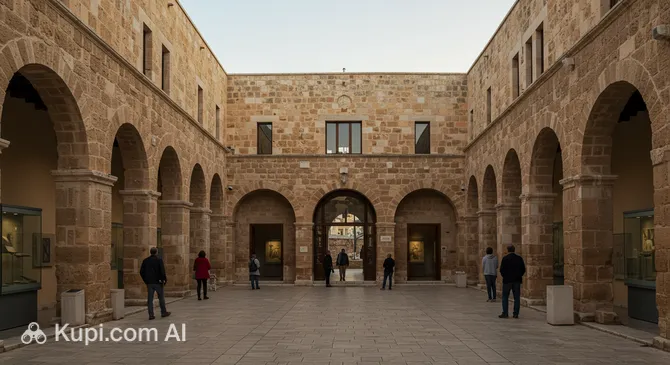
The Archaeological Museum of Chania is one of the most significant cultural spaces on the island of Crete in Greece. Housed in the majestic building of the former Venetian Monastery of Saint Francis, the museum invites guests on a fascinating journey through time, from the Neolithic era to the brilliant Roman period. It is a place where the architecture of the past meets the priceless treasures of antiquity.
Archaeological Museum of Chania
Archaeological Museum of Chania. Иллюстрация. Источник: Kupi.com AI

The museum's exhibition is renowned for its rich collection of Minoan artifacts found across the region. Here, you will see exquisite clay vessels, ritual objects, and unique sarcophagi. About a third of the entire display consists of the famous private collection of Kyriakos and Marika Mitsotakis, donated to the museum in 2000, making it a must-visit for anyone wishing to understand the origins of European civilization.

The building itself on Chalidon Street provides a special atmosphere, preserving features of Venetian Gothic alongside Ottoman-era elements, including a picturesque ablution fountain. Visitors appreciate the museum for its authenticity, the excellent preservation of its exhibits, and the chance to see rare mosaics and sculptures from the ancient city of Kydonia in their historical context.

Contacts

To clarify current information about special exhibitions or visiting rules, you can contact the museum administration directly. It is also recommended to check the official website, where news about temporary exhibitions and educational programs is often published. Below are the main contact details.

How to contactContact
AddressSkra 15, Chania 731 33, Greece
Phone+30 2821 023315
Websitewww.amch.gr

What to Do

Inside the museum, you will find chronologically arranged halls, each opening a new chapter of history. Special attention should be given to the Minoan sarcophagi and the collection of gold jewelry, which showcase the incredible craftsmanship of ancient masters. Fans of the classical period will appreciate the Roman statues and the superbly preserved 3rd-century mosaics depicting scenes from ancient Greek myths.

Be sure to step out into the inner courtyard to see the authentic Ottoman-era fountain and a scale model of 17th-century Chania. It is a wonderful spot for quiet contemplation and photos (remember that photography inside the museum is only permitted without flash). The architectural details of the Church of Saint Francis itself, such as the carved capitals and Venetian decorative elements, are as worthy of attention as the archaeological finds.

For a deeper immersion, it is recommended to use an audio guide or join a themed tour. A visit to the museum pairs perfectly with a subsequent stroll through the Old Town, helping you see the modern streets of Chania through the lens of ancient Kydonia's thousand-year history.

Getting There

The Archaeological Museum of Chania is located in the historical part of the city at Skra 15. If you are already walking through the Old Town or the Venetian Harbor, the walk to the museum will take no more than 5–10 minutes, allowing you to fully enjoy the atmosphere of the cobbled streets and ancient architecture.

For those arriving by public transport, the KTEL bus station is a convenient landmark. From there, the museum entrance is a 15–20 minute walk. If you prefer the comfort of a taxi, the trip from the airport takes about 20 minutes and costs an average of 20–30 euros, while the journey from the seaport is even shorter—only about 10–15 minutes.

Travelers using rented cars or scooters can use GPS; however, keep in mind that traffic is restricted within the Old Town. It is best to leave your vehicle at one of the parking lots on the perimeter of the historical center and continue on foot.

Ближайший город: Chania

History & Facts

The museum's history began in 1899, when archaeological finds were actively collected in Crete to protect the island's cultural heritage. Over the decades, the exhibition changed its location several times: it was housed in the Palace of Justice, a local gymnasium, and even the Küçük Hasan Mosque, until it found its home within the walls of the Church of Saint Francis in the early 1960s.

The museum building itself is a unique historical monument. The former Venetian Monastery of Saint Francis is considered one of the city's most significant religious structures, having survived the destructive earthquake of 1595. During the Ottoman period, the monastery was converted into the Yusuf Pasha Mosque, a legacy still marked by the elegant octagonal fountain in the courtyard once used for ritual ablutions.

Throughout the 20th century, the building served various roles, from the "Ideon Andron" cinema to a military warehouse in the mid-1940s. Only the extensive restorations of the 1980s and 2000s transformed these ancient halls into a modern museum space, where Venetian Gothic architecture harmoniously coexists with Minoan-era artifacts. A major contribution to the museum's growth was the donation of the Kyriakos and Marika Mitsotakis private collection in 2000, which added hundreds of priceless items to the permanent exhibition.

Time Needed

To leisurely explore the main exhibition and see the key masterpieces from the Minoan and Roman eras, most visitors need about 1.5–2.5 hours. This is enough time to walk through all the themed halls and visit the courtyard with its historic fountain.

If you plan to use an audio guide or study the detailed information plaques and rare artifacts of the Mitsotakis collection, you should set aside up to 3 hours for your visit. The museum is not overwhelming, making it a comfortable and educational experience even for those who are not professional history buffs.

Working Hours

The museum welcomes visitors daily on a convenient schedule, making it easy to include in any travel itinerary. Please note that Tuesday is the weekly closing day.

Opening Hours:

  • Monday: 8:00 AM – 8:00 PM
  • Tuesday: Closed
  • Wednesday – Sunday: 8:00 AM – 8:00 PM
It is recommended to arrive at least an hour before closing to explore all the galleries without rushing.

DayWorking hours
Понедельник8:00 – 20:00
ВторникЗакрыто
Среда8:00 – 20:00
Четверг8:00 – 20:00
Пятница8:00 – 20:00
Суббота8:00 – 20:00
Воскресенье8:00 – 20:00

Nearby

A walk around the Archaeological Museum is an excellent way to dive deeper into the region's centuries-old history. Traces of different eras are hidden around almost every corner, from Venetian bastions to Ottoman mosques and ancient synagogues.

Exploring the landmarks of the Old Town perfectly complements the museum's collection, allowing you to see how the city evolved beyond the periods showcased in the galleries. We recommend visiting the following sites, all located within walking distance:

NameDistance
Eleftherios Venizelos House0.2 km
Little Monkey1.1 km
Sabbionara Bastion1.2 km
Bras de Frères1.3 km
Chania Municipal Garden1.3 km
Saint Nicholas Church1.4 km
Greek National Football Museum1.5 km

Reached the end of the page?

That means the route is fully explored