Support

Sabbionara Bastion

About

On the northeastern edge of the Venetian walls surrounding Chania, stands an impressive fortification — the Sabbionara Bastion. This is a significant historical site in Greece, built directly on a sea embankment. Its name, which translates as "Sand Gate", was given to the bastion due to the characteristics of its foundation, constructed on underwater sand and rocks.
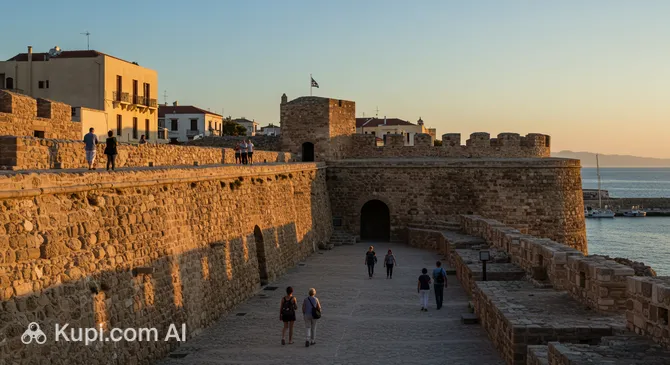
Sabbionara Bastion
Sabbionara Bastion. Иллюстрация. Источник: Kupi.com AI

The structure has a characteristic oval shape, and its facade is still adorned with the Lion of Saint Mark — the symbol of the Venetian Republic, carved in stone alongside coats of arms and the date of construction. It is not just a military facility, but an architectural monument from the late 16th century, which has been perfectly preserved and has become an integral part of the city landscape.

The eponymous gate adjoins the bastion and today serves as a cultural space for municipal exhibitions. The combination of the rugged power of the fortress walls and the elegance of the pavilion, restored in the early 20th century, makes Sabbionara one of the most recognizable landmarks of the old town.

Contacts

For those planning to visit this historical fortification, it is helpful to know its exact location in the city. The bastion is situated in a picturesque area where modern streets meet ancient walls, making it easy to find while walking along the embankment.

How to contactContact
AddressAkti Miaouli, Chania 731 32, Греция

What to Do

The main reason to visit the Sabbionara Bastion is for its panoramic views. From here, you get a magnificent perspective of the endless sea, the historic Kum Kapi district, and the curves of the Venetian harbor. It is an ideal spot for photography, especially during sunset hours when the ancient stones are bathed in warm golden tones. Be sure to take a close look at the stone bas-reliefs on the facade: the coats of arms and the figure of the lion, which have preserved the spirit of the 16th century.

The interior space of the Sabbionara Gate is often used as an exhibition center. Visitors can step inside to explore displays dedicated to the city's history or works by contemporary local artists. The cool atmosphere of the massive vaults provides a pleasant contrast to the hot sun, allowing you to comfortably explore Crete's cultural heritage.

After exploring the fortifications, it is pleasant to stroll along the embankment beyond the wall. The Kum Kapi area is famous for its taverns and cafes, where you can taste the freshest seafood or traditional Greek coffee while watching the waves. The bastion is seamlessly integrated into the walking route connecting the eastern part of the city with the heart of the old harbor, making a visit to it an easy and pleasant addition to your walk.

Getting There

The Sabbionara Bastion is located in the northeastern part of the Old Town at Akti Miaouli. The easiest way to get here is on foot: it takes about 10–15 minutes from the Venetian harbor or the central 1866 Square. A walk through the atmospheric Kum Kapi district will allow you to gradually immerse yourself in the history of this place.

If you are using public transport, use the KTEL buses that arrive at Chania's main bus station. From the station, you can walk to the bastion in 20 minutes or take a taxi for a reasonable fee. For those arriving from Chania Airport (CHQ), regular bus services (route No. 6) or taxis are available; the distance is about 25–30 km, and the journey takes 30 to 40 minutes depending on traffic.

For travelers by car, parking areas are provided nearby in the Kum Kapi district or near the Old Market. However, we recommend leaving your car at one of the municipal parking lots and walking to the bastion on foot to enjoy the views of the Venetian fortifications and the sea breeze.

Ближайший город: Chania

History & Facts

The construction of the Sabbionara Bastion began in 1591 under the leadership of the prominent military engineer Michele Sanmicheli. The fortification became an important link in the defensive system designed to protect the city from external threats. The bastion owes its name ("Sandy") to its location on sandy rocks at the very edge of the sea. It also has a second name — Mocenigo Bastion, in honor of a noble Venetian family whose members governed Crete for a long time.

Interestingly, despite the strength of the fortifications, which included five bastions and three entrances, the fortress could not withstand the onslaught of Ottoman forces in the mid-17th century. During the Turkish period, the structure was repaired and named Kum Kapi, which also translates as "Sand Gate". The adjacent Sabbionara Gate today remains the only surviving entrance of the three original passages into the city walls.

At the beginning of the 20th century, during the era of the Cretan State, the bastion's functional purpose changed — it housed a gendarmerie building. The gates and adjacent parts of the walls acquired their modern appearance after a large-scale restoration in the 1920s, carried out according to the project of architect D. Kollaros. Today, this structure serves as a living reminder of the changing eras, from Venetian rule to the modern Greek state.

Time Needed

For a quick introduction to the bastion and the adjacent Kum Kapi Gate, most travelers need about 30–60 minutes. This is plenty of time to inspect the outer walls, find the ancient Venetian lion relief, and take memorable photos against the backdrop of the sea horizon.

If you decide to visit the exhibitions held inside the gate or want to relax in one of the cozy cafes in the Kum Kapi area, it is worth setting aside about an hour and a half for your visit. The location invites slow contemplation, so it is best not to rush and fully enjoy the atmosphere of the ancient fortification.

Working Hours

The Sabbionara Bastion itself and the surrounding open area are accessible for viewing 24 hours a day. You can admire the powerful walls and sea views at any time convenient for you, whether it's early morning or late evening when the night lighting is turned on.

Regarding the exhibition space located inside the Kum Kapi Gate, its operating hours may vary depending on current events. Before visiting a specific exhibition, we recommend checking information on-site or verifying the schedule on the city's official tourism portal.

Круглосуточно

Nearby

The location of the Sabbionara Bastion makes it an ideal starting point for further exploration of Chania's historical heritage. Many unique monuments are concentrated around it, each telling its own chapter in the island's history.

A walk around the area will allow you to see both Byzantine fortifications and the elegant Venetian architecture of the harbor, located just a few hundred meters from the bastion. Below is a list of the most interesting sites within walking distance.

NameDistance
Bras de Frères0.1 km
Little Monkey0.2 km
Saint Nicholas Church0.3 km
Kastelli0.4 km
Greek National Football Museum0.4 km
Old Venetian Harbor of Chania0.6 km
Küçük Hasan Mosque0.6 km

Reached the end of the page?

That means the route is fully explored