Support

Archaeological Museum of Sparta

About

Behind the strict neoclassical facade of one of the country's oldest museums lies a true treasure trove of the ancient world. The Archaeological Museum of Sparta is a unique place where the legendary history of fierce warriors and great lawmakers takes material form. Located in the city of Sparta, this landmark became the first provincial museum opened in Greece back in the 19th century.
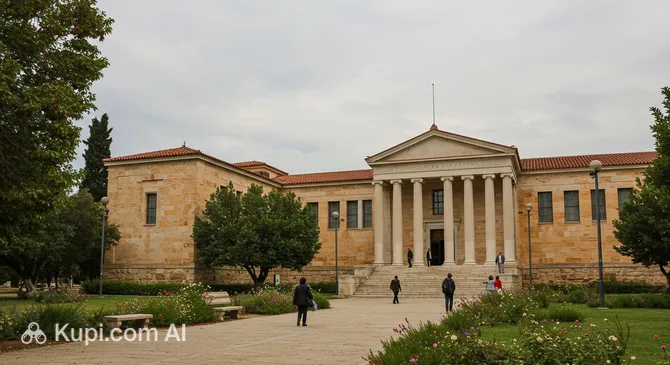
Archaeological Museum of Sparta
Archaeological Museum of Sparta. Иллюстрация. Источник: Kupi.com AI

The exhibition occupies seven halls, featuring rare artifacts covering a colossal period from the Neolithic to the late Roman era. Here, you won't see the gold of Troy, but you will find something more valuable for understanding the Spartan spirit: austere archaic sculptures, delicate ritual objects, and unique evidence of daily life in Laconia.

The museum building itself is an architectural monument, built in the 1870s. Despite its modest size (about 500 square meters), the museum is world-renowned for masterpieces such as the famous bust of a Spartan hoplite—in which many researchers recognize King Leonidas himself—and magnificently preserved Roman mosaics.

Contacts

For up-to-date information before your visit, you can use the museum's official contact details.

How to contactContact
AddressΛυκούργου, Agiou Nikonos &, Sparti 231 00, Greece
Phone+30 2731 028575
Websitearchaeologicalmuseums.gr

What to Do

In the museum's halls, visitors can embark on a true chronological journey. Be sure to take the time to examine the bronze statuette of Athena Chalkioikos and the majestic marble bust of a helmeted warrior—a symbol of the Spartans' unwavering courage. These objects are rightfully considered the "stars" of the collection.

The halls dedicated to finds from the Sanctuary of Artemis Orthia are of particular interest. Here, you can see thousands of tiny lead votive figurines depicting deities, animals, and warriors. This is evidence of mass production and the deep piety of the ancient polis's residents, rarely found on such a scale in other parts of the country.

Art lovers should linger by the Roman mosaics from the 3rd–4th centuries. The fine work of the craftsmen who captured mythological scenes, such as the story of Perseus and Medusa, is striking for its vivid colors that have survived through the centuries. Also, pay attention to the architectural fragments of the Temple of Apollo from Amyclae, which allow you to imagine the former grandeur of Laconia's ancient structures.

Getting There

The museum is located in the very heart of the city, at Λυκούργου, Agiou Nikonos. Thanks to its central location, it is very easy to reach on foot from almost anywhere in central Sparta, including the main square and primary shopping streets.

If you are arriving from Athens or Kalamata, it is most convenient to use the KTEL intercity buses. The trip from the capital takes about 3–4 hours. From the Sparta bus station, the museum is just a leisurely 10–15 minute walk away.

For those who prefer to travel by car, follow the E65 highway. Parking spaces can usually be found near the museum. The city also has a well-developed taxi service that will take you to the museum doors from any district in just a few minutes.

Ближайший город: Sparta

History & Facts

The history of this cultural institution began in 1872, when the Archaeological Society of Greece commissioned Panayiotis Stamatakis to collect antiquities scattered across private collections and the surrounding region. Prior to this, valuable finds were often kept in improper conditions, and some artifacts even suffered during a fire at the local town hall.

The building we see today was constructed between 1874 and 1876 according to the design of architect G. Katsaros. This event was a milestone for the entire country: the site in Sparta became the first archaeological museum built in a provincial Greek city rather than the capital.

Over the decades, the collection has grown significantly. The museum has evolved from a small collection into an important scientific center. Interestingly, due to the abundance of finds, only a small fraction of Laconia's treasures is displayed in the museum's seven halls—thousands of items remain in storage, awaiting future expansions of the exhibition.

A special place in the museum's chronicles is held by the study of the Sanctuary of Artemis Orthia. It was the finds from this site that allowed historians to take a fresh look at the religious rites and daily life of the ancient Spartans, dispelling many myths and confirming the uniqueness of their culture.

Time Needed

To walk through all seven halls without rushing and carefully study the key exhibits, most travelers need about 1–2 hours. This is enough time to appreciate the fine work of ancient craftsmen, examine the details of the Roman mosaics, and take photographs.

If you have a deep interest in archaeology or plan to read the information plaques in detail, your visit may last longer. However, the museum is quite compact, making it easy to include in a busy one-day walking itinerary around Sparta.

Working Hours

The museum welcomes visitors according to the following schedule: Monday, and from Wednesday to Sunday, the doors are open from 8:30 to 15:30.

Please note that Tuesday is a day off, when the museum is completely closed to visitors. It is recommended to arrive an hour before closing to have enough time to explore the exhibition without rushing.

DayWorking hours
Понедельник8:30 – 15:30
ВторникЗакрыто
Среда8:30 – 15:30
Четверг8:30 – 15:30
Пятница8:30 – 15:30
Суббота8:30 – 15:30
Воскресенье8:30 – 15:30

Nearby

The museum's location in the historical center makes it easy to combine your visit with a tour of other iconic sites. A walk around the neighborhood will help you fully experience the spirit of the ancient polis and see how the modern city exists side-by-side with ancient ruins.

NameDistance
Aeriko0.1 km
Retro Music Bar0.2 km
Tsipouradiko to 500.3 km
Statue of Leonidas0.6 km
Museum of the Olive and Greek Olive Oil0.6 km
Archaeological Site of Sparta0.9 km

Reached the end of the page?

That means the route is fully explored