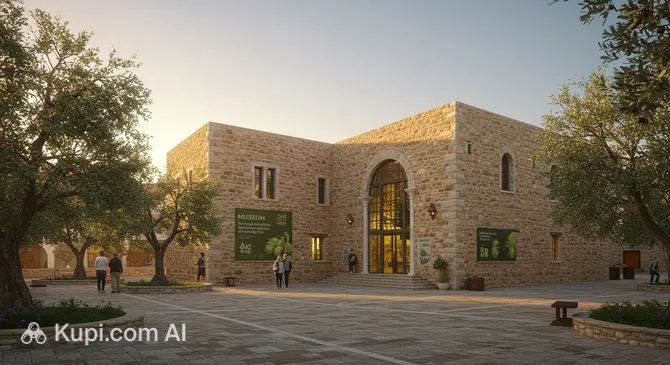
Immerse yourself in an atmosphere of ancient traditions and innovation in a unique cultural space. The Museum of the Olive and Greek Olive Oil in the city of Sparta is the first institution of its kind in Greece entirely dedicated to the culture and production technologies of this essential Mediterranean product. The museum is housed in a magnificently restored industrial building of a former power plant, which gives the exhibition a special character.
Museum of the Olive and Greek Olive Oil. Illustration.
Source: Kupi.com AI
Traveler photos:
This museum is not just a collection of antique items, but a true center for exploring Greek identity. It features rare finds, such as fossilized olive leaves over 50,000 years old and ancient tablets with the first mentions of olive production. The exhibition covers a vast span of time — from prehistoric eras to the early 20th century, revealing the role of the olive in the economy, religion, and daily life of the Greeks.
A visit to the museum will be interesting not only for history buffs but also for those who want to understand how Mediterranean culture was shaped. The Museum of the Olive and Greek Olive Oil is rightfully considered one of the main attractions of the Peloponnese, offering guests a deep and inspiring look at a symbol of peace and prosperity.
Contacts
To check up-to-date information about temporary exhibitions or to organize group tours, you can contact the museum administration directly. Below is all the necessary contact information, including the official website and its exact location on the map.
The museum staff is always ready to help tourists navigate the event schedule and answer questions regarding the availability of exhibits.
Visitors can expect an exciting journey across two levels of the museum. On the upper floor, you will learn about the symbolic significance of the olive in Greek culture: from the myth of the gift of the goddess Athena to the use of oil in medicine and sports. It features archaeological artifacts, digital installations, and photographs that tell the story of how this tree shaped the lifestyle of entire generations.
The ground floor is dedicated to technical progress and the evolution of production. Here you can see exact replicas of ancient oil presses — from primitive prehistoric presses to complex mechanisms from the Hellenistic and Byzantine periods. Of particular interest are working models of steam, diesel, and electric plants, which clearly demonstrate the transition to industrial production. There is also a separate section dedicated to the art of soap-making, showcasing traditional methods of making soap from olive oil.
For those traveling with family, the museum offers interactive elements and educational programs that make the visit informative for children. At the end of your visit, stop by the souvenir shop, where you can purchase high-quality olive wood products and literature dedicated to the region's gastronomic traditions.
Getting There
Getting to the Museum of the Olive and Greek Olive Oil in Sparta is easy, as it is located in the central part of the city at Othonos Amalias 129. If you are already in the center, a walk from the main square or the Archaeological Museum will take only about 10–15 minutes.
Travelers coming from Athens will find it most convenient to use the KTEL Laconia intercity buses. The trip takes about 3 hours, and the Sparta bus station is within walking distance of the museum entrance. If you prefer driving, follow the E65 highway (the journey takes approximately 2.5 hours); there is parking available for visitors next to the museum.
Within Sparta itself, public transport is limited, but thanks to the city's compact size and the convenient location of its landmarks, most tourists prefer to get around on foot or by taxi, which is inexpensive within the city limits.
Nearest city: Sparta
History & Facts
The history of this unique site began in 1998, when the local municipality handed over the building of the former Sparta Electric Company to the Piraeus Bank Group Cultural Foundation. This industrial building from the interwar period, constructed in the early 20th century, is an industrial architecture monument in its own right. After the power plant equipment was purchased by the state company DEI in 1959, the building stood empty for a long time until it found new life as a museum in 2002.
The choice of location for the museum is no coincidence: the Laconia region has remained one of the world's primary centers for olive oil production for thousands of years. The museum's exhibition clearly demonstrates that the olive has been an integral part of local life since prehistoric times. One of the most precious exhibits is fossilized olive leaves from the island of Santorini, estimated to be 50,000–60,000 years old.
Special attention is paid to written records: the halls display exact replicas of tablets with Linear B script, dating back to the 14th century BC. These artifacts confirm that oil production was already a vital economic sector in the Mycenaean era, and the tree itself was revered as a sacred gift from the gods, deeply rooted in Greek mythology and religion.
Time Needed
To explore all levels of the museum, examine the models of ancient oil presses, and read the information stands without rushing, most visitors need between 1.5 and 2 hours. This is quite enough time to immerse yourself in the history of "liquid gold" and appreciate the technological progress of oil production.
If you plan to study the digital installations in detail or browse the museum's souvenir shop, it is worth setting aside a little more time. The museum is very logically organized, so you will easily find your way through the exhibition even during a self-guided tour.
Working Hours
The Museum of the Olive and Greek Olive Oil welcomes guests throughout the week, with the exception of one day off. Please note that the opening hours remain the same on both weekdays and weekends, which is convenient for planning your trip.
Opening hours:
Monday: 10:00 – 18:00
Tuesday: Closed
Wednesday: 10:00 – 18:00
Thursday: 10:00 – 18:00
Friday: 10:00 – 18:00
Saturday: 10:00 – 18:00
Sunday: 10:00 – 18:00
The museum is closed on Tuesdays, as well as on some Greek public holidays, so it is recommended to check the calendar before your visit.
Day
Working hours
Monday
10:00 – 18:00
Tuesday
Closed
Wednesday
10:00 – 18:00
Thursday
10:00 – 18:00
Friday
10:00 – 18:00
Saturday
10:00 – 18:00
Sunday
10:00 – 18:00
Nearby
Sparta is a city with a rich heritage, and a visit to the Olive Museum can easily be combined with exploring other historical monuments. A walk around the neighborhood will allow you to immerse yourself deeper in the atmosphere of antiquity and see places made famous by legends of great warriors and ancient rulers.
In the immediate vicinity of the museum are iconic statues and archaeological zones that reveal different facets of life in the ancient polis. Be sure to take time to explore the following sites: