Support

Archaeological Site of Sparta

About

Imagine a place where every stone breathes legends of fierce warriors and great battles. The Archaeological Complex of Sparta is a unique historical reserve on the Peloponnese peninsula, featuring the ruins of one of the most powerful city-states of the ancient world. Unlike many other cities built in Greece, ancient Sparta for a long time had no walls, as the bravery of its citizens was its primary defense.

The centerpiece of the complex is the acropolis, which in ancient times was the heart of political and religious life. Here, you can see the foundations of the Temple of Athena Chalkioikos (Athena of the Bronze House), the remains of ancient shops, and fragments of a Byzantine basilica. One of the most impressive structures is the ancient amphitheater, built of white stone in the 1st century BC. At its peak, it could hold up to 16,000 spectators, making it one of the largest structures of its kind.
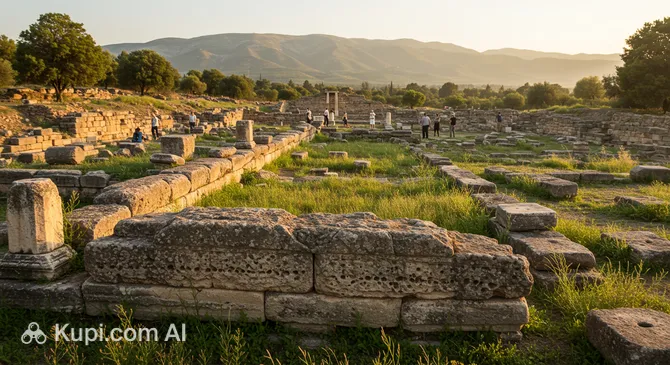
Archaeological Site of Sparta
Archaeological Site of Sparta. Иллюстрация. Источник: Kupi.com AI

The complex territory also includes the ruins of the Sanctuary of Artemis Orthia—one of the oldest Greek temples, where the famous Spartan initiation rites once took place. Walking through these sites, you will come across the presumed Tomb of King Leonidas, the hero of the Battle of Thermopylae. The authentic atmosphere of the ruins, surrounded by centuries-old olive trees, allows the modern traveler to feel the grandeur of a bygone era without unnecessary pomp or modern decorations.

Contacts

To plan your visit to the archaeological monuments of the ancient city-state, it is useful to have the exact coordinates and address at hand.

Below is the essential contact information:

How to contactContact
AddressSparta 231 00, Greece

What to Do

Visiting this site is, first and foremost, an opportunity to travel back in time. You can freely explore the acropolis territory, examining the remains of ancient foundations and walls that were once part of a mighty state. Be sure to head down to the southern slope to appreciate the scale of the ancient amphitheater. Even now, among the ruins, it’s easy to imagine the magnificent acoustics this grand white-stone structure once had.

For a deeper immersion into the context, it is recommended to download an audio guide in advance or hire a tour guide. A stroll among the olive trees will lead you to the fragments of Leonidas's tomb and the remains of ancient merchant stalls. This place is perfect for those who love detail: here, you can spend hours studying masterfully laid mosaics and the intricate forms of ancient capitals.

After touring the open-air site, be sure to stop by the Archaeological Museum of Sparta. It houses the most valuable finds discovered during excavations: from ritual terracotta masks of the Sanctuary of Artemis to the famous bust of a Spartan warrior. The complex offers excellent opportunities for historical photography, while the park's shaded corners allow you to relax and enjoy the silence with a view of the Eurotas River valley.

Getting There

Reaching the ancient ruins is quite easy, as they are located directly within the modern city of Sparta. If you are traveling by car, the most convenient route is via the E65 highway, which connects the city with Kalamata and Tripoli. The distance from Kalamata Airport is about 60 km, while the drive from Athens takes about 200 km along the scenic roads of the Peloponnese.

For those who prefer public transport, KTEL buses depart regularly from Athens (Kifissos bus station). The journey takes approximately 4–5 hours. Upon arriving at the Sparta bus station, you can reach the archaeological zone on foot or take a taxi in just 10–15 minutes. There are also regional bus routes from neighboring cities like Nafplio or Mystras.

Travelers arriving at the port of Gythion (located 30 km away) are recommended to rent a car or book a guided tour. Convenient parking is available near the archaeological complex. To avoid the midday heat and comfortably explore all the sights, it is best to plan your arrival for the morning hours.

Ближайший город: Sparta

History & Facts

The history of this site dates back to the second millennium BC. Legend has it that Sparta was named after the wife of King Lacedaemon, but the city-state's true golden age began after the Dorian conquest of the Peloponnese in the 11th century BC. Unlike the opulent Athens, the Spartans followed a policy of asceticism, which was reflected in their architecture: for a long time, the city had no defensive walls, as the warriors themselves were considered its protection.

The most active construction on the acropolis took place in the 6th century BC. This period saw the emergence of significant structures such as the Temple of Athena Chalkioikos (Athena of the Bronze House) and the majestic Throne of Apollo. A special place in history is held by the 5th century BC, the period to which the construction of the legendary King Leonidas's tomb belongs, located at the junction of the ancient and modern city.

In the Roman era, the complex's appearance underwent changes. The massive theater, built of white stone at the end of the 1st century BC, was rebuilt to accommodate even more spectators. The Sanctuary of Artemis Orthia, one of the oldest in Greece, has preserved traces of unique rituals and the high level of craftsmanship of local artisans.

Systematic excavations in this area only began at the end of the 19th century. Archeologists managed to uncover artifacts spanning a colossal period from the Neolithic to Late Antiquity. Most of these treasures, including Mycenaean pottery and the famous bronze bust of a hoplite, are now kept in the Archaeological Museum of Sparta, founded in 1875.

Time Needed

To leisurely explore the ruins of the ancient acropolis, walk through the rows of the majestic theater, and study the foundations of ancient temples, an average tourist will need about 2–3 hours. The complex territory is quite vast, and many paths wind through olive groves, making for a pleasant, steady stroll.

If you also plan to visit the Archaeological Museum of Sparta, which is located nearby, add another 1–1.5 hours to your itinerary. In total, you should set aside 3 to 5 hours to get acquainted with the city's historical heritage. This is plenty of time to soak in the spirit of the great city-state and take high-quality photographs without any rush.

Working Hours

The archaeological site welcomes visitors daily throughout the week. This allows tourists to flexibly plan their schedule in the city and choose the most comfortable time for an open-air walk.

The site operates according to the following schedule:

  • Monday: 08:00 – 15:30
  • Tuesday: 08:00 – 15:30
  • Wednesday: 08:00 – 15:30
  • Thursday: 08:00 – 15:30
  • Friday: 08:00 – 15:30
  • Saturday: 08:00 – 15:30
  • Sunday: 08:00 – 15:30

8:00 – 15:30

Nearby

Exploring the surroundings of the ancient city-state allows for a deeper dive into the atmosphere of the classical era and showcases the continuity of generations. A walk through the modern city and its outskirts will reveal numerous monuments dedicated to the great warriors and lawmakers of the past.

Near the main complex, you will find both the ruins of market squares and majestic statues that have become symbols of the city. Be sure to visit the following sites:

NameDistance
Statue of Leonidas0.3 km
Aeriko0.7 km
Retro Music Bar0.9 km
Archaeological Museum of Sparta0.9 km
Tsipouradiko to 500.9 km
Museum of the Olive and Greek Olive Oil1.2 km

Reached the end of the page?

That means the route is fully explored