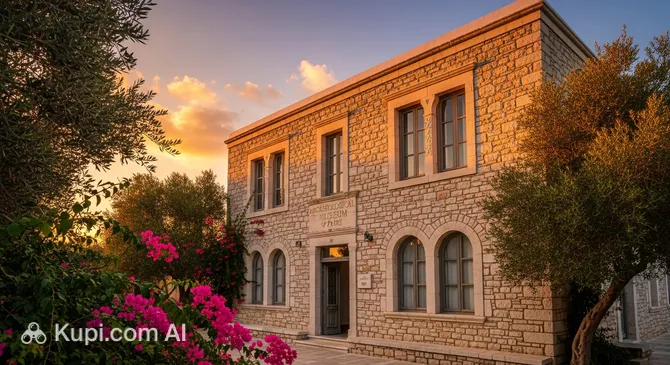
The Archaeological Museum of Paros is a treasure trove of ancient art located in the town of Paros (Parikia) on one of the most beautiful islands in Greece. Founded in 1960, this museum is considered one of the most important in the Cycladic archipelago, as it houses unique evidence of the region's centuries-old history—from the Neolithic era to Roman rule.
Archaeological Museum of Paros. Illustration.
Source: Kupi.com AI
Traveler photos:
The main pride of the collection is artifacts made from the famous Parian marble, which in antiquity was valued more highly than gold for its transparency and purity. Notable exhibits include the prehistoric "Fat Lady" figurine, found on the islet of Saliagos, and a fragment of the legendary Parian Chronicle—an ancient marble tablet inscribed with key dates in Greek history.
The museum occupies a small building next to the gymnasium, but its halls are literally overflowing with masterpieces: here you can see delicate ceramics, mosaic floors depicting the Labors of Hercules, and monumental sculptures from the Archaic and Classical periods. It is a place where legends of ancient masters and great heroes of the past come to life.
Contacts
For more information regarding your visit, you can use the following contact details:
Within the museum's halls, guests can enjoy a fascinating journey through time. It is recommended to start the tour in chronological order, moving from the Neolithic artifacts to the displays dedicated to the height of Classical Greece. Be sure to pay attention to the details: exquisite ceramics, seals, and ancient coins that vividly illustrate the wealth of Paros in antiquity. The mosaic floors of the Roman period and masterfully executed frescoes provide a special aesthetic pleasure.
Mythology buffs should take a close look at the pebble floors and sculptures depicting gods and heroes. In addition to touring the interior halls, take a look at the courtyard—it displays fragments of architectural structures, sarcophagi, and reliefs that allow you to feel the scale of ancient buildings. This is an ideal place for self-guided historical study: information stands provide detailed accounts of the role of local marble in world art and the latest archaeological discoveries on the island.
Getting There
Finding the Archaeological Museum of Paros is easy, as it is located in the heart of Paros (Parikia), just a few minutes' walk from the main port. If you are already in the island's capital, look for the gymnasium and the famous Panagia Ekatontapiliani church—the museum is situated in the immediate vicinity of these landmarks. A walk from the waterfront or the central square will take about 5–10 minutes through picturesque white-washed streets.
If you are arriving on the island from other regions of Greece, the most convenient way is to take a ferry from the ports of Athens (Piraeus or Rafina), which takes between 4 and 5 hours. Paros can also be reached by plane: from the local airport, regular buses and taxis run to the center of Parikia, and the trip takes no more than 15 minutes. For maximum convenience when traveling around the island, many tourists prefer to rent a scooter or a car, and parking spaces are available near the museum.
Nearest city: Paros
History & Facts
The history of this place is inextricably linked with the flourishing of Cycladic culture. The museum's collection covers a vast period starting from the 5th millennium BC, when the first settlements appeared on the island. During the Archaic period, Paros became famous throughout the ancient world for the extraction of a special variety of marble—Lychnites. This translucent, snow-white stone was so highly valued that it was used to create such masterpieces as the Venus de Milo and the Winged Victory of Samothrace.
One of the most intriguing finds kept here is a fragment of the Parian Chronicle. This unique marble tablet from the 3rd century BC is a kind of annals of Greek history, covering a period of more than a thousand years. Although most of this relic is now in Oxford, the Paros fragment remains an invaluable testament to how the ancient Greeks recorded the key events of their civilization.
The museum itself was founded in 1960 to systematize and preserve the numerous artifacts found during excavations on the island and the nearby islet of Saliagos. The collection is constantly growing: for example, the remains of a Hellenistic marble workshop were discovered relatively recently, located right on the ruins of houses from earlier eras, allowing scientists to better understand the daily life and techniques of ancient stone cutters.
Time Needed
To leisurely explore the two main halls of the museum and the inner courtyard with the lapidarium, an average visitor will need 1 to 1.5 hours. This is sufficient time to study the key exhibits, including the famous sculptures and fragments of the ancient chronicle, and to read the explanatory plaques.
If you are a passionate archaeology enthusiast or plan to study the Parian marble carving techniques and Roman-era mosaic floors in detail, it is worth budgeting about 2 hours for the visit. The museum is compact, so the visit will not be tiring and can easily be combined with a walk through the city's historical center.
Working Hours
As a rule, the museum welcomes visitors daily, except for Tuesdays. Standard operating hours are from 08:30 to 15:30. However, the schedule may change depending on the season or ongoing restoration work.
Since the site's status may currently be marked as temporarily closed, we strongly recommend checking for the latest information on the official website or confirming opening hours at the Parikia tourist information center before your visit.
Day
Working hours
Monday
08:30–15:30
Tuesday
Закрыто
Wednesday
08:30–15:30
Thursday
08:30–15:30
Friday
08:30–15:30
Saturday
08:30–15:30
Sunday
08:30–15:30
Nearby
A visit to the museum is just one part of discovering the rich heritage of Parikia. A stroll through the surroundings will allow you to see how ancient history intertwines with the island's modern life, revealing new facets of Cycladic culture.