Support

Acropolis of Rhodes

About

The Acropolis of Rhodes (Greek: Αкρόπολη της Ρόδου) is an impressive ancient architectural complex that stands majestically on St. Stephen's Hill, also known as Monte Smith, in close proximity to the city of Rhodes in Greece. This acropolis is one of the most significant archaeological monuments on the island of Rhodes and offers a unique window into the ancient world.
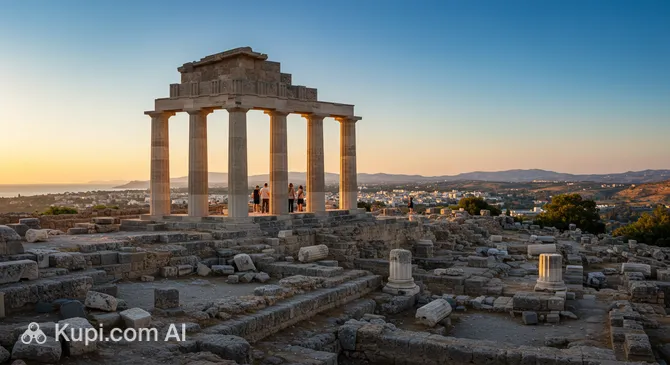
Acropolis of Rhodes. Illustration.
Source: Kupi.com AI

Traveler photos:

On the acropolis grounds, visitors can explore the ruins of several important ancient structures. Most notable among them are the remains of the Temple of Pythian Apollo, dating back to the 2nd century BC. Nearby is a small but elegant marble amphitheater (Odeon), which served as a school of rhetoric in antiquity, and the ancient Pythian Stadium. Ancient games in honor of the god Apollo were once held at this impressively sized stadium, attracting athletes and spectators alike.

In ancient times, presumably in the 3rd–2nd centuries BC, the Acropolis of Rhodes functioned as a fortified citadel. It is worth noting that a large part of this ancient city has not yet been excavated and still hides its secrets underground. Today, the ruins available for viewing are picturesquely situated within the extensive Monte Smith Park, named after the English Admiral Sidney Smith. A walk through the acropolis allows you not only to touch ancient history but also to enjoy magnificent views.

Contacts

The Acropolis of Rhodes is an ancient historical complex located on St. Stephen's Hill. It can be reached on foot from the center of Rhodes, by public transport, or by taxi. As it is an open archaeological site, specific contact numbers for inquiries are usually not provided; information on opening hours and possible tours is best checked at the city's tourist information centers or on the official tourism portals of Greece.

How to contactContact
AddressDiagoridon 68, Rodos 851 00, Greece

What to Do

A visit to the Acropolis of Rhodes is a unique opportunity to touch ancient history and imagine the majesty of the classical world. The main activity here is exploring the surviving ruins of ancient structures. As you walk through the area, you can see the remains of the Temple of Pythian Apollo, where several columns still stand and the foundation, built around a massive rectangular stone of cyclopean proportions, is visible. This site allows you to literally feel the breath of centuries and imagine what this sacred complex looked like in its prime.

The beautifully restored marble Odeon amphitheater is a major draw for tourists. Here, you can not only admire the ancient architecture but also learn that many famous figures of antiquity, including Cicero, honed their oratorical skills in this very place. Today, the Odeon has been restored to its original appearance, and visitors can sit on its steps, imagining themselves as spectators of ancient performances or students of rhetoric.

Another iconic feature on the acropolis grounds is the unique Pythian Stadium. It is believed to be the only surviving analog of the stadium at Ancient Olympia in the world, making a visit particularly valuable. You can walk across the arena where athletes once competed and soak in the atmosphere of the ancient games. Furthermore, the acropolis grounds offer many picturesque spots for memorable photos, whether it's the ancient orator’s platform or the steps of the ancient amphitheater and stadium.

Overall, a visit to the Acropolis of Rhodes is more than just sightseeing; it is a true immersion into the history and culture of ancient Rhodes. You will be able to enjoy the views of ancient monuments while learning a great deal about the lives of the people of that era, their beliefs, and their achievements. This place leaves a deep impression and provides a better understanding of the origins of European civilization.

Getting There

The Acropolis of Rhodes is conveniently located on Monte Smith Hill, which is the highest point of the city of Rhodes. Thanks to its position within the city limits, this iconic landmark is easily accessible for tourists wishing to explore the ancient history of the island.

There are several ways to reach the Acropolis. If you prefer public transport, it is worth checking the current city bus routes that go towards Monte Smith Hill. Generally, the stops are within walking distance of the foot of the hill. Another convenient option is a taxi, which will quickly take you from any part of Rhodes directly to the start of the climb or to one of the entrances to the Acropolis grounds.

For those who enjoy walking, the climb up Monte Smith Hill can be a pleasant part of the journey. Keep in mind that the ruins of the ancient Acropolis are scattered across a vast area that resembles a large park. Therefore, be prepared for a walk across the hill itself to see all the surviving structures. It is recommended to wear comfortable shoes and bring water, especially in hot weather.

Nearest city: Rhodes

History & Facts

The construction of the Acropolis of Rhodes began in the Hellenistic period, around the 3rd–2nd centuries BC, and it originally served as the fortified citadel of the ancient city of Rhodes. Its vast territory housed not only temples and sanctuaries but also public buildings. One of the key structures was the Temple of Pythian Apollo, dating back to the 2nd century BC. Additionally, the acropolis was a hub for cultural and sporting life: the famous Pythian Games were held here at the local stadium in honor of the god Apollo.

The marble amphitheater holds particular historical value, as evidence suggests it was part of a renowned school of rhetoric. It is believed that the great Roman orator Cicero honed his skills here, highlighting the high cultural status of Rhodes in the ancient world. There is also an intriguing hypothesis proposed by some researchers: the legendary Colossus of Rhodes, one of the Seven Wonders of the Ancient World, might have been located on the acropolis grounds rather than in the harbor as traditionally thought. This 36-meter statue, which descriptions say was cast from bronze and silver, would have lent even greater majesty to this site if it indeed stood here.

Systematic archaeological excavations of the Acropolis of Rhodes began thanks to the efforts of the Italian School of Archaeology in Athens and continued from 1912 to 1945. After that, from 1946, research and restoration work passed under the control of the Greek Archaeological Service. Thanks to these years of effort, key structures of the complex, such as the Temple of Apollo, the stadium, and the theater, were discovered and partially restored. Nevertheless, a significant part of the ancient acropolis remains unexplored, keeping many secrets and potential discoveries buried underground that could shed new light on the history of this amazing place.

Time Needed

When planning a visit to the Acropolis of Rhodes, you should expect that a general tour of the main ruins and panoramic views will take about 1–2 hours. This is usually enough time to walk through the key points of the archaeological complex, such as the remains of the Temple of Apollo, the ancient stadium, and the theater, and to get a general impression of this historical site in Rhodes.

If you want to study each surviving element in more detail, delve into the history of the ancient structures, take plenty of photos from different angles, and simply enjoy the ancient atmosphere, then feel free to budget 2–3 hours or even slightly more. The time spent here will also depend on your personal pace and level of interest in the archaeology and history of Ancient Greece.

Thus, for a complete and leisurely introduction to the Acropolis of Rhodes, most visitors will find it comfortable to allocate between one and a half to three hours. This will allow for an unhurried walk through the grounds, an appreciation of the scale of the ancient buildings, and time to enjoy the views from St. Stephen's Hill, where the acropolis is located.

Working Hours

The Acropolis of Rhodes is generally open to visitors year-round, though opening hours can vary significantly depending on the season. During the peak summer tourist season, access is usually provided for longer hours, while in winter, the hours may be reduced. To get the most accurate and up-to-date information on opening hours, it is recommended to check the attraction's official website or consult local tourist information centers upon arrival in Rhodes.

When visiting significant historical sites like the Acropolis of Rhodes, especially during high season, it may be advisable to check in advance regarding online ticket purchases or tour booking options. This will help you avoid long queues and plan your visit in the best way possible. Some parts of the acropolis may have restricted access or require a separate ticket, so clarifying these details beforehand will also be useful.

DayOpening hours
Monday9:00 – 18:00
Tuesday9:00 – 18:00
Wednesday9:00 – 18:00
Thursday9:00 – 18:00
Friday10:00 – 18:00
Saturday9:30 – 18:00
Sunday9:00 – 18:00

Nearby

Visiting such an iconic landmark as the Acropolis of Rhodes is undoubtedly a highlight of any trip. However, to make your experience even more enriching, it is worth exploring what is in the immediate vicinity. Exploring the surrounding areas will allow you to dive deeper into the atmosphere of Rhodes City and discover new facets of its history and culture.

The area surrounding the Acropolis of Rhodes offers many interesting spots that will nicely complement your impressions. From ancient ruins to picturesque corners, everyone will find something to their liking. Below is a list of some nearby attractions, including the distance to them, so you can easily plan your route.

NameDistance
Ancient Stadium of Rhodes0.2 km
Monte Smith Hill0.3 km
Saint Athanasios Gate1.2 km
My Escape1.3 km
Clock Tower of Rhodes1.3 km
Tamam Restaurant1.3 km
Palace of the Grand Master of the Knights of Rhodes1.4 km

Have you reached the end of the page?

So the route has been studied inside and out