Support

Coronel Enrique Soto Cano AB

Airports in the city

About the Airport

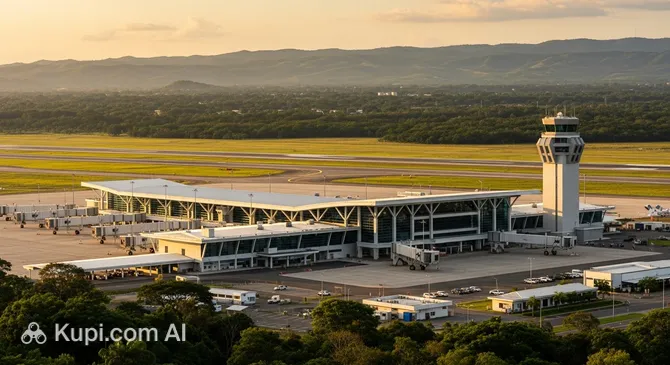
Coronel Enrique Soto Cano Air Base. Source: Kupi.com Binoculars

Coronel Enrique Soto Cano Air Base, better known to modern travelers as Palmerola International Airport (XPL), serves as the main aerial gateway to Honduras, heralding a new era in the country's aviation. Located in the picturesque Comayagua Valley, this ultra-modern transport hub shares its runway with a legendary military base, offering tourists the highest level of safety and comfort. The airport opened in late 2021 to replace the capital's Toncontín Airport, which was challenging for pilots, and now handles the majority of international flights bound for Tegucigalpa.

The complex impresses with its scale and novelty: a spacious terminal equipped with advanced technology and a long runway capable of accommodating wide-body liners make arriving here a calm and pleasant start to a journey through Central America. Passengers are welcomed by modern waiting lounges, shops, and easy navigation, while transfers to the capital are organized with maximum convenience.

AirportCoronel Enrique Soto Cano AB
IATAXPL
ICAOMHPR
CityTegucigalpa
TimezoneAmerica/Tegucigalpa
ScheduleOnline board

Airport Features and Advantages:

Safety First. Unlike the old capital airport situated amongst mountains, Palmerola is located in flat terrain and boasts a runway over 2,400 meters long. This allows for the safe reception of aircraft of any class in all weather conditions and at any time of day, which was a key factor in transferring international flights here.

Modern Terminal. The passenger terminal, covering an area of approximately 40,000 square meters, is designed with environmental standards in mind and equipped with solar panels. It features 7 jet bridges (aerobridges), sparing passengers from having to walk on the tarmac. Inside, spacious VIP lounges, duty-free shopping zones, and food courts offering local cuisine are available.

Convenient Logistics. Despite its distance from the capital (about a 1.5-hour drive), the airport offers a free shuttle service, Palmerola Connect, running between the terminal and Tegucigalpa. The buses are equipped with Wi-Fi and air conditioning, turning the transfer into a comfortable mini-excursion along the scenic roads of Honduras.

Contact Information

For the convenience of travelers, we have compiled the current contact details for Palmerola International Airport (XPL), located at the Soto Cano base. This information will help you check flight schedules or resolve any issues that may arise.

  • Official Airport Website: www.palmerola.airport.hn — here you can find the online flight board and news.
  • Information Desk Phone: +504 2627-0010 — the main number for general inquiries.
  • Airport Address: Carretera CA-5, Kilómetro 73, Comayagua, Honduras (CA-5 Highway, approximately 6 km south of Comayagua city center).
  • Email: info@palmerola-airport.com — for official inquiries and feedback.
  • Airport Social Media: Official pages are available on Facebook, Instagram, and X (Twitter) by searching for "Palmerola International Airport". Operational updates are frequently posted there.
  • Lost Luggage Information: If your suitcase has not arrived, first contact your airline's counter (Lost & Found) in the arrivals hall. To search for items left in the terminal, contact the airport information desk or security service via the main phone number.
  • Passenger Support Contacts: You can send a request via the feedback form in the "Contáctenos" section on the official website or write to the email address listed above.

How to Get to the Airport

There are several ways to get to Coronel Enrique Soto Cano Air Base, where the civilian terminal of Palmerola International Airport (XPL) operates. Since the airport is located in the Comayagua Valley, at a significant distance from the capital (approximately 75–80 km), the transfer question is key when planning your trip. Modern infrastructure and the excellent condition of the CA-5 highway make the journey relatively quick and comfortable.

Free Express Shuttle Palmerola Connect
The most popular and cost-effective way to reach Tegucigalpa is to use the airport's official bus service. Comfortable buses run between the terminal in Comayagua and the old Toncontín Airport in the capital.
Cost: For passengers of most airlines, the ride is free (you must present a boarding pass or ticket booking).
Travel Time: About 90 minutes.
Features: Buses are equipped with Wi-Fi, air conditioning, and luggage space. It is recommended to book a seat in advance via the airport's website or your airline.

Taxi and Private Transfer
For those who value personalized service and speed, official taxis are available around the clock at the terminal exit. This is a safe option as the cars are registered with the airport service.
Cost: A trip to the center of Tegucigalpa will cost approximately 50–70 USD (it is better to agree on the price before boarding). A trip to Comayagua city center will cost about 10–15 USD.
Travel Time: About 1 hour 15 minutes to the capital, 15 minutes to Comayagua.
Tip: Taxi-hailing apps (like Uber) operate in the region, but their availability directly in the arrivals zone may vary.

Car Rental
Counters for international and local rental companies (Alamo, Enterprise, Avis, Hertz) are located in the arrivals hall. Renting a car is an excellent solution if you plan to travel around Honduras on your own.
Route: The exit from the airport leads directly onto the CA-5 highway — the best road in the country with four lanes and good surfacing.
Cost: From 40 USD per day for an economy class car. Consider fuel costs and potential toll road fees (peaje).

Intercity Buses
Since Honduras does not have a metro or passenger rail service, intercity buses serve as the alternative. Major carriers (such as Hedman Alas or Viana) traveling the Tegucigalpa — San Pedro Sula route make a stop in Comayagua.
Nuance: Most of these buses do not enter the terminal directly but stop on the highway or at the Comayagua bus station, from where you will need to take a short taxi ride to the airport.

Airport Parking
The terminal is equipped with a spacious secure parking lot designed for hundreds of vehicles. The parking area is within walking distance of the check-in hall entrance. Payment is made via automated terminals. Both hourly and daily rates for long-term parking are available.

If your itinerary involves visiting other regions or Central American countries, it is useful to know the location of neighboring aviation hubs. The nearest major domestic hub is Ramon Villeda Morales International Airport in San Pedro Sula (about 123 km), which is convenient for trips to the Caribbean coast. For travel to the islands, Roatan Airport is ideal, although it is significantly further (244 km) and requires a flight or ferry crossing. Also located on the coast is Goloson International Airport in La Ceiba (171 km).

For international connections in neighboring El Salvador, tourists sometimes use El Salvador International Airport (186 km) or the smaller Ilopango Airport (178 km), although transferring across the border will take significantly more time.

Terminals and Map

The civilian sector of Coronel Enrique Soto Cano Air Base, operating as Palmerola International Airport (XPL), is designed on the principle of maximum functionality and simplicity. The airport features one main passenger terminal, making it extremely convenient for travelers: it is practically impossible to get lost here, and transfers take minimal time.

Terminal Structure and Zones

The terminal building is divided into two main levels, separating arriving and departing passenger flows, which complies with modern global standards of safety and comfort.

  • Departures Zone: Usually located on the upper level. Here you will find airline check-in counters, the pre-flight security screening area, passport control, and the entrance to the "airside" zone. After completing formalities, passengers enter a spacious waiting hall with Duty Free shops, cafes, and boarding gates.
  • Arrivals Zone: Located on the lower level. Passengers descend here after disembarking from the aircraft (most flights are serviced via jet bridges). The path leads through immigration control to baggage claim belts and customs, and then to the city exit, where taxi and car rental counters are located.

Navigation and Transfers

Thanks to the linear layout of the building, navigation in the airport is intuitive. Clear signs in English and Spanish are installed everywhere. Since there is only one terminal, transfers between flights take place within the same building. Transit passengers do not need to use trains or shuttles — changing gates is done on foot and usually takes no more than 10–15 minutes at a calm pace.

Terminal Features

The Palmerola terminal stands out from older airports in the region due to its technical equipment:

  • Jet Bridges: 7 modern boarding bridges allow for comfortable transfer from the aircraft to the building, protecting passengers from tropical heat or rain.
  • VIP Lounges: Business lounges (such as the Tenampua VIP Lounge) operate in the departures zone, offering rest in a quiet environment, snacks, and beverages before the flight.
  • Accessible Environment: The complex is fully equipped for passengers with reduced mobility: there are elevators, ramps, and specially adapted restrooms.

Check-in and Security

The airport is equipped with modern baggage scanning and biometric control systems, which speeds up queue processing. However, given the international status of flights, it is recommended to arrive at the airport in advance:

  • Check-in: Counters usually open 3 hours before and close 60 minutes prior to departure.
  • Security Screening: The procedure is standard (removing belts, placing electronics in separate trays). During peak hours (morning flights to the USA), waiting times can take up to 30–40 minutes.

Navigation Tips: If you arrive via the Palmerola Connect shuttle or taxi, drop-off occurs right at the entrance to the check-in zone. For those meeting passengers, a separate waiting area is provided at the exit of the arrivals hall to avoid overcrowding inside the terminal.

Airport History

The history of the air hub known to tourists today as Palmerola International Airport (XPL) surprisingly intertwines a military past with a civilian future. It is a rare example of how a strategic military facility transformed into a key passenger transport node, reopening the country to the world.

Birth of the Base and the Military Era
The history of the site began in 1981. Initially, this place was known simply as Palmerola Air Base. It was built by the United States of America during the Cold War as a strategic point in Central America. Thanks to the wide and flat Comayagua Valley, it was possible to lay one of the highest quality and longest runways in the region here, which was impossible in the mountainous landscape of the capital.

A Hero's Name
The complex received its official name — Coronel Enrique Soto Cano Air Base — in 1988 (according to other sources, the official renaming was cemented in the early 2000s by a Congressional decree). The base was named after the Honduran national hero, distinguished pilot Enrique Soto Cano, who was renowned for his skill and contribution to the development of the country's air force. Despite the base's official name, the historical geographical name — Palmerola — has stuck among the people and travelers.

Path to Civil Aviation: Large-Scale Modernization
For a long time, Tegucigalpa was served by the infamous Toncontín Airport, considered one of the most difficult for landing in the world. The idea of moving civilian flights to the safe and spacious Soto Cano base was discussed for decades.

  • 2016: The official start of the ambitious project was announced. The President of Honduras and investors laid the foundation stone for the construction of a modern passenger terminal on the territory of the military base. The goal was to create a logistics center capable of receiving large transatlantic liners.
  • 2019–2020: Active construction phase. Despite global challenges, the erection of the terminal, fire station, and new control tower continued.
  • October 15, 2021: The solemn inauguration of the airport took place. This event became a national holiday, symbolizing a new era of flight safety in Honduras.
  • December 2021: The airport received its first scheduled international flights, finally taking the baton from the old capital airport.

Interesting Facts from History and Modernity:

  • Joint Use: The airport is unique in that the civilian terminal and the military base operate side by side. Joint Task Force Bravo (USA) and the Honduran Air Force Academy are based here. Tourists can see military hangars while the aircraft is taxiing.
  • Runway Record: The 2,440-meter long runway is one of the best in the country. It allowed for the reception of huge C-5 Galaxy military transport aircraft back in the 80s, and today it easily accommodates civilian Airbus A350s and Boeing 787s, which could not land in Tegucigalpa with a full load.
  • Archaeological Heritage: The Comayagua Valley, where the airport is located, is a historically significant place. During the design and expansion of roads around the airport, the need to preserve the region's cultural heritage, rich in colonial history, was taken into account.
  • Symbol of Safety: The opening of XPL allowed Tegucigalpa to be removed from lists of cities with "extreme" airports, significantly increasing the region's tourism appeal.

Services and Amenities

Since the civilian terminal of Palmerola Airport (XPL), located on the air base territory, is a completely new structure, passengers have access to modern infrastructure designed with global comfort standards in mind. Although the airport does not possess the giant dimensions of major hubs, it has everything necessary for a pleasant wait for your flight.

Restaurants, Cafes, and Shops
Several dining points are located in the "airside" departure zone and the general hall. Travelers can enjoy famous Honduran coffee at popular chain coffee shops (such as Espresso Americano), grab a snack at fast-food restaurants, or choose local cuisine dishes.
The retail area includes Duty Free shops where you can purchase perfumes, confectionery, and other goods tax-free. Particular attention should be paid to souvenir stalls: they sell items from local artisans, cigars, coffee beans, and textiles, which make excellent gifts from your trip.

VIP Lounges and Comfort
For those who value privacy and enhanced comfort, the Tenampua VIP Lounge (and other business class lounges) operates in the international departures zone. This stylish space offers soft armchairs, a buffet with snacks and beverages, as well as a calm atmosphere for work or relaxation before the flight. Access is possible via loyalty program cards (e.g., Priority Pass) or for a separate fee.

Connectivity and Electronics
The airport is fully covered by a high-speed free Wi-Fi network, allowing you to stay in touch with loved ones or handle work matters. The waiting lounges feature a large number of charging stations with power outlets and USB ports built into the seating blocks, so charging gadgets will not be a problem.

Financial Services
ATMs of the country's major banks are installed in the terminal, allowing you to withdraw cash in local currency (Lempiras) or US dollars. Currency exchange points are also available; however, experienced tourists recommend exchanging small amounts for immediate expenses, as the rate at the airport may be less favorable than in the city.

Services for Passengers with Children
Palmerola is a family-friendly airport. Diaper changing tables are provided in the restroom blocks. Spacious halls allow for comfortable movement with strollers. Small play corners can be found in the waiting area to occupy little travelers before boarding.

Passengers with Reduced Mobility
The new terminal is designed in accordance with strict barrier-free environment standards. Services available to passengers include:
— Specially equipped spacious restrooms;
— Elevators and ramps for moving between levels;
— Designated spaces in the parking lot;
— The option to request assistance (help with boarding and disembarking) through the airline.

Medical Assistance
A first aid station operates within the terminal building, which you can visit in case of illness. Qualified personnel are ready to provide support until the arrival of city emergency services if necessary.

Hotels and Accommodation
There is currently no transit hotel directly inside the passenger terminal. However, due to the close proximity to the city of Comayagua (just a 10–15 minute drive), passengers can use hotels in the city. Both budget guesthouses and more comfortable options, such as the Hotel Comayagua Golf Club or boutique hotels in the historic center, are available there.

For Business
Specialized conference rooms are not provided in the general access areas of the terminal; however, VIP lounges are equipped with convenient work zones where you can hold negotiations in an informal setting or work with documents in silence.

Dining

The gastronomic infrastructure of Palmerola International Airport (XPL), located at the Soto Cano base, corresponds to its status as a modern air hub. The terminal was opened recently, so dining zones are designed with passenger comfort in mind: they are spacious, hygienic, and offer a clear selection of dishes. Although there are no endless rows of restaurants here like in giant global hubs, the available options are quite sufficient for a hearty lunch or grabbing quality coffee for the road.

Coffee Culture and Desserts

Honduras takes pride in its coffee, and the airport is an excellent place to enjoy local varieties before departure. The terminal features two key coffee chains worth visiting:

  • Espresso Americano: A cult national chain loved by locals. Here you should order a classic cappuccino or Granita de Café (a cold coffee dessert), which is perfectly refreshing in hot weather.
  • Galeanos Café: Another worthy representative of the Honduran coffee industry. This place is distinguished by a cozy atmosphere and offers excellent espresso as well as fresh pastries.

Both coffee shops offer a wide selection of desserts: from muffins and croissants to local sweet pies, making them ideal places for breakfast.

Restaurants and Fast Food: Where to Eat

The main dining area is organized in a food court format, which is convenient for transit passengers and families with children due to quick service.

  • International Brands: For those who prefer familiar tastes, well-known chains operate at the airport. Subway offers classic sandwiches convenient to take on the plane, and Domino's Pizza offers hot pizza suitable for a family lunch.
  • Local Flavor — Mister Baleadas: If you want to experience Honduran cuisine or have grown to love it during your trip, be sure to visit Mister Baleadas. They serve the main national dish — baleadas. This is a large folded wheat tortilla filled with refried beans, cheese, and cream (mantequilla). Optionally, you can add eggs, avocado, or meat. It is a hearty, tasty, and inexpensive snack option.

Location: Landside and Airside

Dining establishments are distributed throughout the terminal to meet the needs of all visitors:

  • General Zone (Landside): On the first level, accessible to those meeting and seeing off passengers, there are cafes and fast-food points. This is the best place to sit quietly with friends before going through security control.
  • Departure Zone (Airside): After passport control and screening, passengers enter the shopping gallery with boarding gates. There is also an opportunity to drink coffee and have a snack here, although queues may arise during peak hours (usually in the morning).

Dietary Needs

There are no specialized health food restaurants at the airport, so passengers with special requests should study the menu carefully.

  • Vegetarians: Will find options without difficulty. At Mister Baleadas you can order a classic baleada (beans and cheese), at Domino's — a vegetable or cheese pizza, and at Subway — a meat-free sandwich.
  • Vegans: The choice is more limited, as dairy products are actively used in local cuisine. Safe options would be black coffee, sliced fruit, or salads without dressing. It is recommended to clarify the ingredients of dishes.
  • Halal and Kosher: There are currently no certified outlets offering Halal or Kosher food at Palmerola. Travelers strictly observing these dietary laws are advised to limit themselves to vegetarian dishes, beverages, or bring food with them.
  • Gluten-Free: A separate gluten-free menu is rare. It is better to rely on packaged snacks in Duty Free shops where ingredients are listed, or salads.

Opening Hours and Prices

The operating schedule of establishments is tied to the flight schedule.

  • Hours: Most cafes open early in the morning (around 5:00–6:00 AM) for the first wave of flights and close after the departure of the last evening flight. Most points do not work at night.
  • Price Range: Prices at the airport are slightly higher than in the city of Comayagua but remain affordable. A cup of good coffee will cost 3–5 USD, a sandwich or baleada — 5–8 USD, and a full combo meal — 10–15 USD. Honduran Lempiras, US dollars, and bank cards are accepted for payment.

Recommendations for Travelers

For a full, relaxed lunch, it is recommended to use the food court area in the general hall (before security control), where there is less bustle. If time is short, the ideal option for a quick snack is to grab a sandwich at Subway or coffee with pastries at Galeanos Café right at the gate. Also, do not forget to buy bottled water after passing security, as drinking fountains may not be available everywhere.

Travel Tips

Traveling through Palmerola International Airport (XPL), located at the Soto Cano base, differs from the experience many are used to when flying from the old capital airport. To ensure your trip goes as smoothly as possible, we have prepared a series of practical recommendations considering the specifics of this new air hub and its distance from Tegucigalpa.

Plan Your Time with a Buffer
The main advice for all departing passengers is to calculate travel time correctly. The airport is located in the Comayagua Valley, approximately 80 km from the capital. The drive along the CA-5 highway usually takes about 1.5 hours, but in the event of roadworks or accidents, this time may increase.
Recommended arrival time at the terminal:
— For international flights: 3 hours before departure.
— For domestic flights: 2 hours before departure.
In total, budget about 5 hours before your flight time for the transfer and airport procedures if traveling from Tegucigalpa.

Check-in and Mandatory Documents
Honduras is actively implementing digital technologies at the border.
Important: All passengers arriving in or departing from the country are required to fill out an electronic preliminary immigration check form (Pre-chequeo migratorio). This must be done online before arriving at the airport (preferably 24–48 hours in advance) to receive a QR code. Without this code, you may be detained at the check-in counter or passport control.
It is also better to complete flight check-in online — the new terminal has drop-off counters for quick baggage drop, which will save you time in line.

Security Screening and Carry-on Luggage
Since the airport shares territory with an active US and Honduran military base, security measures here are strictly observed, but the staff behaves professionally.
What to consider when packing carry-on luggage:

  • Coffee: Many tourists bring back Honduran coffee. If you are carrying ground coffee in your hand luggage to the USA, remember the restriction on transporting powder-like substances (usually no more than 350 ml). It is better to check coffee in your luggage or buy it in Duty Free shops after security.
  • Liquids: The 100 ml rule is strictly enforced. All containers must be in a transparent bag.
  • Electronics: Laptops and tablets must be placed in separate trays on the screening belt.

Seat Selection on the Plane
Unlike the old Toncontín Airport, where landing was an extreme attraction, take-off and landing at Palmerola are smooth. However, the views outside the window remain picturesque. Choose a Window Seat to admire the green hills of the Comayagua Valley during take-off or landing approach. When departing towards the USA, the best views often open up from the left side of the aircraft.

Tips for Transit Passengers
The airport is compact, and transfers here are quick and stress-free. You do not need to change terminals. If you have a single ticket, your luggage will be checked through to the final destination. If the layover is long, do not rush to go to the "airside" immediately: the choice of food and prices in the general access zone (Landside) are often more diverse and affordable.

Customs Nuances
Honduras is an agrarian country, so customs pays special attention to phytosanitary control.
Prohibited: Import of fresh fruits, vegetables, seeds, and meat products without factory packaging and certificates. Your luggage will likely be X-rayed upon exit on arrival specifically for such "contraband".
Export: Be careful with items made of wood, shells, or coral — some require permits. Buy souvenirs only in official stores.

How to Save Time and Money

  • Transfer: The most efficient way to save is to use the free Palmerola Connect bus. A taxi to the capital is expensive (up to $70), while the bus is free for passengers with a boarding pass. Book a seat on the bus in advance via the airport website.
  • Water: Water prices in the "airside" zone are inflated. Bring an empty reusable bottle — there are drinking water dispensers in the terminal (check their functionality with staff, as water supply interruptions can occur in the region).
  • Currency: Do not exchange large sums of money at airport exchange bureaus upon arrival — the rate is often unfavorable there. Withdraw a minimum from an ATM for a taxi or small expenses, and exchange the rest at a bank in the city.

If Your Flight is Delayed
In case of a delay, do not panic — the terminal is comfortable for waiting.
1. Connect to the free Wi-Fi to check flight status or contact relatives.
2. If the wait drags on, consider visiting the Tenampua VIP lounge. Even if you don't have a loyalty card, a one-time pass can be paid for on the spot — this pays off with free food, drinks, and comfortable seats.
3. In case of flight cancellation or an overnight layover, remember that the airport does not operate 24/7 as a "sleeping place," and there is no hotel inside. You will have to go to the city of Comayagua (10–15 minutes by taxi), where inexpensive hotels can be found.

Reached the end of the page?

That means the route is fully explored