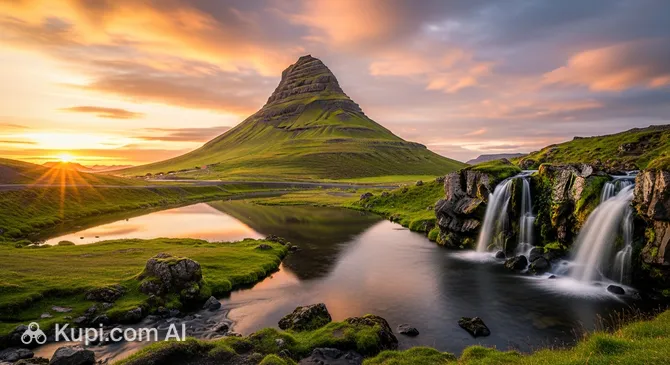
In the western part of the stunning Iceland stands one of the most recognizable natural silhouettes in the world. Mount Kirkjufell, whose name translates as "Church Mountain," has become the visual signature of the Snæfellsnes Peninsula. It owes its unique conical shape, reminiscent of an ancient cathedral spire, to centuries of work by glaciers that literally sculpted its slopes.
Kirkjufell Mountain. Illustration.
Source: Kupi.com AI
Traveler photos:
Located near the picturesque town of Grundarfjörður, this 463-meter peak dominates the surrounding landscape. It rises proudly over the blue waters of the fjord and small lagoons, drawing the eyes of travelers. At its base flows the Kirkjufellsá river, forming a cascade of scenic waterfalls that create a perfect harmony of stone and water.
Kirkjufell is more than just a mountain; it is the result of a complex geological history. Part of an ancient volcanic system, it consists of layers of lava and sedimentary rock dating back millions of years. Thanks to its photogenic appearance and accessibility, it is rightfully considered the most photographed mountain in the country, becoming a true Mecca for landscape photographers.
Contacts
For those planning a trip to the foot of this majestic peak, it is useful to have the exact coordinates at hand. Kirkjufell is an open natural site, so there is no traditional information office directly at the mountain, but the address for your navigator will help you quickly find your way.
The main draw for tourists here remains landscape photography. The most iconic shots are taken from the Kirkjufellsfossar waterfalls, where the flowing water in the foreground emphasizes the mountain's geometry. Depending on the season, the landscape changes beyond recognition: in summer, the slopes are covered in emerald grass, while in winter, they are wrapped in a snowy blanket under the magical Northern Lights.
Fans of popular culture will surely recognize Kirkjufell as the famous "arrowhead mountain" from the cult series "Game of Thrones." A walk along the shore of the fjord or a quiet rest by the river allows you to fully experience the atmosphere of this place, which looks as if it stepped off the pages of a fantasy novel.
For the most experienced and physically fit travelers, a summit hike is available during the summer months. The route, approximately 1.5 km long, is considered difficult and steep, so hiring a guide is highly recommended. The reward for the challenging climb is breathtaking bird's-eye panoramas of the ocean and mountain ranges.
Getting There
Reaching this natural wonder is easy: the mountain is located just 4 kilometers from the center of the town of Grundarfjörður. If you are traveling from Reykjavik in a rented car, the journey takes about 2–2.5 hours via the scenic Route 54, which winds along the northern coast of the Snæfellsnes Peninsula. Parking is available right at the start of the trail to the waterfalls.
For those who prefer public transport, there are Strætó buses running from the capital to Grundarfjörður. From the town itself, you can reach the mountain by taxi or take a pleasant walk while enjoying views of the fjord. Additionally, many cruise ships stop at the local harbor, making the mountain an easily accessible destination for a short excursion.
Nearest city: Grundarfjordur
History & Facts
The formation of Kirkjufell began over a million years ago within the ancient Lýsuskarð volcanic system. The mountain's geological structure resembles a layered cake: its base consists of ancient sedimentary rocks and Tertiary lava flows, while the summit is crowned with hyaloclastite — a special type of volcanic tuff formed by the rapid cooling of lava.
The mountain owes its modern appearance to glacial erosion. During the last ice age, massive ice sheets flowed around the rock on both sides, literally sculpting its steep slopes and giving the peak its current pointed shape. This process transformed an ordinary mountain massif into a unique natural monument rising above the ocean.
For centuries, this mountain served as a vital landmark for seafarers and fishermen entering Grundarfjörður. Three secluded Icelandic farms once stood at its foot; their abandoned lands still preserve the atmosphere of old Iceland and add a touch of mystery to the landscape.
Time Needed
Typically, getting to know the mountain and the adjacent waterfalls takes from 1 to 2 hours. This is usually enough time to stroll along the well-maintained paths, take dozens of striking photos from different angles, and simply enjoy the sound of the water against the backdrop of the majestic peak.
If you plan to complete a full ascent to the summit or want to wait for the perfect light for professional photography, you should set aside about 4 hours or even half a day. Keep in mind that the climb requires caution, and the changeable weather may force you to wait for the right moment.
Working Hours
As a natural site, Mount Kirkjufell is accessible 24 hours a day, 7 days a week. There are no entrance gates or fixed schedules, allowing tourists to plan their visit at dawn or in the middle of the night to catch unique lighting or astronomical phenomena.
Nevertheless, it is recommended to check the official websites of road services and meteorological portals before your trip. Weather conditions in this part of the island can change abruptly, and in winter, access to parking lots or trails may be temporarily restricted due to heavy snowfall or storm-force winds.
Open 24 hours
Nearby
The Snæfellsnes Peninsula is rich with fascinating locations, and Kirkjufell is just one of the region's gems. Exploring the surrounding area will allow you to dive deeper into the rugged yet beautiful nature and experience the welcoming atmosphere of local establishments.
Nearby, you will find famous waterfalls, cozy viewpoints, and even unusual art installations. Below are some interesting places located within a few kilometers of the mountain: