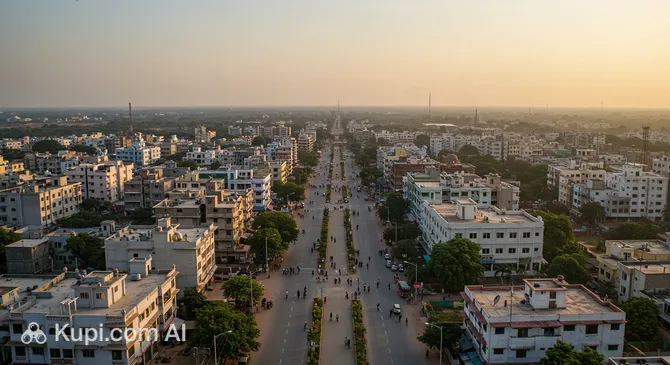
Dhule is a dynamically developing administrative center of the district of the same name in the state of Maharashtra, located in the western part of India. While it is not a classic tourist destination, it possesses the unique atmosphere of a major industrial and transport hub where the region's daily life is in full swing. Over the past decades, the city's population has grown significantly and currently stands at around 750,000, turning it into an important economic center for the state.
Dhule. Illustration.
Source: Kupi.com AI
Geographically, Dhule is situated northeast of Mumbai at the junction of major national highways. The city is surrounded mainly by agricultural land, which contrasts with its urban landscape. If you are interested in the historical development of regional centers in Maharashtra, this city serves as an excellent example of how a traditional lifestyle fits into modern industrial realities.
Although there are no world-famous monuments here, the city attracts visitors with its authenticity: bustling markets, typical Marathi architecture, and its role as an essential transit point. A visit to Dhule is an opportunity to see the real India without the tourist gloss, get acquainted with the local way of life, and feel the rhythm of a growing Indian metropolis.
Weather Overview
The climate in Dhule is characterized by pronounced tropical seasonality, typical for the state of Maharashtra. Travelers should prepare for significant temperature fluctuations throughout the year. Summer arrives early here and is marked by dry heat: in April and May, temperatures often reach +40°C, making daytime walks quite tiring.
The winter months, from November to February, are considered the most comfortable for visiting the city. During this period, the weather is mild and pleasant, with daytime temperatures ranging from +22°C to +28°C, while nights bring much-anticipated coolness. To better plan your visit, we recommend checking the current weather forecast in Dhule in advance.
Special attention should be paid to the monsoon season, which lasts from June to September. During this time, the city is hit by heavy rains, and humidity increases significantly. July and August are the rainiest months, when precipitation can exceed 200 mm, sometimes leading to traffic difficulties and local flooding in low-lying areas.
Average monthly temperature
Average monthly precipitation
Interesting Facts
Rapid Growth: The city's population shows impressive dynamics: in 1950, only 75,000 people lived here, and by 2026, the number of residents within the city limits is expected to reach 450,000.
Important Hub: Dhule ranks 18th in terms of population in the state of Maharashtra and 116th in all of India.
Industrial Status: The city is the key administrative center of a district that covers an impressive area of 7,195 km².
Education Level: Despite its industrial profile, the literacy rate in the district is about 72.8%, which is a solid figure for the region.
Demographics: The gender ratio in the district is approximately 946 women per 1,000 men, which is typical for many fast-growing industrial zones in India.
How to Get There
Dhule is an important transport hub for the state of Maharashtra, ensuring good accessibility despite the absence of its own major airport. The city is conveniently located at the intersection of several national highways, making it a popular stop for those traveling across India by car or bus.
The nearest major international airports are in Mumbai, Aurangabad, and Nagpur. The journey from these cities to Dhule by car or taxi can take between 4 to 6 hours, depending on the traffic on the NH-3 highway. If you are planning your trip in advance, we recommend checking detailed information on how to get to Dhule using various modes of transport.
Rail service is another reliable way to reach the city. Dhule Railway Station directly connects the region with metropolises such as Mumbai, Pune, and Delhi. However, keep in mind that due to the city's industrial status, roads are often busy with freight transport, so travel time by bus or car may increase during peak hours.
Station
Passenger traffic
Distance
Jalgaon railway station
6
83 km
Sainagar Shirdi railway station
5
128 km
Chhatrapati Sambhaji Nagar railway station
7
128 km
Nasik Road railway station
5
144 km
Surat railway station
9
204 km
Main Attractions
The city of Dhule is primarily known as an industrial and administrative hub, so it is difficult to find the usual world-class tourist attractions here. Nevertheless, for a traveler seeking an authentic experience, the city offers interesting locations centered around daily life and commerce.
The central markets are the city's main "face." Here, amidst narrow streets and endless rows, you can feel the true spirit of Maharashtra. The shopping areas near the administrative center are always full of movement and the bright colors of local goods, fabrics, and spices. For many tourists, Dhule becomes a convenient stop during transit, allowing for a walk through commercial quarters and a glimpse into the real life of a modern Indian city.
Local landmarks also include the city railway station building and the central squares, which serve as meeting places and venues for local festivals. Despite the absence of ancient temples of national significance directly within the city limits, the surroundings are rich with small shrines revered by locals, reflecting the region's deep spiritual traditions.
Local Cuisine
The gastronomy of Dhule is a vibrant reflection of Maharashtra's culinary traditions. Local cuisine is famous for its heat and the use of numerous spices. The residents' diet is based on vegetarian dishes prepared with great skill. The main street food favorites are misal pav — a spicy sprout curry served with soft bread — and puri bhaji.
Special attention should be paid to the regional dish vaghari — a spicy curry where the flavors of chili and peanuts, often added for texture, are prominent. The city's gastronomic scene is mainly represented by cozy family restaurants (dhabas) and numerous street food stalls. Here you won't find gourmet delicacies, but you can enjoy honest and hearty Indian food that the locals themselves eat.
Commonly popular drinks in Dhule include masala chai — strong black tea with milk and spices — as well as lassi, a refreshing yogurt drink that helps one survive the midday heat. At local markets, be sure to try samosas with spicy chutney. The overall character of the local cuisine can be described as spicy, aromatic, and very affordable, making it an interesting adventure for any foodie.
Travel Tips
A visit to Dhule can be an interesting experience if you prepare for the specifics of life in an Indian industrial center. These practical tips will help make your trip more comfortable and safe.
Clothing and Essentials: Choose light clothing made from natural fabrics, as the region can be very hot. During the monsoon period (June–September), a raincoat and reliable shoes are essential. When visiting temples or administrative buildings, follow a modest dress code.
Transport: To move around the city, it's best to use auto-rickshaws or mobile taxi apps. Keep in mind that public transport is heavily overloaded during peak hours.
Finances: Be sure to carry a sufficient supply of cash in Rupees. Small shops and rickshaws do not accept cards. International cards only work at large ATMs in the center.
Health and Safety: Drink only bottled water and avoid ice in street drinks. In crowded places like markets, keep an eye on your personal belongings due to the risk of petty theft.
Communication: The main language is Marathi, but Hindi is also widely spoken. English is understood by hotel staff and younger people. It's useful to learn a few basic greeting phrases in the local language.
Local Etiquette: It is customary to remove your shoes when entering homes or religious sites. Indians are very friendly but appreciate polite and calm communication without excessive rush.
What to Avoid: Do not visit poorly lit industrial areas on the outskirts of the city after dark. Also, avoid traveling during the monsoon season unless absolutely necessary due to potential local flooding.
Extra Tip: If you are traveling in transit, allow an extra 1–2 hours for traffic jams that often occur at the city entrance and exit due to freight traffic.
May your introduction to Dhule go smoothly and bring plenty of new impressions from real, non-tourist India!
Entertainment & Nightlife
The entertainment scene in Dhule reflects its status as a provincial center with a traditional family-oriented lifestyle. There are no noisy nightclubs or large-scale concert venues typical of metropolises like Mumbai. Most evening activity is concentrated in street cafes and cinemas showing the latest Bollywood releases, which is one of the most popular leisure activities for local residents.
For those looking for a place to relax in the evening, the best options are restaurants at major hotels or popular street food spots in the city center. The atmosphere here is friendly and relaxed, with the crowd mostly consisting of local families and business travelers. Evening walks are possible in the well-lit central districts, though it's worth noting that most establishments close quite early.
As an alternative to daytime entertainment, you can visit local markets, which become especially lively toward the evening. Occasionally, the city hosts regional festivals and fairs, turning ordinary squares into centers of folk festivities with music and traditional treats. For more active nightlife and large-scale entertainment, Dhule residents usually head to neighboring major cities in the state.
Parks & Museums
In industrial Dhule, classic parks and museums are not the main attractions. The urban environment here is dense and functional; however, locals find comfort in small squares and green alleys along the main roads. These locations serve as spots for a short rest amidst the city noise.
Currently, the city lacks major national-level museums, which is typical for industrial centers of this type. Nevertheless, the old quarters and markets play the role of a "living museum," where you can observe traditional crafts and trading methods that haven't changed for decades. Greening remains an important task for city development, and small municipal gardens are gradually becoming focal points for family walks.
For those who miss nature and large green zones, the best solution is to head outside the city limits. The rural district of Dhule offers picturesque views of hills and fields that are perfect for picnics. Such an outing allows you to swap the industrial landscape for the tranquility of the Indian countryside.
Getting Around
The public transport system in Dhule is primarily represented by buses and numerous rickshaws. City buses connect the main districts, but they are often overcrowded, especially during peak hours — from 7 to 10 AM and 5 to 8 PM. For tourists, the most convenient and mobile means of travel are auto-rickshaws, which can be found on almost every corner.
Payment in rickshaws is usually made in cash, and the fare should be negotiated in advance as meters are rarely used. A trip within the city over a distance of 10–15 kilometers can take 30 to 60 minutes due to heavy traffic, especially in market areas and near industrial zones where there are many trucks.
There is no metro or tram system in Dhule; for long-distance travel, residents use the railway. If you decide to move around the city independently, be prepared for chaotic traffic and a lot of dust on the roads. A practical tip: during peak hours, it's better to plan your time with a buffer and always have small change for the drivers.
Accommodation
The accommodation market in Dhule is primarily oriented toward business travelers and transit passengers. It is difficult to find luxury five-star resorts here, but the city offers a decent selection of mid-range hotels (2–3 stars) and budget guesthouses. Most hotels are concentrated in the city center and near transport hubs such as the railway station and bus terminals.
For tourists arriving in the city for a short stay, hotels in the central part are the most convenient option as they provide quick access to markets and administrative offices. Most local hotels offer basic amenities: air conditioning, clean bedding, and an Indian-style breakfast. The focus here is on practicality and affordable pricing.
If you plan to visit Dhule during regional holidays or major business events, it is recommended to book accommodation in advance. It is also worth looking at apartments and guesthouses for long-term stays, which are popular among expats and specialists working in the city's industrial sector.
Nearby Cities
Thanks to its location at the crossroads of key roads, Dhule can serve as an excellent starting point for exploring the lesser-known but interesting corners of Maharashtra. The city's surroundings offer a mix of industrial centers and authentic rural landscapes that allow for a deeper understanding of life in the Indian hinterland.
Just 34 kilometers away is the town of Amalner, known for its peaceful atmosphere. If you want to see a larger regional center, you can head to Malegaon, about 47 kilometers away. It is also worth visiting smaller settlements like Dhanur Kalyanwadi, where a traditional way of life is still preserved.
City
Population
Distance
Dhanur Kalyanwadi
10 133
17 km
Amalner
95 994
34 km
Malegaon
800 000
47 km
Soyagaon
21 822
48 km
Sakri
18 002
49 km
For those ready for longer trips, the region offers routes to the cities of Nandurbar and Nagpur, which are famous for their industrial and cultural ties. Exploring neighboring areas will allow you to see the diversity of Maharashtra's landscapes — from endless fields to growing urban agglomerations.
Shopping & Souvenirs
Shopping in Dhule is, above all, an introduction to traditional Indian bazaars. You won't find giant shopping malls with global brands here, but there is an abundance of colorful stalls where you can find goods for every taste. The main shopping areas are concentrated around the central railway station and in the city's historical core.
The main product worth visiting the local market for is fabric. The district is famous for cotton production, so you can find high-quality fabric cuts, traditional sarees, and Indian-style clothing at good prices. Dhule is also a great place to buy fresh spices, sold here by the sack, and local Marathi sweets that stay fresh for a long time.
Most shops and stalls operate from morning until late evening, though it's worth noting that some owners may take a break in the middle of the day. Payments are mostly made in cash (Indian Rupees), so tourists are advised to always carry a supply of banknotes. Strolling through the bazaars of Dhule is not just about souvenir hunting, but also an opportunity to practice the art of bargaining and feel the rhythm of local commerce.