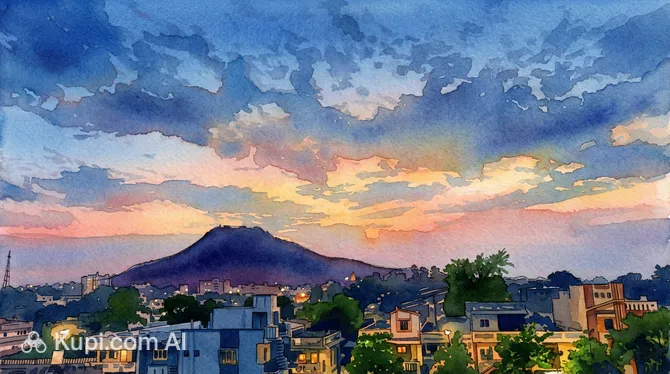
Songadh is a cozy administrative center in the Tapi district, located in the picturesque state of India. The town is a classic example of a small Gujarati settlement, where life flows at a measured pace and the atmosphere is steeped in rural authenticity. It is a place where you can see the region's daily life unadorned, far from noisy tourist routes.
Songadh. Illustration.
Source: Kupi.com AI
Geographically, the town is situated in the southeastern part of the state of Gujarat. According to census data, the municipality's population is about 26,000 people, while the entire tehsil unites more than 220,000 residents. Songadh is surrounded by farmland, which defines its importance as a vital trade and administrative hub for the surrounding villages.
Despite the lack of major world-famous sights, the history and heritage of this region attract those seeking tranquility and wanting to experience the traditional way of life in Gujarat. Strolling through local markets and exploring the architecture of administrative buildings allow for a better understanding of the cultural code of this region.
A visit to Songadh is an excellent choice for travelers planning a route through South Gujarat. It is an ideal spot to take a break, enjoy the local flavor, and experience the true hospitality of the Indian heartland.
Weather Overview
The climate of Songadh is distinctly tropical, typical of the state of Gujarat. When planning your trip, keep in mind that there are three main seasons here: hot summer, humid monsoon, and a mild, pleasant winter. To better plan your visit, we recommend checking the weather in Songadh in advance.
Summer months (from March to May) can be quite harsh: the average maximum temperature often reaches 38°C, and on peak days, it can rise to 45°C. From June to September, the town is under the power of monsoons. During this period, heavy rainfall occurs (especially in July and August), bringing long-awaited coolness but increasing humidity. Winter, lasting from November to February, is considered the best time for tourists — during this time, dry and sunny weather sets in with average temperatures around 22–25°C.
Average monthly temperature
Average monthly precipitation
Interesting Facts
Rare demographic balance: Unlike many other regions of India, Songadh has a very high sex ratio — 995 females for every 1000 males, which significantly exceeds the national average.
Twin town: There is another settlement named Songadh in the state of Gujarat, located in the Bhavnagar district. Travelers should be careful when booking tickets to avoid confusing these two different locations.
Administrative division: For municipal elections, the town is clearly divided into 7 wards, each represented in the local government.
Dynamic growth: Despite its quiet status, the population of Songadh tehsil is growing steadily and is projected to reach 280,000 by 2026.
How to Get There
The transport accessibility of Songadh makes it a convenient stop when traveling through South Gujarat. The town is integrated into the regional road network, making it easy to plan a route by both public transport and private car. You can find out the best way to plan your journey by studying the routes to Songadh.
If you plan to arrive by air, the nearest major aviation hub is the airport in Surat, located about 100 kilometers away. You can also use the airport in Vadodara (about 200 km). Taxis and buses run regularly from these cities to Songadh, with travel times ranging from 2 to 4 hours depending on traffic conditions.
For train enthusiasts, the Songadh station operates in the town. It primarily serves local trains heading towards Surat and other districts of the state. A train journey is not only a budget-friendly but also a very colorful way to travel, allowing you to see Indian provincial life from the carriage window.
Station
Passenger traffic
Distance
Surat railway station
9
75 km
Vadodara junction railway station
9
133 km
Nasik Road railway station
5
138 km
Bhavnagar Terminus railway station
3
162 km
Sainagar Shirdi railway station
5
181 km
Road communication is mainly via the NH48 highway. The road to the state's major centers along this highway is quite comfortable, although dense traffic should be expected during morning and evening rush hours. Intercity buses remain the most popular and affordable way for most locals and tourists to reach the town.
Main Attractions
Songadh is a town that does not strive to dazzle tourists with grand monuments; however, its charm lies in its details and daily life. The main center of attraction here is the Central Square and the surrounding municipal buildings. This is the heart of the town, where you can observe the rhythm of local life and feel the administrative status of the settlement.
For those who appreciate the atmosphere of Eastern bazaars, the Local Market is a must-visit. There are no souvenir shops for foreigners here, but there is an abundance of goods used by Indians themselves: from vibrant fabrics to aromatic spices and fresh produce from nearby fields. This is the best place to see Songadh "unfiltered."
The town's surroundings will delight lovers of rural landscapes. Endless fields, traditional farms, and the quiet roads of the Tapi tehsil create a wonderful backdrop for leisurely trips by car or bicycle. Although there are no designated monuments in the town itself, the overall atmosphere of the region and its natural simplicity make Songadh an interesting point on the map for explorers of off-the-beaten-path India.
Local Cuisine
The cuisine of Songadh is a celebration of vegetarianism and traditional recipes from the state of Gujarat. The diet here is based on simple yet hearty dishes. Be sure to try the local thali — a tray with various snacks, typically including dal (lentil soup), sabzi (vegetable curry), fresh roti flatbreads, and aromatic rice. The influence of the Tapi district's tribes adds unique millet-based dishes to the menu that are rarely found in large cities.
Street food in the town is represented by popular Indian hits such as panipuri (crispy hollow balls with filling) and vada pav (spicy potato patty in a bun). Locals prefer to dine in small roadside eateries called dhabas, where the food is always fresh and cooked right in front of you. The culinary scene here is devoid of pretense, but it is as honest as possible and reflects the true taste of the region.
The main drink in Songadh, as in all of India, is masala tea with spices and milk, which is enjoyed at any time of day. In hot weather, freshly squeezed juices, especially lemon or seasonal mango, are very refreshing. When visiting local establishments, remember general hygiene rules and opt for bottled water to ensure your gastronomic adventure leaves only pleasant memories.
Travel Tips
Songadh will welcome you with true Indian hospitality. To make your trip as comfortable as possible, we have prepared several practical recommendations.
Clothing and Dress Code: Choose clothing made from natural fabrics (cotton, linen), as it can be very hot in the region. For visiting temples and walking around the town, a modest dress code covering shoulders and knees is recommended.
Transport: The best way to get around town is by auto-rickshaws. Always agree on the price of the trip in advance, as meters are rarely used here.
Finances: Be sure to carry a sufficient supply of cash rupees. ATMs are not common in Songadh, and bank cards are only accepted at very large outlets.
Health: Drink exclusively bottled water and use it even for brushing your teeth. Pharmacies can be found in the town center, but it's better to bring specific medications with you.
Communication: The primary language is Gujarati; English is understood in administrative offices. Learning a few phrases in the local language is very appealing to the residents.
Local Etiquette: Be sure to remove your shoes when entering homes and temples. It is customary to greet with a slight bow or the traditional "Namaste."
What to Avoid: It is not recommended to walk alone on the outskirts of the tehsil after dark due to poor lighting and the risk of petty theft.
Connectivity: Wi-Fi in hotels can be unstable, so it's better to purchase a local SIM card (e.g., Airtel or Jio) for internet access.
Following these simple rules will help you focus on the beauty of the region and make your stay in Songadh truly pleasant and safe.
Entertainment & Nightlife
In Songadh, you shouldn't look for noisy nightclubs or neon bar signs — life here quiets down after sunset, following the traditional rural rhythm. Evening leisure for locals is usually centered around street tea stalls and small snack bars, where leisurely conversations take place over a cup of masala tea. This is the time when the town sinks into tranquility, and families can be seen out for evening strolls.
Occasionally, the town's cultural life is livened up by religious festivals and gatherings held in local communities. Such events are an excellent opportunity to see folk dances and listen to traditional music. If you crave more familiar modern entertainment, such as cinemas or large shopping malls, locals usually head to neighboring Surat, located about 100 kilometers away.
Daytime entertainment in the town is limited to walking through the markets and watching local craftsmen at work. Songadh is a place for those who seek a break from the city bustle and appreciate life's simple pleasures, such as contemplating nature or leisurely getting to know another culture's way of life in a most natural setting.
Parks & Museums
There are no classic museums with historical collections in Songadh itself, as the town is more focused on its administrative functions. Cultural heritage here lives not in display cases but in the traditions of the locals and the architecture of old buildings. Nevertheless, for the curious traveler, the town itself can become a kind of "open-air museum," showcasing the way of life in the state of Gujarat.
Green spaces and parks in the town are represented by small squares near administrative buildings and landscaped areas along the main roads. You won't find large-scale botanical gardens here; however, the lack of parks is more than compensated for by the natural landscapes of the surroundings. Picturesque fields and the banks of reservoirs in the Tapi district serve as recreation spots for townspeople.
The absence of large museum complexes makes Songadh an ideal place for those who prefer authentic experiences over organized excursions. Here you can simply walk through the streets, peek into local temples, and enjoy the silence that is so hard to find in India's megacities.
Getting Around
The transport system in Songadh is simple and efficient for a town of its size. The main means of transport within the municipality are auto-rickshaws — the most maneuverable and affordable mode of transport. Distances here are small, so many residents prefer to move on foot or by bicycle, which helps avoid congestion in the narrow streets near the market area.
Intercity and regional connections are provided by buses. The bus station is a key transport hub connecting Songadh with Surat, Vapi, and other towns in the state. Keep in mind that during morning and evening hours, buses can be very crowded as they are actively used by workers and students. Bus fares are paid in cash to the conductor.
For longer trips, it is convenient to use the railway. Songadh station accepts suburban trains, which are a reliable alternative to buses. If you require maximum comfort, you can call a taxi through apps or arrange with a private driver; however, be aware that roads outside the main highways can be quite narrow.
Accommodation
The hotel infrastructure of Songadh is primarily geared toward transit travelers and people visiting the town for administrative purposes. You won't find five-star hotels here, but you can stay in cozy guesthouses (dharamshalas) or budget lodges that offer basic amenities for an overnight stay.
Most accommodation options are concentrated near the main streets and the bus terminal, which is convenient for those traveling by public transport. When choosing a place to stay, keep in mind that these establishments mostly feature simple furnishings focused on functionality rather than interior luxury.
If you plan to stay in the region for a longer period, you might consider renting an apartment in residential areas. In any case, it is recommended to book accommodation in advance, especially if your trip coincides with local holidays, when the demand for budget rooms can increase.
Nearby Cities
Thanks to its location in the Tapi district, Songadh is a convenient starting point for exploring nearby towns and the hidden gems of South Gujarat. The surroundings offer travelers a mix of industrial landscapes, historical locations, and quiet rural expanses.
Just 20 kilometers away is the town of Vyara, the administrative center of the district, which is worth a visit to discover local architecture and markets. Another interesting destination is Navapur, located only 24 kilometers away. For those who miss the big city life, shopping, and vibrant entertainment, the huge and modern city of Surat is spread out 76 kilometers away.
Exploring neighboring settlements will allow you to see the multifaceted nature of the state and feel the contrast between quiet Songadh and the region's dynamic centers. Each such trip is a chance to discover a new India hidden behind the turns of Gujarat's dusty yet charming roads.
Shopping & Souvenirs
Shopping in Songadh is primarily an immersion into the atmosphere of traditional Eastern bazaars. There are no huge shopping malls with global brands in the town, but there is the colorful Central Market, located near the bus station. Here you can find everything you need for daily life: from kitchenware and household goods to bright fabrics.
Gujarat is famous for its textiles, and Songadh is no exception. In local shops, you can purchase traditional clothing or embroidered fabrics, which make excellent gifts. It is also worth paying attention to spices and local produce — they are always fresh here and cost significantly less than in tourist centers.
Shops usually operate from morning until late evening with a short break for lunch during the hottest time. Payment is primarily made in cash, so it's a good idea to take care of currency exchange in advance. The process of buying at the local market is always a small adventure, where the ability to politely bargain and friendly communication with the seller is valued.