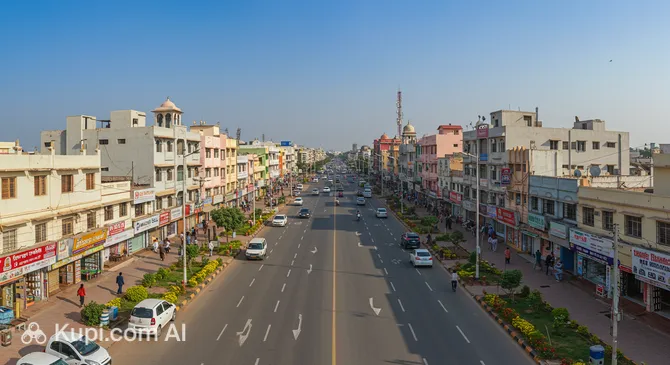
Gandhidham is an energetic and rapidly developing city in the state of Gujarat, located in western India. As the largest settlement in the Kutch district, it serves as the region's primary economic and commercial hub. The city boasts a unique cosmopolitan atmosphere, born from a blend of cultures brought by settlers from various parts of the country.
Gandhidham. Illustration.
Source: Kupi.com AI
Geographically, Gandhidham is situated in close proximity to a major maritime hub—Kandla Port. The history of the city's foundation dates back to the early 1950s, when it was designed as a modern settlement for the Sindhi community who left their lands after the partition of the country. The city was named in honor of the great leader Mahatma Gandhi, whose ideals formed the foundation of its development.
Today, home to approximately 248,000 people, the city continues to grow, attracting professionals and entrepreneurs. Although Gandhidham is primarily focused on business and industry, it charms tourists with its practicality, layout, and proximity to the unique natural and historical landscapes of the Kutch region. A visit to this city is an excellent opportunity to see the modern industrial face of Gujarat.
Weather Overview
The climate in Gandhidham is characterized as hot and semi-arid, due to its location in the desert region of Kutch. Summers here can be extremely sweltering: between April and June, the thermometer often rises to the mark of +39°C...+45°C. Winters, by contrast, are very comfortable and mild, with daytime temperatures ranging from +20°C...+27°C and cool nights.
The monsoon season lasts from July to September, bringing long-awaited moisture, although rainfall in this region remains quite sparse compared to other parts of India. To make your trip as pleasant as possible, we recommend checking the weather in the city in advance. The best time to visit is from October to March, when the heat subsides and ideal conditions for walking are established.
The proximity to the Arabian Sea and the industrial activity of Kandla Port create a specific environmental setting. During the dry season, dust may be present in the air, so travelers with sensitive health should take this into account. Nevertheless, a fresh sea breeze sometimes softens the heat, making evenings in Gandhidham quite pleasant.
Average monthly temperature
Average monthly precipitation
Interesting Facts
Gandhidham was designed from scratch: the settlement was originally called Sardarganj and was built as an organized hub for refugees from the Sindh region.
The city ranks eighth in population in the state of Gujarat, and projections suggest the number of residents will soon reach the 370,000 mark.
Any construction of permanent structures in the city requires mandatory permission from a special body—the Gandhidham Development Authority (GDA)—which allows for controlled urban growth.
The city's economic prosperity is inextricably linked to Kandla Port—one of India's largest and most significant seaports.
Due to its history, Gandhidham is considered the cultural home for the Sindhi Hindu community, who have preserved their traditions and language in the heart of Gujarat.
How to Get There
Gandhidham is an important transport hub in the state of Gujarat, making it easy to reach. The city is connected to the country's major metropolises by both air and rail. To better plan your route, it's worth exploring all available ways to get to the city.
For those who prefer air travel, Kandla Airport (IATA: IXY) is located 6 kilometers from the city center. It serves regular flights from Mumbai and Ahmedabad. The flight takes about an hour, and upon arrival, you can quickly reach your hotel by taxi in just 15–20 minutes.
Railway connection is the most popular way of travel for both locals and tourists. Gandhidham Junction station receives trains from Ahmedabad, Mumbai, and other key cities. A trip from Ahmedabad takes about 7–9 hours. Additionally, National Highway NH41 passes through the city, linking it to Bhuj (75 km) and other parts of the region.
Station
Passenger traffic
Distance
Gandhidham Junction railway station
5
2 km
Bhuj railway station
4
51 km
Jamnagar railway station
5
65 km
Rajkot junction railway station
8
109 km
Keshod railway station
3
197 km
Main Attractions
Despite its primarily industrial status, Gandhidham offers guests several interesting locations to explore the local culture and lifestyle. One of the main spiritual landmarks is the ancient Purneshwar Temple, dating back to the 9th–10th centuries. Dedicated to Shiva, this temple is a striking example of the Solanki architectural style and attracts history buffs with its unique stone carvings.
For those who want to delve deeper into the city's roots, the Gandhidham Cultural Centre and Museum is open to visitors. It houses a rich collection of artifacts telling the story of the Sindhi heritage, their traditional crafts, and the history of their resettlement. Also popular in the city is the Lions Club of Gandhidham, which serves as a venue for various community events.
Fans of unusual strolls should visit the Gandhidham Cat Garden—a cozy relaxation area popular among locals. While the city lacks a traditional "tourist center," its bustling markets and squares, such as Friends Square, allow you to fully experience the rhythm of life in this industrial hub.
Local Cuisine
The gastronomy of Gandhidham is a wonderful mix of traditional Gujarati cuisine and the culinary secrets of the Sindhi community. Due to the predominance of Hindu and Jain traditions, the local menu is mostly vegetarian. The diet is based on spicy dishes such as dal (lentil soup with rice) and the famous Sindhi Kadhi—a thick vegetable curry made with chickpea flour.
Be sure to try sev tamata (a spicy dish made of tomatoes and fine vermicelli) and freshly baked chapati flatbreads. An evening in the city is unimaginable without a cup of fragrant masala chai, which is sold on every corner. It's worth noting that alcohol is officially prohibited in the state of Gujarat, so establishments offer a wide selection of refreshing juices and lassi.
The dining culture here is closely linked to street food and affordable family restaurants. Popular spots include Kake Di Hatti, offering hearty North Indian dishes, and Pizza Zone, where you can find familiar Western fast food. Most eateries are concentrated near markets and port zones where worker life is in full swing.
Travel Tips
A trip to Gandhidham is an opportunity to see India from its industrial and enterprising side. To make your journey as comfortable as possible, we have prepared a few practical tips.
Clothing and Essentials: Choose light cotton clothing, as the climate in the region is very hot. When visiting temples, be sure to cover your shoulders and knees. Don't forget comfortable closed-toe shoes for walking through markets.
Transport: The easiest way to get around is by auto-rickshaws. Always carry small change for payment. For long-distance trips (e.g., to Bhuj), it is better to book a licensed taxi through your hotel.
Finances: The official currency is the Indian Rupee (INR). ATMs are available in the center, but cards are not accepted everywhere, so always carry a reserve of cash.
Health and Safety: Drink only bottled water and avoid ice in drinks on the street. Use sunscreen and drink more fluids to avoid dehydration.
Communication: The main languages are Gujarati, Hindi, and Sindhi. English is common in hotels and large offices, but knowing a few phrases in Hindi will help you at the market.
Local Etiquette: India is a land of traditions. Greet locals with a slight bow or the word "Namaste." Always remove your shoes before entering a home or temple.
What to Avoid: Do not visit port zones or the outskirts of the city alone late at night. Also, refrain from open criticism of local customs and religious rites.
Extra Tip: Try the local cuisine in small family cafes—it's the best way to feel the true taste of Gandhidham, but choose places with many customers.
May your acquaintance with this unique city leave only pleasant memories and reveal new facets of the amazing state of Gujarat!
Entertainment & Nightlife
Nightlife in Gandhidham is quiet and family-oriented, typical of industrial cities in Gujarat. You won't find noisy discos or bars serving alcohol here (strict regulations apply in the state), but the city comes alive in the evenings through numerous cafes and restaurants that stay open late. Locals prefer to spend time with their families, strolling through central squares or visiting cinemas.
One of the centers of evening activity is the Lions Club of Gandhidham, where business conferences, cultural events, and community gatherings are periodically held. For young people and tourists, modern food courts and establishments like Pizza Zone are popular meeting spots where you can enjoy a meal in a relaxed atmosphere.
During the day, entertainment is focused on shopping and visiting local shrines. If you're looking for more active recreation or vibrant experiences, it's recommended to head to neighboring Bhuj or the beaches of Mandvi. Within Gandhidham itself, the well-lit central streets and areas around major hotels are considered the safest for evening walks, while licensed taxis or auto-rickshaws are preferred for travel after dark.
Parks & Museums
Green zones in Gandhidham occupy a small part of the territory, as the city was primarily designed as an industrial hub. Nevertheless, there are places for quiet strolls. One notable site is the Gandhidham Cat Garden—a small, cozy square where locals take a break from the city bustle. Although the scale of greenery might seem modest for a large city, such islands of nature are highly valued in the arid climate.
The city's main cultural treasure is the Gandhidham Cultural Centre and Museum. This is a must-visit if you want to learn the history of the city's creation and get acquainted with the heritage of the Sindhi community. The exhibition features rare historical photographs, documents, and everyday items reflecting the spirit of the settlers who built this city.
In addition to the central museum, small gardens and well-maintained areas can be found at major city temples. In the face of rapid urbanization, these spaces serve as important places for relaxation and social life for citizens, offering coolness and peace amidst busy streets.
Getting Around
Public transport in Gandhidham is primarily represented by buses and auto-rickshaws, which compactly cover the city area. Since the city has a diameter of about 10 kilometers, moving between districts takes no more than 20–30 minutes. However, it's worth noting that during peak hours, transport can be overcrowded with port and local factory workers.
Auto-rickshaws are the most convenient and affordable way for a tourist to get around. A trip around the city will cost approximately 10–50 Indian Rupees. It is better to agree on the price in advance or ensure the driver turns on the meter. In the central part of the city, many prefer to get around on foot or on rented bicycles, which are also popular among locals.
There is no metro or tram in Gandhidham, but the railway station is very conveniently located, allowing easy access to the outskirts or neighboring settlements. For those who value comfort, taxi services are available and can be called via apps. Main transport hubs are concentrated around markets and the railway station, where life doesn't quiet down from early morning until late evening.
Accommodation
Accommodation in Gandhidham is primarily geared toward business travelers and specialists coming to work at the port or industrial plants. Modern mid-range hotels and long-stay apartments predominate here. There are virtually no luxury tourist resorts in the city, but there is a decent selection of quality housing with good service.
The city center, located near the railway station and main shopping markets, is considered the most convenient area to stay. Popular chain hotels like Lords Hotels are concentrated here. Room prices start on average from 1500–2000 Indian Rupees per night, making the city accessible for budget tourists.
If your trip coincides with major holidays or large business conferences, it is recommended to book your room in advance through international services or directly on hotel websites. For those planning to stay in Gandhidham for several weeks, it is more economical to consider renting serviced apartments.
Nearby Cities
Thanks to its convenient location and developed transport network, Gandhidham serves as an excellent starting point for exploring the amazing Kutch region. The city's surroundings hide both modern industrial wonders and monuments of ancient architecture.
Just 10 kilometers away is Kandla—one of the country's largest ports. Although access to commercial zones is limited, the scale of the port infrastructure is impressive. For cultural immersion, a trip to Bhuj (about 75 km) is ideal. It is the administrative center of the region, famous for its palaces, museums, and unique markets where you can buy handmade goods.
It's also worth paying attention to the city of Mundra, another important maritime hub, and Jamnagar, known for its temples and royal heritage. Each of these destinations is accessible for a day trip by taxi or bus.
Traveling through the surrounding areas will allow you to see the contrast between the industrial progress of Gandhidham and the centuries-old traditions of rural Gujarat. Don't miss the chance to get to know this distinctive region better!
Shopping & Souvenirs
Shopping in Gandhidham is primarily about exploring traditional markets and crafts. The city does not abound with giant shopping malls, but its bazaars offer unique goods that are difficult to find in other regions. The main interest for tourists lies in fabrics with hand-embroidery in the Sindhi style and vibrant Gujarati patterns.
Gandhidham's Central Bazaar is the heart of city trade. Here you can purchase high-quality spices, traditional clothing, and household utensils. If you prefer a modern shopping format, it's worth visiting Friends Square, which hosts shops and cafes in a more familiar Western style.
Cotton products, Jain folk crafts, and copperware are often brought home as souvenirs from Gandhidham. Shops typically operate from 10:00 to 21:00 with a short break during the hottest time of the day. Payment by card is possible at larger outlets, but you will definitely need cash rupees at markets and in small shops.