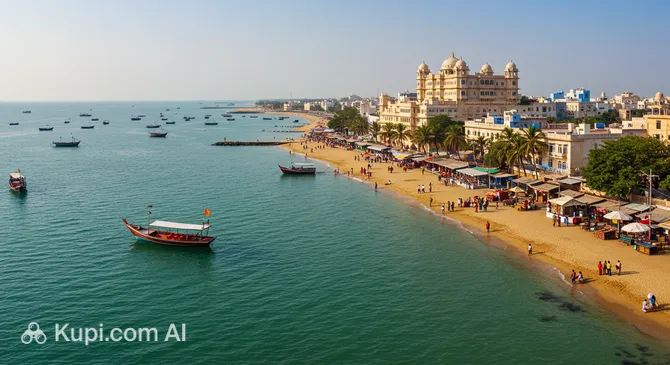
On the shores of the Arabian Sea in the state of Gujarat lies Mandvi — a city with a unique maritime soul and a rich trading past. Founded at the end of the 16th century, this cozy corner of India once served as the region's most important port and the summer residence of the rulers of the Kutch State. Today, a calm provincial atmosphere prevails here, attracting those seeking solitude on spacious beaches and those wishing to touch the living history of seafaring.
Mandvi. Illustration.
Source: Kupi.com AI
The city's geographical position on the banks of the Rukmavati River determined its destiny as a shipbuilding center. Although the modern population of the city is about 814,000 people (according to administrative data), the historical center itself retains the charm of a small port settlement. The city's rich history is inextricably linked with international trade: local merchants once owned a vast fleet, maintaining ties with East Africa, the Persian Gulf, and even Europe.
Tourists are drawn to Mandvi primarily by two things: pristine white sandy beaches and the famous shipyards, where massive wooden vessels are still built by hand. This is a place where you can see how four-hundred-year-old traditions continue to live in the modern world. A visit to this city is an excellent addition to a journey through the Kutch region, offering a rare opportunity to witness authentic coastal life without the usual hustle and bustle.
Weather Overview
The climate in Mandvi is determined by its coastal location in the arid Kutch region. Hot semi-arid weather prevails here, softened by refreshing breezes from the Arabian Sea. Throughout the year, the city passes through three distinct seasons: a hot summer, a rainy monsoon, and a mild, pleasant winter.
The summer months (April–June) are characterized by high temperatures that can reach 35–40°C, while the proximity to water creates high humidity. The monsoon period lasts from July to September, bringing heavy rainfall, especially in July and August, when up to 330–500 mm of moisture falls. Winter, lasting from November to March, is considered the ideal time to visit: the average temperature is a comfortable 20–26°C, and the sky remains clear and dry.
When planning a trip, keep in mind that the weather in Mandvi can be accompanied by dusty winds from the desert during the dry season. Nevertheless, the sea air makes staying here much more pleasant than further inland. Expect a sunny and hot summer with occasional dust storms and fresh, dry winter evenings when a light jacket might be needed.
Average monthly temperature
Average monthly precipitation
Interesting Facts
Mandvi is one of the oldest centers of traditional shipbuilding in the world. For over 400 years, huge wooden dhows have been built here by hand; they are considered some of the largest handmade products on the planet.
The city was named after the legendary sage Mandavya from the ancient Indian epic "Mahabharata," who, according to legend, lived in these parts.
In the 18th century, the local merchant fleet was so large that it numbered more than 400 vessels, which traded along the entire triangular route between Oman, India, and Central Africa.
Before its rise as a port, the city was known as "Maddi" and, unfortunately, was a major center for the slave trade, where captives were brought from East Africa.
The Old City is still surrounded by the remains of a massive 8-meter-high fortress wall, which once featured 25 bastions for protection against maritime attacks.
How to Get There
The transport accessibility of Mandvi largely depends on the neighboring administrative center — Bhuj, located about 60 km away. There is no direct rail connection or private airport in the city, so most travelers use combined routes. The journey from Bhuj by taxi or bus takes about an hour and a half to two hours and passes through the picturesque arid landscapes of the Kutch region.
If you plan to arrive by air, the nearest hub is Bhuj Airport (BHU). It regularly receives flights from Mumbai and Delhi. After landing, it is most convenient to book a transfer or take GSRTC state buses, which run quite frequently and are inexpensive. For those who prefer comfort, it is better to plan the route to Mandvi in advance by ordering a taxi from the airport.
Bhuj Railway Station is the nearest major station, connecting the region with Ahmedabad and other cities in the state. Trains are an excellent way to reach Kutch from remote regions of the country, and the subsequent transfer to Mandvi by auto-rickshaw or regular bus is straightforward. Keep in mind that during the monsoon season and holiday periods, travel time may increase slightly due to traffic.
Station
Passenger traffic
Distance
Bhuj railway station
4
58 km
Jamnagar railway station
5
81 km
Gandhidham Junction railway station
5
85 km
Rajkot junction railway station
8
160 km
Keshod railway station
3
194 km
Main Attractions
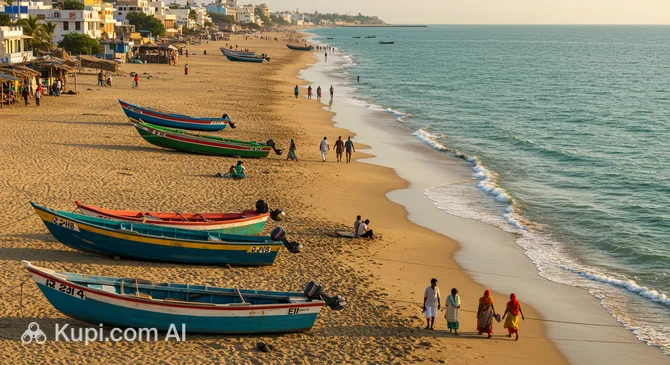
The main magnet for travelers in Mandvi is Mandvi Beach. This place is famous for its clean white sand and gentle entry into the water, making it ideal for long sunset strolls. Here, you can not only swim but also take a camel or horse ride along the surf line, enjoying the sea breeze and the view of the endless ocean.
Mandvi Beach. Illustration.
Source: Kupi.com AI
Traveler photos:
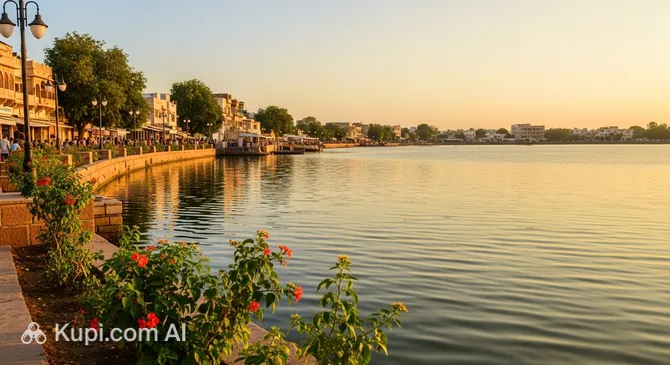
For those who prefer a more tranquil rest away from the sea waves, Topansar Lake is a wonderful spot. Located in the heart of the city, it is an important landmark for locals and a quiet oasis for tourists. During the winter months, migratory birds arrive at the lake, turning it into an excellent spot for nature observation within the city limits.
Topansar Lake. Illustration.
Source: Kupi.com AI
Traveler photos:
An equally impressive sight is the shipbuilding yards on the banks of the Rukmavati River. Here, craftsmen build massive wooden vessels — dhows — by hand, using methods passed down through generations for centuries. A walk along the shipyards allows you to see firsthand the process of creating these "hand-built giants," which still navigate the waters of the Indian Ocean today. It is also worth exploring the remains of the ancient Mandvi Fort, whose walls and bastions still serve as a reminder of the former strategic importance of this fortified port.
Local Cuisine
The gastronomic scene in Mandvi is a celebration of traditional Gujarati cuisine, which is overwhelmingly vegetarian. The diet is based on hearty lentil dishes (dal), various vegetable stews (sabzi), and freshly baked roti flatbreads. Desserts are particularly popular, such as the delicate sabudana halwa, made from tapioca.
While here, be sure to try dishes unique to the Kutch region. These include kutchi dhol (lentil flour flatbreads) and bharavani — vegetables stuffed with spices. Despite the dominance of vegetarianism, grilled dishes made from freshly caught fish and seafood can be found in coastal communities, which is a rarity for the inland areas of the state.
For an introduction to local cuisine, OSHO Restaurant and Shyam Restaurant are excellent choices, serving authentic meals. To finish your meal, enjoy a glass of fragrant masala chai or refreshing freshly squeezed sugarcane juice, sold everywhere in the markets. Remember that Gujarat is a "dry state," so you will not find alcohol in the city's restaurants.
Travel Tips
A visit to coastal Mandvi will give you plenty of pleasant impressions if you prepare in advance for the specifics of local life and culture. Here are a few tips to help make your trip comfortable and safe:
Seasonality and Clothing: The best time to visit is from October to March, when the temperature stays within a pleasant 20–30°C. Choose clothing made of light natural fabrics. Remember the dress code: outside of beach areas and especially when visiting temples, shoulders and knees should be covered.
Sun and Water: Be sure to use sunscreen and wear a hat, even if a sea breeze is blowing. Drink only bottled water and avoid ice in drinks at street cafes.
Transport Tricks: When moving by auto-rickshaws, always haggle — fixed rates for tourists often do not exist. For long trips, it is more convenient to book a taxi through your hotel.
Money Matters: Have a sufficient supply of cash rupees with you. Cards are rarely accepted, and there are few ATMs in the city; they don't always work with international cards.
Local Etiquette: When entering homes and temples, be sure to remove your shoes. The traditional greeting "Namaste" is always met with a smile and helps establish contact with the locals.
Safety: In general, the city is safe, but after dark, it is better to avoid walking alone on the outskirts and in the industrial areas of the shipyards. Keep valuables in a hotel safe.
Alcohol Taboo: Gujarat is a "dry state." Do not try to bring alcohol with you or consume it in public places; this can lead to serious legal problems.
Connectivity: Wi-Fi is available in hotels, but for constant internet, it is better to purchase a local SIM card in Bhuj, as the registration process in Mandvi itself may take longer.
Observing these simple rules will allow you to fully immerse yourself in the atmosphere of maritime history and enjoy the hospitality of this amazing city.
Entertainment & Nightlife
Entertainment in Mandvi is of a calm and contemplative nature, making it ideal for relaxation. The main daytime activity is concentrated on the coast: tourists and locals spend time at Mandvi Beach, riding camels or engaging in water sports. In the evening, the Rukmavati riverfront turns into a place for leisurely walks, where you can watch the city lights and the wooden ships docked at the pier.
Nightlife in the traditional sense (clubs, bars, and discos) is practically non-existent in the city. Gujarat is a "dry state," so alcohol establishments are prohibited, and public spaces quiet down shortly after sunset. The main evening leisure for guests consists of dinners at local restaurants, such as OSHO Restaurant or Shyam Restaurant, where you can sample traditional dishes in a cozy setting.
For a more active evening, travelers often head to nearby Bhuj, where the infrastructure is more developed. However, the charm of Mandvi itself lies in its silence. Instead of loud music, it offers the sounds of the ocean and visits to local fairs during the winter season, which introduce visitors to the region's culture without unnecessary noise and fuss.
Parks & Museums
Park culture in Mandvi is closely intertwined with its natural landscape. Instead of traditional city gardens, the coastline and the banks of water bodies play the role of the main recreation zones. Topansar Lake is a popular walking spot for locals; in winter, you can find many species of migratory birds here, turning the lakeshore into an open-air natural gallery.
Although there are no large art museums in the city, its history and culture are best represented in "living" exhibitions. The most impressive "open-air museum" is the shipbuilding yards, where you can spend hours watching the process of creating wooden ships. Local temples such as Sundarvar and Lakshminarayan also deserve attention, serving as important cultural sites reflecting the region's religious heritage.
For a deeper dive into the history of Kutch, tourists often visit small private collections and exhibition halls at major hotels or workshops. For example, Serena Beach Resort Mandvi often organizes introductions to local crafts. The lack of large museum buildings is fully compensated by the authenticity of the city streets, where every bastion of the old fort is a historical exhibit.
Getting Around
The public transport system in Mandvi is simple and geared toward the city's compact size. Most interesting places are within walking distance or a few minutes' drive by the most popular transport here — auto-rickshaws. A rickshaw ride around town will cost only 10–30 rupees, but it is worth agreeing on the price in advance, as meters are rarely used.
For trips to neighboring villages and towns in the state, GSRTC buses are used. The bus station is a key transport hub from which regular trips to Bhuj and other settlements depart. This is the most budget-friendly way to get around, popular among locals, though buses can be crowded during peak hours.
Tourists who value freedom of movement are recommended to consider renting a scooter, which will allow you to easily reach remote parts of the beach or the shipyards. Bicycle rentals are also popular, given the flat terrain. However, remember that traffic on Indian roads can be chaotic, so always exercise caution and take into account the dusty conditions of dry weather.
Accommodation
Accommodation options in Mandvi mainly consist of cozy guesthouses and mid-range hotels, which are perfect for a peaceful getaway. Most tourists prefer to stay in the waterfront area or in close proximity to the city beaches to have quick access to the sea and the main walking zones.
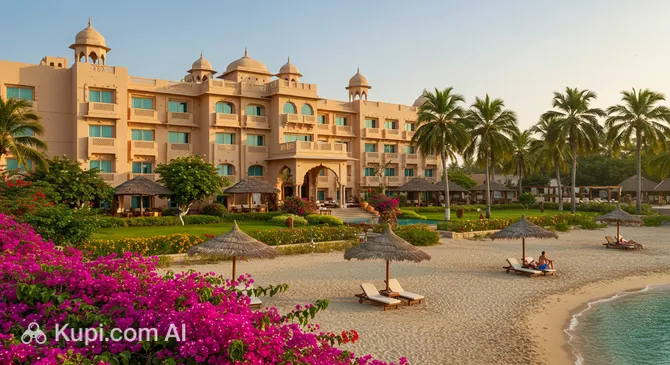
For those looking for a higher level of comfort and a resort atmosphere, the Serena Beach Resort Mandvi or Beach Resort HV are excellent choices. These establishments offer well-maintained grounds, proximity to private coastal areas, and good service. Such options are particularly popular during the winter season when the climate is most favorable for beach holidays.
Serena Beach Resort Mandvi. Illustration.
Source: Kupi.com AI
Traveler photos:
Budget travelers can find affordable housing within the city itself, where the cost per night in guesthouses ranges between 1,000 and 3,000 rupees. It is recommended to book in advance if your trip coincides with major holidays or the winter tourist peak, as the number of quality hotels in the city is limited compared to major metropolises.
Nearby Cities
Mandvi serves as an excellent starting point for exploring the unique Kutch region, offering travelers the chance to discover neighboring towns and historical monuments. Just an hour and a half away is Bhuj — the administrative center and cultural heart of the region, where you should visit ancient palaces, museums, and colorful markets selling the famous Kutchi embroidery.
Also of interest is Mundra, a major port city with modern infrastructure that showcases the contrast between the region's historical past and its industrial present. For those ready for a longer journey, the road is open to Dwarka — one of the country's most important pilgrimage centers, steeped in ancient legends.
Exploring the surroundings of Mandvi allows for a deeper understanding of Gujarat's diversity: from abandoned forts like Lakhpat to the endless salt deserts of the Rann of Kutch. Each of these destinations fits easily into a day-trip format, enriching your travel experience with new impressions.
Shopping & Souvenirs
Shopping in Mandvi is primarily an introduction to the unique crafts of the Kutch region. There are no modern shopping centers with international brands, but there are colorful markets located near the old fort and the waterfront. The main souvenir here is miniature models of wooden ships, skillfully crafted by local shipbuilders.
At local bazaars, look for Kutchi embroidery and fabrics dyed in the Bandhani technique. These products are famous for their bright colors and intricate patterns. The city is also known for its trade in spices and fresh seafood, the aroma of which fills the market stalls. Souvenir shops often offer seashell crafts and traditional jewelry.
Shops and markets are usually open from morning until late evening, with a short break during the hottest time of the day (siesta). For payment, it is always best to have cash rupees, as credit cards are only accepted in major hotels or some restaurants. Don't forget to haggle at the markets — it is an important part of the local culture that will allow you to acquire unique items at a fair price.