Support

Uparkot Fort

About

Uparkot Fort is an ancient and majestic fortress rising on a hill in the heart of the city of Junagadh. This attraction is one of the key historical and architectural monuments of the state of Gujarat in India, drawing travelers with its rich history and imposing appearance.
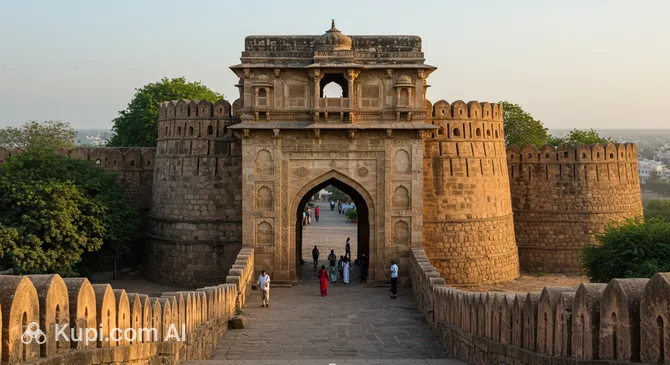
Uparkot Fort. Illustration.
Source: Kupi.com AI

Traveller photos:

The fortress is surrounded by massive walls, reaching up to 20 meters high in some places. Due to its strategic location, the fort has long served as an important defensive structure, offering magnificent panoramic views of the surrounding landscapes. Its architecture is a unique blend of Gujarati style with ornamental masonry and intricate carvings.

Inside Uparkot Fort, a true journey through time awaits you. Its territory preserves unique Buddhist caves carved into the rock, ancient stepwells (baolis), as well as mosques and temples. This blend of architectural styles and religious structures bears witness to the fact that over the centuries, the fortress was not only a military site but also an important cultural and spiritual center for the region.

Contacts

Uparkot Fort is a large historical complex, and no prior booking is required for a visit. You can reach the fort by local taxi or auto-rickshaw from any point in the city of Junagadh. For current opening hours and entrance fees, it is best to check on-site or at local tourist information centers, as official contact details may not always be available.

How to contactContact
AddressMullawada, Junagadh, Gujarat 362001, India
Websiteuparkotfort.com

What to Do

A visit to Uparkot Fort is a true immersion into history. The main activity here is a leisurely walk through its vast territory, exploring ancient gates, powerful bastions, and inner structures. Of particular note are the unique Buddhist caves carved directly into the rock, which impress with their atmosphere and craftsmanship. No less interesting are the ancient stepwells—Adarsh and Navghan. Their complex architecture and impressive depth are brilliant examples of ancient engineering.

In the heart of the fortress lies the Jumma Mosque. This architectural monument has its own unique history: it was built using materials from former Hindu temples. This combination of elements reflects the multilayered and sometimes complex history of this region of India. Touring the mosque allows for a better understanding of how eras and cultures succeeded each other in this land.

In addition to historical structures, the fort offers visitors magnificent panoramic views of Junagadh and its picturesque surroundings. Many tourists take this opportunity to capture impressive photographs, have small picnics, or simply enjoy the peace and grandeur of this place. For history and architecture enthusiasts, this is a wonderful chance to touch antiquity and learn more about the rich cultural heritage of Gujarat.

Getting There

Getting to Uparkot Fort is quite simple, as it is one of the key landmarks in Junagadh. First, you need to arrive in the city itself. Junagadh has good transport links with major cities in the state of Gujarat, such as Ahmedabad and Rajkot. Travelers can use trains or intercity buses to reach the city.

The fortress is located in the very heart of Junagadh, making it easily accessible for tourists. The railway station is only a few kilometers from the fort. From the station or bus terminal, you can quickly and affordably reach the entrance by auto-rickshaw or taxi—the most popular modes of local transport. The trip takes just a few minutes and will easily bring you to your destination.

If you prefer to get around on your own, you can rent a bicycle or motorcycle in the city. This is a great opportunity not only to visit the fort but also to explore other corners of Junagadh at your own pace. Additionally, for a deeper dive into its history, you can book a tour with a local guide who will organize the transfer and lead a fascinating journey through the territory of the ancient fort.

Nearest city: Junagadh

History & Facts

Uparkot Fort is not just a fortress, but a true chronicle in stone, with a history dating back to ancient times. According to legend, its foundation dates to approximately 319 BC and is associated with the great Emperor Chandragupta of the Maurya dynasty. Just imagine—these walls have seen the turn of millennia and hold secrets older than many civilizations. It is one of the oldest structures in Junagadh, and it still impresses with its grandeur.

Over the centuries, Uparkot Fort was the heart of power and the stage for many historical events. It changed hands many times, serving as a stronghold for various dynasties, including the Mauryas, the rulers of Saurashtra, and the Babi dynasty. During the period of the Princely State of Junagadh, the fortress was not only the residence of the Nawabs but also a key strategic site. The fort walls withstood numerous long sieges, becoming silent witnesses to the battles and political intrigues that shaped the history of this region of India.

The uniqueness of Uparkot lies in the amazing blend of cultures and eras that can be seen within its walls. It is a true historical kaleidoscope. Ancient Buddhist caves, carved into the rocks long before many other buildings, sit alongside majestic mosques built during the reigns of sultans and Hindu temples. Each structure tells its own story, making a walk through the fort a thrilling journey through time.

Time Needed

To get to know the majestic Uparkot Fort in Junagadh, most travelers should set aside about 2–3 hours. This is usually enough time to walk through the main complex without rushing, see the key structures, and soak in the ancient atmosphere within these walls. This time frame allows for a full appreciation of the scale and significance of this historical site.

With a couple of hours planned for your visit, you will have time to see the fort's main highlights: the ancient Buddhist caves, the impressive mosque, and the unique stepwells Adi-Kadi Vav and Navghan Kuwo. The fort territory is quite large, so some time will be spent walking between the sites. If you are passionate about history, architecture, or photography, you may want to stay longer to explore every corner in detail and find the best angles for photos. In that case, you can easily plan for a half-day visit.

Working Hours

Uparkot Fort in Junagadh welcomes guests all year round. Its doors are open to visitors daily, typically from sunrise to sunset. This means that exact operating hours may vary by season: in summer, the fort is accessible for longer, while in winter, the daylight hours are shorter and it closes earlier.

No special booking is usually required for individual visits; you can simply arrive and purchase a ticket on-site. However, it is always helpful to check the current information regarding opening hours and any potential restrictions on the official website or at local tourist offices just before your visit to ensure your trip goes smoothly and without surprises.

8:00 – 18:00

Nearby

Visiting such a significant landmark as Uparkot Fort is an event in itself. However, to truly experience the atmosphere of Junagadh, it is worth exploring its surroundings. Often, the most interesting discoveries wait just around the corner, allowing you to dive deeper into the history and culture of this unique place in India.

Exploring nearby sites will not only enrich your journey with new impressions but also help create a more complete picture of the region's rich heritage. Many of them are within walking distance, making a stroll around the fort area both convenient and exciting.

NameDistance
Navghan Kuvo0.2 km
Adi Kadi Vav0.3 km
Leo Resort & Club0.6 km
Khapra Kodia Caves0.6 km
Science Museum0.7 km
Danapith Darwaja0.7 km
Ashoka Rock Edict1 km

Reached the bottom of the page?

Looks like you know this route inside out