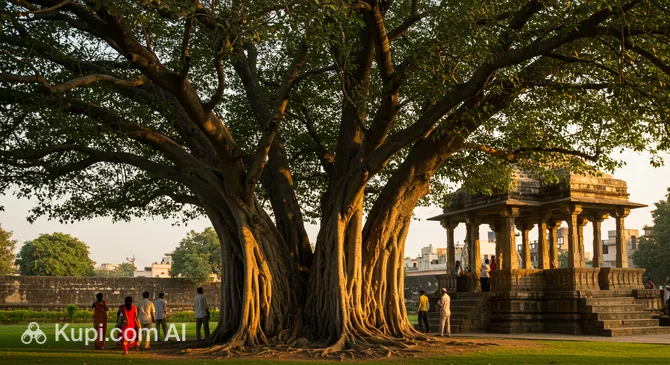
The Three-Leaved Banyan, also known as Vad Vriksh or Trivetiya Vad, is a remarkable natural phenomenon and a revered site located in the city of Surat, in the state of Gujarat, India. This ancient banyan tree is a rare phenomenon due to its unusual three-trunked structure, which is very uncommon for banyans. The age of this unique tree is estimated at approximately 300-400 years, making it not only a wonder of nature but also a living witness to history.
Traveler photos:
Banyan trees, belonging to the Ficus family, are famous for their ability to spread outwards, forming many additional trunks thanks to their aerial roots. When these roots reach the ground, they take root and eventually turn into new pillars, creating entire groves from a single tree. However, the Three-Leaved Banyan in Surat is particularly notable for having three massive main trunks growing from a single root system. This feature gives it not only visual uniqueness but also deep symbolic meaning.
Due to its unique three-trunked shape, the Three-Leaved Banyan holds special cultural and religious significance in Hindu tradition, where the number three (as in the Trimurti – the trinity of supreme deities) is considered sacred. For many locals and pilgrims, this tree is a place of worship, meditation, and reflection, symbolizing unity, strength, and longevity. A visit to this banyan allows you to connect with ancient nature and experience the special, tranquil atmosphere of this revered site.