Support

Elephanta Caves

About

The Elephanta Caves are a stunning rock-cut architectural complex located on Gharapuri (Elephanta) Island in the Arabian Sea, just off the coast of Mumbai in India. This so-called "City of Caves" is a collection of ancient temples carved directly into the rock and has been a UNESCO World Heritage Site since 1987. A trip here is not just a tour, but a true immersion into history and mythology.

The heart of the complex is the famous "Shiva Caves"—a sacred space dedicated to one of the supreme gods of Hinduism. The main jewel and center of attraction for visitors is the monumental five-meter bust of the three-headed Shiva (Maheshamurti). This majestic sculpture embodies his three aspects: the Creator, the Preserver, and the Destroyer, impressing with its detail and scale.
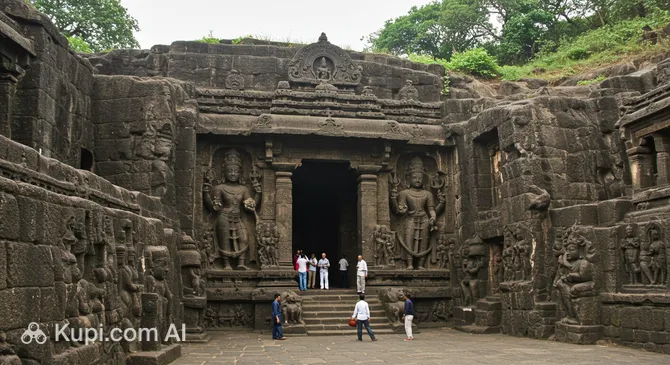
Elephanta Caves. Illustration.
Source: Kupi.com AI

Traveler photos:

Inside the caves, a mysterious atmosphere awaits, created by the dim light and enormous stone statues. The complex consists of several caves where, in addition to Hindu shrines, there are also Buddhist monuments. Each hall and column tells its own story, and the rock-cut reliefs and sculptures reveal scenes from ancient myths, creating an unforgettable impression.

A visit to the Elephanta Caves is a unique opportunity to experience centuries-old heritage and see one of the most impressive works of rock-cut art in the world. This site provides a deeper understanding of the country's culture and spiritual traditions, leaving vivid memories for everyone interested in history and art.

Contacts

The Elephanta Caves are a historic site on an island, so they do not have a single tourist contact center like a dedicated phone number or email address. The primary way to reach the caves is by ferry, which departs regularly from the jetty near the Gateway of India monument in Mumbai. The boat trip takes about an hour, and it is best to check the current ferry schedules and ticket prices on-site as they are subject to change. The caves are open to visitors every day except Monday.

How to contactContact
AddressGharapuri, Maharashtra 400001, India
Websiteasi.nic.in

What to Do

Visiting the Elephanta Caves is an opportunity to immerse yourself in the ancient history and art of India. The main activity for tourists is exploring the unique collection of rock-cut images dedicated to the cult of the god Shiva. The primary attraction is the grand five-meter bust of the three-faced Shiva, symbolizing his roles as Creator, Preserver, and Destroyer. Studying these rock-carved temples, created in the 5th-8th centuries, allows you to fully experience the grandeur and skill of ancient architects.

Beyond the main group of five Hindu caves, the island offers other discoveries. Travelers can climb one of the two hills to see ancient Buddhist stupa mounds, some of which date back to the 2nd century BC. This highlights the cultural and religious fusion characteristic of this site. Additionally, the ferry ride to the island from the Gateway of India monument in Mumbai is a mini-adventure that takes about an hour. Once on the island, you can walk from the pier to the caves by climbing 100 steps or take a fun toy train ride, which children especially enjoy.

While walking around the island, be cautious: it is home to many monkeys that are not shy about begging for or even grabbing food from tourists. Therefore, it is recommended to keep personal belongings close. A visit to the Elephanta Caves is not just a sightseeing trip, but a complete experience that combines history, art, and even the nature of this amazing corner of India.

Getting There

Getting to the Elephanta Caves is a small adventure in itself, as they are located on Gharapuri Island in the Arabian Sea. The only way for tourists to get there is by water transport from the city of Mumbai. The journey begins at the city's most famous waterfront, home to the Gateway of India monument. This is where the ferries regularly depart to take you to your destination.

The ferry ride takes about an hour each way, allowing you to enjoy the sea views and the panorama of the massive city. Ferries run quite frequently starting at 9:00 AM; however, the last boat to the island departs at approximately 2:00 PM, and the last ferry back from the island leaves around 5:30 PM. It is recommended to plan your day in advance and check the schedule on-site as it may vary. Tickets are usually sold as a round trip.

Upon arriving at the island, you will find yourself at a pier from which you will need to walk a bit further to the caves. To reach the base of the hill where the complex is located, you can use a small toy train, which is especially convenient in hot weather. Next, you will face a climb of about 120 steps leading directly to the entrance of the caves. This path passes through market stalls where you can buy souvenirs and drinks.

Nearest city: Mumbai

History & Facts

The history of the Elephanta Caves is rooted deep in the past, representing a unique monument of rock-cut architecture. This majestic temple complex, dedicated to the god Shiva, was hand-carved by monks between the 5th and 8th centuries. The island received its modern name, "Elephanta," from Portuguese explorers who landed on its shores in the 16th century and discovered stone statues of elephants here. However, the local population still uses the historic name Gharapuri, which translates to "City of Caves."

With the arrival of the Portuguese, the history of this place changed dramatically: it lost its significance as an active center of Hindu worship. For many years, the caves were neglected, but their cultural and historical value was never forgotten. In 1987, the unique complex on Elephanta Island was rightfully included in the UNESCO World Heritage list, highlighting its outstanding significance for world culture. The island itself, spanning about 2.4 km, is located very close to the coast of bustling Mumbai, one of India's largest metropolises.

Every stone in the Elephanta Caves holds the breath of time, and the rock-cut reliefs tell ancient myths and legends. This is a place where art, religion, and history have intertwined to create a unique atmosphere. Visiting the caves is not just an excursion, but a real journey into the past, allowing you to touch the mysteries of an ancient civilization and feel the spiritual power of one of Shiva's most significant sanctuaries.

Time Needed

When planning a trip to the Elephanta Caves from Mumbai, it is worth setting aside at least half a day. The ferry ride to the island takes about an hour each way, which already accounts for two hours of the total time. Most visitors spend about 2-3 hours exploring the cave complex itself. This is enough time to leisurely walk through the main halls, examine the reliefs, and soak in the atmosphere of this ancient site.

The main focus is usually on the Great Cave (Cave No. 1), which houses the famous sculpture of the three-faced Shiva. A detailed study of it can take about an hour. Other smaller Hindu and Buddhist caves can be viewed more quickly. It is also worth budgeting some time for the journey from the pier to the cave entrance: you can walk or take the small train, and then climb the staircase of about 120 steps.

In total, the entire excursion—including the round-trip ferry, the walk on the island, and the cave tour—will take between 4 to 5 hours. To fully enjoy this unique monument of India's history, it is better not to rush and to allocate enough time for unhurried exploration. It is an ideal option for an educational morning or afternoon trip from the busy metropolis.

Working Hours

The Elephanta Caves are open to visitors year-round, allowing you to plan a visit at any convenient time. However, it is important to remember a key rule: the complex is closed on Mondays. On other days of the week, from Tuesday to Sunday, operating hours are typically from 9:30 AM to 5:30 PM. It is recommended to arrive early, as the ticket office may close slightly earlier, and the last ferry from the island departs around 5:30 PM, so you should account for travel time back.

Regarding tickets, they can usually be purchased directly on-site at the island. Advance online booking is generally not mandatory, but during the peak tourist season or for your own convenience, it doesn't hurt to check the latest information on the official website of the Archaeological Survey of India (ASI) or Mumbai travel portals. Pre-registration for a tour is not required. The most important thing is to catch the ferry, as the last boat to the island leaves around 2:00 PM, so it is best to plan your trip for the first half of the day.

DayOpening hours
MondayClosed
Tuesday9:00 – 17:00
Wednesday9:00 – 17:00
Thursday9:00 – 17:00
Friday9:00 – 17:00
Saturday9:00 – 17:00
Sunday9:00 – 17:00

Nearby

Visiting the Elephanta Caves is an exciting journey on its own, but to make your day even more fulfilling, it is worth exploring other interesting places in Mumbai. Since the caves are on an island, returning to the city opens up plenty of opportunities to continue exploring the culture and history of this metropolis. Many iconic landmarks are located near the Gateway of India jetty where the ferries depart, making them convenient to visit on the same day.

The area around the pier is a true kaleidoscope of impressions. Here you can find everything from historical monuments and world-class museums to modern shopping centers. When planning your itinerary, you can easily combine a spiritual immersion into antiquity on Elephanta Island with vibrant and modern entertainment on the city's mainland. Below is a list of some interesting places located relatively nearby.

NameDistance
Deepa Aquarium9.5 km
Rajgruha (Dr. Babasaheb Ambedkar Museum)10.9 km
Flora Fountain11 km
Chhatrapati Shivaji Maharaj Vastu Sangrahalaya11.1 km
Gateway of India11.2 km
Seawoods Grand Central Mall11.2 km
Lord of the Drinks Worli12 km

Have you reached the end of the page?

So the route has been studied inside and out