Support

Sanjay Gandhi National Park

About

Sanjay Gandhi National Park is a true natural oasis sprawling across the northern part of the Mumbai metropolis in India. This vast reserve, covering an area of about 104 square kilometers, is rightfully called the "lungs" of the city. It serves as a vital source of fresh air for bustling and densely populated Mumbai, offering a unique opportunity to escape the urban hustle and bustle.

The park represents a unique ecosystem with rich biodiversity. More than 1,000 plant species grow here, and the animal world is strikingly diverse. It is home to dozens of mammal species and hundreds of species of birds and butterflies, making it one of the most visited national parks in the world.
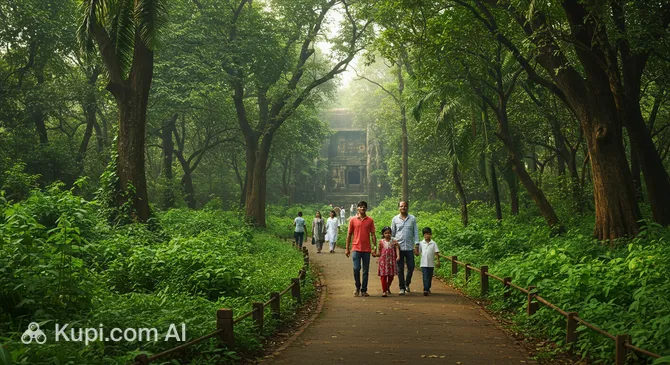
Sanjay Gandhi National Park. Illustration.
Source: Kupi.com AI

Traveler photos:

For nature enthusiasts, this place is of particular interest. In the park's forests, you can encounter spotted deer, macaques, porcupines, and many other animals. One of the main features of the reserve is its population of leopards living in their natural habitat. Two man-made lakes, Vihar and Tulsi, are also located within the park, where you can see crocodiles and observe migratory birds.

In addition to its natural splendor, the park holds historical treasures. The main cultural attraction is the ancient Kanheri Caves—a complex of more than a hundred caves carved into the rocks that served as a shelter for Buddhist monks over two thousand years ago. Thus, Sanjay Gandhi National Park is not just a recreation area, but an important ecological and cultural asset that is definitely worth a visit during a trip to Mumbai.

Contacts

Sanjay Gandhi National Park does not have public contact details like a phone number or email, so it is recommended to consult Mumbai's official tourism resources for the most up-to-date information. You can reach the park via public transport or taxi. The main entrance to the reserve is located in Borivali East, near the railway station of the same name.

How to contactContact
AddressMumbai, Maharashtra, India
Websitesgnp.maharashtra.gov.in

What to Do

A visit to Sanjay Gandhi National Park offers many activities that combine history and outdoor recreation. One of the main jewels of the park is undoubtedly the ancient Kanheri Caves. This impressive complex consists of 109 caves carved directly into the basalt rock. Created between the 2nd century BC and the 9th century AD, they served as a place for Buddhist monks to live, meditate, and study. Visitors can explore prayer halls (chaityas) with columns and stupas, as well as more modest cells (viharas) decorated with ancient sculptures, bas-reliefs, and wall paintings.

For wildlife lovers, the park offers an exciting safari where you can observe animals in their natural habitat, including deer, monkeys, and if you're lucky, lions and tigers. In addition to the safari, there are several scenic hiking routes, such as the Shilonda Trail, View Point, and Ashok Van, which are perfect for trekking and quiet walks. Visitors can also rent bicycles and explore the park's numerous trails at their own pace.

Other activities include boating on the lake and a ride on a mini-train that introduces you to the park's territory. For convenience when moving between distant sites, such as from the main entrance to the Kanheri Caves, local park buses are available. This variety of activities makes Sanjay Gandhi National Park a place where everyone will find something interesting, whether it's a deep dive into ancient history or connecting with nature.

Getting There

Getting to Sanjay Gandhi National Park is quite simple, as it is well-connected to the Mumbai transport system. The most convenient and popular way is to use suburban trains. You should take a Western Line train and get off at Borivali station. The park's main entrance is only about a kilometer from the station, a distance that can be easily covered on foot in 10-15 minutes or by taking an auto-rickshaw, which will take you to the gates in just a few minutes.

If you prefer traveling by car, you can use taxis or ride-sharing services like Uber or Ola. A trip from South Mumbai will take longer due to traffic, but it is a good option for those who value comfort. Additionally, many city buses stop at the "National Park" stop, especially those running along the Western Express Highway. This method can be more economical but requires more route planning.

It is important to remember that the park territory is very vast. To get around inside—for example, to reach the famous Kanheri Caves, located about 8 km from the main entrance—special park buses are available. This is a convenient way to reach remote attractions while enjoying the scenic natural views along the way. You can also rent bicycles at the entrance, which is an excellent alternative for exploring the park trails on your own.

Nearest city: Mumbai

History & Facts

The history of Sanjay Gandhi National Park dates back to ancient times. The area where this green expanse lies today was already significant as far back as the 4th century BC. At that time, a busy trade route passed through this forest, connecting two prosperous settlements—Sopara and Kalyan. Thus, the modern park is a direct heir to an ancient forest that has witnessed centuries of regional history.

In more recent history, until 1969, the park was known as Krishnagiri and occupied a much smaller area—only about 20 square kilometers. The decision to expand its territory to the current 104 square kilometers was a turning point. The park received its modern name in 1981 in memory of Sanjay Gandhi, the son of Prime Minister Indira Gandhi, who tragically died in a plane crash. The park was officially granted national reserve status in 1996, cementing its environmental importance.

Beyond its natural value, the park preserves a unique historical monument—the ancient Kanheri Caves. This complex, carved into basalt rock, is a former Buddhist settlement that was actively used by monks for many centuries, starting from the 1st century BC. The caves served not only as a shelter but also as a center for learning and pilgrimage, preserving valuable artifacts, sculptures, and evidence of ancient India's rich spiritual culture to this day.

Time Needed

To fully experience Sanjay Gandhi National Park, it is recommended to set aside about 6 hours. This amount of time is enough to see the main attractions without rushing, including the ancient Kanheri Caves, enjoy the nature, take a wildlife safari, and capture beautiful photos. Essentially, you should plan for the visit to take most of the day.

If you are short on time, you can focus on one thing—for example, just walking the hiking trails or visiting the caves. However, if you plan a deeper immersion into the park's atmosphere and want to visit additional sites, such as the Golden Pagoda Temple located nearby, you might need even more than the standard six hours. When planning your trip, keep in mind that exploring the Kanheri Caves and going on a safari alone can take several hours.

Working Hours

Sanjay Gandhi National Park is open to visitors year-round, but operating hours may vary slightly depending on the source. Generally, the park welcomes guests daily except for Mondays. General visiting hours for tourists are approximately from 7:30–8:00 AM to 5:30–6:30 PM. For morning walkers, there are special early hours from about 5:30 AM to 7:30 AM, but these may only be available to pass holders. Since exact schedule information can change, it is highly recommended to check up-to-date details on the park's official website or at local tourist centers immediately before your visit.

Tickets for park entry and individual activities, such as lion and tiger safaris, the "Vanrani" train, or boating, can be purchased on-site. However, for some activities like the safari, online booking through the official website may be required. Given the park's popularity, especially on weekends and holidays, planning ahead and buying tickets online, if the option is available, will help avoid queues and guarantee your spot in your desired activities.

7:30 – 18:30

Nearby

Visiting Sanjay Gandhi National Park is just the beginning of your introduction to the rich and diverse northern district of Mumbai. Exploring its surroundings allows for a deeper dive into the culture and history of the region, complementing your wildlife impressions with new discoveries. Combining a rest in the park with visits to nearby attractions will turn your trip into a full-fledged adventure.

There are many interesting places around the park—from ancient historical monuments to modern entertainment complexes and other natural areas. Thanks to its convenient location, you can easily create a packed full-day itinerary by combining several locations in one trip.

NameDistance
Kanheri Caves1.6 km
Sanjay Gandhi National Park Boating Area4.7 km
Fish World Aquarium8.2 km
Aarey Forest9.9 km
Dr. Babasaheb Ambedkar Memorial Bhavan11.3 km
Mumbai Water Park12.5 km
Andheri Taproom12.6 km

Have you reached the end of the page?

So the route has been studied inside and out