Support

Kanheri Caves

About

The Kanheri Caves are an impressive Buddhist temple and monastery complex located in the northern part of Mumbai, India. This unique historical site is situated within Sanjay Gandhi National Park in the suburb of Borivali and represents one of the most significant testaments to ancient Indian architecture and religious life.
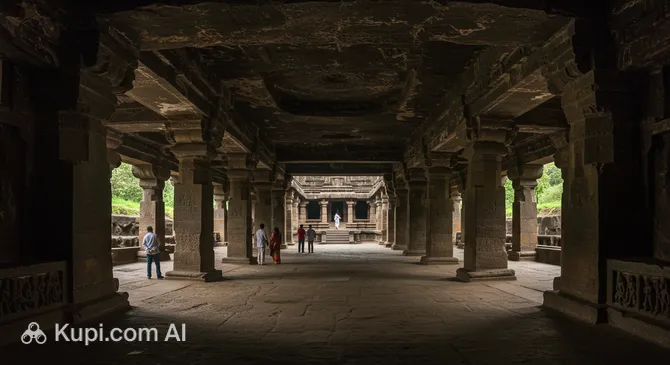
Kanheri Caves. Illustration.
Source: Kupi.com AI

Traveler photos:

The complex consists of more than 100 caves, skillfully carved into the massive basalt rocks of Salsette Island. These caves were created over many centuries, starting from the 1st century BC and continuing up to the 11th century AD, making them a living chronicle of the development of Buddhist art and monasticism in the region.

Originally, the Kanheri Caves served not only as places for solitary prayer and meditation but also as full-fledged dwellings (viharas) for Buddhist monks, as well as educational centers and shelters for pilgrims. Some caves are large assembly halls (chaityas) with intricately carved stupas, while others are modest cells for monks.

Thanks to well-preserved stone reliefs, numerous statues of Buddha and Bodhisattvas, and ancient inscriptions in Brahmi and Pali, the Kanheri Caves are considered an invaluable historical and cultural monument. They offer a unique opportunity to touch the past and understand how Buddhism developed in Western India over more than a thousand years, attracting researchers and tourists from all over the world.

Contacts

Since the Kanheri Caves are part of Sanjay Gandhi National Park, it is recommended to visit the official website of Sanjay Gandhi National Park or contact tourist information centers in Mumbai for up-to-date information on opening hours, ticket prices, and administration contacts. Visitors usually reach the caves through the park's main entrance, from where they can use park transport or walk.

How to contactContact
Address6W53+4WV, Mumbai, Maharashtra 400101, India
Websitekanhericaves.com

What to Do

Visiting the Kanheri Caves is a true immersion into the history and culture of ancient India. Tourists can explore numerous halls and monastic cells connected by passages carved into the rock. Inside the caves, you will find unique Buddhist sculptures, skillfully executed reliefs, and ancient inscriptions on the walls telling stories of the lives and beliefs of the monks who lived here centuries ago. This is a unique opportunity to experience ancient art and spirituality.

Special attention should be paid to several key halls. For example, Cave 3 (a chaitya, or prayer hall) and Cave 11 (the Darbar Hall, or assembly hall) are outstanding examples of Indian rock-cut architecture and sculpture. In Cave 34, you can see ancient wall paintings preserved in surprisingly good condition. These halls are the real gems of the complex, demonstrating the craftsmanship of ancient stone carvers and artists.

In addition to exploring the caves themselves, visitors can enjoy a walk through the picturesque territory of Sanjay Gandhi National Park, where the Kanheri Caves are located. Here, you can take a break from the city bustle, enjoying the peace and beauty of the surrounding nature. It is also interesting to learn about the ancient system of cisterns and channels that the monks used to collect rainwater and provide for their daily needs. This system testifies to the high level of engineering at the time.

The Kanheri Caves complex will be a real discovery for lovers of history, ancient architecture, Buddhist culture, and spiritual practices. It is a place where you can not only see impressive man-made structures but also feel an atmosphere of serenity and touch centuries-old wisdom.

Getting There

The Kanheri Caves are located within the vast territory of Sanjay Gandhi National Park. To reach them, you first need to get to Borivali railway station, which is located about 7 kilometers from the caves. Borivali station is easily accessible from anywhere in Mumbai via suburban trains, city buses, or taxis.

The most convenient way to get from Borivali station to the main entrance of Sanjay Gandhi National Park is by auto-rickshaw or taxi. The ride doesn't take much time. Once inside the park, you can reach the Kanheri Caves either by taking a walk and enjoying the surrounding nature or by using a dedicated shuttle bus that runs through the park.

When planning your visit, keep in mind that there is an entry fee for Sanjay Gandhi National Park. A separate fee is also charged for access to the Kanheri Caves themselves. It is recommended to arrive in the morning to avoid the midday heat and large crowds. Don't forget to bring enough drinking water and wear comfortable shoes, as exploring the cave complex involves walking on hilly terrain.

Nearest city: Mumbai

History & Facts

The history of the Kanheri Caves is rooted in deep antiquity. The first of these unique rock-cut dwellings were carved by Buddhist monks around the 3rd century BC. From that point on, the complex underwent centuries of development, transforming it into a significant spiritual and cultural center in what is now Mumbai.

By the 3rd century AD, Kanheri had gained the status of a major Buddhist center in Western India. This prosperity was made possible by the patronage of local rulers, as evidenced by numerous inscriptions preserved on the cave walls. These inscriptions also mention the names of donors who contributed to the construction and maintenance of the monastery, highlighting its social importance at the time.

The most outstanding works of art and architectural designs in the Kanheri Caves were created between the late 5th and early 6th centuries. It was during this period that impressive reliefs depicting Buddha and Bodhisattvas appeared, and complex architectural elements were implemented, showcasing the high skill of ancient stone carvers. The caves served not only as a place for ascetic life and meditation for hermits but also as a venue for important religious ceremonies and Buddhist community gatherings.

The monastic complex at Kanheri continued to function actively until the 13th century. After this period, it gradually fell into decline, yet it never lost its immense historical and cultural value. Today, the Kanheri Caves are an invaluable testament to the region's rich Buddhist heritage, attracting researchers and travelers from all over the world who wish to experience ancient history and spirituality.

Time Needed

To fully enjoy a visit to the Kanheri Caves and see the main highlights of this unique complex, it is recommended to set aside at least 2–3 hours. This time is generally sufficient to explore the most significant cave halls, admire the ancient sculptures and wall paintings, and take a short walk through the scenic territory of Sanjay Gandhi National Park, where the caves are located.

If your interest in ancient history and Buddhist culture is particularly deep, or if you plan to study the lesser-known corners of the complex in detail and enjoy the park's nature without rushing, the visit may require more time, up to half a day. Keep in mind that the complex is quite large, and moving between different groups of caves also takes a certain amount of time. For a shorter introductory visit, 1-1.5 hours might be enough, but in this case, you will have to focus only on the most important sites.

Working Hours

The Kanheri Caves are usually open to visitors daily from 9:00 AM to 5:00 PM. It is important to note that entry to the complex typically closes one hour before the official closing time, i.e., at 4:00 PM. This gives you enough time for exploration before the caves close.

While the caves are generally open year-round, it is always recommended to check the current schedule on the official website of Sanjay Gandhi National Park (where the caves are located) or verify information at tourist centers in Mumbai, especially if your trip coincides with public holidays in India. Official resources can also provide information on whether advance ticket booking or tour registration is required, if such conditions apply.

DayOpening hours
MondayClosed
Tuesday8:00 – 17:30
Wednesday8:00 – 17:30
Thursday8:00 – 17:30
Friday8:00 – 17:30
Saturday8:00 – 17:30
Sunday8:00 – 17:30

Nearby

A visit to the Kanheri Caves is a fascinating journey into history in itself, but exploring the surroundings can significantly enrich your experience. The city of Mumbai and its environs hold many other treasures waiting to be discovered. By extending your itinerary beyond the main site, you can dive deeper into the multifaceted culture and nature of this part of India.

This is especially relevant for the Kanheri Caves, as they are located within the sprawling Sanjay Gandhi National Park, which is a popular destination for recreation and walks in its own right. Exploring nearby attractions will allow you to get a more complete picture of the region and make your trip even more fulfilling and memorable. Here are a few interesting places located nearby:

NameDistance
Sanjay Gandhi National Park1.6 km
Sanjay Gandhi National Park Boating Area4.4 km
Fish World Aquarium7.4 km
Aarey Forest8.3 km
Mumbai Water Park10.9 km
Andheri Taproom11 km
Dr. Babasaheb Ambedkar Memorial Bhavan11 km

Have you reached the end of the page?

So the route has been studied inside and out