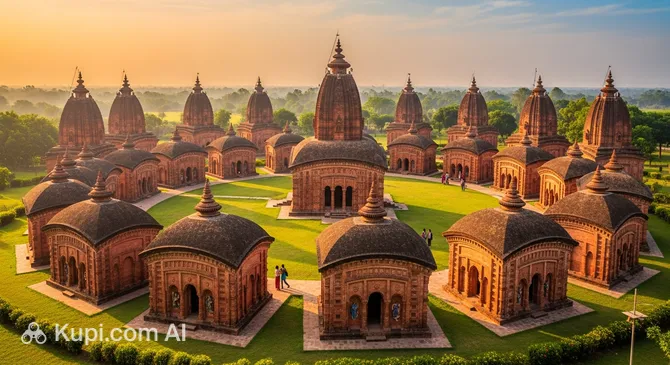
If you are looking for a place where architectural perfection meets profound spirituality, the temple complex in the city of Kalna will be a true discovery for you. This unique structure, located in the state of West Bengal, is a masterpiece embodying sacred geometry and religious fervor. Kalna 108 Shiva Temples. Illustration.
Source: Kupi.com AI
Traveler photos:
The complex, also known as Nava Kailasha, consists of 108 small temples dedicated to the god Shiva. They are arranged in two concentric circles: the outer circle includes 74 temples, and the inner one — 34. Such a layout is extremely rare in India and creates an amazing optical illusion of infinity, striking the imagination of every visitor.
The architectural style of the buildings is called Atchala and is characterized by distinctive eight-sloped roofs made of red brick. The choice of the number 108 is no coincidence — it holds sacred significance in Hinduism, corresponding to the number of beads in traditional meditation malas (japamala).
Contacts
The temple complex is currently managed by the Archaeological Survey of India (ASI). There are no direct contact phone numbers or an official website for this site, so tourists are advised to check details at West Bengal tourism centers.
The main impression this place offers is the opportunity to make a symbolic pilgrimage by walking around the 108 shrines in a circle. Thanks to the unique layout, you can see all the Shivalingams at once from the center of the square, creating a unique sense of belonging to something eternal.
Note the symbolism of the details: in the outer ring of temples, white and black Shivalingams alternate, representing the peaceful and fierce forms of the deity. The inner circle consists entirely of white shrines, symbolizing the purest form of Sadashiva. The walls of the buildings are decorated with intricate brick carvings depicting scenes from the Ramayana and hunting scenes.
The complex is surrounded by well-maintained gardens that invite meditation and quiet contemplation. In the evening, when modern floodlights are turned on, the temples take on a mystical appearance, becoming an ideal subject for artistic photography.
Getting There
This architectural monument is located on the western bank of the Hooghly River in the Purba Bardhaman district. The easiest way to get here is from Kolkata: a journey by taxi or rented car will take several hours and allow you to enjoy views of the Bengali countryside.
For those choosing public transport, the most convenient option is a train trip to the city's railway station. From the station, you can quickly reach the historical complex by auto-rickshaw or local taxi. Exact coordinates for navigation: POINT(88.3647655 23.220409).
Nearest city: Kalna
History & Facts
The construction of this majestic ensemble began in 1809 by order of Maharaja Tej Chandra Bahadur, the ruler of Bardhaman. According to legend, his mother, Queen Bishnukumari, received a divine revelation that served as the impetus for creating such a large-scale shrine.
The construction of the 108 temples was not only a spiritual feat but also a significant political event, marking the transfer of the royal estate of Bishnupur. Kalna at that time was a thriving center where the Bengali architectural school reached its peak under the patronage of the Maharajas.
In the past, 12 priests looked after the order and rituals in the complex, making daily offerings in all 108 shrines. Today, the site is recognized as a monument of national importance and is protected by the Archaeological Survey of India, preserving its historical greatness for future generations.
Time Needed
For a thoughtful tour of the entire grounds, studying the delicate carvings on the facades, and walking between the two circles of temples, most travelers need 1 to 2 hours. This time is quite sufficient to soak in the atmosphere of the place and take impressive photos.
If your goal is deep immersion into the spiritual atmosphere, meditation, or waiting for the evening illumination to turn on, we recommend setting aside half a day for your visit to enjoy the harmony of this architectural ensemble at your leisure.
Working Hours
The temple complex welcomes guests daily; however, please note that it closes in the middle of the day. The gates are open in the morning from 06:00 to 12:00 and in the evening from 16:00 to 20:00.
It is recommended to plan your visit for the early morning when the soft light highlights the details of the brick carvings, or for the evening to see the complex glowing under artificial lights. Before your trip, it is advisable to check the current schedule, as the monument does not have official web resources.
06:00–12:00, 16:00–20:00
Nearby
Exploring the surroundings of the temple complex will give you a complete picture of the cultural richness of this region. Within walking distance are other important architectural monuments and sites of great significance to the locals.