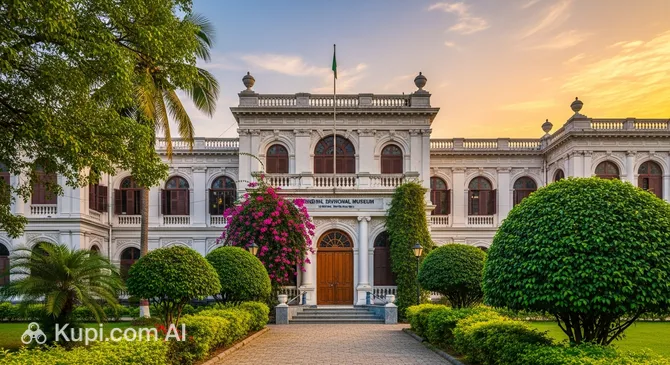
The best way to start exploring the cultural heritage of the region is by visiting a place where time itself comes to life. The Barishal Divisional Museum is a key cultural institution located in the heart of the city of Barisal. The museum occupies the magnificent historic Collectorate building (Collectorate Bhaban), built back in 1821. This structure is a valuable exhibit in its own right, serving as a striking example of colonial architecture in Bangladesh.
Barishal Divisional Museum. Illustration.
Source: Kupi.com AI
Traveler photos:
Following an extensive restoration conducted under the auspices of the Department of Archaeology, the museum officially opened its doors on June 8, 2015. Today, nine thematic galleries are spread across the building's second floor. Here, visitors can trace the entire history of the region: from the geographical features of the Ganges Delta to the achievements of prominent figures and the intricacies of folk art. The museum's collection includes more than 200 unique artifacts, reflecting the centuries-old traditions and archaeological wealth of these lands.
What makes the museum particularly significant is that it not only houses antiquities but also preserves the memory of the building itself as a symbol of the administrative past of the British India era. Modern security systems and a careful approach to the displays make it a must-visit for any traveler wishing to understand the soul of the southern part of the country.
Contacts
For the latest information on special exhibitions or events, visitors can refer to the official resources of the Department of Archaeology.
In the museum's halls, visitors can expect a fascinating journey into the world of history and ethnography. The nine galleries showcase rare archaeological finds, examples of traditional folk art, and everyday items that have shaped the character of this region over centuries. Special attention should be paid to the exhibit dedicated to the geography of the Ganges Delta — it is thanks to the abundance of rivers and canals that the region earned the poetic nickname "Venice of the East."
Architecture enthusiasts will appreciate the opportunity to closely examine the 1821 building. It is recommended to notice the monumental entrance staircase, the decorative elements of the facade, and the high ceilings of the halls, which are characteristic of the colonial style. The museum grounds also include a well-kept garden where you can take a short stroll and snap commemorative photos against the backdrop of the ancient walls.
The museum's educational aspect makes it an ideal destination for family visits. It clearly demonstrates how Barisal developed as a strategic river port, how the rice and jute trade was conducted, and how the unique aquatic landscape influenced the character and occupations of the local people. The collection features over 200 exhibits, each telling its own small story of a vast region.
Getting There
The museum is conveniently located on Fazlul Haque Avenue, one of the city's main thoroughfares. Since Barisal is a major river port in the Ganges Delta, many travelers prefer to arrive by water. Multi-deck ferries (launches) and boats run regularly from Dhaka, allowing you to fully experience the atmosphere of the region known as the "Venice of the East." The journey from the nearest river port on the Kirtankhola River to the museum does not take long.
For those who prefer land transport, there are regular bus services from the capital. A trip by bus or minibus usually takes between 6 to 8 hours. Within the city, the most popular and colorful way to get around is by rickshaw, which will take you right to the doors of the historic Collectorate building. You can also use a taxi or walk if you are staying in the central part of the city.
Nearest city: Barisal
History & Facts
The history of this site began long before museum showcases appeared in its halls. The monumental Collectorate building was erected in 1821 and served as the administrative heart of the region for many decades during the colonial era. However, time took its toll on the structure: by 1979, it was declared unfit for use, and in 1984, the administrative staff finally vacated the premises.
The turning point came in 2003 when the government officially recognized the vacant building as a protected monument of antiquity. Two years later, the site came under the management of the Department of Archaeology. Restoration work aimed at returning the colonial architecture to its former glory and adapting the rooms for museum use was completed by 2007. Nevertheless, the doors only opened to the general public on June 8, 2015, following a formal inauguration.
The region where the museum is located has historically played a key role in the economy of Bengal. Since the Mughal Empire and through the British Raj, the city flourished thanks to the rice and jute trade. This close connection to river trade routes and the rich natural resources of the Ganges Delta is reflected in many archival materials presented in the museum's exhibition today.
Time Needed
To leisurely explore all nine galleries and appreciate the architectural details, most visitors need about 1.5 to 2 hours. This is enough time to view the main archaeological finds and read the information stands detailing the region's history.
If you are interested in photography or architecture, allow extra time for a walk in the garden and to examine the facades of the historic Collectorate. The museum is usually not overcrowded, allowing you to enjoy a quiet and peaceful atmosphere away from the busy city streets.
Working Hours
The museum typically welcomes guests from 8:00 AM to 6:00 PM most of the week, including Saturday and Sunday. Please note that Friday is the traditional weekly holiday. Depending on the season, the schedule may vary slightly: in summer, the doors are often open from 10:00 AM to 6:00 PM, while in winter, they may open from 9:00 AM.
To confirm exact opening times during holidays or special events, it is recommended to visit the official website of the Department of Archaeology of Bangladesh or inquire locally upon arrival in the city.
Day
Working hours
Monday
08:00–18:00
Tuesday
08:00–18:00
Wednesday
08:00–18:00
Thursday
08:00–18:00
Friday
Закрыто
Saturday
08:00–18:00
Sunday
08:00–18:00
Nearby
A walk through the museum's surroundings will allow you to dive deeper into the daily life and culture of the city. The area around Fazlul Haque Avenue is rich in small parks and landmarks that are convenient to visit as part of a single route.