Support

Kiratpur

About

Kiratpur Sahib is an amazing town nestled on the banks of the picturesque Sutlej River, at the foot of the green Shivalik Hills in the state of Punjab, India. Thanks to its geographical location, the town is literally bathed in fresh air and surrounded by lush vegetation, making it particularly attractive for those who appreciate the harmony of nature and tranquility. The atmosphere of Kiratpur Sahib is filled with a special sense of peace and hospitality characteristic of all of Punjab.

With a population of just over 210,000 people, Kiratpur Sahib is considered one of the important towns in the Rupnagar district. Despite its modest size, the town plays a significant role in the cultural and spiritual life of the region. It is located approximately 50 kilometers north of Chandigarh and is easily accessible by both train and car.
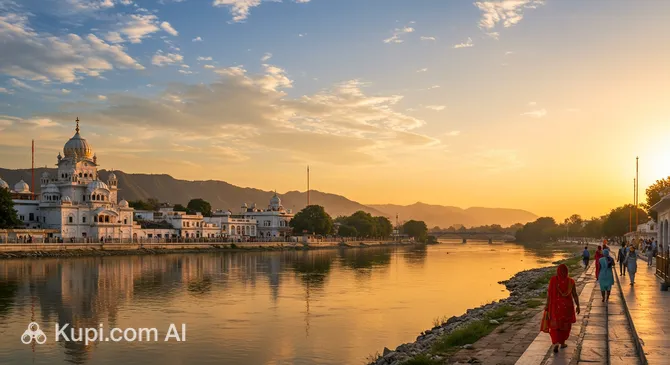
Kiratpur Sahib. Illustration.
Source: Kupi.com AI

A key feature of Kiratpur Sahib is its status as a major religious center for Sikhs. Every year, pilgrims from all over the world come here to visit the shrines and enjoy the spirit of unity. The town is also interesting for how it harmoniously blends tradition and modernity: old streets neighbor new buildings, and in the markets, you can see people in traditional clothing alongside youth following the latest fashion trends.

If you are looking for inspiration, new experiences, and wish to get acquainted with authentic Indian culture in a calm and genuine setting, Kiratpur Sahib will be a true discovery for you. This town offers a unique opportunity to immerse yourself in a spiritual atmosphere and enjoy the natural beauty of Punjab.

More interesting facts can be found on the history of Kiratpur Sahib page.

Weather Overview

The weather in Kiratpur Sahib is characterized by distinct seasonal changes. The town has a climate where summers are warm and winters are cool, with varying levels of precipitation throughout the year.

In general, expect warm summers with periodic rains and cool, relatively dry winters. Summer months, such as June, are the hottest, with an average temperature of around 27.3°C and maximum values reaching 33.1°C. July and August are the wettest months, with the highest number of rainy days (up to 27 days) and precipitation up to 8 mm. Winter months, such as January, are the coldest, with an average temperature of around 9.0°C and minimum temperatures dropping to 3.3°C. Precipitation in winter is minimal, usually around 1-3 mm per month.

To get a more detailed idea of the weather conditions in Kiratpur Sahib for each month, including average temperatures, rainfall amounts, and the number of rainy days, you can visit the Kiratpur Sahib climate page.

Average monthly temperature

Average monthly precipitation

Interesting Facts

In addition to its famous shrines, Kiratpur Sahib holds many amazing stories and features that make it a truly unique place. Here are just a few interesting facts about this town in India:

  • The town was founded in 1627 by the sixth Sikh Guru himself—Guru Hargobind. It is believed that he spent a significant part of his life here, and the town's name, according to one version, comes from the word "kirat," which means "labor" or "service," reflecting important principles of Sikhism.

  • Kiratpur Sahib has special spiritual significance as a place where final rites are traditionally performed. Many Sikhs bring the ashes of their departed here to scatter them in the sacred waters of the Sutlej River, believing it brings peace to the souls. The central location for this tradition is Gurdwara Patal Puri Sahib.

  • The town is the birthplace of many prominent figures in Punjabi culture, including famous musicians and poets. Kiratpur Sahib is renowned for its deep traditions of performing classical music and religious hymns, and cultural festivals dedicated to Sikh culture are held here regularly.

  • Local residents carefully preserve ancient customs and crafts. In Kiratpur Sahib, one can still witness colorful folk festivals with traditional dances such as Giddha and Bhangra, as well as get acquainted with the local art of weaving and fabric painting.

How to Get There

When planning a trip to this spiritual center of Punjab, it is important to think through your route in advance. The town has decent transport accessibility, especially due to its proximity to major regional hubs. You can find all the details and alternative options on the how to get to Kiratpur Sahib page, and below we will look at the main ways to arrive.

Kiratpur Sahib does not have its own airport, so most tourists fly into neighboring cities. The most convenient and popular option is Chandigarh Airport (IXC), located in the city of Chandigarh. This is a major international aviation hub receiving flights from many cities in India and abroad. It is located about 60 km from Kiratpur Sahib. A taxi ride from the airport to the town will take about 1.5–2 hours, depending on traffic.

Another option, especially for those traveling from mountain resorts, could be Shimla Airport (SLV) in the city of Shimla. Although it is geographically closer—just 49 km away—the travel time can be significant due to the winding mountain roads. This is a small airport accepting a limited number of flights. You can also consider Gaggal Airport (DHM) in Dharamshala, however, it is located significantly further, more than 100 km from the destination.

For clarity, here is a summary of the main airports in the region:

AirportPassenger trafficDistance
Bilaspur30 00029 km
Simla25 49349 km
Chandigarh Airport3.6 mln60 km
Bhuntar Airport29 64995 km
Ludhiana (Halwara)102 km

Regarding rail connections, Kiratpur Sahib has its own railway station, which is an important hub on the line connecting Delhi and Himachal Pradesh (via Nangal Dam and Una). Direct trains arrive here from New Delhi (such as the "Himachal Express" or "Jan Shatabdi"), as well as from Amritsar and Chandigarh. Traveling by train is not only a budget-friendly but also a scenic way to reach the town, especially on the final stretch passing through the green plains of Punjab.

Furthermore, Kiratpur Sahib is well-connected by a network of roads. The town is located on the national highway leading to Manali, so many state and private buses pass through it. You can easily catch a bus in Delhi (from ISBT Kashmere Gate) or in Chandigarh (ISBT Sector 43). The journey by bus or taxi from Chandigarh is very comfortable and takes minimal time.

Main Attractions

Kiratpur Sahib, located in the Indian state of Punjab, is a town of immense spiritual significance for Sikhs. Founded by the sixth Sikh Guru, Guru Hargobind, this town preserves many shrines and historical sites that attract pilgrims and tourists wishing to experience the rich history and culture of Sikhism. The main attractions here are the gurdwaras (Sikh temples), each associated with important events and figures in Sikh history.

One of the most significant shrines is Gurdwara Patal Puri Sahib. This site holds special sacred meaning as it is where Sikhs from all over the world bring the ashes of their deceased to be scattered in the Sutlej River. It is believed that Guru Hargobind and Guru Har Rai were cremated here. A visit to this gurdwara provides an opportunity not only to see a holy place but also to feel a deep spiritual atmosphere, especially during rituals.

Equally revered is Gurdwara Baba Gurditta Ji, dedicated to Baba Gurditta, the eldest son of Guru Hargobind and father of the seventh Guru, Guru Har Rai. Located on a scenic hill, this gurdwara offers visitors not only a place for prayer but also peaceful views of the surroundings. The legends associated with Baba Gurditta and his role in Sikh history make this place particularly interesting for pilgrims and those interested in religious history.

Gurdwara Shish Mahal Sahib is a historical site that once served as the residence for Guru Hargobind and Guru Har Rai. It was here that the eighth Sikh Guru, Guru Har Krishan, was born. The name "Shish Mahal" (Mirror Palace) hints at the beauty of this place. Visiting this gurdwara allows for a deeper understanding of the daily lives of the Sikh Gurus and provides a look at the architectural features of that era.

Another important point on the spiritual map of Kiratpur Sahib is Gurdwara Charan Kamal Sahib. This site is sanctified by the visit of the first Sikh Guru, Guru Nanak Dev Ji, who, according to tradition, stopped here for rest and meditation. "Charan Kamal" means "lotus-like feet," emphasizing the holiness of the ground where the founder of Sikhism walked. This gurdwara attracts believers seeking to follow in the footsteps of Guru Nanak and experience the serenity of this sacred place.

Local Cuisine

The cuisine of Kiratpur Sahib is a true immersion into the gastronomic traditions of Punjab, where every meal turns into a small celebration of taste and aroma. Locals often start the day with appetizing aloo paratha—fluffy flatbreads with potato filling, generously seasoned with ghee. These are invariably served with a glass of refreshing lassi, a traditional yogurt-based drink that perfectly quenches thirst, especially in hot weather.

Among the dishes that are a must-try in Kiratpur Sahib, dal makhani stands out—a thick, aromatic stew made from black lentils and kidney beans, simmered over a slow fire with butter and a rich bouquet of spices. Meat lovers will appreciate tandoori chicken, roasted to a golden crust in a traditional clay tandoor oven. For vegetarians, there are also many exquisite options, such as sabzi made from fresh seasonal vegetables or the famous dish saag, prepared from leafy greens.

The town's gastronomic scene is not limited to restaurants. Street food in Kiratpur Sahib is an adventure of its own! At every turn, you can find stalls with hot samosas (pastries with savory filling), chole bhature (spicy chickpeas with fluffy bread), and sweet, crispy jalebi soaked in sugar syrup. Local markets also play an important role in the food culture, offering the freshest vegetables, fruits, aromatic spices, and homemade paneer cheese. This is where you can feel the true spirit of Punjabi cuisine and purchase ingredients for your own culinary experiments.

Travel Tips

Welcome to Kiratpur Sahib! To ensure your journey to this important spiritual center in India goes smoothly and leaves only the warmest memories, we have prepared some practical tips. They will help you better navigate and immerse yourself more deeply in the unique atmosphere of this holy place.

  1. Clothing and Essentials:

    Keep in mind that the climate in Kiratpur Sahib is subtropical: hot summers (April-June), a humid monsoon season (July-September), and a pleasant, sometimes cool winter (November-February). In summer and during the monsoon, bring light cotton clothing; in winter, bring layered clothing and light warm items. A key point: Kiratpur Sahib is a sacred place for Sikhs, so when visiting gurdwaras (Sikh temples), modest clothing that covers shoulders and knees is mandatory, as is a scarf or other headgear to cover the head (for both men and women). Shoes must be removed before entering. Don't forget comfortable walking shoes, sunscreen, a sun hat, and a universal adapter for electronics (India uses Type C, D, and M sockets).

  2. Transport in the Town:

    In Kiratpur Sahib, it is most convenient to get around by auto-rickshaws—they are available and suitable for short distances. Local buses also run but can be overcrowded. Taxis can be hired on the spot. Popular taxi-hailing apps like Ola or Uber may have limited coverage in smaller towns, so it's best to check upon arrival. Renting a car for self-driving in the town is generally not recommended due to local traffic patterns; for trips to other cities, you might consider renting a car with a driver.

  3. Finance: Currency, Exchange, Expenses:

    The local currency is the Indian Rupee (INR). It is better to exchange currency at banks or authorized exchange points in larger cities along the way or at the arrival airport, as choices may be limited in Kiratpur Sahib itself. Credit and debit cards are accepted in some hotels and larger stores, but cash remains the primary means of payment, especially for small purchases, transport fares, and donations at gurdwaras. There are ATMs in the town, but it's better to have a supply of cash. International cards may not work everywhere; notify your bank about your trip. An approximate daily budget (excluding expensive accommodation) could be 1500-3000 rupees. Tipping is not mandatory but appreciated for good service (5-10%) in restaurants.

  4. Health and Safety:

    There are pharmacies ("chemist shops") with basic medications in town, but not all work around the clock. It is recommended to carry a basic first-aid kit. For serious medical assistance, it is better to seek clinics in larger cities. Be sure to get travel insurance. Kiratpur Sahib is generally a safe town, especially in pilgrimage areas. Follow standard precautions: keep an eye on your belongings, especially in crowded places, and avoid poorly lit areas at night. Drink only bottled or purified water, and be cautious with street food (choose busy and clean-looking stalls).

  5. Communication and Connectivity:

    The main language of communication is Punjabi, and Hindi is also widely spoken. Some locals understand and speak English, especially those in the tourism sector and the youth, but not as universally as in metropolises. Useful phrases: "Sat Sri Akal" (Sikh greeting), "Dhanvaad" (thank you in Punjabi). A SIM card from local operators (Airtel, Jio, Vi) can be bought by presenting your passport and visa. Wi-Fi is available in some hotels, but for constant internet access, it's better to purchase a local SIM card with a data package.

  6. Local Etiquette and Traditions:

    The main rule is respect for local customs and religious feelings. The greeting "Sat Sri Akal" will be very appropriate. In gurdwaras, always cover your head and remove shoes and socks before entering. Accept kara parshad (sacred offering) with your right hand or both hands cupped together. In the langar hall (community dining hall), sit on the floor and accept food with gratitude; it is not customary to refuse langar. Photographing people, especially during prayer or religious rituals, should only be done with their permission.

  7. What to Avoid:

    Strictly avoid showing disrespect to religious shrines and customs. Do not enter the territory of gurdwaras or their premises with an uncovered head, in shoes, or while under the influence of alcohol or drugs, or with tobacco products. Also, do not take photos inside temples without special permission.

  8. Special Tip — Langar:

    Don't miss the chance to participate in langar—a free community meal offered at all gurdwaras. This is a unique experience demonstrating the principles of equality and hospitality in Sikhism. You can also volunteer to help with preparing or serving food (this is called "seva")—such a contribution is highly valued.

We hope these tips help you enjoy your trip to Kiratpur Sahib, soak in its spiritual atmosphere, and take away unforgettable impressions of India's hospitality!

Entertainment & Nightlife

Evening in Kiratpur Sahib offers an experience quite different from the bustling nightlife of major metropolises. As an important center of Sikh pilgrimage, the town is more conducive to quiet relaxation and immersion in local culture rather than seeking out noisy nightclubs and bars. It should be noted that there are no typical nightclubs, bars, or dedicated nightlife districts in the European sense here. The town's atmosphere is more conservative and oriented toward spiritual and family tourism.

Instead, evening life in Kiratpur Sahib centers around its spiritual heritage and local traditions. After sunset, one can enjoy a peaceful environment, especially near the numerous gurdwaras. Evening is a wonderful time to visit local eateries and small family-run restaurants serving authentic Punjabi cuisine. Unfortunately, due to the lack of detailed data on specific establishments (such as restaurants, cafes, or markets operating in the evening) in available sources, we cannot provide their names or links. Travelers are recommended to explore on the spot, choosing places on the main streets or near market squares. Some small markets may also remain open during evening hours, offering souvenirs and local goods.

When planning an evening walk, it is recommended to choose well-lit streets. In general, Kiratpur Sahib is considered a safe town, but it is always wise to follow standard safety precautions. Regarding the dress code, it should be modest, especially when near or visiting religious sites, even in the evening. Local taxis or auto-rickshaws can be used for getting around the town at night; it is recommended to agree on the fare in advance. Information regarding the opening hours of specific establishments and approximate prices for food or goods is best clarified directly on-site, as it may vary.

During the daytime, Kiratpur Sahib offers a rich program for those interested in history and culture. The main points of attraction are the numerous gurdwaras, each with its own unique history and significance, such as Gurdwara Patalpuri Sahib. Besides visiting shrines, one can simply stroll through the town, observing the daily life of its inhabitants and enjoying the local color. There are no large theaters or amusement parks in the traditional sense; the focus is on spiritual and historical heritage.

Thus, an evening in Kiratpur Sahib is an opportunity to take a break from the urban hustle, enjoy the silence, and touch the spiritual side of India more deeply. This experience will be remembered for its authenticity and peaceful atmosphere, offering an alternative to traditional nighttime entertainment.

Parks & Museums

Kiratpur Sahib, a sacred town with a rich history in the state of Punjab, offers its guests not only a deep spiritual immersion but also the opportunity to enjoy the tranquility of nature and get acquainted with a unique cultural heritage. It harmoniously combines places for peaceful rest and sites that tell the stories of centuries-old traditions.

The main natural attraction of Kiratpur Sahib is undoubtedly the picturesque banks of the Sutlej River. It is an ideal place for leisurely strolls where you can enjoy the fresh air and views of the Shivalik foothills. While there may not be large, formally landscaped parks here, nature itself along the river creates wonderful conditions for relaxation and meditation. Additionally, many gurdwaras in Kiratpur Sahib are surrounded by well-maintained gardens and green zones. These spaces, though not parks in the traditional sense, offer visitors quiet and beautiful corners for reflection and rest from the hustle and bustle.

Speaking of cultural heritage, it is important to note that Kiratpur Sahib may not have large separate museums in the classical sense. However, its historical gurdwaras are living museums in themselves. Shrines such as Gurdwara Patalpuri Sahib, which holds special significance for Sikhs, or Gurdwara Baba Gurditta Ji, house centuries of history and religious relics and serve as centers of living culture. Visiting these sites allows for a deep dive into Sikh traditions and history. For those wishing to gain a more comprehensive understanding of the history of Sikhism and the culture of the region, it is highly recommended to visit the magnificent Virasat-e-Khalsa museum complex. It is located in the neighboring town of Anandpur Sahib, just a few kilometers from Kiratpur, and offers breathtaking world-class exhibitions.

Besides the main gurdwaras, the town and its surroundings are rich in historical structures and commemorative sites associated with the lives of the Sikh Gurus. Each such site has its own unique atmosphere and architectural features reflecting the deep religious significance of Kiratpur Sahib. Exploring these objects will allow for a better understanding of the town's historical context.

For a truly authentic experience, try to visit Kiratpur Sahib during one of the significant Sikh festivals. During these days, the town is transformed, filling with a special spiritual energy, prayers, and hymns. Also, do not hesitate to talk with local residents—they often graciously share stories and traditions of their sacred town, which can become one of the most memorable moments of your journey.

Getting Around

Getting around Kiratpur Sahib and its surroundings is possible in several ways typical of small Indian towns. Public transport here is quite simple and oriented toward local residents, but tourists can also make use of it.

The main form of public transport in Kiratpur Sahib is buses. These can be both state and private routes connecting different parts of the town and leading to neighboring settlements. Buses are the most economical way to travel, especially over longer distances. Fares are usually paid in cash directly to the conductor or driver when entering the bus.

Auto-rickshaws (often called "tuk-tuks") are very popular and widely available. These three-wheeled motorized carts are ideal for short and medium trips around town. The cost of an auto-rickshaw ride should be agreed upon with the driver before starting the trip, as there may be no fixed tariffs or meters. Bargaining is appropriate and expected here. For very short distances, especially in crowded areas or markets, you may encounter cycle rickshaws.

The payment system in the public transport of Kiratpur Sahib is predominantly cash-based. Specialized transport cards, tourist passes, or mobile apps for fare payment are generally not available. It is recommended to carry small bills for ease of payment. Bus tickets are purchased on the spot; validation is usually not required.

Practical tips for tourists:

  • Always clarify the fare for an auto-rickshaw or cycle rickshaw before getting in.
  • Buses can be overcrowded, especially during peak hours. Be prepared for this.
  • The main bus departure points and rickshaw clusters are typically the local bus station and central market squares.
  • Public transport usually starts running early in the morning and ends late in the evening, but the frequency of service may decrease during evening hours.
  • Knowing a few words in Hindi or Punjabi can help, but in tourist areas, drivers often understand basic English or can communicate with gestures. It is helpful to have the name of your destination written in the local language or shown on a map on your smartphone.

As an alternative to public transport, you can consider taxis. They are less common than auto-rickshaws and are best ordered in advance through your hotel or found at specialized stands. Mobile taxi apps may have limited coverage in this region. For exploring the central part of Kiratpur Sahib, especially its shrines, walking is quite suitable as the town is relatively small. Renting a scooter or motorcycle could be an option, but it requires an international driving permit and confident driving skills in local conditions.

Accommodation

In the town of Kiratpur Sahib, travelers will find various accommodation options suitable for different budgets and preferences. Generally, the choice includes budget guesthouses and inexpensive hotels offering basic amenities, as well as mid-range hotels with more comfortable conditions. For those seeking more privacy or traveling as a family, apartment or room rental options may be available.

When choosing accommodation, tourists should pay attention to areas located near the town's key attractions or those with convenient access to transport hubs. Staying in such places will save time on travel and make your acquaintance with Kiratpur Sahib more fulfilling. Areas close to the historical center or important religious sites are often popular if they are the primary purpose of your trip.

It is recommended to book accommodation in advance, especially if your trip is planned for the peak tourist season or coincides with major local festivals and holidays. This will help ensure you get the best choice and prices. Most accommodation options can be found and booked through popular online platforms, which is the most convenient method. Some small guesthouses may also accept direct bookings. The price range in Kiratpur Sahib usually varies from very affordable to mid-range, allowing you to find a suitable option for any budget.

Nearby Cities

For those who want to explore the surroundings, Kiratpur Sahib serves as an excellent starting point for day trips to several interesting nearby locations.

Among them, several directions deserve special attention. For example, Rupnagar, located just 24 km away, is interesting as an ancient city with archaeological sites of the Indus Civilization, as well as for the Ropar Wetland, where you can go bird watching. A bit further, 29 km away, is Nangal, known for its grand Bhakra-Nangal Dam, one of India's largest engineering structures, offering impressive panoramas. It is also worth considering a trip to Una (43 km), which is an important transport hub on the way to Himachal Pradesh and a starting point for visiting some of the region's religious shrines.

CityPopulationDistance
Banni17 38711 km
Rupnagar56 00024 km
Dhauni9 01525 km
Auhar10 31026 km
Mianpur Dubauli9 56027 km

These nearby destinations allow for a more complete understanding of the diverse culture, history, and landscapes of the Punjab region and the foothills of Himachal Pradesh.

Shopping & Souvenirs

Shopping in Kiratpur Sahib offers travelers a chance to connect with local culture and traditions rather than chasing famous brands. This town, which holds important religious significance, is famous primarily for items related to faith, as well as products from local craftsmen and traditional Punjabi goods. You won't find huge malls here, but you can purchase authentic items to remember your trip to India.

The main shopping activity in Kiratpur Sahib is typically concentrated on the main bazaar streets and near the gurdwaras (Sikh temples). Numerous small shops and stores are located here, offering a variety of goods—from religious paraphernalia to everyday items. Walking through such streets is an interesting experience in itself, allowing you to observe the life of the town.

Large modern shopping centers in the conventional sense are not characteristic of Kiratpur Sahib. Shopping here is more traditional, with focus placed on local markets and small private shops. The atmosphere here is more authentic, conducive to leisurely browsing and chatting with sellers.

Local markets are the heart of commerce in Kiratpur Sahib. Here you can find fresh fruits, vegetables, aromatic spices, various textiles, household items, and, of course, religious goods. Visiting a market is a great way to feel the true flavor of Punjab, see the daily life of the townspeople, and find interesting local products.

As souvenirs from Kiratpur Sahib, consider purchasing items related to Sikhism (such as kirpans, kara, kanga—if they match your interests and export rules), traditional Punjabi fabrics, especially items with phulkari embroidery, small handmade items from local artisans, as well as local sweets or spices. These will be truly memorable and authentic gifts.

Shops in Kiratpur Sahib usually open in the morning, around 10:00-11:00, and operate until evening, approximately until 19:00-20:00. Some small shops may close for a lunch break in the middle of the day. Regarding payment, cash is the most common method, especially in markets and small shops. Some larger retail outlets may accept bank cards, and local digital payment systems (UPI) are gaining popularity in India.

The Tax Free system for tourists on most everyday goods and souvenirs in small Indian towns, including Kiratpur Sahib, is generally not available or is extremely rare. You should not count on a VAT refund for regular purchases here.

Reached the end of the page?

That means the route is fully explored