Support

Laxmi Vilas Palace

About

Imagine a building whose scale and luxury surpass even Buckingham Palace. Laxmi Vilas Palace is an outstanding architectural masterpiece located in the city of Kolhapur, India. Built in 1890, it is considered one of the largest private residential structures in the world, spanning nearly 500 acres. This is not just a historical site, but a functioning residence where the royal family lives to this day.
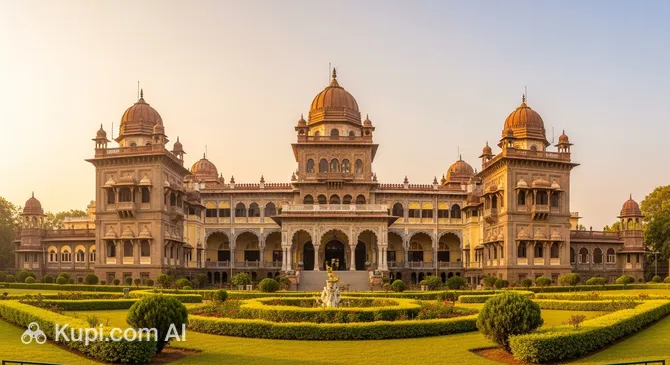
Laxmi Vilas Palace
Laxmi Vilas Palace. Иллюстрация. Источник: Kupi.com AI

The exterior of the palace represents an amazing synthesis of cultures. Its appearance harmoniously intertwines elements of Indian, Islamic, and British architecture, creating the unique Indo-Saracenic style. The facade of the building, decorated with fifteen majestic domes, stretches for 500 feet, striking the imagination of every guest with its monumentality.

The palace space is clearly divided into functional zones: on the left is the ceremonial Durbar Hall (throne room), the central part is occupied by the Maharaja's private quarters, and on the right is the zenana—rooms traditionally intended for women. Today, this complex is a vital cultural landmark of the state of Maharashtra, attracting travelers with its royal grandeur.

Contacts

To plan your visit to this majestic place, it is helpful to have up-to-date information about its location at hand.

We recommend confirming the possibility of visiting the interior halls in advance, as the palace remains a private residence.

How to contactContact
AddressP6JQ+QJ6, Kagalwadi, Kasaba Bawada, Kolhapur, Maharashtra 416006, Индия

What to Do

The highlight of your visit will be the famous Durbar Hall. This throne room is striking for its size and unique roof construction, which is supported by a complex system of massive beams without the use of central columns. Here, you can spend hours admiring the floor mosaics, stained glass imported from Belgium, and the intricate plasterwork decorating the walls.

It is interesting to observe how the latest technologies of the late 19th century were implemented in the palace interiors. Laxmi Vilas Palace was one of the first buildings in India to have electricity and elevators installed, which was considered the height of luxury at the time. You can see how European comfort (such as ventilation systems) was combined with traditional Indian aesthetics.

Don't forget to pay attention to the finishing details. The walls of the building are constructed of porous red sandstone, which takes on a deep, rich hue in the sun. A walk along the facade will allow you to see the finest carvings, numerous arches, and decorative minarets that make the palace look like an illustration from an Oriental fairy tale.

Getting There

Reaching this architectural monument, located in the Kasaba Bawada district, is quite simple. If you are staying in the city center, it is most convenient to use a taxi or traditional Indian auto-rickshaws, which will take you directly to the gates of the complex.

For those traveling by private or rental car, use the address Kagalwadi, Kasaba Bawada as a landmark. The city is well-connected by a road network to other major centers in the state of Maharashtra. If you are arriving from another region, the nearest major aviation hub is in Pune, from where you can reach your destination by intercity bus or by booking a transfer.

City public transport also runs in this direction; however, for tourists, online taxi-hailing services remain the most comfortable option, allowing you to avoid difficulties with navigating city streets.

Ближайший город: Kolhapur

History & Facts

The history of this grand structure began in 1878 under the guidance of the talented British architect Charles Mant. He was a passionate proponent of the Indo-Saracenic style, which sought to reconcile and unite Hindu architectural traditions, Islamic elegance, and Victorian austerity in stone. After his death, the work was continued by engineer Robert Fellowes Chisholm, who introduced important technical innovations to the project.

One of the main features of the construction was the move away from the traditional use of wood in favor of iron to reinforce the structures. This was a revolutionary decision for the time, ensuring the palace incredible strength for centuries to come. No expense was spared on materials: red sandstone from Agra and particularly durable blue stone from Pune were used for the facades and interiors, transported over hundreds of kilometers.

Construction was completed in 1890, turning the complex into a symbol of the region's prosperity and modernization. The palace is closely linked to the name of Rajarshi Chhatrapati Shahu Maharaj, an outstanding reformer who was born here. Notably, the building was designed from the start not as a fortress, but as a luxurious home for a large family, which is reflected in its open and welcoming layout.

Time Needed

To leisurely explore the facades, stroll through the surrounding grounds, and peek into the halls open to the public, tourists usually need about 2–3 hours. This is quite enough time to admire the delicate stone carvings and appreciate the scale of the Durbar Hall.

If you are interested in architectural photography or art history, it is worth setting aside a little more time. The morning and pre-sunset hours are ideal for seeing how the sunlight plays on the red sandstone walls, creating unique visual imagery.

Working Hours

The palace welcomes guests from Tuesday to Sunday. The doors of the complex are open for visits from 10:00 AM to 5:00 PM. Please note that the attraction is closed to tourists on Mondays.

Since the palace is a private property, the operating schedule may change due to official events or national holidays. It is recommended to check for current information on the official website or verify details with local guides before your trip.

DayWorking hours
понедельникЗакрыто
вторник10:00–17:00
среда10:00–17:00
четверг10:00–17:00
пятница10:00–17:00
суббота10:00–17:00
воскресенье10:00–17:00

Nearby

A visit to the palace can be easily combined with exploring other interesting sites in the city. A walk around the area will allow you to better feel the atmosphere of the region and see how history intertwines with modernity.

NameDistance
Bawada Misal0.4 km
New Palace1.6 km
Kolhapur Zoo1.6 km
Krishna Inn – The Green Hotel2.6 km
Chhatrapati Maharani Tarabai Statue3 km
Sayaji Hotel Restaurant3.3 km
DYP City Mall3.4 km

Reached the end of the page?

That means the route is fully explored