Support

Leh Palace

About

Towering over the old town on Tsemo Hill, the majestic Leh Palace serves as the primary symbol of the Ladakh region in India. This historical monument in the city of Leh is one of the most recognizable landmarks, largely due to its striking resemblance to the famous Potala Palace in Lhasa, Tibet.
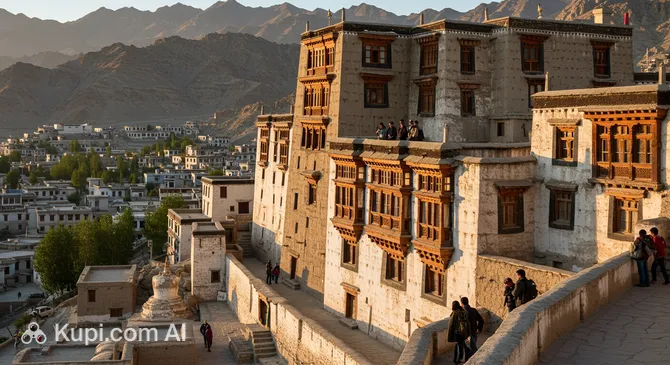
Leh Palace
Leh Palace. Иллюстрация. Источник: Kupi.com AI

The nine-story building was constructed according to the canons of traditional Himalayan architecture using stone, wood, and clay. This construction not only gives the palace a rugged and monumental look but also ensures remarkable durability in high-altitude conditions. The interior is a labyrinth of corridors, living quarters, and spacious halls once occupied by members of the royal family.

In addition to the living quarters, Buddhist temples and chapels hold an important place in the palace structure. They still house ancient wall paintings and priceless religious relics, turning the building into more than just an architectural monument, but a vital site of cultural and spiritual heritage for the region.

Contacts

For planning a visit to this architectural landmark, it is helpful to have the exact coordinates on hand. The palace is located in the historical part of the city, and its monumental silhouette is visible from almost anywhere in the center.

How to contactContact
AddressNamgyal Hill Leh Jammu and Kashmir, Leh, 194101

What to Do

The main reason to climb up to the palace is the opportunity to walk through its historical galleries and floors, where literally every stone breathes history. Visitors can explore ancient halls and rooms, imagining what the daily life of monarchs looked like hundreds of years ago. The inner temples, decorated with bright frescoes and ancient statues that have been perfectly preserved to this day, deserve careful inspection.

The open terraces make a special impression. From a bird's-eye view, an incredible panorama opens up over the entire Indus River valley, the snow-capped peaks of the Himalayas, and the maze of streets in the old town. This spot is considered one of the best locations for photography in the entire region, especially in the glow of the pre-sunset sun.

For curious travelers, small museum exhibits are organized inside the palace. Here you can see a collection of royal jewelry, everyday items, and traditional costumes that help you better understand the rich culture and unique traditions of the Ladakhi people.

Getting There

The site is located on Namgyal Hill, right in the heart of the city. Most travelers prefer to reach it on foot from the Main Bazaar. A walk through the narrow, meandering streets of the old quarter takes about 15–20 minutes, turning an ordinary climb into a fascinating excursion through historical residential areas.

For those arriving from other regions, the city's airport is the main transport hub, with regular flights from Delhi, Manali, and Srinagar. From the airport to the central part and the foot of the hill, it is most convenient to take a taxi. Although there is no metro or extensive bus network in the city itself, the compact layout makes it easy to navigate and move between key points on foot or by rented transport.

Ближайший город: Leh

History & Facts

Construction of this majestic citadel began in the mid-16th century at the initiative of King Jamyang Namgyal. However, Leh Palace only acquired its final appearance, as we know it today, in the early 17th century under his son, King Sengge Namgyal. For a long time, the building served as the primary residence of the ruling dynasty and was a living symbol of the independence and prosperity of the Kingdom of Ladakh.

During its heyday, the city was a vital trade crossroads on the route between Tibet and Kashmir. The palace served not only as an administrative center but also as a powerful defensive structure. Interestingly, its architectural style significantly influenced subsequent construction in the region, becoming the standard for Tibetan architecture of that time.

The building's history was full of trials: in the 19th century, it was seriously damaged during enemy sieges. As a result of the damage, the royal family was forced to move to a residence in the village of Stok, located on the other side of the Indus River. After decades of neglect, thanks to the efforts of restorers, the palace was restored and today is once again open to those who wish to touch the secrets of ancient monarchs.

Time Needed

To fully explore all nine levels of the palace, look into the ancient halls, and study the frescoes in the temples, it usually takes between 1.5 and 2.5 hours. This is enough time to soak in the atmosphere of the place at a leisurely pace and take great photos against the mountain backdrop.

If you are interested in architectural history or plan to wait for the perfect lighting for panoramic shots of the city, your visit may take longer. Many tourists prefer to come here in the afternoon, when the soft sunlight especially effectively emphasizes the texture of the old stone and clay walls.

Working Hours

You can visit this historical monument any day of the week, as it is open to tourists daily. Official opening hours are set from 7:00 AM to 7:00 PM, which makes it possible to come here both in the early morning and at sunset.

It is worth considering that the schedule may be slightly adjusted depending on the time of year and weather conditions. Travelers are advised to check information locally, especially if planning a visit during the winter period when daylight hours in the mountains are significantly shorter.

7:00 – 19:00

Nearby

Exploring the surroundings of Tsemo Hill allows tourists to get a complete picture of life in the ancient capital of Ladakh. Its proximity to other historical and spiritual sites makes this area ideal for a long walk filled with discoveries and picturesque views.

NameDistance
Hotel Singge Palace0.6 km
The Bodhi Tree Hotel0.7 km
Hotel Samaya0.7 km
Downtown Cafe & Bar0.8 km
Tsas1.4 km
Shanti Stupa1.4 km
Zorawar Fort1.8 km

Reached the end of the page?

That means the route is fully explored