Support

Arulmigu Subramaniya Swami Temple

About

Arulmigu Subramaniya Swamy Temple, also known as the Murugan Temple, is an important Hindu sanctuary located in the ancient city of Madurai, in the state of Tamil Nadu, India. This temple is dedicated to Lord Murugan, the revered son of Lord Shiva, and is one of the six holy abodes of Murugan in Tamil Nadu, making it a key pilgrimage site. The temple is an outstanding example of South Indian temple architecture, partially carved into the rock.

According to legend, this is the very place where Lord Murugan defeated the demon Surapadman and married the goddess Devasena. This gives the temple a special aura and makes it a popular location for wedding ceremonies. The sanctuary's uniqueness also lies in the fact that, alongside Murugan, other important deities such as Shiva and Vishnu are worshipped here, with their shrines facing each other—a rare occurrence in Hindu temples.

The Arulmigu Subramaniya Swamy Temple is an integral part of the spiritual landscape of Madurai, known as the "City of Temples." It stands alongside such famous shrines as the Meenakshi Amman Temple and the Arulmigu Koodal Azhagar Vishnu Temple. A visit to this temple allows you not only to touch ancient history and religion but also to experience the living atmosphere of devotion that attracts both believers and tourists from all over the world.
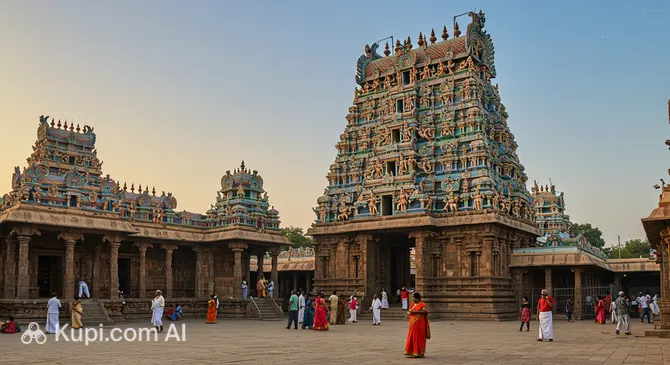
Arulmigu Subramaniya Swami Temple. Illustration.
Source: Kupi.com AI

Traveler photos:

Contacts

For the most up-to-date information on opening hours, visiting rules, and special events, it is recommended to visit the official website of the temple or contact the administration directly. This will help you plan your visit effectively and avoid any unforeseen changes to the schedule.

How to contactContact
Address146a, Periya Ratha Veethi, Thiruparankundram, Tamil Nadu 625005, India
Phone number+91 1800 4253 1111
Websitehrce.tn.gov.in

What to Do

Visiting the Arulmigu Subramaniya Swamy Temple is an opportunity to dive deep into the spiritual and cultural life of South India. The main thing to do here is observe traditional Hindu rituals or even participate in them. Regularly held pujas (prayer ceremonies) dedicated to Lord Murugan create a special, spiritual atmosphere. Pilgrims and tourists can witness the colorful rites that are an essential part of the living faith in this region.

Beyond the religious experience, the temple is of great interest to art and architecture lovers. It is a wonderful chance to get acquainted with the characteristic features of the Dravidian style. Visitors can study the intricate sculptural images and detailed bas-reliefs decorating the walls and halls of the sanctuary. Each element here tells its own story, providing a better understanding of the region's rich culture and mythology.

A visit to the Murugan Temple is easily combined with exploring other religious and historical treasures of Madurai. For example, many tourists include it in their itinerary alongside a visit to the world-famous Meenakshi Amman Temple, located in the heart of the city. Such a comprehensive tour allows for a complete understanding of Madurai as one of the most important spiritual centers of South India.

Getting There

The Arulmigu Subramaniya Swamy Temple is located in the city of Madurai, which is an important cultural and transport hub in the state of Tamil Nadu, India. Reaching the city is quite simple. Madurai has an airport located about 12-15 km from the center, serving domestic flights. Additionally, the city is connected by rail to all major Indian cities, and the railway station is conveniently located in the center. There are also four main bus terminals from which you can travel to almost anywhere in South India.

Upon arrival in Madurai, you can reach the temple by local public transport or taxi. The most popular and affordable ways to get around the city are buses, auto-rickshaws, and taxis. The trip from the city center or the railway station does not take long. For convenience, you can hire a taxi or auto-rickshaw for a few hours—this will allow you not only to visit the Arulmigu Subramaniya Swamy Temple but also to include other famous attractions in your itinerary, such as the grand Meenakshi Temple.

Nearest city: Madurai

History & Facts

The history of the Arulmigu Subramaniya Swamy Temple is closely linked to the ancient history of Madurai itself, which is mentioned in Tamil literature dating back to the Sangam period. It is believed that the temple's original rock-cut architecture was created during the reign of the Pandya dynasty in the 6th century, making it one of the oldest shrines in the region. This site is not just a religious landmark but a part of the rich heritage of a city that has been an important spiritual center of South India for centuries.

Throughout its long history, the temple has enjoyed the patronage of various ruling dynasties that contributed to its development. Following the Pandyas, significant additions were made during the rule of the Nayaks in the 16th century, who were renowned for their contributions to temple architecture throughout Tamil Nadu. These rulers not only expanded and decorated existing shrines but also promoted the prosperity of arts and culture, which is reflected in the magnificent halls with carved pillars that can be seen in the temple today.

Thus, the Arulmigu Subramaniya Swamy Temple stands as a living testament to centuries of religious tradition and architectural mastery. It reflects the transition of eras and styles, from the early rock-cut architecture of the Pandyas to the exquisite additions of the Nayak era. For visitors, it offers a unique opportunity to touch authentic history carved in stone and experience the cultural depth that has been shaped here for nearly fifteen hundred years.

Time Needed

For most visitors wishing to get a general overview of the Arulmigu Subramaniya Swamy Temple, the visit will take approximately 1-2 hours. This time is usually sufficient to leisurely walk through the main halls, appreciate the unique rock-cut architecture of the sanctuary, and feel its spiritual atmosphere. Such a visit will provide a complete impression of this important religious center.

However, if you have a deep interest in Dravidian architecture, mythology, or wish to observe religious ceremonies, it is worth setting aside more time. Art enthusiasts can spend up to three to four hours here, studying the detailed bas-reliefs and sculptures. Additionally, if your visit coincides with a puja (prayer service) or a major festival, the visit may take longer, but it will offer an unforgettable experience of total immersion in the local culture.

Working Hours

The Arulmigu Subramaniya Swamy Temple is open to visitors year-round and operates daily, but with a midday break. Morning visiting hours are from 5:30 AM to 1:00 PM. The temple then closes for a few hours and reopens its doors to devotees and tourists in the evening, from 4:00 PM to 9:00 PM. This break is traditional for many temples in India, so it is worth considering when planning your visit to Madurai.

Special advance booking is generally not required for a standard visit. However, be prepared for queues, especially during major festivals such as Skanda Sashti (October-November) or Panguni Uthiram (March-April). During these periods, the temple attracts a huge number of pilgrims. To avoid large crowds, it is best to visit on weekdays. In any case, it is recommended to check the current schedule on the official temple website or via contact numbers before your trip, as opening hours may change during special rituals and holidays.

5:00 – 13:00, 4:00 – 20:30

Nearby

Visiting the Arulmigu Subramaniya Swamy Temple is just one part of an exciting journey through Madurai. To fully experience the atmosphere of this ancient city, it is worth exploring its surroundings. Discovering nearby attractions will allow you to delve deeper into the region's history and culture, seeing the diversity of its architectural styles and religious traditions.

The city of Madurai, often called the "City of Temples," offers many interesting sites located very nearby. Each of these attractions possesses its own unique atmosphere and history, complementing the experience of visiting the main temple. Below is a list of some of these sites along with their distances.

NameDistance
Samanar Hills5.3 km
Koodal Azhagar Temple6.1 km
Madura Bags6.2 km
Arulmigu Immaiyilum Nanmai Tharuvar Temple6.2 km
Heritage Madurai6.4 km
The Banyan Restaurant6.5 km
Meenakshi Amman Temple6.9 km

Have you reached the end of the page?

So the route has been studied inside and out