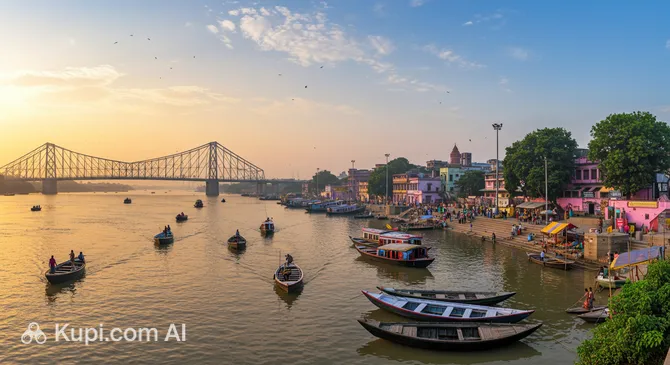
Situated on the eastern bank of the great Hooghly River, Naihati is a vibrant industrial and cultural center of the state of West Bengal in India. A part of the Kolkata Metropolitan Area, this city harmoniously combines the dynamics of a modern industrial hub with the charm of old Bengal. With a population of about 217,900, Naihati is one of the key residential and commercial suburbs of the metropolis, while still maintaining its unique identity.
Naihati. Illustration.
Source: Kupi.com AI
The city is inextricably linked to the rich history of the region: founded in 1869, the Naihati municipality is one of the oldest in the North 24 Parganas district. A special source of pride for locals is that Naihati is the birthplace of the famous writer Bankim Chandra Chattopadhyay, the author of "Vande Mataram," the country's national song. A walk through the city will allow you to see historical jute and paper mills that once laid the foundation for its economic prosperity.
While Naihati is not a typical glitzy tourist resort, it attracts travelers with its authenticity. Here, you can immerse yourself in the daily bustle of Indian markets, enjoy views of the river, and feel the rhythm of life of Bengal's real working class. Visiting this city is a great opportunity to see India without embellishment, touch its literary heritage, and experience the hospitality of the local people.
Weather Overview
A typical tropical savanna climate prevails in Naihati, characterized by three distinct seasons. Summer, lasting from March to May, can be very hot and humid, with the thermometer often rising above +35°C. During this period, humidity increases significantly due to the proximity of the Hooghly River, which makes walking during the daytime quite tiring.
The monsoon season arrives in June and continues until October, bringing heavy rains and temporary relief from the heat. July and August are traditionally considered the rainiest months. If you are planning a trip, keep in mind that the weather in the city at this time can affect transport operations. Winter, starting in November and lasting until February, is the most pleasant time for a visit: average temperatures are a comfortable +19°C...+24°C, and the days are dry and sunny.
The most favorable period to visit Naihati is from October to March. At this time, the city's climate is most conducive to long walks and sightseeing of historical attractions. The air becomes cleaner, and the absence of exhausting heat allows you to fully enjoy the atmosphere of this distinctive industrial center.
Average monthly temperature
Average monthly precipitation
Interesting Facts
Literary Cradle: Naihati is the birthplace of Bankim Chandra Chattopadhyay, an outstanding writer and poet whose work "Vande Mataram" became the national song of India.
Historic Municipality: The local government was established here as early as 1869, making the local municipality one of the oldest in the state of West Bengal.
Etymology of the Name: It is believed that the city's name comes from the Bengali phrase "Naya Hati," which translates to "new market," indicating its long-standing role as a trading post.
High Density: With a relatively small area of about 11.5 km², the population density in Naihati exceeds 18,000 people per square kilometer, creating an atmosphere of an incredibly busy city.
Industrial Heritage: The city is historically famous for its massive jute and paper mills, which largely determined its appearance and economic structure.
How to Get There
Due to its location within the Kolkata agglomeration, Naihati enjoys excellent transport accessibility. The main and fastest way to get here is by rail. The city serves as an important junction linking various parts of the state, and a commuter train journey from central Kolkata usually takes about an hour. If you are planning a visit, useful information about routes can be found in the section on how to get to the city.
For international travelers, the nearest gateway to the region is Netaji Subhash Chandra Bose International Airport (IATA: CCU), located approximately 40 kilometers from the city. A taxi or bus ride from the airport can take anywhere from an hour and a half to two hours, depending on the traffic situation, which can be quite unpredictable in Bengal due to heavy traffic on the bridges.
Naihati Junction railway station is the beating heart of the city. The station accepts trains from Kolkata, Barrackpore, and other major settlements. If you prefer road transport, the city can be reached via the NH12 highway or Grand Trunk Road (GT Road), although you should account for possible traffic jams during peak hours.
Station
Passenger traffic
Distance
Howrah railway station
21
35 km
Jashore Junction railway station
5
86 km
Durgapur railway station
7
131 km
Rajshahi Railway Station
3
166 km
Kamalapur railway station
11
225 km
Main Attractions
Although Naihati is primarily known as an industrial center, there are several locations of interest for the curious traveler. One of the main points of attraction is the Bankim Bhavan Research Foundation (the ancestral home and museum of Bankim Chandra Chattopadhyay). This is the birthplace of the great man of letters where the famous song "Vande Mataram" was composed; it attracts history and literature lovers from all over the country wishing to honor the memory of the national hero.
For those seeking spiritual peace, a visit to Ghosepara is a must. It is closely associated with the name of the prominent yogi and guru Sri Sri Paramahansa Yogananda. The atmosphere here is steeped in tranquility and holds great religious significance for followers of his teachings. Another important landmark is Naihati Railway Station itself—not just a transport hub, but one of the oldest and busiest historical buildings in the region, preserving the spirit of the colonial era.
The Hooghly River bank is rightfully considered a natural attraction of the city. It is pleasant to take a walk here at sunset, watching the flow of the water and the daily life of the boatmen. It is also worth looking into the local markets, for example, near the main GT Road. While not an architectural monument, this is where you can feel the true flavor of Naihati, seeing an endless variety of goods, fabrics, and handicrafts from local artisans.
Local Cuisine
The cuisine of Naihati is a real paradise for lovers of authentic Bengali flavors. Fish caught directly from the Hooghly River takes center stage on the table. Be sure to try Machher Jhol—a traditional fish curry with spices served with fragrant rice. Local chefs masterfully use mustard oil and the "panch phoron" spice blend, which gives the dishes a distinctive and memorable taste.
Bengal is famous for its desserts, and Naihati is no exception. In local confectioneries (mishti bhandar), it is worth tasting the delicate Rosogulla balls soaked in syrup and the cottage cheese dessert Sandesh. These sweets are prepared here according to traditional recipes and are considered some of the best in the district. To complement the meal, locals often drink sweet Masala tea, sold in small clay cups called "bhar" on every corner.
The city's culinary scene is best represented by street stalls and small family restaurants located near the markets. Here you can try Luchi (deep-fried flatbreads) with vegetable curry or hearty Kati Rolls. The atmosphere in such establishments is simple and friendly, and the food is always fresh and prepared right in front of you, making the immersion into the local food culture particularly pleasant.
Travel Tips
Visiting Naihati will allow you to see the real, non-tourist India, and to make your trip comfortable, we have prepared several practical recommendations.
Clothing and Seasonality: The best time to visit is from October to March when the weather is mild. Choose clothing made from lightweight natural fabrics. When visiting temples or the Bankim Bhavan museum, it is recommended to cover your shoulders and knees as a sign of respect for local traditions.
Transport Matters: Use local trains for trips from Kolkata, and rely on rickshaws within the city. If you want more comfort, call a taxi via Uber or Ola apps—this will save you from the need to bargain.
Finance and Payment: Always carry a supply of cash Rupees in small denominations. Cards are accepted only in large stores; in local markets and for rickshaws, you will only need cash.
Health: Drink only bottled water from well-known brands. Due to the city's industrial status, there may be dust in the air, so people with sensitive respiratory systems should carry a light mask.
Communication: The main language here is Bengali, but many understand Hindi and basic English. Learning a few phrases like "Namaskar" (a greeting) will easily win over the local residents.
Local Etiquette: It is customary to remove your shoes when entering private homes or some shops. Be prepared for increased attention—foreigners are rare guests here, so people may look at you with curiosity.
What to Avoid: Do not plan important movements during peak hours (8:00–10:00 and 17:00–19:00), as the station and roads turn into a veritable ocean of people.
Environmental Tip: Try not to visit the industrial outskirts of the city in the evening—there is little lighting and no tourist infrastructure.
May your acquaintance with Naihati be filled with interesting discoveries and warm encounters with the hospitable culture of Bengal!
Entertainment & Nightlife
Entertainment in Naihati is predominantly traditional and community-oriented. You won't find noisy nightclubs or neon discos here, as the city lives at the pace of a working suburb. The main centers of activity in the evening are the local markets and the walking areas by the Hooghly River, where residents gather to socialize, discuss news, and take family strolls.
The main source of vibrant emotions in the city is the numerous festivals and cultural events. During the celebrations of Durga Puja or Kali Puja, the streets of Naihati are transformed: decorative pandals are erected, music plays, and the city is filled with festive lights. This is the best time to see folk dances, listen to traditional songs, and immerse yourself in the atmosphere of a Bengali holiday, which replaces any modern attractions.
For those still seeking classic evening entertainment, cinemas, or concert venues, the best solution is to head to neighboring Kolkata, located just an hour's drive away. The region's main nightlife is concentrated there, with world-class bars and restaurants. In Naihati itself, the night is best spent enjoying a quiet dinner at one of the local eateries, trying traditional sweets and observing the unhurried flow of life.
Parks & Museums
In the conditions of dense industrial development in Naihati, finding quiet green zones can be a bit of a quest. The primary place for outdoor recreation for residents is the Hooghly River bank. Although there are no classic parks with manicured lawns, the embankment is a favorite spot for evening promenades where one can enjoy the river breeze and views of passing boats away from the noisy factory quarters.
In terms of cultural enrichment, the city's main attraction is the Bankim Bhavan Research Foundation. This literary memorial complex, located in the writer's ancestral home, carefully preserves the memory of the author of "Vande Mataram." Here, visitors can see the writer's personal belongings, rare editions of his books, and learn more about the period of the Bengal Renaissance, which had a huge impact on the culture of all of modern India.
Despite the lack of major state galleries, the city is interesting for its temporary exhibitions and cultural spaces that open during numerous festivals. At such moments, the streets turn into a kind of open-air museum. For large-scale park complexes and art collections, residents and guests of the city most often head to Kolkata; however, Naihati charms specifically with its intimacy and close connection to a great literary past.
Getting Around
The public transport system in Naihati relies on three main pillars: the railway, bus services, and nimble rickshaws. The Naihati railway junction is a key infrastructure element through which hundreds of commuter trains pass, connecting the city with Kolkata and the northern districts of the state. Trains run frequently; however, tourists should avoid traveling during peak hours (early morning and evening) when the carriages can be very overcrowded.
For traveling short distances within the city and trips to the markets, auto-rickshaws and cycle-rickshaws are indispensable. This is the most popular and authentic way to get around, allowing you to easily maneuver through narrow alleys and traffic jams. It is best to agree on the price of a rickshaw ride in advance. Municipal and private buses also run along the main roads, connecting Naihati with neighboring settlements such as Barrackpore or Halisahar.
In recent years, modern taxi-hailing services such as Uber or Ola have become available in the city, which significantly simplifies travel for those who value comfort and fixed prices. Payment for municipal transport is made in cash; train tickets can be purchased at the station ticket offices or through the Indian Railways mobile app. Be prepared for the fact that traffic in the city can be chaotic, and the air in industrial zones can be dusty, so it is better to combine walks along main thoroughfares with short rickshaw rides.
Accommodation
The hospitality infrastructure in Naihati is primarily oriented toward business travelers and those visiting for family matters rather than mass tourists. The bulk of accommodation options consists of budget hotels and guesthouses, concentrated mainly around the railway station and major shopping streets. These options offer basic amenities at very affordable prices, which is typical for industrial cities in the region.
If you are looking for more comfortable conditions or modern hotel chains, you should look into neighboring areas or consider staying in Kolkata and using Naihati as a destination for day trips. Within the city itself, small private pensions are popular, where you can feel a sense of home comfort and taste authentic homemade Bengali food.
When planning a trip, especially during major religious festivals like Durga Puja, it is recommended to book accommodation in advance as demand for guesthouse rooms increases sharply. Most bookings are made through popular local services or directly on-site, although you can always find a few budget hotels operating 24/7 in the city center.
Nearby Cities
The city of Naihati serves as an excellent starting point for exploring the surroundings and small historical towns located along the banks of the Hooghly River. Just a few kilometers away is Hooghly-Chinsurah, a city with a rich colonial past where traces of Dutch and Portuguese influence remain, including the famous Bandel Church—one of the oldest in West Bengal.
Only 4 kilometers away is the neighboring Halisahar, known for its picturesque river views and religious shrines. Also of interest is a trip to Bhatpara, which is famous for its traditions of Sanskrit study and ancient temples. These places can be reached very quickly by suburban train or even by rickshaw, making them ideal destinations for short excursions.
Exploring these small towns allows for a deeper understanding of the region's history and an opportunity to see how different cultures have intertwined here over the centuries. Each destination offers unique views, old architecture, and a chance to take a break from the bustle of industrial Naihati.
Shopping & Souvenirs
Shopping in Naihati is primarily about visiting colorful local markets where life teems from early morning. The main shopping hub is considered the area around the railway station and the adjacent GT Road. There are no huge mirrored shopping malls here, but instead, there is an abundance of shops with traditional Indian goods: from bright saris and hand-loomed fabrics to everyday clothing and high-quality leather products.
Special attention should be paid to the food markets. Naihati is famous for its fresh vegetables, fruits, and, of course, fish. Walking through the rows will allow you not only to buy exotic fruits but also to see the real life of the Bengalis. As souvenirs from the city, people often bring back famous Bengali sweets in gift packaging, as well as products of local craftsmen, including traditional ceramics and jute crafts, the production of which is historically developed in this region.
Shops in the city usually operate from 10:00 to 20:00, but many stalls close for a lunch break. Payment in most outlets is made in cash, although larger stores are starting to accept bank cards and electronic payments. Don't forget that friendly bargaining is appropriate and even expected in the markets of Naihati—it is part of the local communication culture that will help you not only save money but also establish contact with the sellers.