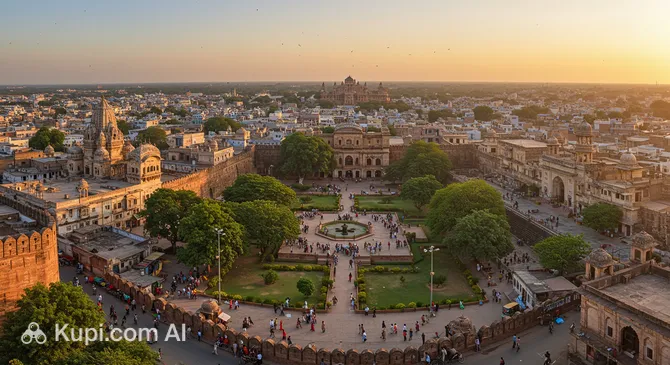
Located in the state of Uttar Pradesh, Rampur is a unique blend of industrial rhythm and the rich heritage of the Nawab era. Founded in 1775 by Nawab Faizullah Khan, the city served as the capital of the princely state of the same name for a long time. Today, it is a bustling commercial and administrative center of India, home to over 325,000 people, with an atmosphere steeped in the spirit of ancient traditions and crafts.
Rampur. Illustration.
Source: Kupi.com AI
Geographically, the city is nestled along the banks of the Kosi River, approximately 24 kilometers from neighboring Moradabad. Exploring the history of Rampur, travelers will discover that it was once known as Mustafabad. Despite its industrial leanings, the city maintains its cultural significance, attracting connoisseurs of Islamic architecture and rare book collections.
The city's main treasure is considered the famous Rampur Raza Library, which houses priceless manuscripts, and the remains of the old fort. Although Rampur is often perceived as a transit point, its authentic markets and magnificent Nawab cuisine make it well worth a stop. We invite you to immerse yourself in the slow pace of this historical center and discover the hospitality of Northern India.
Weather Overview
The city of Rampur is under the influence of a subtropical climate, characteristic of the Gangetic Plain. This means travelers should prepare for significant seasonal temperature fluctuations. Summer here can be truly sweltering: in May and June, the thermometer often rises to 37–45°C. During this period, the city can also be enveloped in dust brought by winds from the fields.
From July to September, monsoons dominate the region. Particularly heavy rainfall occurs in July and August (averaging about 250–300 mm per month), which brings long-awaited coolness but can make moving around difficult due to humidity. Winter in Rampur, by contrast, is very pleasant and mild: in December and January, the average temperature is around 14–15°C, although it can cool down to 8°C at night. To better plan your visit, we recommend checking the weather in the city by month in advance.
Expect a hot and dry start to summer, followed by intense rains, and cool sunny winters with occasional fog. The most comfortable time to visit Rampur is considered the period from October to March, when stable clear weather sets in, ideal for sightseeing and walking through local bazaars.
Average monthly temperature
Average monthly precipitation
Interesting Facts
Princely Capital: Before joining independent India in 1949, Rampur was the capital of an influential princely state whose ruler was entitled to a 15-gun salute.
Weapon Craftsmanship: The city is famous nationwide for the production of the "Rampuri chaku"—a specific type of folding knife that has become a true symbol of local crafts and even featured in Indian cinema.
Treasury of Knowledge: The Rampur Raza Library holds over 3,000 rare specimens of Islamic calligraphy, as well as unique palm-leaf manuscripts in Tamil and Telugu.
Musical Heritage: The city is considered the cradle of a specific vocal and instrumental school (the Rampur-Sahaswan gharana), which developed under the patronage of enlightened Nawabs.
Religious Character: Rampur stands out among many cities in the region for its demographic composition—about 70% of its population is Muslim, which leaves a deep mark on the local architecture and gastronomy.
How to Get There
Rampur is a significant transport hub in the state of Uttar Pradesh, making it easily accessible for travelers exploring the northern part of the country. The city is conveniently located at the intersection of major roads and railways. If you are planning a trip from Delhi, the journey by train or bus will take about 4–6 hours, depending on the traffic on the NH9 highway. For more detailed information about routes, it is worth looking at the special section on how to get to the city.
The city does not have its own airport serving regular commercial flights. Travelers are usually advised to use Indira Gandhi International Airport in Delhi or the regional airport in Pantnagar, which is about 100 kilometers away. From there, you can reach the center of Rampur by taxi or intercity bus.
Rail travel is the most convenient and popular way to visit the city. Rampur Junction station regularly receives trains from Delhi, Lucknow, Moradabad, and Bareilly. The station is located in a convenient part of town, from where major attractions can be quickly reached by auto-rickshaw. Keep in mind that traffic jams near the station are possible during peak hours, so it is worth budgeting extra travel time.
Station
Passenger traffic
Distance
Rudrapur City railway station
3
40 km
Bareilly Junction railway station
7
64 km
Aligarh railway station
6
137 km
Ghaziabad railway station
10
156 km
Anand Vihar Terminal
11
168 km
Main Attractions
Even though Rampur is primarily an administrative center, its architectural heritage can surprise the curious traveler. One of the most significant religious landmarks in the city is the Jama Masjid Rampur. This majestic mosque, with roots dating back to the 17th century, impresses with its monumentality and serves as an important spiritual center for the local population, which is predominantly Muslim.
For those wishing to honor the memory of India's great figures, the Gandhi Samadhi is a must-visit. This memorial site dedicated to Mahatma Gandhi offers guests an atmosphere of peace and reflection amidst the urban bustle. It is also worth noting the historic Rampur Fort, founded in 1775, which, despite the passage of time, still preserves the grandeur of the Nawab era.
A special place on the city's cultural map is occupied by the Hamid Manzil palace, which houses the Rampur Raza Library. This institution of national importance attracts scholars and tourists from all over the world thanks to its collection of rare examples of Islamic calligraphy and ancient manuscripts on palm leaves. A walk through the central squares around the fort will allow you to feel the real rhythm of the city and see the old gates that once served as the main entrances to the citadel.
Local Cuisine
A gastronomic journey to Rampur is, first and foremost, an introduction to the exquisite cuisine of the Nawabs. Local culinary traditions were formed under the strong influence of the Mughlai style but acquired their own unique features. The city's main specialty is considered Rampuri kebabs, which are famous for their tenderness and rich bouquet of spices. You should also definitely try the local biryani, which differs from its counterparts in other regions due to its special aroma and rice preparation method.
For those with a sweet tooth, the city offers a wide selection of traditional Indian sweets, while as a refreshing drink, locals prefer tea or various fruit sherbets. The food culture here is closely tied to street food and small family-run establishments located around the central markets. If you prefer a more familiar restaurant format, you can visit Zaika-E-Punjab, which serves popular North Indian dishes.
For those missing international cuisine, chain outlets such as Biggies Pizza are represented in the city. Despite the absence of world-renowned restaurant names, the food in Rampur is valued by gourmets for its authenticity and loyalty to ancient recipes. Walking through the bazaars around the fort, don't miss the chance to try dishes straight from the grill—that's where the true taste of this historic city is hidden.
Travel Tips
A visit to Rampur will give you plenty of impressions if you prepare in advance for the characteristics of this colorful Indian city. Here are some tips to help make your trip more comfortable and safe.
Clothing and Dress Code: Choose clothes made of light natural fabrics (cotton, linen) to better tolerate the heat. When visiting the Jama Masjid and other religious sites, be sure to cover your shoulders and knees; women are recommended to carry a scarf.
Getting Around Town: The best way to get around is by auto-rickshaws. They are maneuverable and allow you to quickly navigate through traffic jams. For longer distances, use taxis via mobile apps.
Money and Payments: The Indian Rupee (INR) is in use. Cards are only accepted in large stores and hotels, so always carry a supply of cash for markets and rickshaws. It's better to look for ATMs in the central part of the city.
Drinking Water and Health: Given the industrial nature of the city, drink exclusively bottled water and avoid ice in street drinks. Sunscreen and hand sanitizer are your reliable companions.
Communication: You can buy a SIM card from a local operator at specialized communication points; a passport and photo are required for registration. Wi-Fi is available in hotels, but its speed can be unstable.
Local Etiquette: Greet people with the traditional "Namaste" gesture. Remember that Rampur is a city with strong Muslim traditions, so show respect for local customs and avoid noisy behavior near shrines.
What to Avoid: We do not recommend walking alone in outlying industrial areas after sunset. Also, try not to photograph people without their explicit consent.
Specific Advice: If you decide to buy the famous "Rampuri chaku" knife, remember that its transport is only allowed in checked baggage when flying.
By following these simple rules, you can fully enjoy the hospitality of Rampur and its unique atmosphere. Have a pleasant trip!
Entertainment & Nightlife
The entertainment scene in Rampur is rather traditional and low-key. You won't find noisy nightclubs or large-scale concert venues typical of major metropolises here. The city's nightlife is centered around cozy local tea shops and evening markets where residents gather for leisurely conversations. Nevertheless, for fans of modern cuisine and comfortable relaxation, venues like Zaika-E-Punjab are open, where you can spend a pleasant evening with family or friends.
Daytime activities in the city are closely linked to its history and crafts. Travelers can take a stroll to sites such as Rampur Fort or the majestic Kila Gate, which serve as excellent backdrops for photography. If you're looking for more modern leisure, you can stop by Biggies Pizza or visit the Trends shopping center, where much of the youth and shopping enthusiasts congregate.
For more active nightlife and modern cinemas, locals and visitors often head to neighboring Moradabad, located just half an hour away. For safe travel in the evening within Rampur itself, it is recommended to use taxis or trusted auto-rickshaws. The city's cultural life also occasionally comes alive with poetry evenings and musical performances in the Nawab style, allowing a touch of the region's aristocratic past.
Parks & Museums
The main cultural magnet of Rampur is undoubtedly the Rampur Raza Library, located in the magnificent Hamid Manzil palace. This is not just a book repository, but a true museum of global significance. It houses priceless treasures: manuscripts, rare paintings, and unique specimens of Islamic calligraphy. A visit to the library allows you to touch the intellectual heritage of the Nawabs and see documents recognized as national treasures of India.
The historical spirit of the city is best felt during a walk to a site like Rampur Fort. Although time has not spared many of the buildings, the massive walls and majestic Kila Gate still recall the former power of the princely state. These places are a must-visit for those interested in military architecture and the history of the colonial era.
As for parks, Rampur, as a typical industrial center, does not have an abundance of organized green zones. Locals often spend time on the banks of the Kosi River, which is a natural space for outdoor recreation. Nevertheless, the area around the library and the Government College offers a bit of shade and tranquility away from the dusty commercial streets.
Getting Around
The public transport system in Rampur is typical for medium-sized cities in Northern India and is oriented toward maximum accessibility. The main means of transportation within the city are auto-rickshaws and cycle-rickshaws. This is the fastest way to cover short distances between markets, the station, and historical sites. A rickshaw ride is inexpensive, but it is worth agreeing on the price with the driver in advance, as meters are very rarely used here.
Buses are actively used to connect with surrounding areas and neighboring cities. The bus station provides regular service to Moradabad and Bareilly. It should be taken into account that during peak hours, public transport can be very crowded, and congestion often occurs on the city's main roads due to the large number of trucks heading to local sugar and cotton factories.
If you value comfort, it is best to use taxi services that can be ordered through mobile apps. This will save you from the need to haggle and ensure a more pleasant trip in the hot climate. Bicycle rental is not developed in the city, but the compact size of central Rampur allows for exploring the main attractions on foot or by budget cycle-rickshaws.
Accommodation
The accommodation market in Rampur is primarily geared toward business travelers and those making a short stopover. The majority of offerings consist of budget guesthouses and mid-range hotels. Most of them are concentrated in areas adjacent to the railway station and the historic fort, which is convenient for quick access to transport and the city's main attractions.
For those looking for more comfortable accommodation with a range of additional services, The Riverside Inn can be a suitable option. This type of hotel offers basic comfort, clean rooms, and often features its own restaurant. It should be noted that there are virtually no luxury five-star resorts in the city, so expectations should be set toward functionality and authenticity.
If your trip coincides with major holidays or official events, it is recommended to book accommodation in advance through popular international or Indian booking services. Prices for staying in Rampur remain very affordable compared to large tourist centers, and payment in small guesthouses is most often made in cash in the local currency.
Nearby Cities
Rampur serves as an excellent starting point for exploring the northern regions of Uttar Pradesh and the foothills of the Himalayas. Thanks to its location at a crossroads, the city allows travelers to easily make short trips to neighboring cultural and economic centers.
Just 25 kilometers away is the large city of Moradabad, known worldwide for its brass handicrafts and developed infrastructure. Also worth noting is Suar, a small settlement where you can get acquainted with the rural way of life in the region. If you have time for a longer trip, the famous Jim Corbett National Park is a couple of hours' drive north, offering an unforgettable wildlife safari.
For those seeking less crowded places, trips to Belwara or Shishgarh are suitable. Exploring the surroundings of Rampur will help you better understand the multifaceted character of this region, where bustling industrial zones give way to endless agricultural lands and ancient settlements.
Shopping & Souvenirs
Shopping in Rampur is primarily a journey through colorful oriental bazaars where trade goes on just as it did centuries ago. The city is not famous for huge malls, but its markets near the walls of the old fort offer goods that are hard to find anywhere else. The most famous local product is the Rampuri chaku—a traditional knife that makes an excellent and quite unusual souvenir for collectors.
Besides bladed weapons, Rampur is known for its fabrics and traditional embroidery. Local markets offer high-quality textiles, spices, and local agricultural products, as the city is a major center for grain trading. If you require a more familiar modern clothing store format, you can visit the Trends shopping center, where modern brands are represented.
Shops and stalls in the bazaars usually open around 10 AM and work until late in the evening. Payment in most outlets is made in cash, although larger stores are starting to accept cards. Don't forget to haggle in the markets—it's an important part of the local culture that will not only allow you to save money but also to better feel the atmosphere of this lively trading hub.