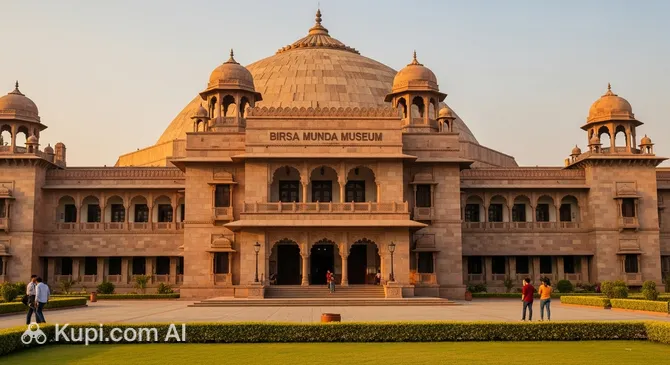
Located in the vibrant city of Ranchi, the Birsa Munda Museum is an impressive memorial complex dedicated to one of India's most revered folk heroes. The site holds deep historical significance, as the museum was established on the grounds of a former prison where Birsa Munda—the leader of a tribal uprising against colonial rule, known by the honorary title Dharti Aaba ("Father of the Earth")—was held and tragically died in the early 20th century.
Birsa Munda Museum. Illustration.
Source: Kupi.com AI
Traveler photos:
The complex combines an educational museum with a tranquil memorial park. One of its main visual highlights is the majestic 25-foot statue of Birsa Munda. Inside the museum, visitors can explore informative exhibits detailing the leader's life, his family tree, and the struggle of the region's indigenous peoples for their rights and freedom.
The preservation of authentic elements from its time as a prison gives the museum a unique atmosphere. Former cells now house busts of tribal freedom fighters, while the cell where Birsa Munda himself was imprisoned carefully preserves pots of soil brought from various corners of Jharkhand state. This site serves as a living reminder of the rich cultural heritage of the Munda and Oraon tribes.
Contacts
For your convenience, the official contact details and location of the museum are provided below to help you plan your visit with ease.
A visit to the museum offers a deep immersion into the history of tribal independence movements. Be sure to spend time at the memorial cell where Birsa Munda was held—it is the most emotionally powerful part of the exhibition. Here, you can see a collection of soil from different districts of Jharkhand, symbolizing the leader's connection to his native land.
As you walk through the galleries, you can study detailed information panels dedicated not only to Birsa Munda himself but also to other legendary figures like Sidhu and Kanhu Murmu, who led the Santhal rebellion. The visual exhibits and busts of tribal freedom fighters help bring the history of those years to life. The colossal 25-foot statue of the hero is always a central spot for photographs.
In addition to the historical section, the museum complex includes a well-maintained memorial park. It is an excellent place for a quiet stroll, where you can take a break from the city noise, reflect on what you have seen, and enjoy the atmosphere of respect for the region's past. The park harmoniously blends its educational role with a space for quiet contemplation.
Getting There
The museum is centrally located at Jail More, Ahirtoli, Ranchi. Thanks to its position near a major transport hub and the Jail More bus stop, finding it is quite easy. The most convenient way to get there is by using a taxi or the colorful Indian auto-rickshaws that operate throughout the city.
If you are arriving in Ranchi by air, Birsa Munda Airport is located approximately 10–15 kilometers from the complex. A taxi ride from the airport takes about 20–30 minutes, depending on traffic. For precise navigation, it is recommended to use GPS coordinates or online maps.
Nearest city: Ranchi
History & Facts
The history of this site is inextricably linked to the life of Birsa Munda (1875–1900), the legendary leader of the Munda people, whom his followers called "Dharti Aaba" or "Father of the Earth." He led a powerful socio-religious movement against colonial rule, calling for his people’s independence and the preservation of traditional values. Today, the museum complex is housed within the walls of the former Ranchi Jail—the very place where the revolutionary spent his final days and passed away in June 1900.
In the late 19th century, the region became a site of fierce struggle as indigenous peoples fought for their rights. Birsa Munda preached against paying rent to landlords and resisted administrative pressure. His work left a profound mark on the people of Jharkhand, a state historically known as "forest territory" and home to many unique tribal communities.
The transformation of the prison into a memorial was a significant step in preserving national heritage. The architecture of the complex was inspired by the famous Cellular Jail in the Andaman Islands, highlighting the site's importance as a monument to India's struggle for freedom.
Time Needed
To thoughtfully explore all the exhibits, read the information boards, and stroll through the memorial park, visitors usually need 1.5 to 2 hours. This is ample time to view the statues and cells and learn about the historical background.
If you have a deep interest in indigenous history or plan to take detailed photographs of the site, you might want to set aside a bit more time. The peaceful atmosphere of the park area also makes it a great place to linger and relax after touring the main museum galleries.
Working Hours
The museum is open to visitors daily, making it easy to include in any sightseeing itinerary around the city. The complex doors are open from early morning until evening.
Opening Hours:
Monday – Sunday: 10:00 AM – 7:00 PM.
10:00–19:00
Nearby
After visiting the memorial complex, it is worth taking some time to explore the surrounding area, which can further your understanding of the city's culture and daily life. Several interesting locations, including parks and specialized aquarium centers, are within walking distance or a short drive away.