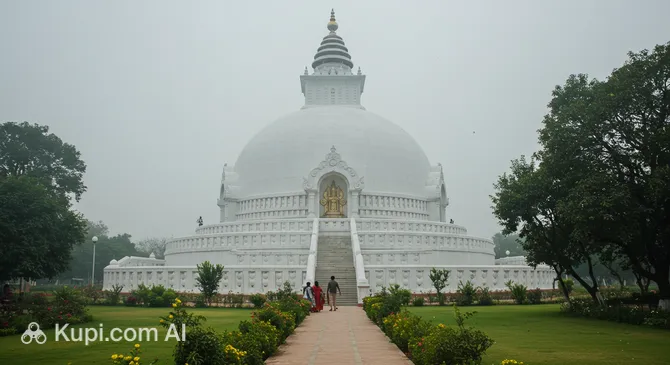
In the heart of a historical region where great empires once flourished, the Pataliputra Karuna Stupa rises. This majestic monument, located in the city of Patna, is not just an architectural ornament but a living symbol of the Buddhist revival in India. The stupa was erected in memory of the rich spiritual heritage of ancient Pataliputra and today serves as a major center of attraction for pilgrims and tourists.
Patliputra Karuna Stupa. Illustration.
Source: Kupi.com AI
Traveler photos:
The structure is a classical Buddhist stupa with its characteristic hemispherical dome, embodying peace and harmony. The complex harmoniously combines the functions of a religious site and a modern cultural space. Visitors can not only see the unique architecture but also immerse themselves in an atmosphere of contemplation while walking along the quiet paths surrounding the monument.
Of particular value is the museum located here, which houses an impressive collection of Buddhist artifacts. It contains ancient sculptures, rare manuscripts, and relics found during archaeological excavations in the state of Bihar. The exhibition vividly tells the story of Buddha's journey and how his teachings spread throughout the world, making this a must-visit for anyone interested in Eastern philosophy.
Contacts
To plan your visit to this spiritual monument, it's worth checking its location and available contact methods in advance. Pataliputra Karuna Stupa is centrally located in the city, making it easily accessible for tourists. For the most up-to-date information regarding any changes in opening hours, it is best to check on-site or through regional tourist information centers.
Begin your discovery of the complex with a slow walk around the stupa itself, admiring its monumental forms and soaking in the peaceful atmosphere. Visitors can study the symbolism of the decorative elements and appreciate the scale of this modern structure, which has become an important part of the urban landscape. A stroll through the grounds will lead you to secluded spots in the gardens, perfect for reflection or simply taking a break from the city bustle.
A mandatory part of the program is a visit to the museum of Buddhist art. Here, you can spend hours examining the details of ancient statues and learning about historical documents that reveal the secrets of India's past. The displays are designed so that even those unfamiliar with the subject can understand the key milestones in the development of Buddhism and the region's significance in world culture.
For those seeking spiritual enrichment, special meditation zones are provided. The quiet environment and the aesthetics of the space encourage inner focus. Additionally, the complex often hosts educational lectures and themed events that allow for a deeper dive into philosophical studies. Don't forget to bring your camera: the architecture of the stupa against the sunset sky looks particularly impressive.
Getting There
A journey to the city of Patna is the first step toward exploring this outstanding spiritual center. You can reach the capital of Bihar by air via Jayaprakash Narayan International Airport, which receives regular flights from major metropolises across the country. From the terminal, the stupa is most conveniently reached by taxi or a traditional auto-rickshaw; the trip takes approximately 30–40 minutes depending on traffic.
If you prefer rail travel, the city's main station (Patna Junction) is located in the immediate vicinity of the complex. This makes the site highly accessible for those arriving from other regions by train. From the station square, you can even walk to the park entrance or use one of the many rickshaws for a minimal fee.
For comfortable travel within the city, modern travelers often use ride-hailing apps like Ola or Uber, which helps avoid long negotiations over fares. City buses also run along the main streets; however, they can be quite crowded during peak hours, making a taxi the most preferred option.
Nearest city: Patna
History & Facts
The history of this site is inextricably linked with an ancient past when India was the heart of great empires. Ancient Pataliputra served as the capital of the mighty Maurya Empire, and it was from here that Emperor Ashoka the Great spread the teachings of peace and compassion. The construction of the modern stupa serves as a symbolic revival of that golden age, recalling the region's role in the formation of Buddhist philosophy.
The modern Pataliputra Karuna Stupa was designed as a tribute to this great heritage. The architects sought to blend the classic canons of Buddhist architecture with innovative construction solutions. This project emphasizes the importance of preserving cultural identity and India's commitment to maintaining its historical ties with the Buddhist world, attracting pilgrims from all corners of the planet.
Notably, the complex symbolizes "Karuna"—compassion, which is one of the central virtues in Buddhism. Every detail of the structure, from the curve of the dome to the layout of the internal halls, is filled with deep meaning. Today, this place serves not only as a museum but as a living reminder of how ideas born thousands of years ago continue to inspire people in the 21st century.
Time Needed
To explore all corners of the complex without rushing, visitors usually need about 2 to 3 hours. This is ample time to appreciate the architecture of the stupa itself, examine the exhibits in the museum, and take a leisurely stroll through the well-kept gardens. If you are passionate about religious history, it’s worth setting aside extra time to read the explanatory plaques in the museum halls.
Many come here not just for a tour, but to experience the atmosphere of tranquility. If you plan to spend time in meditation or simply want to sit longer in the shade of the trees enjoying the silence away from the city noise, your visit could last half a day. In any case, this place does not tolerate haste and invites thoughtful contemplation.
Working Hours
The Pataliputra Karuna Stupa complex welcomes guests from Tuesday to Sunday. It is important to note that Monday is a closing day when the attraction is inaccessible to visitors. On all other days, the doors are open from 9:00 AM to 7:00 PM, providing plenty of time for both morning walks and evening viewings in the rays of the setting sun.
To fully enjoy the beauty of the place and avoid the midday heat, it is best to plan your visit for the morning hours. Keep in mind that the operating hours of the museum and park area may change slightly on public holidays or during major Buddhist festivals, so it is recommended to confirm the current schedule before your trip.
Day
Working hours
Monday
Closed
Tuesday
9:00 – 19:00
Wednesday
9:00 – 19:00
Thursday
9:00 – 19:00
Friday
9:00 – 19:00
Saturday
9:00 – 19:00
Sunday
9:00 – 19:00
Nearby
Exploring the surroundings of the stupa allows you to dive deeper into the city's atmosphere and witness its many facets. Near the spiritual center, you will find both historical monuments and modern recreational spots that harmoniously complement your sightseeing itinerary.
Visiting neighboring parks and museums will help provide a more complete picture of the cultural life of Bihar. Below is a list of the most interesting sites located within a few kilometers of the Pataliputra Karuna Stupa.