Support

Ashoka Pillar, Sarnath

About

Imagine a monument that has stood guard over history for over two thousand years. The Ashoka Pillar is not just an archaeological site, but one of the most significant symbols that modern India is proud of. This ancient stone column made of polished sandstone was erected at the site of Buddha's first sermon, making it a world-class sanctuary.
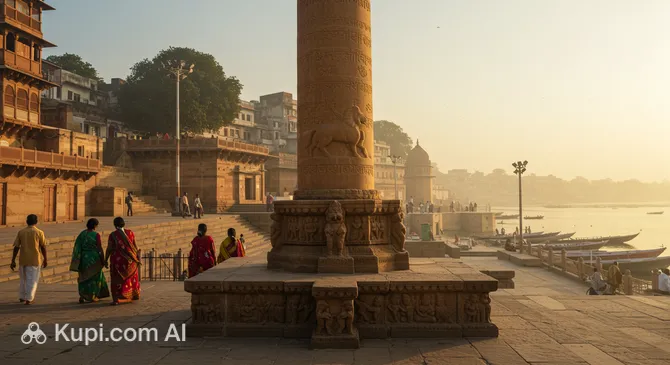
Ashoka Pillar
Ashoka Pillar. Иллюстрация. Источник: Kupi.com AI

Located in the suburbs of Varanasi, this landmark is a central part of the Sarnath archaeological complex. The pillar is famous for its unique edicts and incredibly smooth surface, which has not lost its luster over the centuries. Although time has not spared the top part of the column, its base still impresses with its power and energy.

The primary value of the monument is its historical continuity. It is the Lion Capital that once crowned this pillar which is depicted on the National Emblem of India today, serving as a reminder of Emperor Ashoka's reign and the triumph of the principles of non-violence and dharma.

Contacts

To clarify current information regarding visiting rules, you can contact the official phone number of the archaeological service. The pillar is located within a protected park in Sarnath, where staff are always on duty to help guide you to key sites.

Below are the main contact details and the exact address for your navigator:

How to contactContact
Address92JF+H3X, Dharmapala Rd, Singhpur, Sarnath, Varanasi, Uttar Pradesh 221007, India
Phone+91 522 406 1369

What to Do

Begin your acquaintance with this site by examining the lower part of the Ashoka Pillar, which is located in the open air near the ruins of the Dharmarajika Stupa. Here, you can see ancient Brahmi inscriptions up close, which preach peace and the unity of the Buddhist community. It is a wonderful place for quiet contemplation and an attempt to touch living history.

A mandatory part of the program is a visit to the Sarnath Archaeological Museum. It is there that you will see the original of the famous Lion Capital—four lions facing different cardinal directions, recognized as a masterpiece of world art. The museum halls also feature rare Buddha statues and artifacts found during excavations in the area.

Continue your walk through the archaeological park to see the majestic Dhamek Stupa, decorated with delicate Gupta-era carvings. Many visitors prefer to spend time meditating among the ruins of ancient monasteries, enjoying the silence that contrasts so sharply with the bustling streets of central Varanasi.

Getting There

Getting to this historical site is quite easy, as it is located just 10 kilometers northeast of central Varanasi. The most convenient way for a tourist is to hire a taxi or a traditional auto-rickshaw; a trip from the Cantt area will take about 20–30 minutes via Dharmapala Rd.

For those who prefer public transport, buses and shared vans depart regularly from the main Varanasi Cantt Station directly to Sarnath. You can also take a train: the nearest railway station, Sarnath Railway Station, is located just 2 kilometers from the archaeological park.

If you are arriving by plane, it is best to take a taxi from Lal Bahadur Shastri Airport (25 km), which takes about 45 minutes. Once inside the Sarnath complex, it is most pleasant to explore on foot, though you can rent a bicycle or use a golf cart to move between the stupas if desired.

Ближайший город: Varanasi

History & Facts

The history of this monument is inextricably linked to the name of the great Emperor Ashoka of the Maurya dynasty. By erecting the pillar in the 3rd century BCE, he marked his conversion to Buddhism and his desire to spread dharma. The site was not chosen by chance: it was here, in the Deer Park, that Gautama Buddha delivered his first sermon on the Four Noble Truths.

In ancient times, the pillar amazed pilgrims with its splendor. Chinese travelers Faxian and Xuanzang, who visited India in the 5th and 7th centuries, described it as a shining structure whose luster resembled polished jade. The emperor's edicts, carved in Brahmi script in the Prakrit language, are still preserved on the stone.

Unfortunately, the complex fell into decline over time, and in the 18th century, the pillar was even damaged by locals using the ancient stones as building material. It was only in the 19th century, thanks to the excavations of Alexander Cunningham, that the world saw this masterpiece again, including the famous Lion Capital, which later became the national emblem of India.

Time Needed

To leisurely explore the pillar itself and immerse yourself in the atmosphere of the Sarnath Archaeological Park, you typically need about 2–3 hours. This is enough time to examine the surviving lower part of the column, look at the ancient inscriptions, and walk to the neighboring stupas.

We recommend allocating at least 45 minutes for a visit to the Sarnath Archaeological Museum, where the original famous Lion Capital is kept. If you plan to meditate or study the monastery ruins in detail, your visit may last half a day.

Working Hours

According to official data, access to the Ashoka Pillar is available on the following schedule:

  • Monday — Saturday: Open 24 hours
  • Sunday: Closed

However, it is worth noting that the Sarnath Archaeological Park and Museum generally follow daylight hours. The museum is closed on Fridays, and the ruins look most impressive in the light of the rising or setting sun, so the optimal time for a visit is from 6:00 AM to 6:00 PM.

DayWorking hours
ПонедельникКруглосуточно
ВторникКруглосуточно
СредаКруглосуточно
ЧетвергКруглосуточно
ПятницаКруглосуточно
СубботаКруглосуточно
ВоскресеньеЗакрыто

Nearby

In addition to exploring the ancient ruins, the surroundings of Sarnath offer many opportunities for relaxation and leisure. A walk through the adjacent areas will allow you to see modern temples from various countries and enjoy green park zones.

For those traveling with family or wishing to swap the historical setting for some active recreation, several water parks and entertainment centers are available within a few kilometers:

NameDistance
Archaeological Buddhist Remains of Sarnath0.1 km
Dhamek Stupa0.2 km
Deer Park (Sarnath)0.4 km
Sarnath Buddhist Temple0.4 km
Welcome Garden Amusement Park2.3 km
Nadesar Palace6.1 km
Sant Shiromani Guru Ravidas Temple, Rajghat6.4 km

Reached the end of the page?

That means the route is fully explored