Support

Darbhanga Ghat

About

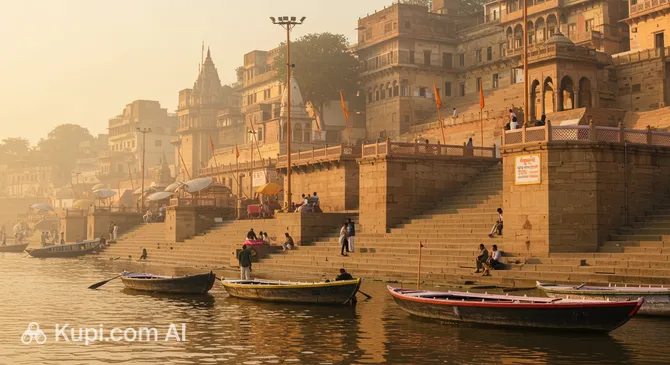
Darbhanga Ghat is one of the most majestic and colorful stepped embankments in the city of Varanasi. Located on the western bank of the sacred Ganges River, this ghat features an impressive series of stone steps leading directly to the water. It is an integral part of the unique five-kilometer chain of ghats that form the heart of spiritual life for which India is so famous.
\n\n

Darbhanga Ghat
Darbhanga Ghat. Иллюстрация. Источник: Kupi.com AI

\n\n

This site stands out for its remarkable architectural harmony and proximity to other historical landmarks in the Bangali Tola district. Here, you can fully experience the authentic atmosphere of the ancient city: pilgrims performing ritual ablutions, sadhus engaged in quiet conversation, and a sense of tranquility spreading over the river. Darbhanga Ghat is considered one of the most photogenic spots on the riverfront, highly rated by travelers for its authenticity.

\n\n

For visitors, this ghat serves as an ideal vantage point for panoramic views of the river and numerous riverside temples. As part of one of the seven sacred cities of Hinduism mentioned in ancient texts, Darbhanga Ghat offers tourists more than just a beautiful view—it provides a deep immersion into a living history and cultural traditions that have remained unchanged for centuries.

Contacts

Since Darbhanga Ghat is a public space on the embankment, it does not have an official administration or a dedicated telephone number. For any questions regarding your visit, you can consult the Varanasi city tourist information center.

\n\n
How to contactContact
AddressNear Ahilyabai Ghat, 8245+3VW, Bangali Tola, Varanasi, Uttar Pradesh 221010, India

What to Do

Visiting Darbhanga Ghat is primarily an opportunity to witness ancient traditions. The main activity here is observing the ritual ablutions of pilgrims. Photographers will find endless inspiration: the stone steps, the bright clothing of worshippers, and the golden reflections on the water create perfect shots, especially at sunrise or sunset.

\n\n

It is definitely worth renting a traditional boat for a ride along the embankment. From the water, Darbhanga Ghat reveals itself from a completely different perspective, allowing you to appreciate the scale of the entire Varanasi ghat chain. During the boat trip, you can see not only this pier but also the neighboring Ahilyabai Ghat, where the mesmerizing Ganga Aarti ceremony—an offering of fire to the deities accompanied by hymns—takes place in the evenings.

\n\n

For those seeking solitude, the ghat provides excellent conditions for yoga and meditation by the river. In the early morning, as the city just begins to wake up, a special silence reigns here. It is also a great place to interact with locals and sadhus, which helps to gain a deeper understanding of Hindu philosophy and feel the rhythm of life in the sacred city.

Getting There

Reaching this iconic spot in Varanasi is easy. If you are arriving in the city via Lal Bahadur Shastri Airport, which is about 25 km away, it is most convenient to take a taxi or auto-rickshaw — the trip will take 45 to 60 minutes depending on traffic. From Varanasi Junction (BSB) railway station, the journey by rickshaw takes about 20–30 minutes.

\n\n

It is important to remember that Darbhanga Ghat is located in the Bangali Tola area, where the narrow streets of the Old City are inaccessible to cars. The best way to experience the atmosphere is to walk here along the embankment from the central Dashashwamedh Ghat (a distance of about 1–2 km) or book a boat ride from any other pier. The river route takes only 10–15 minutes and offers magnificent views.

\n\n

For precise navigation, you can use Google Maps or look for the neighboring Ahilyabai Ghat. From other major Indian cities such as Delhi or Kolkata, there are regular trains to Varanasi Cantt station, from where the Ganges embankment is easily accessible by local transport.

Ближайший город: Varanasi

History & Facts

The history of Darbhanga Ghat is inextricably linked with the centuries-old past of Varanasi. It is believed that the first stepped descents to the water began to form on this bank of the Ganges as early as the Gupta dynasty era (2nd–3rd centuries AD). In those times, the riverside area served not only as a religious hub but also as an important economic center for the region.

\n\n

The ghat acquired its modern architectural appearance much later. Like many other structures on the embankment, it underwent major reconstruction in the 18th and 19th centuries. During this period, rulers of various Indian princely states, including the Marathas and the Rajas of Gwalior, actively invested in the development of the city's sacred infrastructure. The name of the site itself refers to the princely state of Darbhanga in Bihar, whose patrons contributed significantly to the improvement of the area.

\n\n

A special role in the history of this place was played by the period between 1735 and 1830, when, with the support of such prominent figures as Ahilya Bai Holkar, a unified ensemble of the embankment was created. Darbhanga Ghat became a harmonious part of this grand project, preserving its authenticity and spiritual significance to this day, remaining a witness to the changing eras and dynasties.

Time Needed

For a leisurely walk along the steps of Darbhanga Ghat, observing the life of pilgrims, and taking beautiful photos, 1–2 hours is usually enough for the average tourist. This time is sufficient to feel the unique energy of the place and examine the architectural details of the stone stairs.

\n\n

If you plan to combine your visit with a boat trip on the Ganges at sunset or want to stay for the evening Ganga Aarti ceremony, which is held at neighboring locations, you should budget 2–3 hours for your visit. Such an immersion will allow you to see the transformation of the ghat in the rays of the setting sun, when the atmosphere becomes truly magical.

Working Hours

Like most riverfront sites in Varanasi, Darbhanga Ghat is open to the public 24/7. You can visit on any day of the week — from Monday to Sunday, access to the steps remains free 24 hours a day.

\n\n

Despite the round-the-clock access, the most atmospheric time for a visit is early morning (around 5:00–6:00 AM), when morning pujas and ablutions begin, or the pre-sunset hours, when the heat subsides and the ghat is filled with soft light and evening calm.

Круглосуточно

Nearby

Exploring the surroundings of Darbhanga Ghat allows you to see Varanasi from different angles: from ancient spiritual practices to modern entertainment. A walk along the neighboring riverfront steps will inevitably lead you to historic temples, while moving slightly away from the river provides access to parks and recreation areas that can be a great addition to your cultural program.

\n\n
NameDistance
Man Singh Observatory0.3 km
Kashi Vishwanath Temple0.6 km
Shree Annapurna Temple0.6 km
Nepali Temple0.6 km
Kedar Ghat0.7 km
Neelu Kachori Bhandar0.9 km
Chet Singh Ghat1.2 km

Reached the end of the page?

That means the route is fully explored