Support

Rishikesh

About

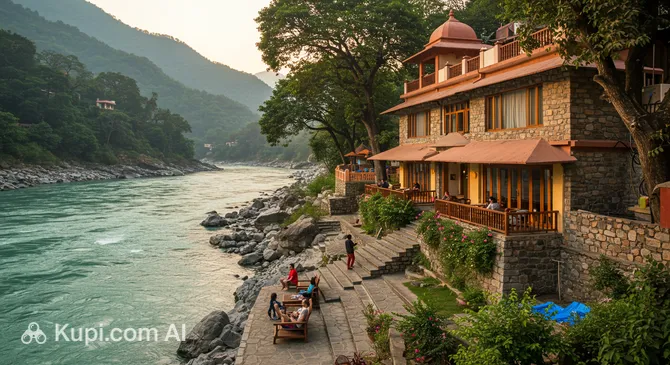
Rishikesh is the true gateway to the Himalayas and a spiritual gem of northern India, nestled comfortably on the banks of the sacred Ganges River, right where it breaks free from mountain gorges and flows onto the plains. The city is surrounded by picturesque green hills, and the crystal-clear waters of the Ganges create a special atmosphere of peace and freshness. This is a place where the majesty of nature and deep spirituality merge, enveloping visitors in morning mists over the river, the ringing of temple bells, and the fragrance of incense.
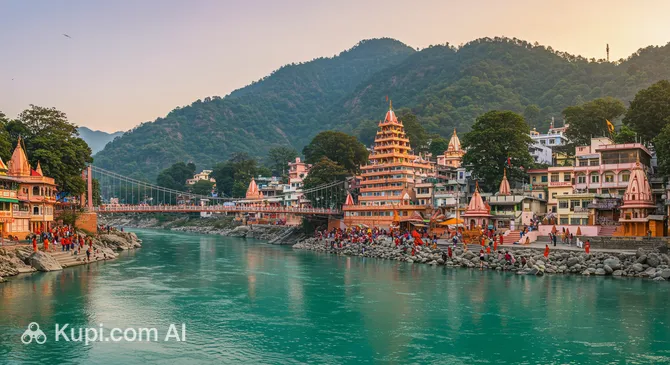
Rishikesh. Illustration.
Source: Kupi.com AI

With a population of just over 100,000, Rishikesh maintains its intimate and cozy feel despite its global fame. It is not just an administrative center, but a true magnet for truth-seekers, yogis, and travelers from all over the world. The city's atmosphere is a unique blend of tranquility, creativity, and a touch of adventure, where ancient Hindu temples stand harmoniously alongside modern cafes, and bustling markets give way to quiet ashrams where time seems to stand still.

Rishikesh primarily attracts tourists as the world capital of yoga and meditation. Numerous ashrams and yoga centers offer courses and retreats for every taste. Beyond spiritual practices, the city is famous for its outdoor activities: thrilling white-water rafting on the Ganges is one of the most popular activities. Equally impressive are the evening Aarti ceremonies on the ghats (steps leading to the river), when thousands of lights are reflected in the sacred waters, creating a truly magical sight.

Rishikesh is a city that inspires you to slow down, listen to yourself, and discover new facets of life. Whether you are looking for spiritual renewal, outdoor adventure, or simply want to immerse yourself in the unique atmosphere of India, Rishikesh will welcome you warmly.

You can find more interesting facts on the history of the city of Rishikesh page.
Weather Overview

The weather in Rishikesh is characterized by significant seasonal changes. You can expect a hot summer, especially in May and June, when daytime temperatures often exceed 30°C. This is followed by a pronounced monsoon rainy season, which lasts from July to September, bringing heavy rainfall. Winters, from November to February, in Rishikesh are cool and mostly dry, with average daytime temperatures in the range of 10-16°C and minimal precipitation.

To better plan your trip and find out details about the weather conditions in different months, we recommend checking the information on the climate of Rishikesh.

Average monthly temperature

Average monthly precipitation

Interesting Facts

In addition to its worldwide fame as the capital of yoga, Rishikesh holds many fascinating secrets and amazing stories that make it even more attractive to travelers. Here are just a few lesser-known facts about this incredible city:

  • In 1968, members of the legendary band The Beatles spent several weeks in Rishikesh, studying transcendental meditation under Maharishi Mahesh Yogi. This visit not only brought a wave of Western spiritual seekers to the city but is also believed to have inspired the musicians to write many songs for their famous "White Album." The former Maharishi ashram, often referred to as the "Beatles Ashram," still attracts their fans today.

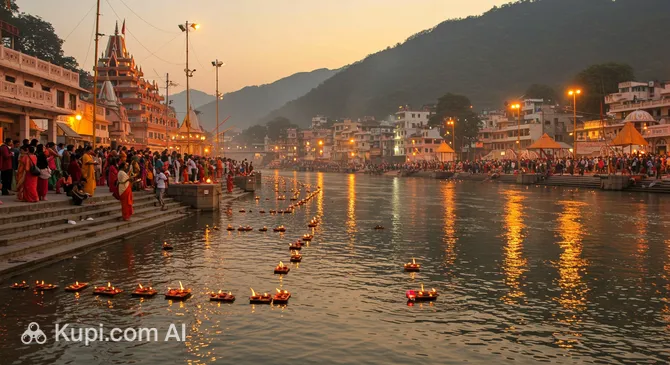
  • One of the most mesmerizing traditions in Rishikesh is the daily evening Ganga Aarti ceremony. It is particularly colorful at Triveni Ghat, where hundreds of people gather at sunset to witness the fire ritual, accompanied by the chanting of mantras and offerings of flowers to the sacred Ganges River.

  • The name of the city itself, Rishikesh, has deep Sanskrit roots. One version states that it means "Lord of the Senses" (Hrishika + Isha), which is one of the names of the god Vishnu. According to another interpretation, it means "sage's hair" (Rishi - sage, kesha - hair), reflecting the city's ancient connection with hermits and sages who meditated on the banks of the Ganges.

  • While Rishikesh is rightfully considered the world capital of yoga, it is also one of India's main centers for adventure tourism. The turbulent rapids of the Ganges attract thousands of thrill-seekers for rafting, such as River Rafting in Rishikesh, and the surrounding Himalayan foothills offer excellent opportunities for trekking and camping.

Triveni Ghat. Illustration.
Source: Kupi.com AI

Traveler photos:

How to Get There

There are several ways to reach Rishikesh, the famous center for yoga and spiritual practices located at the foot of the Himalayas in India. The most common option for international and many domestic travelers is to fly to one of the nearest airports and then take a taxi or bus to the city.

The closest airport to Rishikesh is Dehradun Airport (IATA: DED), also known as Jolly Grant Airport. It is located in the city of Dehradun, about 13 km from the center of Rishikesh. This airport receives regular flights from major cities in India. A taxi ride from the airport to Rishikesh takes about 40-50 minutes.

Another option, especially if you are looking for more international or domestic connections, is Chandigarh Airport (IATA: IXC). This is a major international airport located in the city of Chandigarh, approximately 157 km from Rishikesh. The journey by car or taxi from here to Rishikesh can take around 4-4.5 hours. This airport serves many destinations and may be convenient for travelers arriving from various parts of India and abroad.

For convenience, here is a summary of the main airports that can be used for a trip to Rishikesh:

AirportPassenger trafficDistance
Dehradun Airport1.7 mln13 km
Chandigarh Airport3.6 mln157 km
Simla25 493158 km
Pantnagar Airport101 013166 km
Ghaziabad (Hindon)1.8 mln180 km

In addition to air travel, Rishikesh is well-connected by road to major cities in Northern India, such as Delhi and Haridwar. Regular bus services and the option to rent a car or hire a taxi make overland travel an accessible choice. Although Rishikesh has its own small railway station, the main railway hubs connecting the city to distant regions of the country are located in larger neighboring cities, such as Haridwar. From there, Rishikesh can be easily reached by local transport, such as a bus or taxi.

Main Attractions

Rishikesh, known as the world capital of yoga, attracts pilgrims and adventure seekers from across the globe. Located at the foothills of the Himalayas on the banks of the sacred Ganges River, the city offers many unique attractions. Here, spirituality harmoniously blends with exciting outdoor activities.

One of the most iconic landmarks in Rishikesh is Triveni Ghat. This is a sacred spot on the banks of the Ganges where, according to belief, three holy rivers merge: the Ganges, the Yamuna, and the mythical Saraswati. Spectacular Ganga Aarti ceremonies are held here daily at sunset, drawing hundreds of devotees and tourists. This place is ideal for meditation, observing rituals, and immersing oneself in India's spiritual atmosphere.

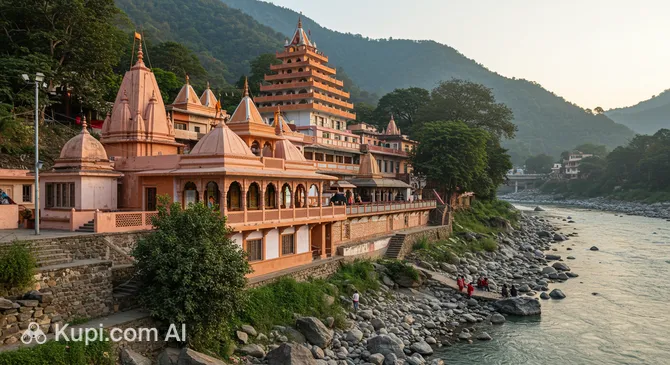
Triveni Ghat. Illustration.
Source: Kupi.com AI

Traveler photos:

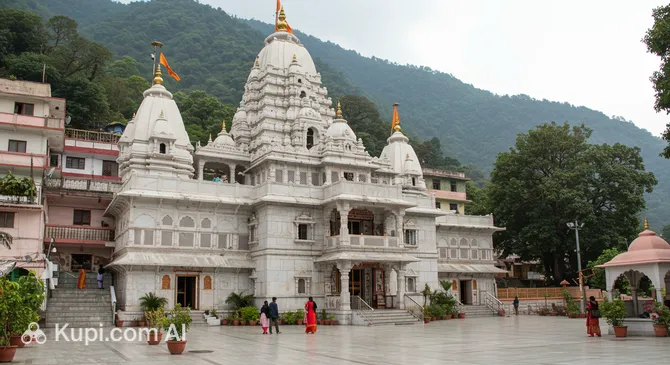
For those interested in Hindu culture and architecture, the Bhootnath Temple is a must-visit. This ancient temple dedicated to Lord Shiva is situated on a hill, offering not only a chance to visit a holy site but also to enjoy panoramic views of the city and surrounding mountains. The temple is known for its peaceful atmosphere and is an important pilgrimage site.

Bhootnath Temple. Illustration.
Source: Kupi.com AI

Traveler photos:

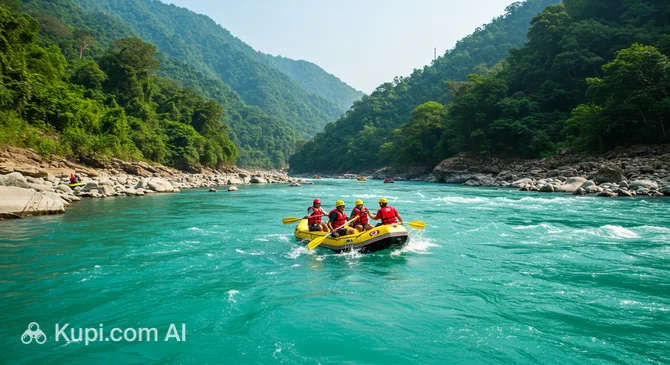
Rishikesh is also famous for its outdoor activities, and rafting on the Ganges River is one of the most popular things to do. Rapids of various difficulty levels attract both beginners and experienced rafters. This thrilling adventure allows you to get an adrenaline rush while admiring the beauty of the Himalayan landscapes from the water.

Rishikesh River Rafting. Illustration.
Source: Kupi.com AI

Traveler photos:

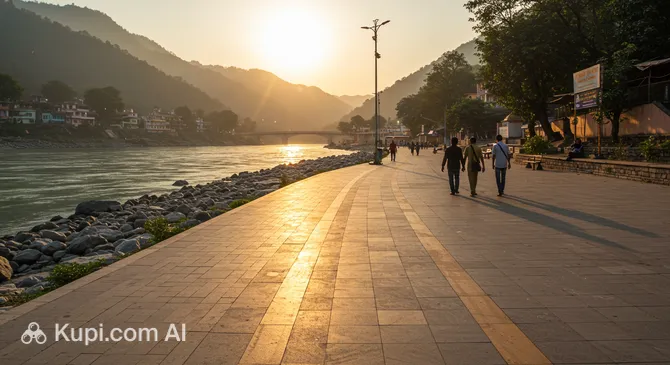
Another wonderful place for walking and contemplation is Marine Drive (Aastha Path). This scenic promenade along the Ganges is perfect for morning or evening strolls. Here, you can enjoy the fresh air, views of the river and mountains, and observe the daily life of locals and pilgrims. This area is frequently used for outdoor yoga and meditation.

Marine Drive (Aastha Path). Illustration.
Source: Kupi.com AI

Traveler photos:

It is also worth visiting Shree Bharat Mandir, considered one of the oldest temples in Rishikesh. It is dedicated to Lord Bharat, the brother of Rama, and houses many ancient relics and statues. A visit to this temple allows for a deeper understanding of the region's history and mythology.

Local Cuisine

The gastronomic world of Rishikesh is a true immersion into the traditions of vegetarian India. The city is known for its strict ban on meat and alcohol, making its culinary scene unique and especially attractive to those who value healthy and ethical food. The foundation of local dishes consists of the freshest vegetables, legumes, aromatic spices, and grains, transformed by chefs into true masterpieces.

Be sure to try the classics of Northern India: thick and nutritious dal (lentil soup), aromatic sabzi (vegetable stew) served with soft naan or roti flatbreads, and fluffy basmati rice with various sauces. Pay special attention to Indian sweets: ladoo, rasgulla, gulab jamun, and various types of halwa, which are often prepared right on the street, filling the air with sweet aromas. You cannot imagine Rishikesh without tea — traditional masala chai with milk and spices is an integral part of local hospitality.

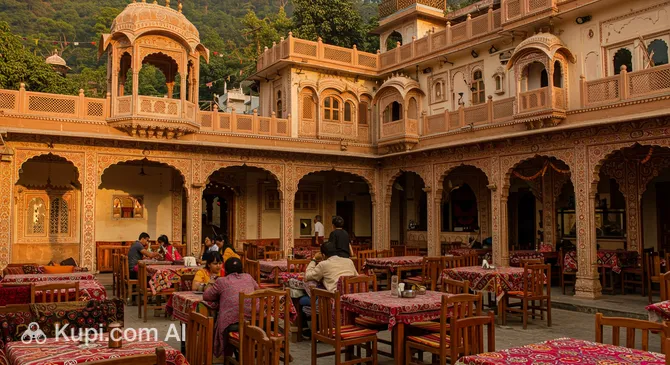
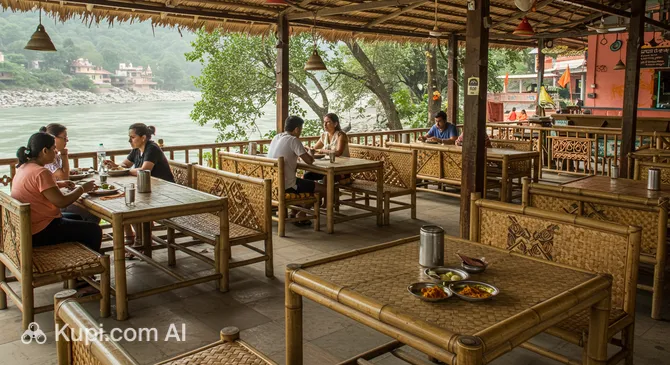
Rajasthani Jalpan Grih and Restaurant. Illustration.
Source: Kupi.com AI

Traveler photos:

The food culture in Rishikesh is diverse. Many cozy cafes, often with an Ayurvedic focus, offer dishes that promote harmony of body and spirit. Street food here is an adventure in itself: at every step, you can find stalls with fresh fruit, juices, coconut water, and popular snacks like samosas, pakoras, and chaat. Many tourists and locals prefer these small establishments or markets to experience the authentic taste of the city. If you are looking for a place for a full lunch or dinner, consider establishments such as Rajasthani Jalpan Grih and Restaurant, where you can enjoy traditional Indian dishes in a pleasant atmosphere. The city also frequently hosts gastronomic festivals and culinary workshops where you can not only taste but also learn how to cook local specialties.

Travel Tips

Welcome to Rishikesh, the world capital of yoga and the spiritual heart of India! To make your journey through this amazing city at the foot of the Himalayas as comfortable and rewarding as possible, we have prepared some practical tips.

  1. Clothing and Essentials: Rishikesh has a warm climate for most of the year, but evenings and the winter months (December-February) can be cool, so bring a light jacket or sweater. In summer (April-June), you will need light, breathable clothing. Given the spiritual atmosphere of the city and the visits to numerous temples and ashrams, choose modest clothing that covers your shoulders and knees. Be sure to bring comfortable walking shoes, sunscreen, a hat, and an adapter for Indian sockets (Type D/M).
  2. City Transport: The main modes of transport in Rishikesh are auto-rickshaws (tuk-tuks) and shared jeeps. For short distances, many prefer to walk, especially in the Laxman Jhula and Ram Jhula areas. Taxis are also available, but always agree on the price in advance. Car rental is not very common among tourists due to the nature of local traffic; a scooter can be an option for more experienced riders.
  3. Finances: The local currency is the Indian Rupee (INR). You can exchange currency at banks or authorized exchange offices. Credit and debit cards are accepted in most hotels, large restaurants, and shops, but for small purchases at markets and in small cafes, it is better to have cash. ATMs are fairly common, but they can sometimes run out of money or have long lines. Tipping is welcome in restaurants (around 10%) and for small services, but is not strictly mandatory.
  4. Health and Safety: Pharmacies are easy to find in Rishikesh, and some are open 24/7. For serious medical assistance, it is best to go to hospitals in Rishikesh itself or in nearby Dehradun. The city is generally safe, but as with anywhere, observe standard precautions: keep an eye on your belongings, especially in crowded places, and avoid walking alone in poorly lit areas late at night. Drink only bottled water.
  5. Communication: The official language is Hindi. In tourist areas, many people speak English. Learn a few simple phrases in Hindi, such as "Namaste" (Hello/Goodbye) and "Dhanyavad" (Thank you). A local SIM card can be purchased at mobile shops by presenting your passport and visa. Wi-Fi is available in most hotels, guesthouses, and cafes.
  6. Local Etiquette: Greet people with "Namaste," accompanied by a slight bow and palms pressed together at the chest. When entering temples, ashrams, and private homes, always remove your shoes. Show respect for local traditions and religious rites. Always ask for permission before taking photos of people.
  7. What to Avoid: Try to avoid public displays of affection, as this is not customary in Indian culture. Do not wear overly revealing clothing, especially when visiting holy sites. Do not pollute the Ganges River and treat it with reverence, as it is considered sacred.
  8. Additional Tip: Rishikesh is the ideal place to discover yoga and meditation. Even if you are a beginner, try to attend at least one class at one of the many ashrams or yoga centers. Also, do not miss the evening Ganga Aarti ceremony at the ghats—it is an unforgettable sight.

We hope these tips help you better prepare for your trip and get the most enjoyment out of your stay in wonderful Rishikesh. Have a smooth journey and bright impressions!

Entertainment & Nightlife

Rishikesh, known as the world capital of yoga, offers a unique evening and night-time experience that differs significantly from the noisy nightlife of major metropolises. Instead of loud clubs and bars, evening Rishikesh is enveloped in an atmosphere of calm, spirituality, and peace. It is important to understand that Rishikesh is a holy city, and there are restrictions on the sale and consumption of alcohol; therefore, traditional nightclubs and bars are virtually non-existent here.

The main evening event, attracting both pilgrims and tourists, is the Ganga Aarti — a colorful worship ceremony dedicated to the Ganges River. One of the most famous places to witness this event is Triveni Ghat. The ceremony usually begins after sunset and is a mesmerizing spectacle of lights, chants, and offerings to the river. The atmosphere here is very spiritual and moving, gathering many people, including both locals and visitors.

Bhootnath Temple. Illustration.
Source: Kupi.com AI

Traveler photos:

While there are no classic nightclubs in Rishikesh, you can spend a pleasant evening in one of the many cafes and restaurants, many of which stay open until late evening. Establishments in the Laxman Jhula and Tapovan areas are particularly popular. They offer predominantly vegetarian cuisine, both Indian and international. Here, you can enjoy dinner in a quiet setting, often with a view of the Ganges or the mountains. Notable places for dinner include Rajasthani Jalpan Grih and Restaurant or Anna's Mess, both offering authentic dishes.

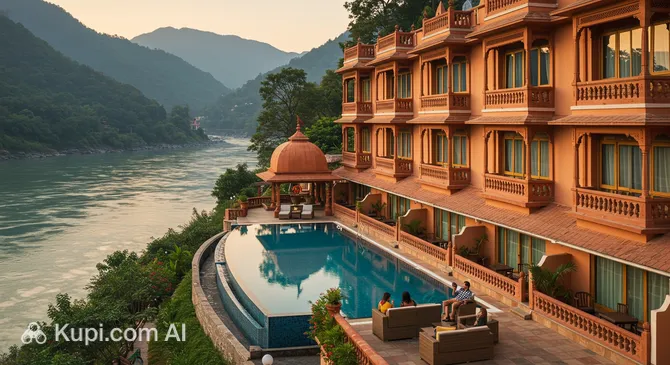
MVT Guesthouse & Restaurant. Illustration.
Source: Kupi.com AI

Traveler photos:

Evening life in Rishikesh also includes the opportunity to attend satsangs (spiritual discourses) and kirtans (communal singing of mantras and religious hymns) in many ashrams. This is a deep and peaceful experience that allows you to touch the spiritual side of the city. For quiet evening walks, the Marine Drive (Aastha Path) promenade is excellent, where you can enjoy the fresh air and the scenery.

Anna's Mess. Illustration.
Source: Kupi.com AI

Traveler photos:

Practical Tips: The evening atmosphere in Rishikesh is very relaxed and friendly. The crowd mainly consists of yogis, spiritual seekers, and tourists interested in Indian culture. The dress code is generally modest and informal, reflecting the spiritual nature of the city. Most establishments close relatively early compared to large cities. For moving around at night, you can use auto-rickshaws; it is best to agree on the fare in advance. Rishikesh is considered quite a safe city, but as with anywhere, standard precautions should be taken, especially if walking alone late at night.

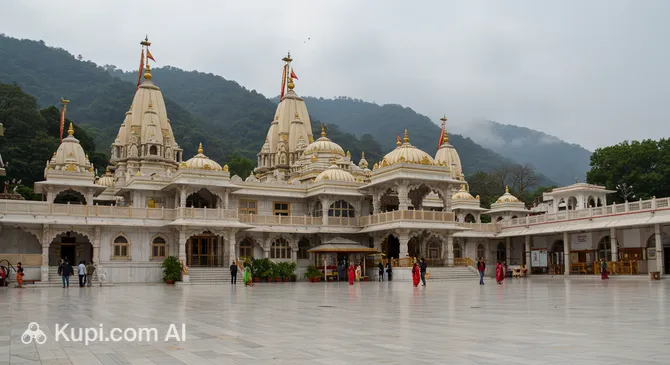
Shri Bharat Mandir. Illustration.
Source: Kupi.com AI

Traveler photos:

During the day, Rishikesh offers a wealth of activities: from yoga and meditation classes in numerous ashrams, such as Madhuban Ashram, to extreme sports like Rafting on the river in Rishikesh. It is also worth visiting local temples, including the Bhootnath Temple and Shree Bharat Mandir. Thus, Rishikesh provides a rich program for both daytime activities and peaceful evening relaxation.

Parks & Museums

Rishikesh, known as the world capital of yoga, offers a unique combination of spiritual heritage and natural beauty that replaces traditional urban parks and museums. Here, every corner is steeped in history, and the surrounding landscapes are a living exhibition in themselves.

While there are no large formal parks in Rishikesh, its entire territory is a natural zone. The sacred Ganges River is the heart of the city, and its banks are a place for walks and meditation. Marine Drive (Aastha Path) is a popular promenade ideal for leisurely strolls along the river, offering picturesque views. The city is located at the foot of the Himalayas, and the surrounding forested hills create an atmosphere of peace and unity with nature. For wildlife enthusiasts, Rajaji National Park is located near Rishikesh, where you can see elephants, tigers, and many other animal species in their natural habitat.

Marine Drive (Aastha Path). Illustration.
Source: Kupi.com AI

Traveler photos:

The cultural and historical heritage of Rishikesh is represented not so much by museums as by its numerous temples, ashrams, and ghats. One of the most significant sites is Triveni Ghat, the confluence of three sacred rivers, where a mesmerizing Ganga Aarti ceremony takes place every evening. This vibrant spectacle attracts pilgrims and tourists from all over the world who wish to experience ancient traditions.

Triveni Ghat. Illustration.
Source: Kupi.com AI

Traveler photos:

Among the ancient shrines, Shree Bharat Mandir stands out; it is considered the oldest temple in Rishikesh and is dedicated to Lord Vishnu. Its architecture and atmosphere immerse you in centuries past.

Shri Bharat Mandir. Illustration.
Source: Kupi.com AI

Traveler photos:

Equally interesting is the Bhootnath Temple, dedicated to Lord Shiva, which is situated on a hill and offers panoramic views of the city.

Bhootnath Temple. Illustration.
Source: Kupi.com AI

Traveler photos:

Ashrams, such as Madhuban Ashram, are not just places to stay but centers for spiritual practices, yoga, and the study of Vedic philosophy—sort of living museums of Indian culture.

Madhuban Ashram. Illustration.
Source: Kupi.com AI

Traveler photos:

For a deeper immersion into the atmosphere of Rishikesh, step off the main tourist paths and explore small, secluded ghats or attend a lecture (satsang) at one of the lesser-known ashrams. It is also worth visiting the local markets, where you can find unique handmade crafts, Ayurvedic products, and spiritual literature that will serve as a wonderful reminder of your trip to this amazing city.

Getting Around

Public transport in Rishikesh consists of several main types adapted to the characteristics of this city stretched along the banks of the Ganges. There is no metro or tram system here, but moving around the city and its surroundings is quite accessible.

The main means of transport for short and medium distances are auto-rickshaws (tuk-tuks). They are found everywhere. It is important to remember that the fare should be agreed upon before the start of the journey, as there are usually no fixed rates. There are also vikrams (or tempos)—these are large motor-rickshaws that operate like shared taxis on specific routes, for example, between Laxman Jhula, Ram Jhula, and the city center. Traveling in them is significantly cheaper as they carry several passengers at once.

Local buses also run through Rishikesh and connect it with nearby towns like Haridwar. Buses are the most economical option, but they can be crowded, especially during peak hours. Bus tickets are usually purchased from the conductor directly on board. Payment for most types of transport is made in cash. Sophisticated travel card systems or mobile apps for paying for public transport in Rishikesh are not yet common.

Practical tips for tourists: Always carry small bills for paying fares. If you use an auto-rickshaw, clearly state your destination and agree on the cost in advance. For vikram rides, confirm the route with the driver or other passengers. Public transport usually starts early in the morning and finishes by evening, but auto-rickshaws are available at later times, though their cost may be higher.

As an alternative to public transport, the following are popular in Rishikesh:

  • Taxis: Can be ordered for more comfortable rides or long-distance travel. Their cost is higher than that of auto-rickshaws.

  • Scooter and motorcycle rentals: A very common option for self-exploration of the city and its surroundings. Rental points are easy to find.

  • Walking: Many areas of Rishikesh, especially around the famous Ram Jhula and Laxman Jhula bridges, as well as along the embankments, are best explored on foot. The suspension bridges themselves are vital pedestrian arteries.

  • Boats: In some places, you can cross the Ganges by boat, which is not just a way to get around but also a small, scenic adventure.

A feature of Rishikesh's transport system is its flexibility and a certain amount of chaos characteristic of many Indian cities. However, thanks to the variety of options, reaching your destination is usually not a major problem.

Accommodation

In Rishikesh, travelers will find a wide variety of accommodation options to suit the needs of both budget tourists and those seeking a more comfortable or even luxurious stay. The range of housing includes inexpensive guesthouses and ashrams offering basic amenities and a unique experience of immersion in local culture, mid-range hotels with a good set of services, as well as high-end resorts and boutique hotels, many of which offer magnificent views of the Ganges and the surrounding mountains.

The most popular areas for tourists to stay are Laxman Jhula and Ram Jhula. These areas are lively, with many cafes, shops, yoga centers, and ashrams concentrated here, and they are within walking distance of the suspension bridges of the same names and other attractions. The Tapovan area, located slightly away from the main tourist bustle, offers a quieter atmosphere and also has a good selection of hotels and guesthouses, often with beautiful river views.

Rishikesh River Rafting and Camping. Illustration.
Source: Kupi.com AI

Traveler photos:

Among the many options, you can find places like River Rafting and Camping in Rishikesh, which offers outdoor activities and nature stays, or the MVT Guesthouse and Restaurant, which provides comfortable conditions for a quieter stay. The choice is truly vast, and everyone will be able to find something to their taste and budget.

When planning a trip to Rishikesh, especially during the peak tourist season (usually from October to April) or during major festivals, it is highly recommended to book accommodation in advance. Prices for accommodation vary from very affordable in simple guesthouses to moderate and high in hotels with a wide range of amenities and better locations. Most options are easy to find and book through popular international and local online platforms. For some ashrams and small guesthouses, direct booking upon arrival or via their websites, if available, is also possible.

Nearby Cities

For those who want to explore the surroundings, Rishikesh serves as an excellent starting point for day trips to several interesting nearby locations. For instance, Haridwar, located just 22 km away, is one of the seven holiest cities in Hinduism, famous for its ghats and the evening Ganga Aarti ceremony. Another popular destination is Dehradun (33 km), the capital of Uttarakhand state, which attracts travelers with its picturesque valleys, Buddhist monasteries, and colonial architecture. Below is a list of some cities that can be visited as part of a day trip:

CityPopulationDistance
Doiwala8 70917 km
Haridwar228 83222 km
Dehradun578 42033 km
Tehri24 01433 km
Majra8 73034 km

These nearby destinations provide an insight into the diverse culture and landscapes of the region.

Shopping & Souvenirs

Shopping in Rishikesh is, first and foremost, an immersion into an atmosphere of spirituality and Indian culture. The city is famous not so much for large shopping malls but for its numerous shops and markets where you can find unique items related to yoga, meditation, Ayurveda, and Hindu traditions. Here, you will find many shops offering ethnic clothing, handmade jewelry, religious paraphernalia, and natural cosmetics.

The main shopping areas in Rishikesh are considered to be the districts around the Laxman Jhula and Ram Jhula suspension bridges. The narrow streets here are literally dotted with small shops and stalls selling everything from bright shawls and saris to books on philosophy and yoga, musical instruments, and incense. It is also worth walking along the main road that runs through the city, where you can find shops catering to both tourists and locals.

In Rishikesh, you will not find large, modern shopping malls in the conventional sense. Shopping here has a more traditional and authentic character, focused on small private shops and street markets.

Markets are the heart of commerce in Rishikesh. The liveliest market areas are in the vicinity of the Laxman Jhula and Ram Jhula bridges. Here you can find souvenirs, clothing, jewelry, handicrafts, and much more. The atmosphere here is very colorful, and bargaining is quite appropriate. For those looking for more local goods, you can visit the market in the main part of the city, which sells fresh fruit, vegetables, spices, and household items.

From Rishikesh, it is worth bringing back:

  • Yoga and meditation supplies: mats, special clothing, meditation cushions, singing bowls.

  • Ayurvedic products: natural cosmetics, oils, herbal blends.

  • Religious paraphernalia: figurines of deities, rudrakshas (sacred seeds), malas (prayer beads).

  • Clothing and textiles: vibrant Indian shawls, stoles, kurtis (traditional tunics), silk and cotton scarves.

  • Jewelry: silver items with semi-precious stones, ethnic bracelets, and necklaces.

  • Incense and essential oils: a wide selection of scents for the home and meditation.

  • Books: on yoga, Hinduism, Vedanta, and spiritual practices, often in English.

Most shops in Rishikesh open around 10:00-11:00 AM and stay open until 8:00-9:00 PM. Some small shops may have more flexible hours and close for a lunch break. The main method of payment, especially in markets and small shops, is cash (Indian Rupees). Larger and more tourist-oriented shops may accept credit cards, but it is always better to have enough cash with you. There are ATMs in the city, but they can sometimes run out of money or have long lines.

The Tax Free refund system for tourists in India is not as widespread or simple as in some other countries, especially for goods purchased in small shops and markets in Rishikesh. Generally, most souvenirs and everyday items are not covered by this system.

Reached the end of the page?

That means the route is fully explored