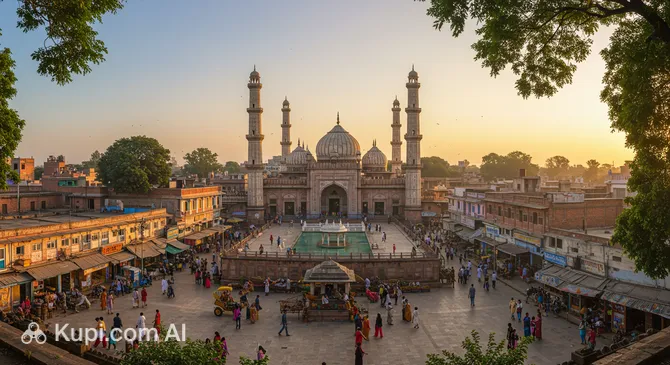
Saharanpur is a large and dynamic city located in the northern part of India, in the state of Uttar Pradesh. As the administrative center of the eponymous district, it plays a vital role in the region's life as a major commercial and industrial hub. The city is nestled in the fertile plains of the Doab, between the basins of great rivers, which historically favored its prosperity and growth. Today, the city's population exceeds 700,000, creating the atmosphere of a typical North Indian metropolis with its vibrant energy and dense urban landscape.
Saharanpur. Illustration.
Source: Kupi.com AI
The city's rich historical heritage dates back to the era of the Delhi Sultanate and the Mughals, which has left its mark on its architectural style and traditions. However, Saharanpur's main "calling card" is its unique craft — artistic wood carving. Local artisans are famous throughout the country and beyond for their intricate work, turning ordinary wood into true masterpieces.
For tourists, Saharanpur reveals itself as an authentic, industrious city where daily life is closely interwoven with centuries-old traditions. People come here not for a luxury resort holiday, but to immerse themselves in genuine Indian culture, visit ancient markets, and explore artisan quarters. It is an excellent destination for those seeking sincere impressions and wanting to see India as it is, while purchasing unique handmade items or using the city as an important transit point on the way to the foothills of the Himalayas.
Weather Overview
The climate of Saharanpur is characterized as hot subtropical monsoon, typical for cities of the Indo-Gangetic Plain. The year is clearly divided into three seasons: a very hot summer, a humid monsoon period, and a cool, dry winter. For comfortable trip planning, it is useful to know that the weather in Saharanpur changes significantly depending on the month.
Summer, lasting from April to June, can be harsh: daytime temperatures often rise to +35°C... +39°C. With the arrival of the monsoon in July, humidity rises sharply, bringing heavy rains that continue until September. The most pleasant time to visit the city is considered to be the period from October to March, when mild weather sets in with sunny days and cool nights (in January, temperatures can drop to +7°C).
Expect extremely hot summers with occasional dust storms and cold, dry winters. It is also worth noting that due to the dense urban development and terrain features, air quality can decrease during the dry season, so travelers with sensitive health are advised to visit the city during the more humid or cooler months.
Average monthly temperature
Average monthly precipitation
Interesting Facts
Saharanpur is considered one of India's leading centers for wood carving; the products of local craftsmen are exported worldwide.
The city is located in a unique geographical zone called the Doab — a fertile territory between two great rivers, the Ganges and the Yamuna.
The city's historical roots are closely linked to the eras of the Delhi Sultanate and the Mughal Empire, making it an important center for studying the region's medieval history.
Over the past decades, Saharanpur has shown impressive growth: its population has increased to over 700,000 people, turning it into a major metropolis in the northwest of the country.
The city is an important railway junction connecting the capital, Delhi, with popular hill stations and the state of Uttarakhand.
How to Get There
Saharanpur is a major transport hub in northern India, making it easily accessible for travelers from various regions of the country. The city has excellent connections with Delhi, Dehradun, and other major centers. Most tourists prefer using the railway or intercity buses to find the most convenient ways to get to Saharanpur. The drive from the capital can take several hours, and it is worth considering heavy traffic on holidays and during peak hours.
Railway communication plays a key role in the city's logistics. The city's main station, known as Saharanpur Railway Station, receives dozens of trains daily, including expresses from Delhi and the state of Uttarakhand. The station is conveniently located, allowing for a quick trip to the central districts by taxi or auto-rickshaw. The railway remains the most reliable and budget-friendly option for visiting this artisanal center.
Within the city itself and for trips around the district, bus routes and taxi services are actively used. Local bus stations provide regular connections to neighboring cities such as Roorkee and Meerut. Travelers are advised to plan their trips with extra time, as the road network in the dense urban areas can be congested with mixed traffic and street vendors.
Main Attractions
The main charm of Saharanpur lies in its artisanal soul and the atmosphere of a traditional North Indian city. Although there are no world-famous architectural ensembles here, the historical quarters, bustling bazaars, and local shrines offer significant interest for travelers looking to understand the local culture and way of life more deeply.
One of the city's most significant spiritual centers is the Shri Bhuteshwar Mahadev Temple. This Hindu temple, dedicated to Lord Shiva, attracts many pilgrims and locals with its peaceful atmosphere and traditional architecture. A visit here provides an opportunity to witness religious rituals and feel the depth of Indian traditions in their daily manifestation.
Another notable landmark is the Baba Laldas Temple. This site is surrounded by local legends and is revered for its historical value. Travelers should pay attention not only to the building itself but also to the surrounding old neighborhoods, where life flows at its own leisurely pace and every street corner can reveal a view of ancient gates or a cozy courtyard.
Special attention should be given to the craft workshops specializing in wood carving. Saharanpur is often called the "City of Wood Art." A walk through the quarters where the craftsmen work allows you to see the process of creating exquisite screens, furniture, and decorative items with your own eyes. It is here that you can feel the true pulse of the city, where talent and hard work are passed down from generation to generation.
Local Cuisine
The gastronomy of Saharanpur is a classic embodiment of Western Uttar Pradesh cuisine, dominated by hearty and aromatic North Indian dishes. The staple diet consists of various wheat breads (roti, naan), rich dal (lentil soup), and spicy vegetable sabzi. Paneer dishes and aromatic rice, prepared with a variety of local spices that give the food a unique taste, hold a special place on the menu.
Lovers of modern cuisine and predictable service standards should visit establishments like Hangries Saharanpur or the chain restaurant Hangries. They offer popular international dishes, including pizza and Chinese noodles, adapted to local tastes. Such restaurants are often chosen by families and young people for a comfortable dinner in a pleasant setting.
The true soul of the city can be felt through its street food and small dhabas. Be sure to try the hot samosas, crispy kachoris, and sweet lassi. Street food in Saharanpur is not just a snack but an important part of the social culture. It's best to look for places with long queues of locals, which guarantees the freshness of the products. You should finish your meal with a cup of traditional masala tea, which is prepared especially strong and fragrant here.
Travel Tips
Visiting Saharanpur is a fascinating immersion into the life of artisanal India, and to ensure your trip goes smoothly, it's worth considering a few practical nuances from experienced travelers.
Clothing and Dress Code: Choose light clothing made of natural fabrics, as it can be very hot in the city. When visiting temples, such as the Shri Bhuteshwar Mahadev Temple, it is important to observe modesty: cover shoulders and knees.
Getting Around the City: The fastest way to move around is by auto-rickshaw. Always confirm the fare in advance to avoid misunderstandings.
Finances: Cash is the predominant method of payment (Indian Rupees). Cards are accepted in large hotels and chain restaurants, but be sure to carry small bills for markets.
Health: Drink only bottled water and avoid ice in drinks on the street. Basic medications can be found in pharmacies in the central districts.
Communication: The main language is Hindi, but English is understood in hotels and banks. Knowing a few phrases in Hindi, such as "Namaste" (hello), always brings a smile to the locals.
Local Etiquette: Be sure to remove your shoes when entering homes or temples. Use the traditional "Namaste" gesture for greetings.
What to Avoid: It is best not to walk in poorly lit outskirts at night. Also, refrain from photographing people without their prior consent.
Shopping: Buy wood products directly from the workshops — there is more choice and the prices are better than from resellers.
May your introduction to this city of master craftsmen be a bright and memorable event, full of amazing discoveries and authentic finds!
Entertainment & Nightlife
Leisure in Saharanpur is primarily local in character, reflecting the traditional way of life in the North Indian region. There is no abundance of Western-style nightclubs; instead, the city's evening life revolves around family walks, visiting busy markets, and tasting street food. The atmosphere of the evening city is filled with the sounds of lively trade and the aroma of spices, creating a unique local color.
For those looking for modern entertainment formats, venues like the Saharanpur Club are open. Such places often become centers of social life for the local elite and business people, offering more familiar service and opportunities for networking. The city also has a network of modern cafes and restaurants at hotels where you can spend a quiet evening in a comfortable setting.
Family leisure and active daytime entertainment can be found at Fun Park and Water Kingdom. This amusement and water park is a popular spot among residents, especially during the hot months, offering water slides and various activities for both children and adults. It is a great alternative to sightseeing, allowing for relaxation and fun within the city limits.
Parks & Museums
The museum and park infrastructure of Saharanpur reflects its status as a major industrial and craft center, where the emphasis is on practicality rather than an abundance of recreational zones. The city is quite densely built-up, so greenery is fragmented, consisting of small squares and green zones near administrative buildings and old quarters.
For those looking for a place for active recreation and family walks, Fun Park and Water Kingdom is an excellent choice. It is not only a water park but also a well-maintained area where you can take a break from the city bustle and noise. Such places are magnets for locals, especially on weekends and holidays.
Since Saharanpur is famous for its wood carving, private galleries and the workshops themselves often serve the functions of museums. Walking through these "living museums" allows you not only to see historical examples of carving but also to observe the work of modern artisans. This gives a much more complete picture of the city's culture and history than a visit to traditional exhibition halls.
Getting Around
The transport system in Saharanpur is typical for a large North Indian city and is largely focused on maneuverability in dense urban conditions. The main modes of transport here are auto-rickshaws and their more eco-friendly counterparts — e-rickshaws. They are ideal for short trips through narrow streets and bazaars where a regular car might get stuck in traffic.
Public buses provide connections between the city's main districts and suburbs. While functional and extremely budget-friendly, buses can be very crowded during peak hours. Tourists are recommended to use rickshaws or call a taxi through mobile apps, if available, for greater comfort and time savings.
Payment for rickshaw rides is usually in cash, and the price should be agreed upon in advance, before the trip starts. There are often no fixed tariffs for tourists, so the ability to bargain politely will be very useful. Cycle-rickshaws also remain a popular and eco-friendly way to travel very short distances in the old part of the city, allowing for a leisurely view of the surrounding architecture.
Accommodation
For tourist accommodation in Saharanpur, mainly urban hotels of various categories are available, catering to both business travelers and those visiting to see the craft workshops. While luxury five-star resorts are hard to find here, the city offers a decent selection of mid-range hotels and budget guesthouses providing the necessary level of comfort.
The most convenient areas to stay are the central quarters located in the immediate vicinity of the railway station and the main markets. This helps save time on travel through the often congested city streets. When choosing accommodation, it is worth checking for air conditioning, especially if your trip falls during the hot summer months or the monsoon season.
It is recommended to book hotels in Saharanpur in advance, particularly during major holidays or business exhibitions. Accommodation prices here remain very affordable compared to the capital or popular tourist centers in the state. For those planning a long stay, private apartment rentals may be an option, allowing for a deeper immersion into the local atmosphere.
Nearby Cities
Due to its location in the north of the state, Saharanpur serves as an excellent starting point for exploring the surroundings and nearby regions. From here, you can take interesting trips to small towns, each possessing its own unique character and atmosphere.
One of the closest destinations is the town of Sarsawa, located just 16 kilometers away. It is known for its peaceful pace of life and agricultural lands. It is also worth visiting Kabirpur and Behat, where a trip will allow you to see the traditional life of the Indian hinterland and the picturesque flat landscapes of the Doab valley.
City
Population
Distance
Kabirpur
10 933
12 km
Sarsawa
18 956
16 km
Mokarrampur
10 342
20 km
Behat
21 059
23 km
Nakur
22 712
25 km
Longer trips from Saharanpur can take you to the foothills of the Himalayas, to cities such as Dehradun or Roorkee, which are important educational and scientific centers. The region around the city offers many opportunities for those who want to go beyond the usual tourist routes and see the real life of Northern India.
Shopping & Souvenirs
Shopping in Saharanpur is primarily an introduction to traditional crafts and authentic markets. The city is not famous for massive shopping malls, but it offers a unique shopping experience in specialized quarters and bustling central bazaars. The main treasure to bring back from here is undoubtedly wood products made using the finest carving techniques.
The city's main commercial arteries are concentrated in its central part, where you can find everything from exquisite furniture and interior items to everyday clothing and spices. For souvenir lovers, a visit to the local workshops is a must. Here you can purchase anything from miniature carved boxes to massive decorative panels that will become a unique decoration for any home.
The city's markets operate from morning until late evening, with most closing on specific days of the week (often Monday or Saturday, depending on the area). Payment in markets and small shops is mainly in cash, so it is worth taking care of currency exchange in advance. Interacting with sellers at the bazaars is always the art of bargaining, which in Saharanpur is perceived as part of a pleasant shopping ritual.