Support

Mussoorie

About

Mussoorie, often referred to as the "Queen of the Hills," is a charming hill station nestled in the foothills of the Himalayas in the state of Uttarakhand, India. This town attracts travelers with its unique atmosphere of tranquility and breathtaking landscapes, offering a peaceful getaway from the hustle and bustle of city life.

With a population of around 30,118 people, Mussoorie is famous for its pleasant cool climate year-round, making it a popular destination to escape the summer heat of the Indian plains. Situated at an average altitude of about 2,000 meters above sea level, the town offers magnificent views of the snow-capped Himalayan peaks to the north and the picturesque Doon Valley to the south.
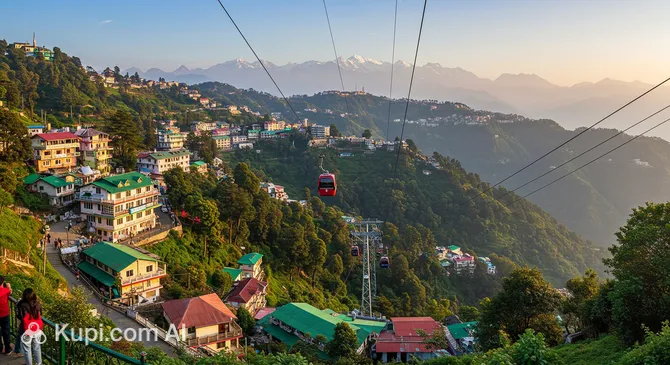
Mussoorie. Illustration.
Source: Kupi.com AI

Among the key attractions that make Mussoorie special is the lively Mall Road – the heart of the town, an ideal place for leisurely strolls, shopping, and experiencing local culture. A visit to Gun Hill, Mussoorie's second-highest point, is a must; accessible by cable car, it offers breathtaking panoramic views of the Himalayas. Equally appealing are the scenic Kempty Falls, a popular spot for picnics and outdoor relaxation.

Mussoorie is more than just a mountain resort; it is a place to enjoy natural beauty, explore colonial heritage, and find peace of mind. We invite you to discover this amazing corner of India and take home unforgettable memories.

You can find more interesting facts on the Mussoorie city history page.
Weather Overview

The climate in Mussoorie is typically mild and pleasant, attracting tourists year-round. Generally, you can expect warm and humid summers, especially in July and August, and cool, noticeably drier winters. The summer months, from June to August, are characterized by average temperatures around 23-24°C. This is also the rainiest period: in July and August, rainfall is about 13-16 mm, and the number of rainy days can reach 31 per month.

The winter season, from December to February, brings cooler temperatures: averaging 8-11°C, with nightly minimums dropping to 2-4°C. Rainfall is significantly lower in winter, and November is often the driest month, sometimes with no rain at all. To learn more about the weather in Mussoorie by month and plan your trip in the best possible way, visit our Mussoorie Climate page.

Average monthly temperature

Average monthly precipitation

Interesting Facts

Mussoorie is not just about scenic views and cool mountain air. This town hides many fascinating secrets and amazing facts that not everyone knows about. Ready to look behind the facade of popular tourist routes?

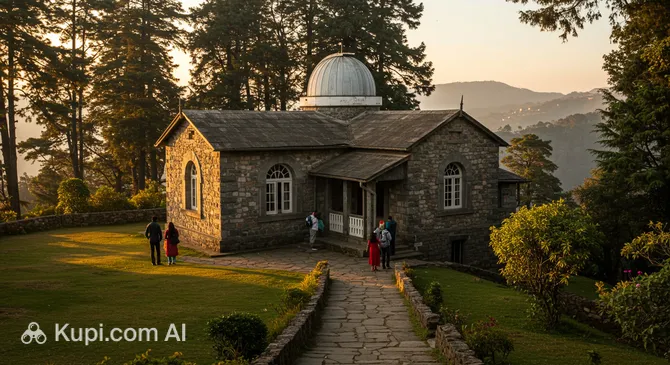
George Everest House. Illustration.
Source: Kupi.com AI

Traveler photos:

  • The Connection to Everest: The town is closely linked to the name of Sir George Everest, the famous surveyor after whom the world's highest peak is named. His home and observatory, where he lived and worked from 1832 to 1843 while conducting the Great Trigonometrical Survey of India, were located here in Mussoorie at his Park Estate. Today, George Everest's House is a popular historical landmark.

  • The "Winter Line" Phenomenon: Mussoorie is one of the few places in the world (and one of two in India, along with certain areas in the Himalayas, also known in the Swiss Alps) where you can observe a unique atmospheric phenomenon known as the "Winter Line." This is a sharply defined false horizon that appears in the west during sunset from mid-October to January, painting the sky in stunning shades of yellow, red, and purple.

  • The Dalai Lama's First Refuge in India: After his forced departure from Tibet in 1959, His Holiness the 14th Dalai Lama found his first refuge in Mussoorie. He lived here for about a year in a place called Happy Valley before the Central Tibetan Administration finally settled in Dharamshala.

  • The Charm of Landour and its Heritage: Landour, the old cantonment adjacent to Mussoorie, seems frozen in time. Here you can find one of India's oldest functioning mailboxes, painted in traditional red, as well as the famous Landour Clock Tower. Landour is also known for its cozy cafes, bakeries, and for being the home of the famous writer Ruskin Bond.

How to Get There

There are several ways to reach the picturesque mountain resort of Mussoorie, but the most popular is flying to the nearest airports followed by a transfer by car or bus. Mussoorie itself does not have its own airport or railway station due to its location in the mountains.

The main and most convenient option for most travelers is Dehradun Airport (IATA: DED), also known as Jolly Grant Airport. It is located in the city of Dehradun, approximately 31 km from Mussoorie. This regional airport receives regular flights from Delhi and other major Indian cities. The trip from the airport to Mussoorie by taxi or local bus usually takes about 1-1.5 hours, depending on road conditions.

Another significant airport to consider, especially if you are looking for international flights or more domestic options, is Chandigarh Airport (IATA: IXC). It is located in the city of Chandigarh, about 126 km from Mussoorie. This is a larger airport with higher passenger traffic. The drive from Chandigarh to Mussoorie by car takes approximately 3.5-4 hours.

For your convenience, here is a summary of the main airports used to reach Mussoorie:

AirportPassenger trafficDistance
Dehradun Airport1.7 mln31 km
Simla25 493119 km
Chandigarh Airport3.6 mln126 km
Bilaspur30 000153 km
Bhuntar Airport29 649181 km

As for rail connections, there is no railway station in Mussoorie itself. The nearest major railway station is Dehradun. Dehradun station is well-connected to major Indian cities, including Delhi, Mumbai, and Kolkata. From Dehradun railway station, Mussoorie is easily accessible by taxi or bus; the trip takes about 1-1.5 hours. It is recommended to check the train schedule to Dehradun in advance and plan your onward transfer.

In addition to flights and trains to the nearest transport hubs, Mussoorie can also be reached by car or by regular buses from Delhi, Dehradun, and other major cities in North India. The roads leading into the mountains can be winding, but they offer breathtaking views of the surrounding landscapes. Traveling by bus is an economical option, although it may take more time.

Main Attractions

Mussoorie, the picturesque "Queen of the Hills," enchants its guests not only with stunning views but also with a variety of attractions. Everyone will find something to enjoy here: from famous waterfalls and panoramic peaks to historical sites and adventure parks. Let's explore some of the most interesting places to visit in Mussoorie.

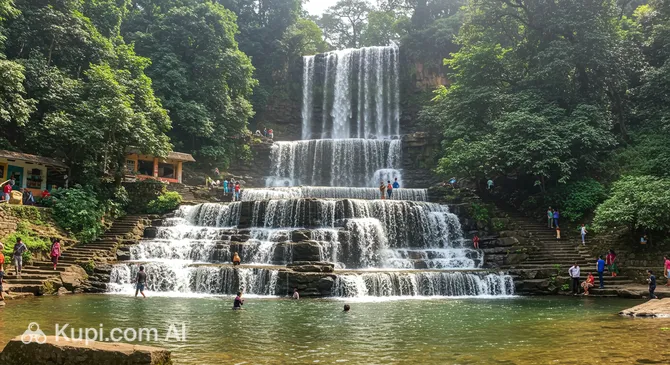
One of Mussoorie's signature landmarks is undoubtedly Kempty Falls. This multi-tiered waterfall, where water drops from a height of about 12 meters, forms several natural pools at its base. It is a wonderful place to cool off on a hot day, have a picnic, or simply enjoy the beauty of nature. Numerous cafes and small shops offering local snacks and souvenirs are located around the waterfall.

Kempty Falls. Illustration.
Source: Kupi.com AI

Traveler photos:

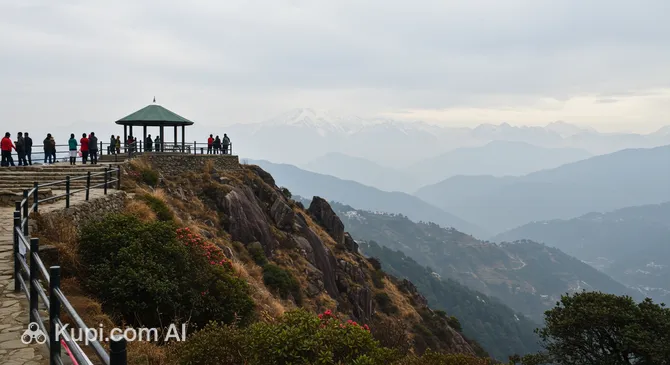
To enjoy the best panoramic views of the Himalayas, head to Lal Tibba – the highest point in Mussoorie, located in the historic Landour district. The name "Red Hill" is fitting: it offers breathtaking views of the snow-covered peaks of Bandarpoonch, Kedarnath, and Badrinath, which are especially impressive at sunrise and sunset. For the convenience of tourists, an old Japanese telescope is installed here, allowing you to see the mountains in detail.

Lal Tibba. Illustration.
Source: Kupi.com AI

Traveler photos:

Gun Hill is the second-highest peak in Mussoorie and has a fascinating history. During colonial times, a cannon was fired from here daily at noon so that residents could synchronize their watches. Today, Gun Hill can be reached by cable car, which is a small adventure in itself. From the top, you get magnificent 360-degree views of the town, the green Doon Valley, and the majestic Himalayas. It is a popular spot for walks, photography, and relaxing in one of the many cafes.

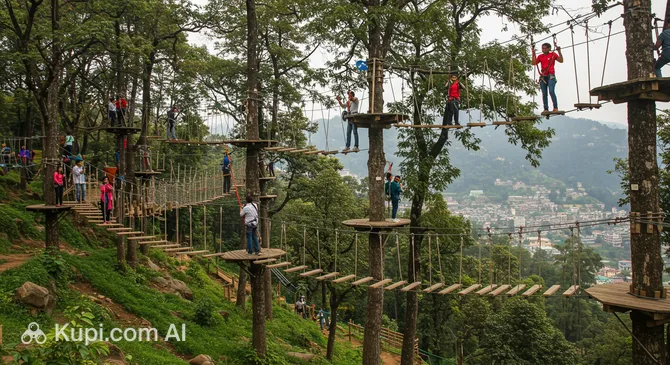
For lovers of active recreation and thrills, Mussoorie Adventure Park is an excellent choice. Set among scenic hills, this park offers a wide range of activities such as ziplining, rock climbing, rope courses, and more. It is a great place for families or groups of friends looking to add some adrenaline and unforgettable experiences to their trip.

Adventure Park Mussoorie. Illustration.
Source: Kupi.com AI

Traveler photos:

If you are looking for seclusion and want to immerse yourself in pristine nature, head to Cloud's End. This picturesque spot, located at the western end of Mussoorie, literally means the "end of the clouds." Here, amidst dense oak and deodar forests, sits one of Mussoorie's oldest buildings – an estate built in 1838. Cloud's End is perfect for hiking, bird watching, and enjoying stunning views of the Aglar Valley and the Himalayas, especially when the area is shrouded in clouds.

Local Cuisine

The cuisine of Mussoorie is a delightful blend of flavors, reflecting its location at the crossroads of cultures. Here, you will find traditional dishes from the Garhwal region as well as a noticeable Tibetan influence and popular North Indian culinary hits. The city's gastronomic scene offers a variety that can satisfy both those seeking authentic local dishes and those who prefer familiar classics.

Among the dishes you must try in Mussoorie are momo – fragrant Tibetan dumplings, steamed or fried, filled with vegetables or meat. This is one of the most popular treats in town. Also, look out for aloo ke gutke – spicy potatoes prepared Garhwali-style with local spices and herbs, and kafuli – a thick dish made from spinach and fenugreek. Naturally, you can always find classic North Indian dishes here, such as various types of curry, dal (lentil soup), and fresh bread (naan, roti).

For drinks, masala tea is universally popular in Mussoorie – a warming and aromatic beverage perfect for the cool mountain weather. You should also try fresh juices made from local fruits and refreshing lassi (a yogurt-based drink). Alcoholic beverages are available in some restaurants and bars, but the focus in Mussoorie is more on cozy tea houses and cafes.

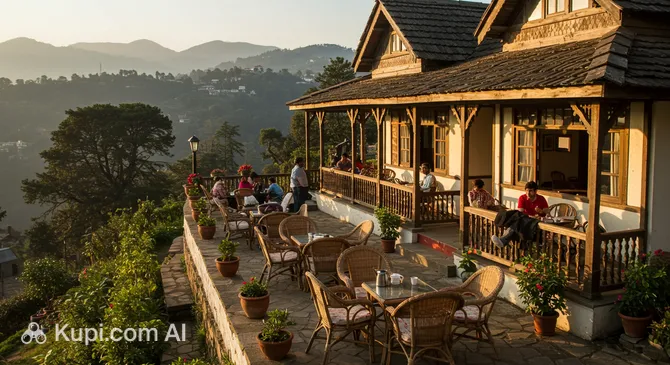
The dining culture in Mussoorie is centered around the main street – Mall Road, which is home to many restaurants, cafes, and street food stalls. Here you can find something for every taste and budget, from simple eateries to restaurants with more refined menus, such as 19th Century, which offers a special atmosphere. Street food also plays an important role: be sure to try hot corn (bhutta), various types of chaat (savory snacks), or sweet jalebis. For fresh produce and local specialties, you can head to the markets, for example, in the Bazaar Mall area.

19th Century. Illustration.
Source: Kupi.com AI

Traveler photos:

Overall, Mussoorie's gastronomic scene attracts visitors with its authenticity and diversity. The opportunity to enjoy the unique flavors of the Himalayan region, from hearty Garhwali dishes to spicy Tibetan momos, combined with stunning views, makes every meal here a small adventure.

Travel Tips

Welcome to Mussoorie, the enchanting "Queen of the Hills"! To make your journey to this picturesque corner of India as comfortable and memorable as possible, we have prepared some practical tips. They will help you navigate better and enjoy every moment of your stay.

  1. Clothing and Essentials: The climate in Mussoorie is mountainous, so the weather can be changeable. Be sure to bring layered clothing: light sweaters or fleece jackets for daytime walks, and a warm jacket or shawl for evenings, especially during the winter months (November to February). In summer (March to June), it is warm during the day, but evenings remain cool. During the monsoon season (July to September), don't forget an umbrella or a raincoat. Comfortable walking shoes are your best friend on Mussoorie's hilly streets. Sunscreen, sunglasses, and a hat will also be useful, as the mountain sun can be strong. If you plan to visit temples, choose modest clothing that covers your shoulders and knees.

  2. Transport: You can get around Mussoorie in various ways. For short distances, especially along the famous Mall Road (where vehicle traffic is often restricted), walking is the best option. For longer trips, such as to Kempty Falls, you can hire a local taxi or use cycle rickshaws. Always agree on the fare in advance, as meters are not always used. Public buses run between Mussoorie and nearby cities like Dehradun, but their network within the resort itself is not very extensive. Renting a car with a driver is also an option for exploring the surroundings more comfortably.

  3. Finance: The local currency is the Indian Rupee (INR). You can exchange currency at banks or authorized exchange bureaus in Mussoorie, although rates may be better in larger cities. Credit and debit cards (Visa, Mastercard) are accepted in most hotels, restaurants, and large shops; however, always carry enough cash for small purchases, taxis, and market visits. There are ATMs in Mussoorie, but they can sometimes run out of cash, especially during peak season. Tipping is welcomed in restaurants (5-10% of the bill if service is not included) and for porters or guides.

  4. Health and Safety: There are pharmacies in Mussoorie where you can buy basic medicines, but it's better to bring a small first-aid kit with your usual medications. For serious medical help, you may need to go to clinics in Dehradun. It is recommended to drink only bottled water. Be careful with street food and choose well-established places. Mussoorie is generally a safe city for tourists, but you should take standard precautions: watch your belongings and avoid walking in deserted areas after dark. Beware of monkeys, especially if you have food in your hands – they can be quite persistent!

  5. Communication: The main languages spoken in Mussoorie are Hindi and Garhwali. However, in tourist areas, hotels, and shops, many people speak English. Learning a few simple phrases in Hindi, such as "Namaste" (Hello) or "Dhanyavad" (Thank you), is a nice gesture. A local SIM card can be purchased at mobile shops (passport and photo required). Wi-Fi is available in most hotels and many cafes, but internet speed can vary, especially in remote areas. Mobile signals are generally stable, but there may be outages in some mountainous regions.

  6. Local Etiquette: Residents of Mussoorie, and India in general, are hospitable and friendly. A "Namaste" greeting with palms folded at the chest is always appropriate. When visiting temples or someone's home, it is customary to remove your shoes. Ask for permission before taking photos of people. In public places, try to behave discreetly; overly public displays of affection may be viewed unfavorably. Bargaining is common at markets, but do so politely and with a smile.

  7. What to Avoid: Try not to litter – help preserve the beauty of this mountain resort. It is also not recommended to feed the monkeys, as this can make them aggressive and dependent on tourist handouts. Show respect for local customs and traditions.

  8. Special Tip for Mussoorie: If you plan your trip between mid-October and January, don't miss the chance to see a unique natural phenomenon – the "Winter Line." This is a sharply defined second horizon line that appears in the west during sunset, painting the sky in incredible colors. This spectacle can be observed from only a few places in the world, and Mussoorie is one of them!

We hope these tips make your journey to Mussoorie even more pleasant and carefree. Enjoy the crystal-clear air, breathtaking views, and the unique atmosphere of this amazing place!

Entertainment & Nightlife

Evening Mussoorie has its own special charm, though its nightlife differs significantly from bustling metropolises. You won't find an abundance of nightclubs or districts that pulse until dawn here. Instead, the "Queen of the Hills" offers a more tranquil and sophisticated leisure experience, ideal for those who appreciate atmospheric dinners, leisurely strolls under the starry sky, and cozy gatherings.

The main hub of evening activity is certainly the famous Mall Road. As the sun sets, it transforms: shop windows light up, appetizing aromas waft from numerous restaurants, and the air fills with the lively chatter of tourists and locals. An evening walk along Mall Road is a chance to enjoy the cool mountain air, buy souvenirs (some shops stay open late), and simply soak in the relaxed atmosphere of this resort town.

Regarding venues, the primary focus in Mussoorie's evening scene is on restaurants and cafes. You can find establishments serving traditional Indian and Tibetan cuisine as well as restaurants with European menus. For a special dinner, you might consider the 19th Century restaurant, known for its ambiance and quality food. While specialized nightclubs are virtually non-existent in Mussoorie, some hotels have their own bars where you can enjoy a drink or two in a quiet setting. The atmosphere in such places is usually relaxed, without a strict dress code, and the crowd consists mainly of tourists.

Beyond Mall Road, it is worth exploring the Landour district, which borders Mussoorie. It is famous for its quieter and more authentic atmosphere. An evening walk through its streets, perhaps around the Landour Clock Tower, will bring a sense of peace. The area around Bazaar Mall is also suitable for an evening promenade to find local delicacies or souvenirs, as life there continues after sunset. There are few classic concert venues here, but small musical evenings are sometimes held in hotels or open-air spaces.

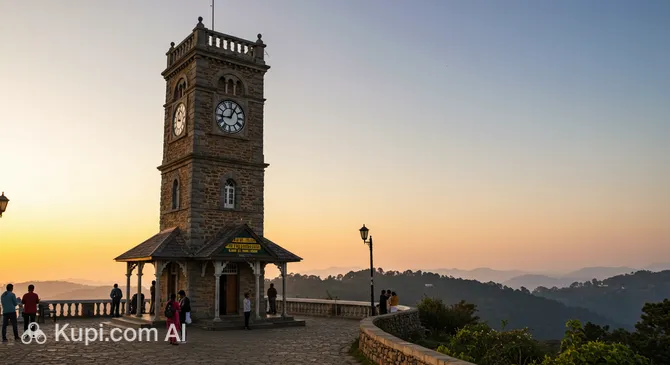
Landour Clock Tower. Illustration.
Source: Kupi.com AI

Traveler photos:

Practical Tips: The best time for evening walks and dinners is from 7:00 PM to 10:00 PM, as most establishments close relatively early, around 10:30 PM–11:00 PM. Average restaurant prices are moderate but can vary depending on the level of the establishment. Moving around Mussoorie at night is most convenient by taxi. It is recommended to agree on the price in advance or use taxi services provided by hotels. The dress code in most places is casual and comfortable.

Safety: Mall Road and other central areas of Mussoorie are generally safe for evening walks. However, as with everywhere, it is worth taking basic precautions: keep an eye on your belongings and avoid poorly lit or deserted areas late at night. To call a taxi at night, it is best to contact the hotel reception or use trusted services.

During the day, Mussoorie offers many other forms of entertainment. You can visit the exciting Mussoorie Adventure Park, explore historical sites like George Everest's House, or head to scenic waterfalls such as the famous Kempty Falls. There are few museums in the town, but the historical heritage is felt in the architecture and atmosphere of the old districts. The theatrical scene is not very active, but cultural events are sometimes held during festivals or at hotels.

Parks & Museums

Mussoorie, a charming mountain resort, captivates not only with its picturesque landscapes but also with its rich cultural heritage. Here you will find peaceful green spots for outdoor relaxation and interesting places that tell the story of the region's history and culture.

For nature lovers, Mussoorie offers many delightful locations. One of the most famous is Kempty Falls, a cascading waterfall where you can cool off in the refreshing water and enjoy the beauty of the surrounding nature. It is a popular spot for picnics and relaxation.

Kempty Falls. Illustration.
Source: Kupi.com AI

Traveler photos:

Another iconic point is Lal Tibba, the highest peak in Mussoorie, offering breathtaking panoramic views of the snow-capped Himalayan ranges, especially at sunrise or sunset. For those seeking seclusion amidst lush greenery, Cloud's End is an ideal choice. This scenic spot, surrounded by thick oak and deodar forests, is considered the geographical end of Mussoorie and offers quiet walking trails.

Lal Tibba. Illustration.
Source: Kupi.com AI

Traveler photos:

While there are not many traditional museums in Mussoorie, its history and culture come to life in iconic landmarks. Be sure to visit George Everest's House, the former residence and observatory of the famous geographer after whom the world's highest peak is named. This site not only offers a glimpse into colonial architecture but also allows you to learn more about the history of mapping India.

George Everest House. Illustration.
Source: Kupi.com AI

Traveler photos:

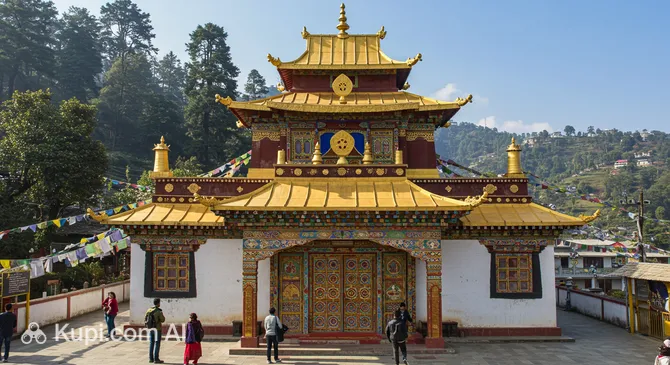
The cultural diversity of Mussoorie is reflected in the Tibetan Buddhist Temple; bright and peaceful, it is an important spiritual center for the local Tibetan community and attracts visitors with its colorful architecture and calm atmosphere.

Tibetan Buddhist Temple. Illustration.
Source: Kupi.com AI

Traveler photos:

Strolling through the charming Landour district, you won't miss the Landour Clock Tower, an old landmark that adds a special charm to the area. For families with children, a visit to the Malsi Deer Park, located on the way to Mussoorie, might be interesting. Here you can see deer and other animals in their natural habitat and simply enjoy a pleasant time in the fresh air.

Landour Clock Tower. Illustration.
Source: Kupi.com AI

Traveler photos:

To dive deeper into the atmosphere of Mussoorie, step off the beaten tourist path. Explore the lesser-known hiking trails around Landour or visit the local market to feel the authentic vibe and perhaps find unique souvenirs.

Getting Around

Getting around Mussoorie, a picturesque hill station, can be done in several ways, each adapted to its hilly terrain. Public transport here has its own characteristics, and knowing them will help you navigate the town easily.

The backbone of Mussoorie's transport system consists of local buses. These can be either state-run or private carriers, operating on main routes and connecting different parts of the town as well as nearby settlements. For more flexible and faster travel, especially to remote attractions or if you are traveling in a group, taxis are widely used. Both private taxis and shared jeeps are common; the latter follow fixed routes and offer a more economical travel option. In some areas, such as along the popular Mall Road, you can find cycle rickshaws – an exotic way for leisurely short trips.

One of the iconic transport features of Mussoorie is the Gun Hill Ropeway. It is not just a means of transport but a popular attraction that allows you to enjoy breathtaking panoramic views of the Himalayas. The ascent to Gun Hill is a must-do for many tourists.

The fare payment system in Mussoorie is mainly based on cash payments. Bus tickets are usually purchased directly from the conductor during the journey. Fares are generally low. When using a taxi, it is recommended to agree on the fare in advance with the driver, especially for private bookings. Some taxi stands may have official rates posted for popular destinations. In shared jeeps, the fare is usually fixed per seat. Specialized travel cards or mobile apps for public transport payment are generally not available in Mussoorie.

Tourists should keep a few practical points in mind. It's best to check bus schedules on the spot as they can change, particularly depending on the season. During peak tourist season, transport can be quite crowded. Public transport usually operates from early morning until evening; night services may be limited or non-existent. Tickets for the ropeway are purchased at the ticket office at the lower station.

As an alternative to public transport, taxis are always an option. For exploring central areas of Mussoorie, such as Mall Road and its vicinity, walking is ideal. This allows you to enjoy the mountain resort's atmosphere and browse local shops and cafes. Some tourist zones also offer horse or pony rides, which can be a fun addition to your holiday, especially if you are traveling with children.

Accommodation

In Mussoorie, you will find a wide selection of accommodation options to suit the needs and budget of any traveler. There are budget guest houses and hostels for price-conscious tourists, as well as comfortable mid-range hotels offering good value for money. For those seeking luxury and first-class service, Mussoorie has premium resorts and boutique hotels, many of which boast magnificent views of the Himalayas. Renting apartments and villas is also popular, which is particularly convenient for families or large groups.

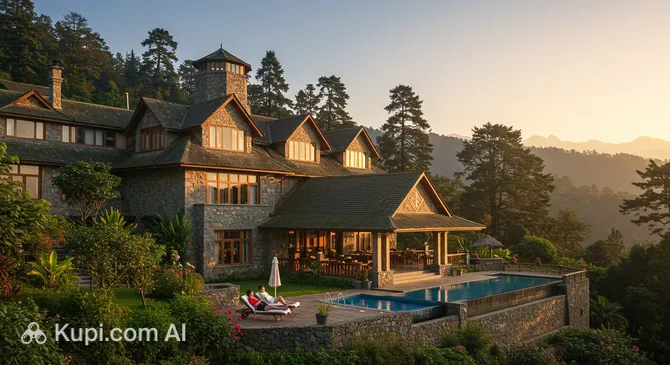
When choosing a place to stay, look for areas near Mall Road – the city's main tourist artery, where shops, restaurants, and primary entertainment are concentrated. Options located near key attractions or transport hubs are also convenient, as they will make it easier for you to move around this mountain resort. For example, for those looking for comfort and high-level service, Regency Dehradun Resort and Spa could be a suitable option, offering quality accommodation.

Regency Dehradun Resort and Spa. Illustration.
Source: Kupi.com AI

Traveler photos:

The price range for accommodation in Mussoorie varies from very affordable to luxury. You can book a hotel or apartment through popular international online booking platforms, directly on hotel websites, or through local travel agencies. It is highly recommended to book accommodation in advance, especially if your trip coincides with the peak tourist season (usually the summer months and holiday periods), as the best options can be snapped up quickly.

Nearby Cities

For those who wish to explore the surrounding area, Mussoorie serves as an excellent starting point for day trips to several interesting nearby locations:

For instance, Dehradun, the capital of Uttarakhand located just 16 km away, attracts visitors with its scenic views, colonial architecture, and attractions like the Forest Research Institute. A bit further, about 42 km away, is Rishikesh, world-renowned as the "Yoga Capital of the World," where you can visit numerous ashrams and enjoy the peaceful atmosphere on the banks of the sacred Ganges. You might also consider a trip to Haridwar (57 km), one of the seven holiest cities in Hinduism, famous for its ghats and the impressive evening Ganga Aarti ceremonies. These cities offer a unique combination of culture, spirituality, and natural beauty.

CityPopulationDistance
Dehradun578 42016 km
Majra8 73019 km
Telpur9 93019 km
Ganeshpur16 17523 km
Lakshmipur10 68827 km

These nearby destinations allow for a more complete understanding of the diverse culture, spiritual traditions, and natural landscapes of the Uttarakhand region.

Shopping & Souvenirs

Mussoorie, the charming "Queen of the Hills," offers its guests not only breathtaking landscapes but also pleasant shopping opportunities. Here you won't find massive modern malls like in megacities, but you can purchase authentic local goods, souvenirs, and handicrafts that will remind you of your trip to India.

The main artery for shopping in Mussoorie is undoubtedly Mall Road. This bustling street stretches along the ridge and is dotted with many shops, stalls, and boutiques. Here you can find clothing, including warm woolen items, jewelry, books, antiques, and, of course, souvenirs. Another popular spot, especially for those looking for a more traditional atmosphere, is Landour Bazaar, located in a quieter part of town. Here you can find old shops offering everyday items as well as unique crafts.

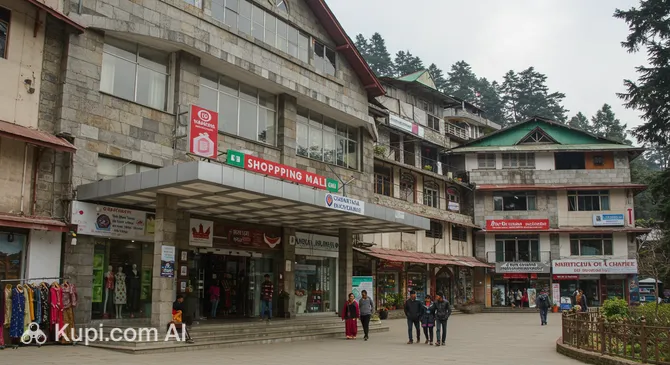
Although Mussoorie is better known for its street markets and small shops, you can also find more organized shopping spaces. One such place is the Bazaar Mall, where various shops offering clothing, accessories, and other goods are gathered under one roof.

Mall Bazaar. Illustration.
Source: Kupi.com AI

Traveler photos:

Besides Mall Road and Landour Bazaar, it's worth checking out the Tibetan Market. Here you'll find colorful Tibetan artifacts, prayer flags, jewelry, clothing, and souvenirs. It's a great place to immerse yourself in the culture and pick up something unique. Markets in Mussoorie usually offer the opportunity to bargain, so don't hesitate to ask for a discount, especially if you're buying several items.

As souvenirs from Mussoorie, tourists often bring back woolen goods (shawls, sweaters, hats, gloves), handmade wooden items, Tibetan souvenirs, incense sticks and oils, as well as local jams, pickles, and honey. Books about the history of the region and the Himalayas are also popular.

Shops in Mussoorie are typically open from 10:00-11:00 AM until 8:00-9:00 PM, though hours can vary depending on the season and the type of store. At markets and small stalls, cash is preferred, although larger stores and hotels accept credit and debit cards. The UPI mobile payment system is also widely used in India.

Regarding the Tax-Free system, it is generally not common in the small shops and markets of Mussoorie that cater to everyday goods and souvenirs. If you make large purchases in specialized stores, it's worth asking the seller about tax refund possibilities, but overall, it is not standard practice for tourist shopping in this region.

Reached the end of the page?

That means the route is fully explored