Support

Jantar Mantar, Ujjain

About

Jantar Mantar, Ujjain is one of five unique astronomical observatories built in India during the 18th century. Located in the sacred city of Ujjain, which has been an important center of astronomical knowledge since ancient times, this observatory is an amazing complex of architectural and engineering structures specifically designed for observing celestial bodies and performing astronomical calculations.
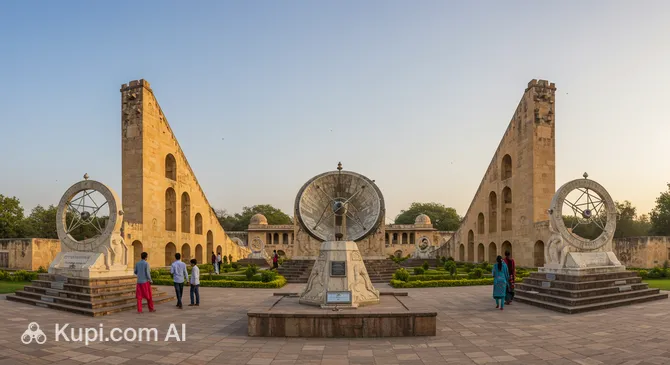
Jantar Mantar, Ujjain. Illustration.
Source: Kupi.com AI

Traveler photos:

The main feature of Jantar Mantar is its monumental instruments, skillfully crafted from stone and metal. These giant devices, each with a precise purpose, allowed ancient astronomers to determine time, track the movement of planets and stars, predict eclipses, and perform other complex astronomical calculations with astonishing precision for their time.

A visit to Jantar Mantar in Ujjain is more than just a tour of ancient structures; it is a true immersion into the history of science. You can see firsthand how human thought and the engineering genius of the past sought to understand the mysteries of the Universe long before the advent of modern technology. The site is impressive for its scale and the key role it played in the scientific development of its era, remaining a vital testament to India's rich astronomical heritage.

Contacts

As Jantar Mantar, Ujjain is a significant historical and tourist landmark, it is recommended to check the official website of the attraction, if available, or visit tourist information centers in the city of Ujjain for the most up-to-date information on opening hours, admission fees, and available tours. The observatory is located within the city limits and is generally easy to reach via local transport or taxi.

How to contactContact
AddressChintaman Rd, Jabsinghpura, Ujjain, Madhya Pradesh 456010, India

What to Do

A visit to Jantar Mantar in Ujjain offers a unique opportunity to connect with the history of science. You can closely examine the ancient astronomical instruments, each of which is striking in its design and concept. This is a great chance to learn exactly how these devices worked and how the scholars of the past, without modern technology, used them to determine time and the coordinates of celestial bodies.

To dive deeper into the atmosphere and understand the significance of what you see, it is recommended to join a guided tour. Guides often share fascinating stories about ancient Indian astronomy and mathematics, and sometimes even demonstrate the working principles of certain instruments. Special attention should be paid to the monumental sundial and other large-scale structures, whose size and intended accuracy still command admiration today.

Photography is permitted within the observatory, so you can capture these amazing structures as keepsakes. Sometimes interactive educational programs are held here, and participating in one can be another highlight of your visit. Therefore, when planning your trip, it's worth checking if any such events are scheduled for the day you visit Jantar Mantar.

Getting There

Reaching the Jantar Mantar observatory is straightforward, as it is located in Ujjain, an important cultural and religious hub of India. Ujjain itself is well-connected to major cities in the state of Madhya Pradesh and neighboring regions. You can arrive by train, bus, or rented car, choosing the most convenient travel method for you.

Since Jantar Mantar is situated in the central part of Ujjain, getting there from your accommodation or major transport hubs is quite simple. For instance, from the Ujjain railway station, you can quickly reach the observatory by taxi, local auto-rickshaw, or public transport routes that pass near this famous landmark.

For those who prefer organized travel, many hotels and travel agencies in Ujjain offer excursions that include a visit to Jantar Mantar. This can be a convenient option, especially if you want to see other significant city sites within a single trip accompanied by a guide. This approach saves time on route planning and makes your exploration of Ujjain's historical heritage even more insightful.

Nearest city: Ujjain

History & Facts

Jantar Mantar in Ujjain holds a fascinating history, closely linked to the name of Maharaja Sawai Jai Singh II, the ruler of Jaipur. This enlightened monarch, known for his deep interest in astronomy and science, ordered the construction of the observatory between 1728 and 1734. The choice of Ujjain for such an ambitious project was far from accidental. Since ancient times, this city has been considered an important center of Indian astronomy—it was through Ujjain that India's prime meridian traditionally passed, and legendary scholars like Aryabhata, Varahamihira, and Brahmagupta made invaluable contributions to astronomical knowledge here.

The observatory in Ujjain became a vital link in a network of five similar astronomical centers that Sawai Jai Singh II established across India. Other observatories in this network are located in Jaipur, Delhi, Varanasi, and Mathura. Each was equipped with unique monumental instruments designed for precise observations of celestial bodies. The creation of such a network demonstrates the Maharaja's grand approach to scientific development and his quest for accurate astronomical data, which was essential for creating calendars and predicting celestial phenomena.

The structures of Jantar Mantar in Ujjain represent a rare and impressive blend of architectural art, engineering, and 18th-century astronomical knowledge. These are not just buildings, but giant measuring instruments, each with its own specific purpose. Their precision and sophisticated design are truly striking, especially considering the technology of the time. Today, Jantar Mantar is not only a tourist attraction but also an important monument to the history of science, bearing witness to India's rich astronomical legacy and the genius of its scientists and rulers.

Time Needed

To fully explore all the instruments and soak in the atmosphere of the ancient Jantar Mantar observatory in Ujjain, most visitors will need between 1 and 2 hours. This time is usually sufficient to leisurely walk through the grounds, examine each of the monumental astronomical devices, and perhaps use the services of a guide or read the information plaques.

If you have a particular passion for the history of science or astronomy, or simply enjoy studying such sites in detail, you might spend a bit more time here. Some visitors prefer to stay longer to take photos from different angles or just sit in silence, imagining how ancient astronomers conducted their observations. However, on average, two hours is quite enough for a meaningful visit.

When planning your visit, keep in mind that your level of interest in each instrument and your desire to delve into its purpose may affect the total time spent at Jantar Mantar. In any case, it is a place that leaves a lasting impression and allows you to touch the amazing world of ancient knowledge.

Working Hours

The Jantar Mantar observatory in Ujjain is typically open to visitors year-round. However, exact opening hours may change depending on the season or other factors. Generally, such historical sites operate during daylight hours, for example, from sunrise to sunset or on a fixed schedule, often from 10:00 AM to 5:00 PM.

To get the most current information regarding opening hours, ticket prices, and the need for advance booking (which may be relevant during peak tourist season or for group visits), it is highly recommended to check the official website of the attraction, if available, or contact local tourist information centers in Ujjain directly before your visit. This will help you plan your trip effectively and avoid any potential inconvenience.

10:30 – 17:30

Nearby

Visiting an iconic landmark like Jantar Mantar, Ujjain is a highlight in itself. However, to make your trip even more fulfilling, it is worth exploring other interesting sites nearby. Studying the surrounding area will allow you to dive deeper into the atmosphere of Ujjain and discover new facets of this ancient city in India.

There are several noteworthy sites near the Jantar Mantar observatory that can complement your cultural itinerary. Below is a list of some of them, along with their approximate distances:

This list will help you plan your route and make the most efficient use of your time to get acquainted with the rich heritage of Ujjain.

NameDistance
Triveni Museum0.6 km
Mahakal Lok0.7 km
Mahakal Lok Corridor0.8 km
Singhasan Battisi of Vikramaditya1.2 km
Shri Mahakaleshwar Jyotirlinga Temple1.3 km
Chaubis Khamba Mata Temple1.5 km
Shipra River1.7 km

Have you reached the end of the page?

So the route has been studied inside and out