Support

Thousand Pillar Temple

About

The Thousand Pillar Temple is an outstanding Hindu temple complex located in the city of Warangal, in the state of Telangana, India. It is considered one of the main masterpieces of Kakatiya dynasty architecture, which ruled in the 12th-14th centuries. This temple, also known as the Rudreshwara Swamy Temple, is not only an important pilgrimage site but also a national heritage site, attracting history and architecture enthusiasts from all over the world.
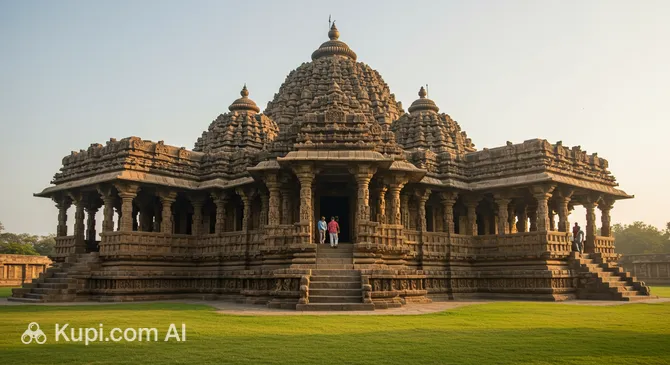
Thousand Pillar Temple. Illustration.
Source: Kupi.com AI

Traveller photos:

The temple gets its name from its unique construction. Its halls and pavilions are supported by hundreds of intricately carved stone columns, each featuring unique ornamentation and detail. Besides the columns, visitors are impressed by the massive halls, carved ceilings, and a huge monolithic sculpture of the Nandi bull, carved from a single stone. The star-shaped form of the temple and the use of black granite give it a special grandeur and monumentality.

The complex, built in the 12th century by order of King Rudra Deva, is dedicated to three supreme Hindu deities simultaneously: Shiva, Vishnu, and Surya. Each of them has a separate altar connected by a common hall. This structure reflects the religious beliefs of the Kakatiya era and makes the Thousand Pillar Temple a unique monument where architectural splendor is combined with deep spiritual meaning.

Contacts

Since the Thousand Pillar Temple is primarily an important archaeological and historical site managed by the state, finding a single official website or direct contact number can be difficult. It is recommended to check the websites of the Telangana State Tourism Department or inquire on-site for the most up-to-date information on opening hours, visiting rules, and possible changes.

The temple is located in the Hanamkonda district and is easily accessible by local transport (taxi or auto-rickshaw) from the Warangal railway station, which is about 6 kilometers away. Below are some contact details that may be useful for planning your visit.

How to contactContact
Address2H3F+CWR, Hyderabad - Warangal Hwy, Raganna Darwaja, Rd, Brahmanawada, Hanamkonda, Telangana 506001, India
Phone+91 99892 14813
Websitewww.telanganatourism.gov.in

What to Do

A visit to the Thousand Pillar Temple is an immersion into a world of ancient art and spirituality. The main activity for guests is a leisurely walk through its halls and examining the exquisite stone carvings. Visitors can spend hours admiring scenes from mythology and daily life in medieval India captured on the columns. The central hall, surrounded by many unique pillars, creates a sense of harmony and has amazing acoustics, as noted by many travelers.

For lovers of history and architecture, the temple offers a unique opportunity to study ancient inscriptions, bas-reliefs, and sculptures in detail. This place is a true source of inspiration for photographers and artists, who are drawn by the amazing play of light and shadow among the carved arches and colonnades. Examining the construction details and the craftsmanship of ancient architects allows for a deeper understanding of the greatness of the Kakatiya dynasty.

The Thousand Pillar Temple is not just an open-air museum, but an active spiritual center. Visitors can witness religious ceremonies that are regularly held here. In addition, traditional festivals and cultural events are often organized on the temple grounds, providing a closer look at local traditions. This gives the visit a special atmosphere and makes it truly memorable.

Getting There

The Thousand Pillar Temple is conveniently located in the Hanamkonda area, which is part of the Warangal metropolitan area. The city itself has good transport links with other major centers in Southern India. The nearest metropolis, Hyderabad, is about 140 kilometers away, and from there, you can easily reach Warangal by train or intercity bus.

Upon arrival in the city, the temple can be reached by local transport. It is located just a few kilometers from the Kazipet railway station, from where a taxi, auto-rickshaw, or city bus will take you quickly to your destination. The trip doesn't take much time, making a visit convenient even with limited time.

If you are traveling by car, reaching the temple is also easy thanks to the region's well-developed road network. There is usually parking for private vehicles on the complex grounds. Important tip: when planning a visit on weekends or during major religious holidays, it is recommended to check transport schedules in advance and be prepared for large crowds, as the temple attracts especially many pilgrims and tourists at these times.

Nearest city: Warangal

History & Facts

The history of the Thousand Pillar Temple begins in the 12th century, when it was built by order of King Rudra Deva. Completed in 1163 AD, the construction took place during the peak of the Kakatiya dynasty, which ruled the region. This temple in Warangal became not just a religious building, but a true symbol of the power and spiritual unity of the rulers, embodying the advanced engineering and architectural solutions of the time. Its creation was intended to demonstrate the greatness of the dynasty and its contribution to the culture of India.

However, prosperity was short-lived. In the 14th century, the temple's history was marred by tragic events: invasions by the forces of the Delhi Sultanate led to the decline of the Kakatiya dynasty and the partial destruction of the temple complex. Despite significant damage, the temple was not abandoned. For the local population, it continued to be an important spiritual and cultural center, maintaining its sacred significance throughout the centuries.

New life was breathed into the ancient walls in the 20th century. Thanks to large-scale restoration work carried out by the Archaeological Survey of India, it was possible not only to stop the decay but also to restore many lost elements. Specialists approached the preservation of original details with great care, allowing the temple to return to its historical appearance. Today, we see this monument as it was intended many centuries ago — as a testament to a great era and the skill of ancient architects.

Time Needed

When planning a visit to the Thousand Pillar Temple, you should allow for 1.5 to 3 hours. This will be quite enough time to enjoy the unique atmosphere of this place located in the city of Warangal without rushing. You will be able to examine the intricate carvings on hundreds of columns in detail, walk along the star-shaped base of the temple, and take impressive photos against the backdrop of ancient architecture.

For those limited on time, a shorter tour is possible, taking about an hour and allowing you to see the main elements of the complex. However, to truly soak in the spirit of this outstanding architectural monument of India, it is recommended not to hurry. The full time will allow you not only to study the architectural details but also to rest peacefully in the shade of ancient columns or observe religious rituals if your visit coincides with them.

Working Hours

The Thousand Pillar Temple in Warangal is open to visitors year-round. According to available information, the opening hours are daily from 6:00 AM to 8:00 PM. This allows guests flexibility in planning their visit. For a more comfortable tour and to avoid the midday heat, it is recommended to visit the temple in the morning or evening hours.

Generally, no prior booking is required for a standard visit, and entrance is free. However, given that various festivals and religious ceremonies are held at the temple, the schedule may change. Therefore, before traveling to India, it is always useful to check current information on tourism portals or local sources, especially if your visit falls on a public or religious holiday.

6:00 – 20:00

Nearby

A visit to the Thousand Pillar Temple is undoubtedly a key highlight of any trip to Warangal. However, to make your journey truly rewarding, it is worth paying attention to its surroundings as well. In the immediate vicinity of the temple, there are many other interesting places that will help you gain a deeper understanding of the history, culture, and modern life of this corner of India.

From ancient shrines and picturesque parks to authentic restaurants and shopping centers, exploring the surrounding area will allow you to get a more complete picture of the city. Below is a list of attractions that are easily accessible from the Thousand Pillar Temple.

NameDistance
Sri Siddeshwar Temple0.9 km
Paradise Biryani1 km
Bhadrakali Temple1.3 km
Narasimha Swamy Temple1.7 km
Kakatiya Zoological Park1.8 km
Blue Diamond Restaurant & Bar2.2 km
Trends3.1 km

Reached the bottom of the page?

Looks like you know this route inside out