Support

Lapangan Banteng Park

About

Lapangan Banteng Park is not just a picturesque green space, but the true historical heart of Jakarta. Located in the central part of the Indonesian capital, this park is a vital public space where the past harmoniously intertwines with the present, offering visitors both peaceful relaxation and food for thought. The park holds immense cultural and historical significance for the Indonesian people.
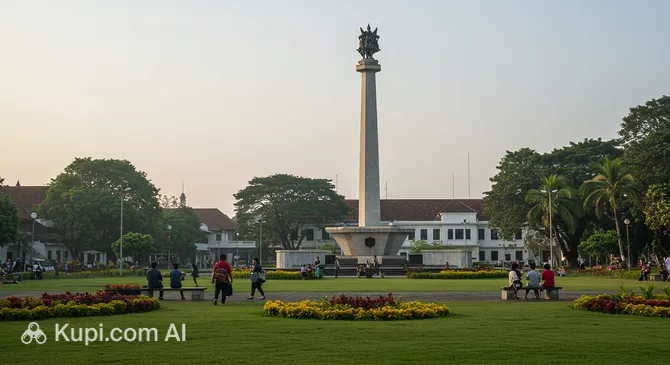
Lapangan Banteng Park. Illustration.
Source: Kupi.com AI

Traveler photos:

The centerpiece of the park is the majestic West Irian Liberation Monument (Monumen Pembebasan Irian Barat). Erected in 1963, this monument depicts a powerful figure of a man with outstretched arms breaking his chains. This expressive sculpture, designed by Edhi Sunarso, symbolizes freedom, independence, and the triumph of the people, serving as a reminder of important chapters in the country's history. The monument stands 35 meters tall and is a key focal point of the park.

Due to its strategic location near administrative and business districts, Lapangan Banteng serves as a popular venue for city festivals, exhibitions, and public events. Following a recent renovation, the park has been transformed into a modern and comfortable space with manicured gardens, jogging tracks, an amphitheater, and illuminated fountains, making it an ideal place for walking and relaxing at any time of day.

Contacts

Since Lapangan Banteng Park is a public urban space, it does not have a single visitor contact center. To find the latest information on opening hours, visitor rules, or the schedule of temporary events and exhibitions, it is recommended to visit official Jakarta tourism portals or local tourist information centers. The park is located in the city center and is easily accessible by taxi or public transport.

How to contactContact
AddressRRJM+4W5, Pasar Baru, Sawah Besar, Central Jakarta City, Jakarta 10710, Indonesia

What to Do

Lapangan Banteng Park offers visitors many ways to enjoy their time. First and foremost, it is an excellent place for leisurely strolls and relaxing in a green zone amidst Jakarta's busy urban landscape. Guests can walk along well-kept paths, rest on benches, and admire the park's central attraction—the famous West Irian Liberation Monument. The area is perfect for both a morning jog and a relaxing evening walk when the fountain lights are turned on.

Beyond relaxation, the park often serves as a hub of cultural life. Tourists looking to get closer to local traditions should check if any community events, festivals, or national celebrations are being held during their visit. For those who want to see the park from a unique perspective, there is a great opportunity: the nearby National Monument (Monas) offers an impressive panoramic view of Lapangan Banteng and its surrounding colonial buildings. It is a fantastic spot for photography and observing the cityscape from above.

Getting There

Getting to Lapangan Banteng Park is quite simple thanks to its central location in Jakarta. One of the most convenient ways is to use taxis or ride-sharing services like Grab or Gojek, which are widely available throughout the capital. The trip from most central areas will be quick, though you should always allow extra time due to Jakarta's heavy traffic. Simply set "Lapangan Banteng" as your destination, and the driver will take you directly to one of the park's entrances.

For those who prefer public transport, the TransJakarta rapid bus system is an excellent option. Several stops are within walking distance of the park, including "Lapangan Banteng" and "Lapangan Banteng 2," served by multiple bus routes. This is not only economical but often faster, as TransJakarta buses run in dedicated lanes, helping to bypass some of the traffic.

Another way to reach the park is via the KRL Commuterline trains. The nearest railway stations, Juanda and Gambir, are within a 10-15 minute walk. This option is particularly convenient for tourists staying in more distant areas of Jakarta or its suburbs. Additionally, the park's location near iconic landmarks like the National Monument (Monas) and the Istiqlal Mosque makes it easy to combine your visit with a walking tour of the city's main attractions.

Nearest city: Jakarta

History & Facts

The history of Lapangan Banteng Park is inextricably linked with the key stages of Indonesia's development. Its roots go back to the colonial era of the early 19th century when the area was known by its Dutch name, "Waterlooplein." Named after the Battle of Waterloo, the site originally served as a military parade ground and was a hub for various social events held by the colonial administration.

With the country's independence in 1945, the park was renamed Lapangan Banteng, marking a symbolic break from the colonial past. It was transformed into an important public space for the new nation, serving as a venue for national holidays, political rallies, and other significant events, reflecting the spirit of an independent Indonesia.

The park's transformation was part of a larger project to reshape Jakarta's urban landscape after gaining sovereignty. By decree of the first president, Sukarno, in 1949, the neighboring Lapangan Ikada was renamed Medan Merdeka (Freedom Square). In 1961, construction began on the famous National Monument at its center, further emphasizing the nation's drive to forge a new identity.

Time Needed

For a quick look at Lapangan Banteng Park, 1 to 2 hours is sufficient for most visitors. This is enough time to take a leisurely stroll along the main paths, take photos at the famous West Irian Liberation Monument, and simply enjoy this green oasis in the middle of bustling Jakarta. The park is compact enough to see its key points without rushing.

If you are planning a more thorough visit, your stay could extend to 2-3 hours or even longer. For example, you could spend the morning jogging or exercising at the onsite sports facilities and return in the evening to enjoy the colorful fountain show. Additionally, the park frequently hosts various community events and festivals that may take extra time. A visit to Lapangan Banteng is easily combined with sightseeing at nearby attractions in the Indonesian capital, turning your walk into a full half-day excursion.

Working Hours

As a public space, Lapangan Banteng Park is open to visitors year-round. According to the latest information, the park has moved to a 24/7 operating schedule, allowing residents and visitors to enjoy its atmosphere at any time of day or night. Entry to the park is free, and no prior booking is required.

Despite being generally accessible 24/7, please note that some sources may still list previous opening hours, such as 6:00 AM to 8:00 PM. Therefore, it is recommended to check the latest information on official Jakarta tourism portals or information boards at the park entrance before your visit. This is especially important if you plan to see the evening fountain show, which usually takes place on weekends (Friday, Saturday, and Sunday) after sunset, with showtimes at 6:30 PM and 7:30 PM.

DayOpening hours
Monday6:00 – 20:00
Tuesday6:00 – 20:00
Wednesday6:00 – 20:00
Thursday6:00 – 20:00
Friday6:00 – 20:00
Saturday6:00 – 21:00
Sunday6:00 – 21:00

Nearby

A visit to Lapangan Banteng Park is a wonderful opportunity to explore the history and culture of Jakarta. Its prime location in the heart of the city opens up even more perspectives for the curious traveler. Exploring the park's surroundings will allow you to dive deeper into the multifaceted atmosphere of the Indonesian capital, with other iconic sites just a few minutes' walk away.

This allows you to easily plan a full day's itinerary, combining relaxation in nature with visits to cultural, historical, and religious landmarks. Below is a list of interesting places located near the park, along with the distance to each.

NameDistance
National Museum of Indonesia1.6 km
Hachi Grill Kebon Sirih1.8 km
SEMAJA Menteng2.4 km
Grand Hyatt Jakarta2.9 km
Hotel Indonesia Roundabout3 km
St. Paul's Protestant Church, Jakarta3.3 km
Proclamation Monument3.9 km

Have you reached the end of the page?

So the route has been studied inside and out