Support

Geological Museum

About

The Geological Museum in Bandung is one of Indonesia's key cultural and scientific attractions, offering visitors a glimpse into the archipelago's geological past and present. Located in the city center, this museum is one of the oldest and most comprehensive of its kind in the country, making it a must-visit for anyone interested in natural sciences.
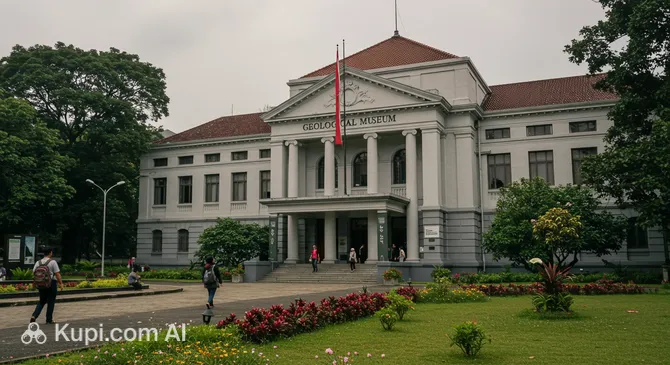
Geological Museum. Illustration.
Source: Kupi.com AI

Traveler photos:

Inside the museum, a fascinating journey through the ages awaits you. The exhibition is divided into several themed zones featuring impressive skeletons of prehistoric animals, a vast collection of minerals and rocks, and meteorite samples. Here, you can learn about the evolution of life on Earth, the region's volcanic activity, and the wealth of its natural resources.

The museum is located at Jl. Diponegoro No. 57, in close proximity to other iconic city landmarks like the Gedung Sate building. Thanks to this convenient location, a visit to the Geological Museum is easy to include in your Bandung sightseeing plans. This is a place that will interest both adults and children, providing a wealth of new knowledge and impressions.

Contacts

To plan your visit, confirm current opening hours, or ask other questions, you can contact the Geological Museum administration. It is recommended to check official resources for the most accurate and up-to-date information.

How to contactContact
AddressJl. Diponegoro No.57, Cihaur Geulis, Kec. Cibeunying Kaler, Kota Bandung, Jawa Barat 40122, Indonesia
Phone number+62 811-8880-1928
Websitemuseum.geologi.esdm.go.id

What to Do

A visit to the Geological Museum promises to be a real adventure for curious travelers. On the first floor, you'll be greeted by the world of paleontology, featuring ancient animals and plants. Here you can see unique exhibits such as the skeletons of prehistoric animals, including an impressive replica of a Tyrannosaurus Rex (T-Rex) skeleton that captures the imagination. Heading up to the second floor, you'll dive into the world of mineralogy and geology, studying rich collections of fossils and minerals from all over Indonesia.

The museum's rare exhibits deserve special attention. You can take a close look at actual meteorites that fell on the island of Java in the 19th century, including the massive 156-kilogram Jatipengilon meteorite. Another gem of the collection is a detailed replica of the Wonosari geological formation, famous for its abundance of fossils. The displays allow you to learn about the origin of the volcanoes that shaped the country's landscape and the processes behind the formation of minerals.

The Geological Museum in Bandung is designed to be interesting for visitors of all ages. Thanks to detailed information boards in two languages, every guest—whether an adult or a child—can easily immerse themselves in the world of science. It is a wonderful opportunity not only to see rare artifacts, such as the "Java Man" fossils, but also to gain deep knowledge about the Earth's geological history in an interactive and engaging format.

Getting There

The Geological Museum is located in the heart of Bandung, making it very accessible for visitors. It is situated near well-known spots like the Gedung Sate building and Gasibu Park, allowing you to easily include it in a walking tour of the city. If you are already exploring the central district, the museum is a pleasant stroll away, letting you soak in the city atmosphere along the way.

For those coming from other parts of Bandung, there are several convenient public transport options. You can use local minibuses known as "angkots" or city buses. Additionally, ride-sharing services are widely available in the city; booking a car through a mobile app is a fast and comfortable way to reach your destination.

If you are arriving in Bandung from another city by train, your journey to the museum will also be straightforward. From Bandung's main railway station, you can easily take a taxi or use public transport to go directly to the Geological Museum. The ride won't take long, as the station is relatively close to the center.

Nearest city: Bandung

History & Facts

The history of the Geological Museum in Bandung is inextricably linked with Indonesia's colonial past. The museum was founded by Dutch geologists in 1928 and was originally intended as a scientific center to house and study samples collected during geological expeditions across the archipelago. From the very beginning, it became an important repository for the region's scientific and cultural heritage.

The museum's collection is truly impressive: today it houses over 250,000 samples of rocks, minerals, and fossils. A unique collection of meteorites is a particular point of pride, drawing the attention of both scientists and casual visitors. Additionally, the halls display fossils of prehistoric animals such as the ancient Stegodon elephant, the Javan rhinoceros, and a giant tortoise. These exhibits allow you to trace the evolution of life on Earth over millions of years.

For decades, the museum has played a key role in the development of geological sciences in Indonesia. It was not just a storehouse for artifacts, but a real engine of scientific progress and education. Today, the Geological Museum continues this tradition, remaining one of the country's leading educational and research centers, where the past meets the present to inspire future generations of scientists.

Time Needed

When planning a visit to the Geological Museum, you should allow for 1–2 hours. This is usually enough time to leisurely explore the main exhibits, get a general sense of the museum's rich collection, and even spend a few hours if you are traveling with little paleontologists.

In this time frame, you will have enough time to see the key halls dedicated to paleontology and mineralogy, as well as engage with the interactive zones. If you are deeply interested in geology or traveling with children who want to study every exhibit in detail, you might want to set aside a bit more time to fully enjoy all the details without rushing.

Since the visit doesn't take all day, it is easy to fit into a busy schedule of exploring Bandung. You can combine it with a walk through the city center or a visit to other nearby attractions, making your day as full and interesting as possible.

Working Hours

The opening hours of the Geological Museum in Bandung can be irregular, and visiting times may change, especially during national holidays when the museum might be closed. Various sources provide conflicting information regarding opening days and hours. For this reason, it's wise to plan your visit carefully and confirm all details in advance.

To avoid any inconvenience, it is highly recommended to check for up-to-date information on opening hours and visiting conditions before your trip. The most reliable way to do this is to visit the museum's official website or contact the administration directly by phone. This is particularly important if you are planning a visit as part of a large group, as prior arrangements may be required.

DayOpening hours
Monday9:00 – 15:00
Tuesday9:00 – 15:00
Wednesday9:00 – 15:00
Thursday9:00 – 15:00
FridayClosed
Saturday9:00 – 14:00
Sunday9:00 – 14:00

Nearby

Visiting the Geological Museum is just the starting point for exploring the rich cultural and historical heritage of Bandung. To make your trip even more rewarding, it is worth exploring other interesting sites located in the immediate vicinity. Many of them are within walking distance, making it easy to create an engaging walking itinerary.

A stroll around the museum's neighborhood will allow you to dive deeper into the city's atmosphere, seeing the contrast between the scientific center and other iconic landmarks—from historical buildings to modern entertainment venues. Below is a list of nearby attractions that can complement your itinerary.

NameDistance
Gedung Sate0.4 km
Heritage Factory Outlet0.7 km
Afterhour Billiard & Lounge1.8 km
Babakan Siliwangi Urban Forest2 km
Cihampelas Walk2 km
Asia-Africa Conference Museum2.6 km
Merdeka Building2.6 km

Have you reached the end of the page?

So the route has been studied inside and out